01. What is hot isostatic pressing?
A special heat treatment process that improves material quality!
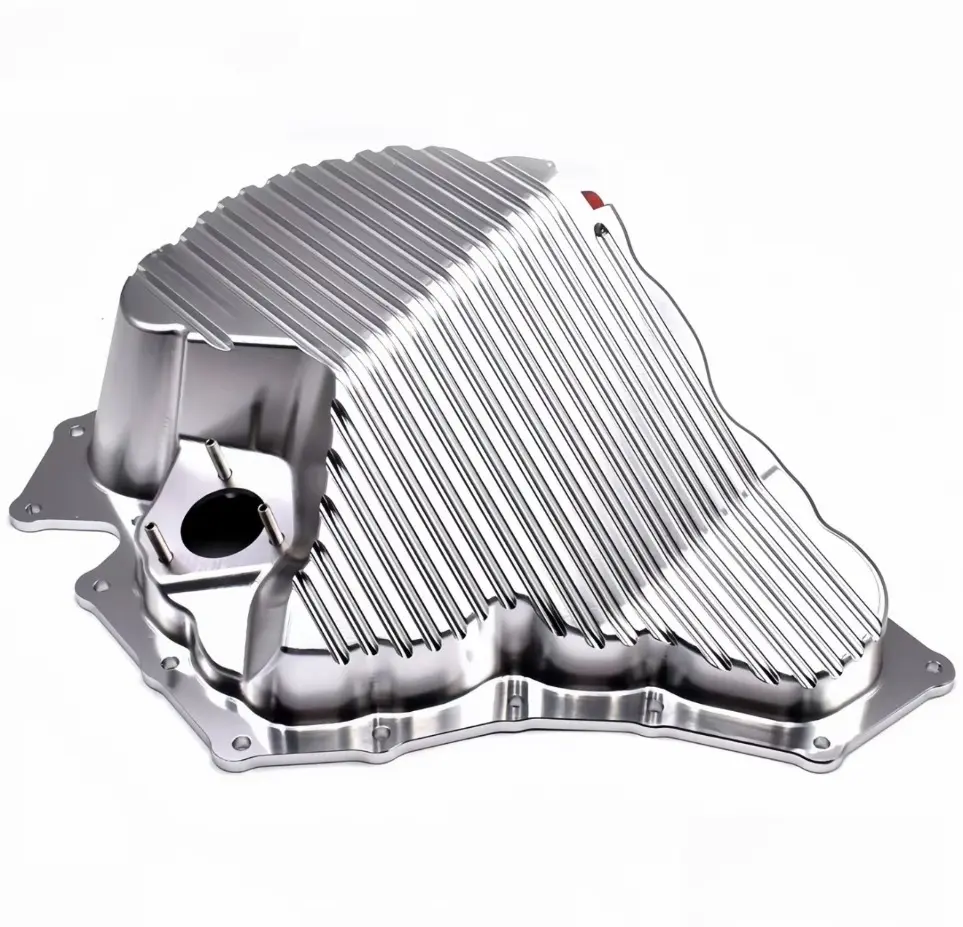
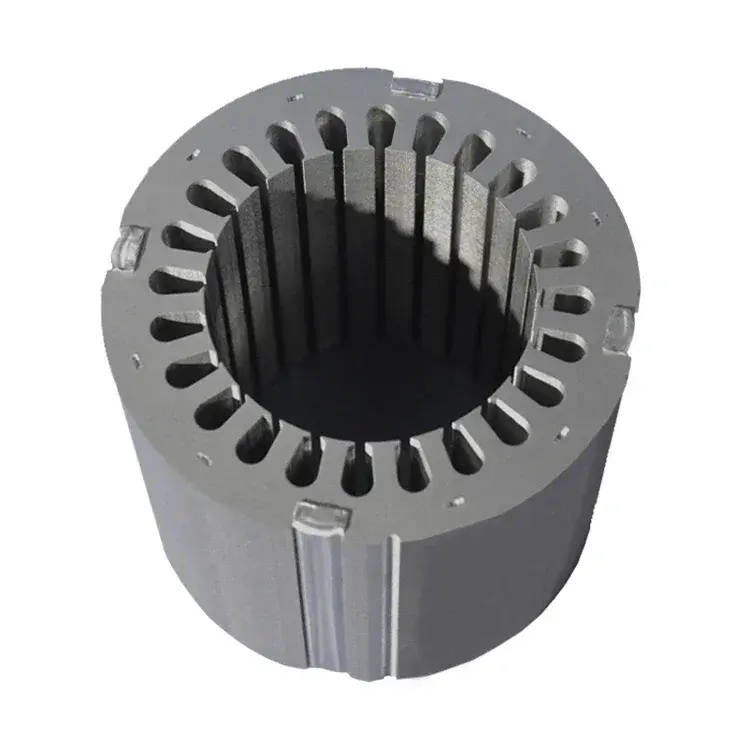
Hot isostatic pressing (HIP) is a special heat treatment process for metal or ceramic materials and is an important means of preparing high-performance materials. This process technology can be used for powder metallurgy casting or densification of castings (titanium alloys, high temperature alloys, aluminum alloys and other free shrinkage castings). After hot isostatic pressing treatment, the wear resistance, corrosion resistance and mechanical properties of the material will be greatly improved, and the fatigue life can be increased by 10 to 100 times.
Processing characteristics:
High temperature up to 2000℃
High pressure up to 200 MPa
Isostatic pressure uses an inert gas as the pressure transmission medium, and the same pressure acts uniformly on the component surface in all directions.
Main application material systems:
High temperature alloys, titanium alloys, aluminum alloys, copper alloys, refractory metals, cemented carbide, stainless steel, corrosion resistant alloys, ceramics, composite materials, electronic materials, functional materials, etc.
02. Why use hot isostatic pressing?
Significantly improves the mechanical properties of the material and increases its fatigue life by 10 to 100 times
Products made from any material have a certain lifespan and cannot be used indefinitely. There are two basic reasons for material failure. The first is the change in the internal structure of the material, that is, the composition of the material changes due to interference. the external environment. Changes occur, new components fail to achieve the appropriate properties and the material then fails; Another more common reason is that due to residual impurities, tiny cracks, holes, etc. inside the material, performance mutation points are formed, which we call material defects. When the material is in a working state, for example when subjected to stress. high temperature cycles and stress cycles, a stress concentration effect will occur at the location of the sudden change in performance, and eventually fatigue diffusion will occur at this point, causing the material to rupture and fail. At present, no traditional casting method can directly eliminate the remaining defects inside the material, and all require further processing.
Of course, in a normal working environment there is no need to place excessive demands on the performance of the material. Some defects may exist as long as they do not affect the use of the material. However, in some special working environments, such as aircraft engines, nuclear reactors, heavy gas turbines and underwater oil extraction, materials must withstand high temperatures, pressures, amplitudes or extremely high corrosive environments. because the materials are also extremely high, they not only require ultra-high strength, toughness and corrosion resistance, but also extremely high stability. At this point, it becomes particularly important to eliminate internal defects in the material.
As a special metal heat treatment process, hot isostatic pressing is currently the most effective heat treatment method to eliminate internal defects of materials, and is also the method of forming materials to minimize internal defects of materials . Therefore, hot isostatic pressing is a routine processing step for important and critical components in various fields around the world.
According to the needs of the products to be transformed
Hot isostatic pressing services can be divided into the following three categories:
1. Densification treatment
Eliminate internal product defects and achieve theoretical density

2. Broadcast connection
Integrate two or more metals

3. Powder metallurgy by hot isostatic pressing
HIP powder casting, high performance, low cost

Densification
Eliminates internal defects in materials and products to achieve theoretical density

During the service of materials, the remaining pores and microcracks inside the material are not only the initiation points of fracture, but also the initiation points of wear and corrosion. In complex working environments such as aircraft engines, nuclear reactors and heavy gas turbines, once the material breaks and fails, it will cause extremely serious consequences. After isostatic hot pressing treatment, the internal structure of the material is densified and all pores and defects disappear, forming a uniform and dense whole, which greatly improves the wear resistance, corrosion resistance, properties mechanical and fatigue resistance of the material.
In the casting process, due to uneven temperature diffusion when the material is cooled, inherent process defects such as internal porosity, segregation, shrinkage cavities and microcracks will occur, reducing performance, the lifespan and stability of the material. Similarly, in metal injection molding and 3D printing processes, there is also the problem of loose internal structure of the material and residual defects.
Hot isostatic pressing densification processing involves placing products with internal defects such as molded parts, injection moldings or 3D printed products in a high temperature environment, using an inert gas as a transmission medium. force and applying various equivalent isostatic pressures to them. to deform in solid phase, diffuses at the atomic level and eliminates internal pores and microcracks to eliminate internal fracture initiation points (stress concentration points) in the material, thereby significantly improving overall product performance.
·Elimination of internal defects – elimination of shrinkage, porosity and segregation
Significantly improves fatigue life – 10 to 100 times
·Improve ductility and toughness
·The product can reach the theoretical density
·Wear and corrosion resistance are greatly improved
·Eliminate internal stresses in materials
Over the past 50 years, the use of hot isostatic pressing technology to process materials, especially castings, has been an important process to improve product quality. Steel Research Haopu has always been a leader in China’s densification processing industry and has continued to provide important guarantees on the quality of domestic major products in recent decades. In recent years, with the overall improvement of people’s requirements for product quality, the densification processing business has gradually expanded to more application fields. The quality of civilian products in various fields has been comprehensively improved through densification processing. Steel Yan Haopu adheres to the responsibility of an industry leader, has strong processing capabilities and a wide range of processing lines, and is committed to providing the most advanced technical support and quality of most reliable service to global customers.
Diffuse connection
Integrate two or more metallic materials

In industrial manufacturing, engineers typically assemble different materials to achieve the best combination of material properties. However, conventional welding methods are often impossible to perform or provide poor results, especially when joining specially shaped parts or larger parts. Hot isostatic pressing can realize solid-solid connection, solid-powder connection and powder-powder connection between two or more metal materials or ceramic materials through the action of high temperature and pressure, way to integrate several materials. Compared with other joining technologies, the joining of the two materials is closely bonded without defects and the joining properties are indistinguishable from those of the original material.
·When connecting materials with the same performance, since no liquid phase is produced at the interface, the bonding strength of the interface is equivalent to that of the base material. When connecting materials with different properties, the interface may achieve good metallurgical bonding and the performance is not. lower than the lower of the two materials.
|Can connect parts with complex shapes of contact surfaces and achieve strict dimensional control
|Can connect multiple similar or different materials in one process
|Can quickly make connections over large areas
|It can achieve solid-state connection of fragile metals that cannot be connected by conventional welding methods, or metals with high melting points.
|Due to the high and uniform isostatic pressure acting on the parts, tiny pores or cracks outside the connection area are reduced and eliminated.
|No defects such as weld beads, heat affected zones, surface pores, inclusions, undercuts and cracks caused by traditional welding processes
Due to the different thermal expansion coefficients of different metals, dislocations and internal stress will be generated at the interface when heated, which will affect the connection effect. Steel Yan Haopu engineers have made giant strides in diffusion connection technology in recent years, developed connection technology between different materials, and applied this technology to more types of materials, such as copper, stainless steel, tungsten alloy, cobalt-based alloy, nickel-chromium-based alloy, molybdenum, etc.
Powder metallurgy nearing its final form
One-step hot isostatic pressing, high performance and low cost
Helpline: 13522079385
Hot isostatic pressing powder metallurgy refers to the use of hot isostatic pressing process to fill powder raw materials into specially designed bags and directly sinter them into products of specified shapes under the action high temperature, pressure and isostatic pressure. metallurgy. Based on its advantages, hot isostatic pressing technology can consolidate powder materials into denser and higher-performance finished products.
• Design Flexibility – Designed to have almost the same shape as the final product, reducing waste of raw materials, machining procedures and shipping times.
•The grains are fine and uniform, with isotropic material properties: wear resistance, corrosion resistance, improved mechanical properties and ultra-long life.
•Preparation of alloy materials at high temperature – the temperature reaches 0.8 times the melting point.
• Internally homogeneous and dense – no influence on ultrasonic testing.
• No liquid phase is produced – minimizes segregation and improves the corrosion resistance of the material.
•It can achieve the preparation of two ingots of different metal materials – the bimetallic strip can still be processed by subsequent forging and extrusion.
How widely is hot isostatic pressing technology used? A series of examples to help you understand!
When spacecraft travel across the vast universe, they must withstand extreme temperatures and high pressures, and the performance requirements of materials are almost demanding. In the oil and gas industry, deep well drilling faces high temperatures, high pressures and complex chemical corrosion environments, which also require strong and corrosion-resistant materials; wear resistance and mechanical properties.
Traditional material processing technologies are somewhat incapable of meeting these complex and stringent requirements.
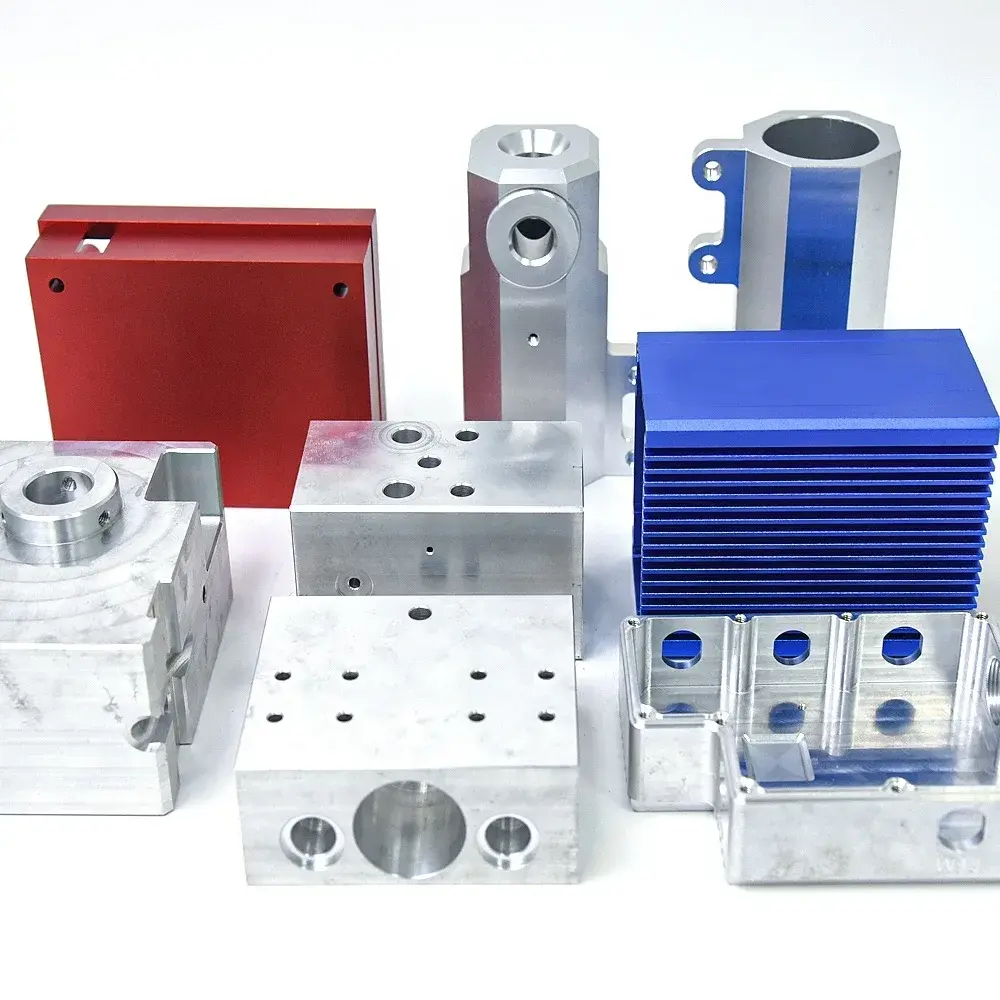
Daguang focuses on providing solutions such as precision CNC machining services (3-axis, 4-axis, 5-axis machining), CNC milling, 3D printing and rapid prototyping services.