
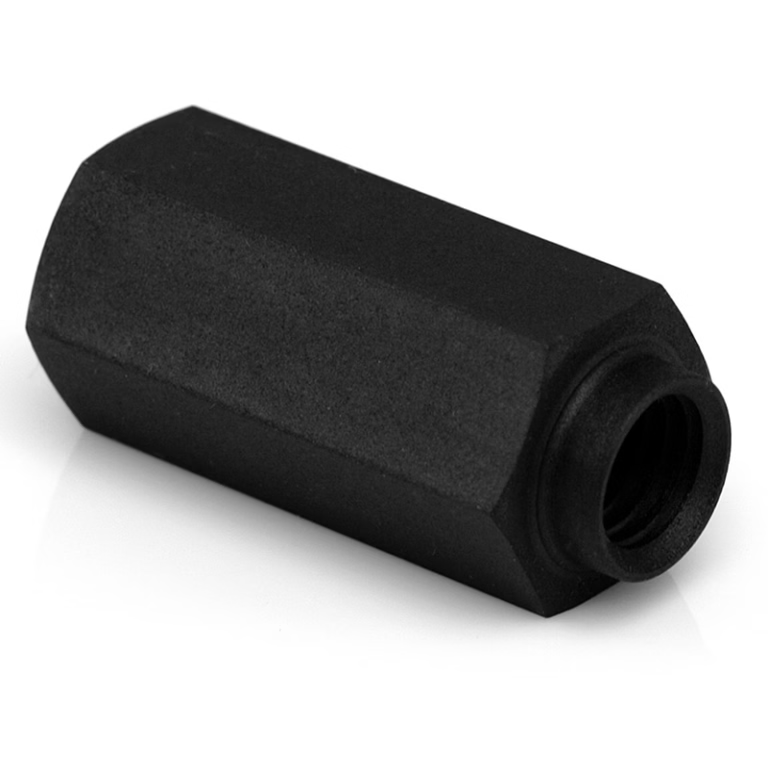
In the world of modern manufacturing, few terms are as pivotal yet sometimes as nebulous to newcomers as “CNC machined.” At its core, when a part is described as CNC machined, it signifies that it has been manufactured using a Computer Numerical Control (CNC) machine tool. This process translates a digital design file into precise, physical instructions that guide cutting tools to selectively remove material from a solid block (or near-net-shape workpiece), transforming it into a final, high-precision component. It is the digital, automated successor to manual machining, representing a paradigm shift towards repeatability, complexity, and accuracy that was previously unattainable.
For clients seeking precision parts machining and customization, understanding what “CNC machined” truly means is the first step in leveraging its full potential for your projects.
Deconstructing the CNC Machining Process
To grasp the meaning fully, let’s break down the journey from a concept to a CNC machined part:
Digital Blueprint (CAD): It all begins with a Computer-Aided Design (CAD) model. This is a precise 3D digital representation of the final part, defining every dimension, curve, and tolerance.
Instruction Translation (CAM): The CAD model is then imported into Computer-Aided Manufacturing (CAM) software. Here, a manufacturing engineer or programmer defines the machining strategy: selecting tools, setting cutting paths (toolpaths), calculating speeds and feeds, and determining the sequence of operations. The CAM software generates the G-code—the universal language of CNC machines, which is essentially a series of alphanumeric instructions controlling every movement of the machine.
Machine Setup: The appropriate material (aluminum, stainless steel, titanium, engineering plastic, etc.) is securely fastened to the machine’s worktable. The required cutting tools are loaded into the machine’s automatic tool changer.
Automated Precision Execution: The operator initiates the program. The CNC machine then executes the G-code autonomously. It precisely controls:
The movement of the cutting tool along multiple axes (X, Y, Z, and often rotational A, B, or C axes).
The spindle speed (how fast the tool rotates).
The feed rate (how fast the tool moves through the material).
Tool changes, coolant application, and other functions.
Result: Through processes like milling, turning, or drilling, material is removed with exceptional accuracy, leaving behind a finished part that is a physical mirror of the original digital design.
Key Characteristics that Define a “CNC Machined” Part
When you receive a component that is CNC machined, it inherently promises certain qualities:
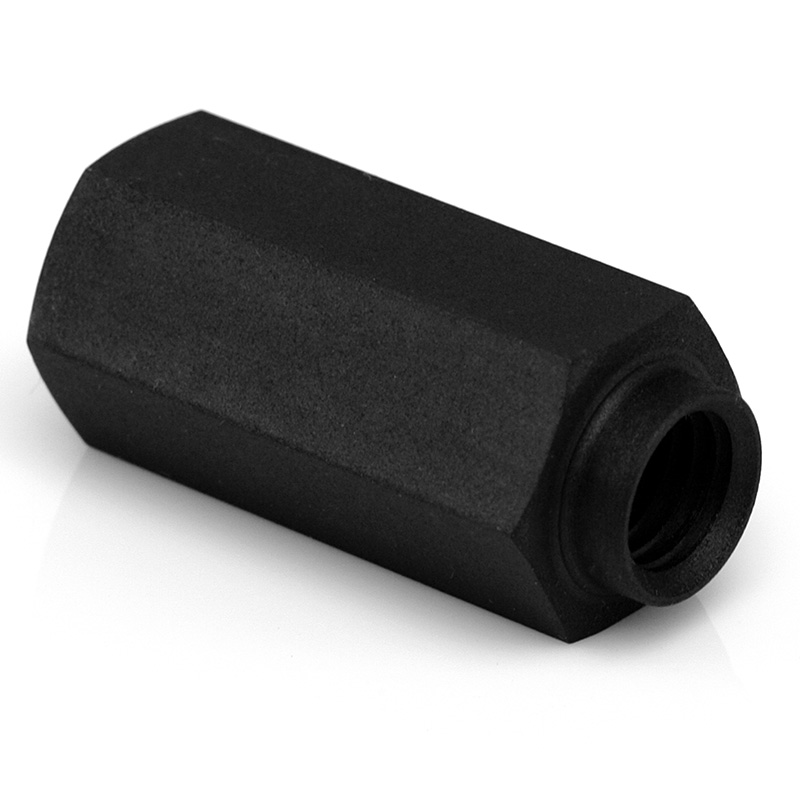
High Precision and Tight Tolerances: CNC machining is synonymous with accuracy. It routinely holds tolerances within ±0.025 mm (±0.001 inches), and in high-precision environments like at GreatLight CNC Machining Factory, capabilities can reach ±0.005 mm or even finer for critical features. This is non-negotiable for aerospace, medical, and optical applications.
Excellent Repeatability: Once the program is verified, the first part and the thousandth part are virtually identical. This is crucial for mass production and assembly interoperability.
Complex Geometry Capability: CNC machines, especially 5-axis CNC machining centers, can produce shapes that are impossible with manual methods—complex contours, deep cavities, intricate undercuts, and precise angled features all in a single setup.
Superior Surface Finish: While secondary finishing can enhance appearance, a well-executed CNC machining process can achieve very fine surface finishes directly off the machine, reducing post-processing time and cost.
Material Versatility: From soft plastics to superalloys like Inconel, CNC machines can process an enormous range of materials, allowing engineers to select the optimal material for strength, weight, corrosion resistance, or thermal properties.
Why “CNC Machined” Matters for Your Custom Parts
Choosing CNC machining is not just selecting a process; it’s choosing a set of guarantees for your project:
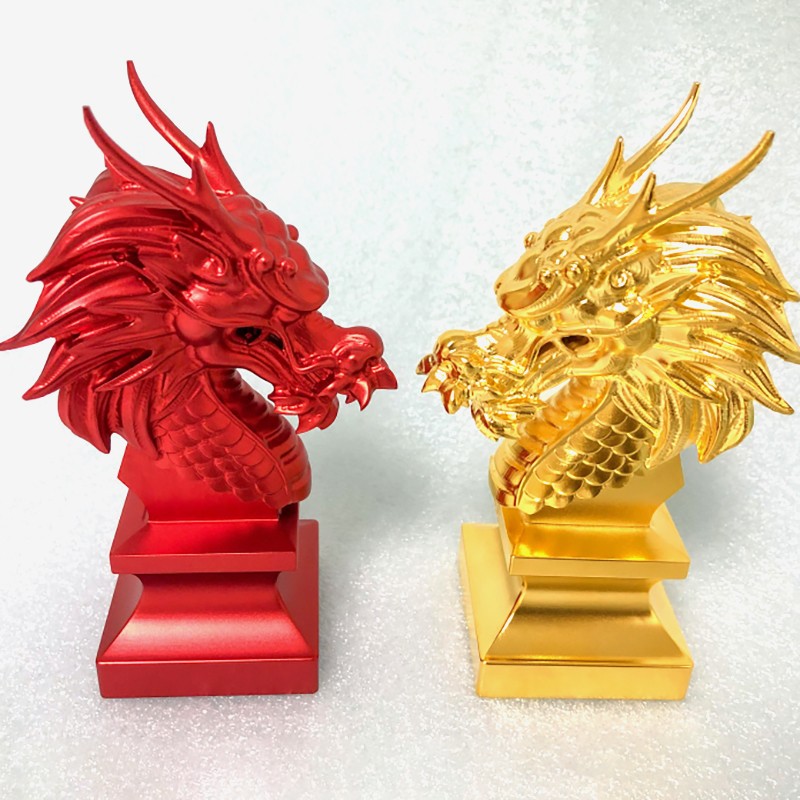
Design Fidelity: Your creative and engineering intent is preserved without interpretation errors. What you design is what you get.
Speed from Prototype to Production: The same digital file used for a one-off prototype can be used for full-scale production, drastically shortening development cycles.
Reduced Human Error: Automation minimizes variances introduced by manual skill levels, ensuring consistent quality.
Ability to Machine Advanced Materials: Modern components often require materials that are too hard or tough for conventional methods. CNC machining handles them effectively.
For example, a client in the robotics sector needed a series of lightweight, high-strength actuator housings with internal complex cooling channels and precise bearing seats. A traditional casting approach would require expensive tooling and struggle with the required internal precision. By opting for parts that were CNC machined from a solid block of aluminum alloy, GreatLight CNC Machining Factory was able to produce them with all critical features intact, excellent thermal performance, and a rapid turnaround, directly from the client’s 3D model.
Conclusion
So, what does CNC machined mean? It means precision, reliability, complexity, and efficiency, all governed by digital intelligence. It represents the standard for creating high-performance, custom metal and plastic parts across industries demanding excellence. It transforms abstract designs into tangible, functional reality with unwavering consistency. For anyone involved in developing innovative hardware, partnering with a manufacturer that has mastered this craft—with the right equipment, rigorous quality systems like ISO 9001:2015, and deep engineering support—is critical to transforming visionary designs into market-leading products.
Frequently Asked Questions (FAQ)
Q1: Is CNC machining only for metal parts?
A: Absolutely not. While exceptionally common for metals (aluminum, steel, brass, titanium), CNC machining is also extensively used for engineering plastics (like PEEK, Delrin, Nylon), composites, and even wood or foam for prototyping. The material versatility is one of its key strengths.
Q2: How does CNC machining differ from 3D printing?
A: They are complementary technologies. CNC machining is a subtractive process, removing material from a solid block, ideal for parts requiring high strength, excellent surface finish, and tight tolerances in metals and plastics. 3D printing is an additive process, building parts layer by layer, ideal for highly complex organic geometries, internal structures, and prototypes where speed over material strength is key. Many projects, like those at GreatLight CNC Machining Factory, benefit from using both technologies within the same workflow.
Q3: What does “5-axis” CNC machining offer over standard 3-axis?
A: A 3-axis machine moves the tool in three linear directions (X, Y, Z). A 5-axis CNC machining center adds two rotational axes, allowing the tool or workpiece to tilt and rotate. This enables machining complex features on five sides of a part in a single setup, reducing errors from re-fixturing, improving accuracy on contoured surfaces, and allowing access to geometries that would be impossible with 3-axis, such as deep undercuts or angled holes.
Q4: What file formats do I need to provide for a CNC machining quote?
A: The most standard and preferred format is a 3D CAD file in STEP (.stp or .step) or IGES (.igs) format, as they contain robust geometric data. 2D drawings in PDF or DWG format are also highly valuable as they communicate critical tolerances, surface finish requirements, and other specifications not always fully captured in the 3D model.
Q5: How do I ensure the quality of my CNC machined parts?
A: Partner with a manufacturer that has a transparent quality management system. Look for certifications like ISO 9001:2015, which provides a framework for consistent quality. Inquire about their in-house inspection equipment (like CMMs – Coordinate Measuring Machines, optical comparators) and their process for First Article Inspection (FAI) and in-process quality checks. A reputable partner will be proactive in discussing quality assurance measures with you. For insights into industry standards and collaboration, you can explore professional networks like those on LinkedIn.



















