
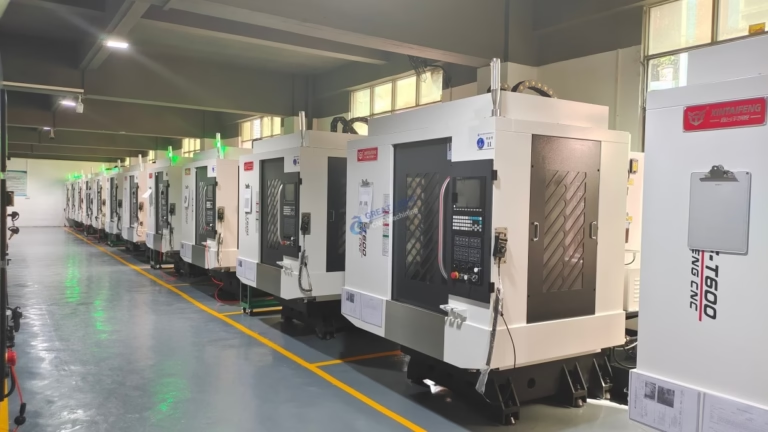
What Do CNC Machines Run Os? — or, more precisely, what operating systems power CNC machines — is a question that cuts to the core of precision parts machining. The operating system (OS) of a CNC machine is its “brain,” controlling every aspect of the machining process from tool movement and spindle speed to error compensation and programming execution. For anyone in the precision parts customization field, understanding CNC operating systems is key to choosing the right manufacturing partner and ensuring your project meets tight tolerances, complex geometry requirements, and delivery timelines.
What Do CNC Machines Run Os?
Understanding CNC Operating Systems: The Backbone of Precision Machining
CNC operating systems bridge the gap between digital design files (CAD/CAM) and physical part production. They translate programming instructions into precise mechanical movements, adjusting for real-world variables like thermal expansion, tool wear, and machine vibration to maintain accuracy. A robust CNC OS isn’t just a technical detail—it directly impacts part quality, production efficiency, and the ability to handle intricate or high-volume projects.
Common CNC Operating Systems and Their Key Strengths
Not all CNC OS are created equal. Each system is designed for specific applications, industries, and machine types. Below are the most widely used CNC operating systems and their ideal use cases:
Fanuc Series (30i/31i/32i)
Fanuc is the gold standard for industrial CNC machining, powering over 50% of the world’s CNC machines. Renowned for its reliability and durability, Fanuc OS excels in high-volume production runs where consistency is non-negotiable. Key features include:
Real-time error compensation for thermal expansion and tool wear, maintaining tolerances as tight as ±0.001mm
Advanced high-speed machining algorithms to reduce cycle time without sacrificing precision
Seamless integration with CAD/CAM software, making it ideal for automotive, aerospace, and medical parts production
Siemens Sinumerik (840D sl)
Siemens Sinumerik is the top choice for complex multi-axis and 5-axis machining. It’s built to handle the most intricate geometries, such as those found in aerospace turbine blades, humanoid robot joints, and medical implants. Standout benefits:
Simultaneous 5-axis motion control, eliminating the need for multiple setups and reducing error risk
Conversational programming tools that simplify complex tasks for operators
Built-in virtual simulation to test programs before machining, cutting down on setup time and material waste
Haas Control
Haas Control is a user-friendly, cost-effective option for small to medium batch production and prototype development. Designed exclusively for Haas machines, it’s known for its intuitive interface that minimizes operator training time. Key advantages:
Quick programming capabilities, making it ideal for custom parts and rapid prototyping
Built-in tool offset and work offset features to maintain accuracy across runs
Excellent support for 3-axis and 4-axis machining, with options to upgrade for 5-axis projects
Mitsubishi M70/M80 Series
Mitsubishi’s CNC OS is favored for high-speed, tight-tolerance machining, particularly in mold making and high-end consumer electronics. Its AI-driven features set it apart:
Adaptive control algorithms that adjust cutting parameters in real-time to optimize tool life and reduce vibration
Fast data processing to handle complex CAD/CAM files efficiently
Compatibility with a wide range of machine types, from lathes to 5-axis machining centers
Linux-Based CNC OS (LinuxCNC, PathPilot)
Open-source Linux-based systems are highly customizable, making them a go-to for specialized or niche projects. While they require more technical expertise to set up and maintain, they offer unique benefits:
Low cost compared to enterprise-grade systems, ideal for small workshops or startup projects
Full access to source code, allowing for custom modifications to meet unique machining requirements
Compatibility with a wide range of hardware, including retrofitted older machines
How CNC Operating Systems Impact Your Precision Parts Project
The choice of CNC OS directly influences three critical outcomes for your project:
Precision and Tolerance: Advanced OS like Fanuc and Siemens include sophisticated error compensation tools that maintain tight tolerances (down to ±0.001mm) even during long production runs. This is essential for parts in medical, aerospace, and automotive industries where even tiny deviations can cause failure.
Efficiency and Delivery: High-speed machining algorithms and simulation tools reduce cycle time and setup errors, enabling faster delivery of prototypes and production parts. For example, Siemens Sinumerik’s simulation feature can cut setup time by up to 30% for complex 5-axis projects.
Complexity Handling: Multi-axis capable OS like Sinumerik can process intricate geometries in a single setup, eliminating the need for multiple machines or repositioning. This reduces the risk of alignment errors and ensures consistency across parts.
GreatLight CNC Machining Factory: Leveraging Top-Tier CNC OS for Unmatched Results
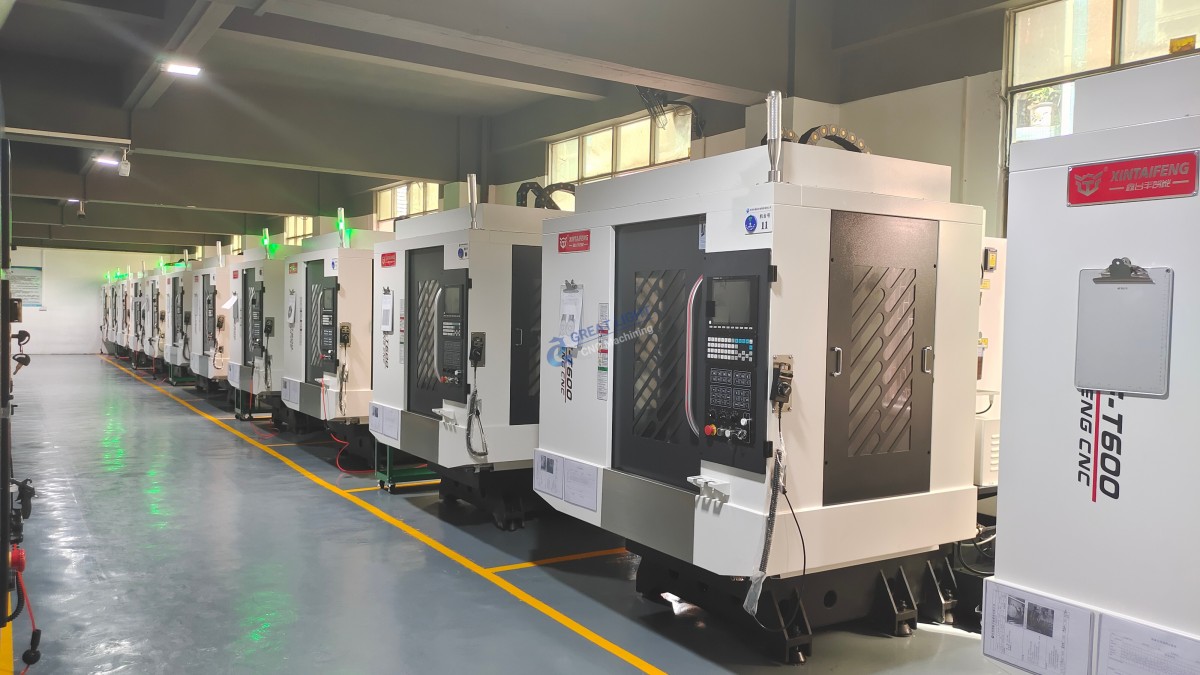
As a leading five-axis CNC machining manufacturer with over a decade of experience, GreatLight CNC Machining Factory understands that the right CNC operating system is non-negotiable for delivering high-quality custom parts. Our 7600-square-meter facility in Dongguan’s Chang’an District—China’s “Hardware and Mould Capital”—houses 127 pieces of precision equipment, each equipped with industry-leading OS tailored to the task at hand.
We deploy Fanuc Series 30i for high-volume production runs requiring consistent tight tolerances, such as automotive engine components. For complex 5-axis projects like aerospace turbine blades or humanoid robot joints, we rely on Siemens Sinumerik 840D sl, which enables simultaneous multi-axis motion to create intricate geometries in a single setup. To tackle rapid prototyping and small-batch custom parts, our Haas machines use Haas Control for quick programming and fast turnaround times.
This strategic use of CNC OS, combined with our ISO 9001:2015, IATF 16949, ISO 13485, and ISO 27001 certifications, enables us to achieve machining precision of ±0.001mm and handle parts up to 4000mm in size. For example, when a European aerospace client needed custom titanium alloy brackets with complex curved surfaces, our team used Siemens Sinumerik to program a 5-axis machining center, completing the project in 3 days (20% faster than the client’s initial timeline) while maintaining a tolerance of ±0.002mm.
Our commitment to quality doesn’t end with machining: we offer one-stop post-processing services (including anodizing, powder coating, and polishing) and a robust after-sales guarantee—free rework for quality problems, and a full refund if rework is still unsatisfactory. To learn more about how our 5-axis CNC machining services (opens in new window) can transform your design into a high-quality part, explore our specialized offerings.
Key Considerations When Choosing a CNC OS for Your Project
When evaluating a manufacturing partner, consider these factors related to their CNC OS:
Project Complexity: For simple 3-axis parts, a user-friendly OS like Haas Control may suffice. For 5-axis or intricate geometries, prioritize systems like Siemens Sinumerik or Fanuc.
Tolerance Requirements: If your parts demand ±0.001mm precision, ensure the OS includes advanced error compensation features.
Production Volume: High-volume runs benefit from OS with fast cycle times and minimal setup errors, while prototype work may prioritize quick programming capabilities.
Industry Compliance: Medical parts require OS that align with ISO 13485 standards, while automotive parts need compliance with IATF 16949.
Conclusion
What Do CNC Machines Run Os? is a question that goes far beyond technical curiosity—it directly influences the quality, efficiency, and success of your precision parts project. By partnering with a manufacturer like GreatLight CNC Machining Factory, which leverages top-tier CNC operating systems and combines them with decades of expertise, you can ensure your custom parts meet the highest standards of precision and reliability. Whether you’re developing a prototype or scaling to mass production, GreatLight’s integrated approach—from advanced OS to one-stop post-processing—delivers solutions that drive your innovation forward.
Frequently Asked Questions (FAQ)
Which CNC operating system is best for 5-axis machining?
Siemens Sinumerik 840D sl and Fanuc Series 30i/31i are the top choices for 5-axis machining. They offer advanced multi-axis motion control, real-time error compensation, and simulation tools to handle complex geometries. GreatLight uses both systems to deliver high-precision parts for aerospace and automotive clients.
How does a CNC operating system affect part precision?
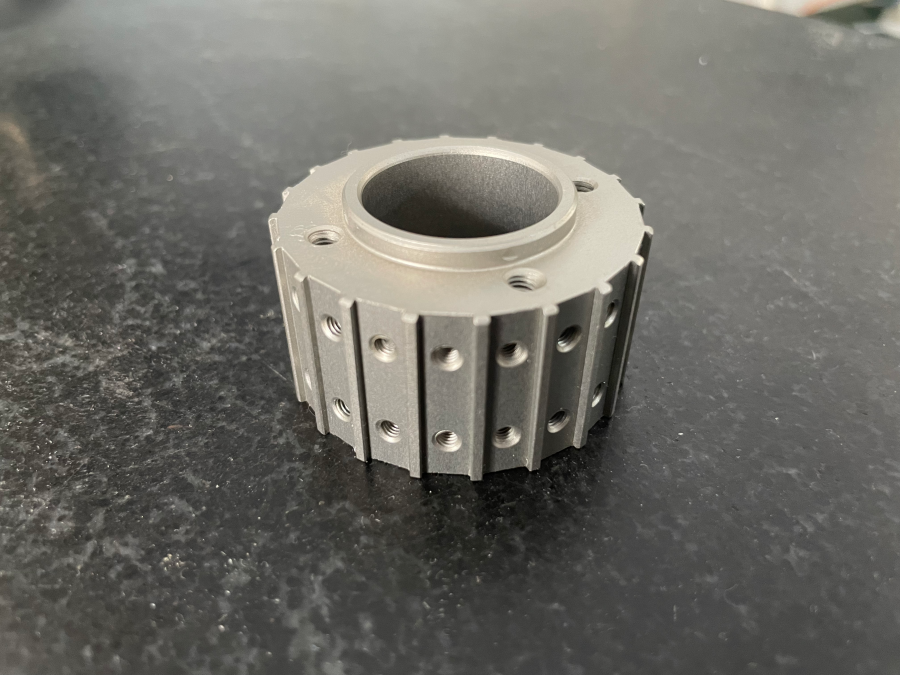
CNC OS controls real-time adjustments for factors like thermal expansion, tool wear, and machine vibration. Advanced systems include algorithms that compensate for these variables, maintaining tight tolerances (down to ±0.001mm at GreatLight) even during long production runs.
Can GreatLight accommodate custom CNC OS requirements for specialized projects?
Yes. Our engineering team has experience working with a range of CNC operating systems, including open-source options like LinuxCNC. If your project requires a custom OS setup, we can collaborate with you to configure the system to meet your unique needs.
Do all CNC machines use the same operating system?
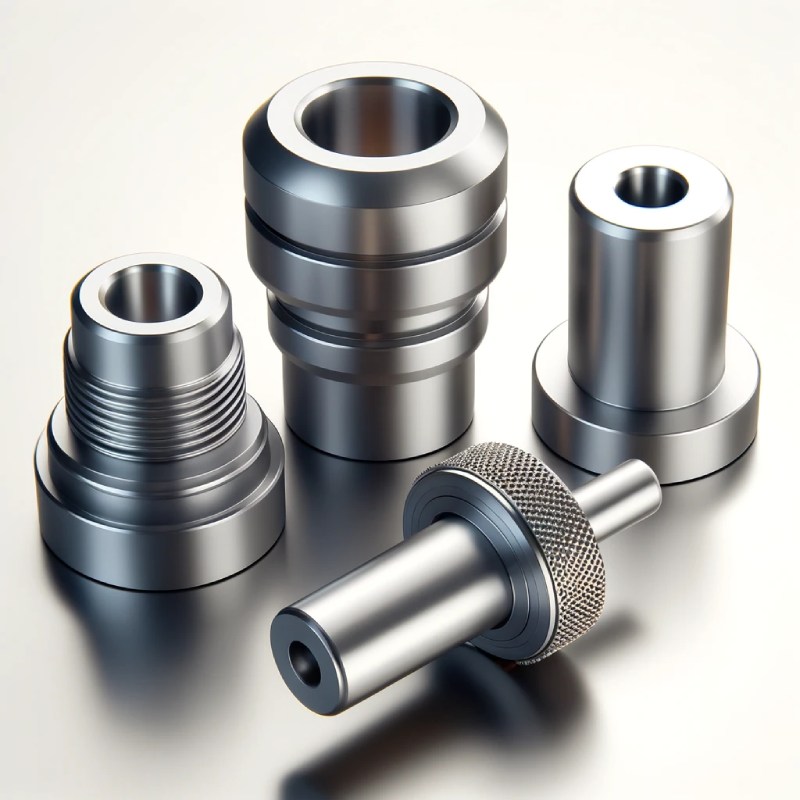
No. CNC operating systems vary by machine manufacturer and application. Entry-level machines may use basic or open-source OS, while high-end 5-axis machines rely on enterprise-grade systems like Siemens or Fanuc for maximum precision and capability.
How does GreatLight ensure its CNC OS are up-to-date?
GreatLight invests in regular software updates and operator training to keep all CNC systems running the latest versions. This ensures we can leverage the newest features for improved efficiency, precision, and compliance with industry standards.
For more insights into GreatLight’s CNC machining capabilities and industry expertise, connect with us on LinkedIn.



















