

In the dynamic world of modern manufacturing, the quest for efficiency, precision, and versatility is relentless. At the heart of this pursuit lies a workhorse of the industry: the CNC Vertical Machining Center (VMC). For clients in precision parts machining and customization, understanding the full spectrum of capabilities offered by a VMC is crucial for making informed sourcing and design decisions. This article delves deep into the multifaceted applications of this indispensable machine, illustrating why it remains a cornerstone technology for shops like ours at GreatLight CNC Machining Factory.
H2: Understanding the CNC Vertical Machining Center: A Foundation of Modern Machining
A CNC Vertical Machining Center is a type of computer numerically controlled milling machine where the spindle (the cutting tool) is oriented vertically. This configuration provides exceptional stability and is ideally suited for machining the top faces and outer contours of a workpiece. The workpiece is typically secured to a table that moves in the X and Y axes, while the spindle moves in the Z axis, allowing for highly precise three-dimensional cutting operations. The “machining center” designation signifies its integration of an automatic tool changer (ATC) and often a coolant system, enabling uninterrupted, complex machining sequences with minimal manual intervention.
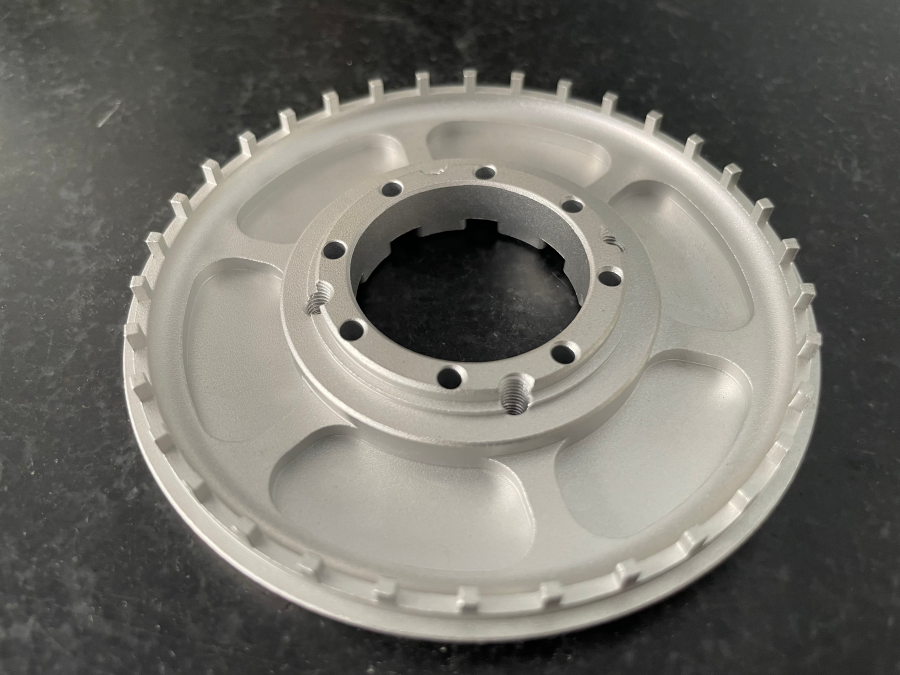
H2: The Extensive Capabilities of a CNC Vertical Machining Center
The true power of a VMC lies in its remarkable versatility. It is not merely a milling machine; it is a complete fabrication platform capable of executing a vast array of operations.
H3: 1. Precision Milling Operations
This is the core function. VMCs excel at:
Face Milling: Creating a flat surface on the top of a workpiece.
Profile Milling: Cutting the external or internal contours of a part.
Pocket Milling: Machining enclosed cavities or recesses into a workpiece, essential for housings, frames, and molds.
Slot Milling: Cutting narrow, linear channels or grooves.
Contour Milling: Producing complex, curved 3D surfaces, which is vital for aerospace components, automotive prototypes, and consumer product casings.
H3: 2. Drilling and Tapping
A VMC transforms into a highly accurate drilling station. With a rotating tool changer holding various drill bits and taps, it can:
Drill holes of precise diameters and depths.
Perform peck drilling for deep holes to efficiently clear chips.
Execute precision tapping operations to create internal threads, ensuring perfect alignment with other features.
H3: 3. Boring
For holes requiring exceptional dimensional accuracy and superior surface finish beyond what drilling alone can achieve, VMCs perform boring. A single-point boring tool is used to enlarge and finish a pre-drilled hole to an exact size and concentricity.
H3: 4. Engraving and Marking
Leveraging small-diameter end mills, VMCs can engrave serial numbers, logos, part numbers, or calibration marks directly onto a component with high precision and repeatability, aiding in traceability and branding.
H3: 5. Complex 3D Machining
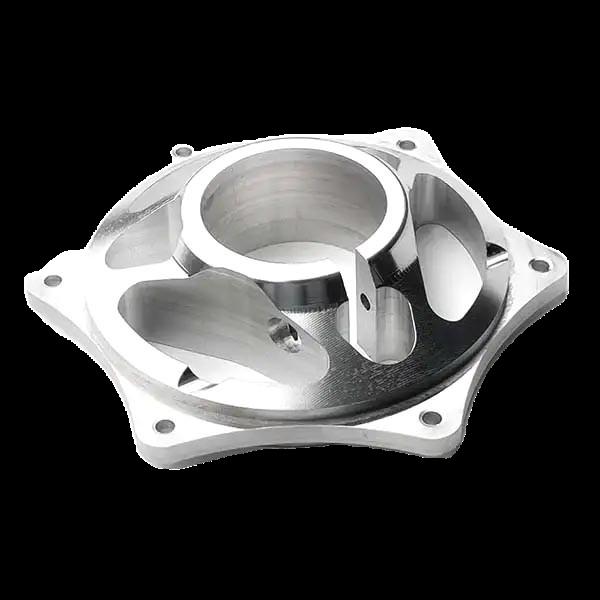
When programmed with advanced CAM software, a VMC can machine intricate three-dimensional forms. This is indispensable for creating molds, dies, prototypes, and artistic components with complex geometries, such as impellers, prosthetic limbs, or architectural models.
H2: Material Versatility: Machining Beyond Boundaries
A key strength of a well-equipped VMC is its ability to handle a diverse material portfolio. At GreatLight CNC Machining Factory, our VMCs are configured to machine:
Metals: Aluminum, stainless steel, steel, brass, copper, titanium, and magnesium alloys.
Plastics: ABS, Nylon, PEEK, Polycarbonate, Delrin (Acetal), and PTFE.
Composites: Certain engineered composites and laminates.
This material flexibility allows us to serve industries from aerospace (machining aluminum aircraft brackets) to medical (producing stainless steel surgical instrument components) with the same core technology.
H2: The Strategic Advantage in Precision Parts Customization
For clients seeking custom precision parts, partnering with a manufacturer that leverages advanced VMCs offers tangible benefits:
High Repeatability and Consistency: Once a program is proven, a VMC can produce the first and the thousandth part with identical precision, which is fundamental for batch production and quality control.
Reduced Lead Times: The automation provided by the ATC and CNC control minimizes setup changes and manual handling, accelerating production cycles.
Complexity for Free: The ability to machine complex geometries in a single setup reduces the need for multiple machines and fixtures, often simplifying the manufacturing process for intricate designs.
Superior Surface Finishes: Modern VMCs with high-speed spindles and precise controls can achieve excellent surface finishes directly off the machine, reducing the time and cost of secondary finishing operations.
H2: GreatLight CNC Machining Factory: Elevating VMC Capabilities with Integrated Expertise
While a VMC is a powerful tool, its output is ultimately defined by the expertise behind it. This is where GreatLight CNC Machining Factory distinguishes itself. Our approach integrates advanced VMC operations into a broader, client-centric manufacturing solution.
Our facility is equipped with a battery of high-precision 3-axis, 4-axis, and 5-axis CNC machining centers, ensuring we select the optimal platform—whether a robust VMC or a more agile 5-axis machine—for each project’s specific requirements. We complement our machining prowess with in-house capabilities like precision grinding, EDM, and comprehensive post-processing (anodizing, plating, painting, etc.), offering a true one-stop service.
Most importantly, our engineering team engages in Design for Manufacturability (DFM) consultations. We analyze your design to recommend adjustments that optimize it for VMC machining, potentially enhancing strength, reducing cost, and shortening delivery times without compromising function. This deep technical partnership transforms the VMC from a simple production tool into an engine for efficient innovation.
Conclusion
So, what can you do with a CNC Vertical Machining Center? The answer is: virtually everything required to transform a raw block of material into a high-precision, functional component. From simple flats and holes to intricate 3D contours, the VMC’s versatility makes it indispensable. For businesses that rely on precision, consistency, and complexity in their custom parts, understanding and leveraging this capability is key. By partnering with an experienced manufacturer like GreatLight CNC Machining Factory, you gain more than just access to advanced VMCs; you gain a collaborative partner dedicated to optimizing the entire manufacturing journey, ensuring your vision is realized with unmatched quality and efficiency. The journey from concept to precision part begins with the right tool and the right team.
FAQ: Frequently Asked Questions About CNC Vertical Machining Centers
Q1: What is the main difference between a CNC Vertical Machining Center (VMC) and a CNC Horizontal Machining Center (HMC)?
A1: The primary difference is spindle orientation. A VMC’s spindle is vertical, ideal for machining the top and sides of a workpiece, often better for single-face complex parts and easier setup visualization. An HMC’s spindle is horizontal, excelling at machining multiple sides of a part in a single setup (using a rotary table) and offering better chip evacuation for heavy milling, making it suitable for high-volume production of boxy parts like engine blocks.
Q2: What level of precision can I expect from parts machined on a VMC?
A2: Modern, well-maintained VMCs in a controlled environment like ours at GreatLight can consistently hold tolerances within ±0.01mm to ±0.025mm (±0.0004″ to ±0.001″) for general features. With specific processes and conditions, even tighter tolerances are achievable. The actual precision depends on part size, material, feature geometry, and the machine’s calibration.
Q3: Are VMCs only suitable for metal machining?
A3: Absolutely not. While excellent for metals, VMCs are equally proficient at machining a wide range of engineering plastics and composites. The key is using the correct cutting tools, speeds, feeds, and fixturing strategies for the specific material to achieve optimal finish and dimensional stability.
Q4: How does using a VMC impact the cost of my custom parts?
A4: For low to medium complexity parts and batch production, VMCs are often the most cost-effective solution due to their widespread availability, faster programming/setup times compared to more complex machines, and high efficiency. They reduce labor costs and material waste through precision. For extremely complex, monolithic parts requiring undercuts, a 5-axis machine might be more efficient despite a higher hourly rate.
Q5: Can a VMC create threaded holes?
A5: Yes, definitively. VMCs perform tapping operations with high precision. They can create threaded holes using a tapping tool synchronized with the spindle rotation, or via thread milling, which uses a milling cutter to produce threads—a more flexible method for larger or non-standard threads.
Q6: Why should I choose a manufacturer like GreatLight CNC Machining Factory over a smaller shop with just a few VMCs?
A6: While many shops have VMCs, GreatLight CNC Machining Factory provides a integrated manufacturing ecosystem. We offer 5-axis CNC machining services for unparalleled complexity, alongside comprehensive post-processing and strict ISO 9001:2015 quality management. This means we can handle your entire project from raw material to finished assembly, ensure consistent quality at scale, and provide expert DFM advice to optimize your part for manufacturability and cost from the outset, reducing overall risk and time-to-market.



















