
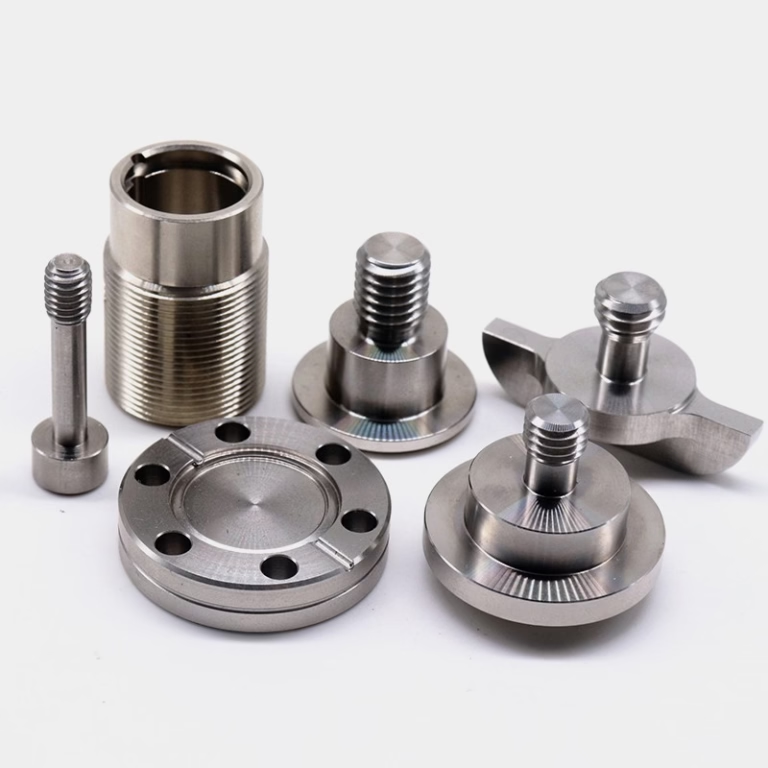
The Core Components and Advanced Capabilities of CNC Machine Tools: A Deep Dive into GreatLight CNC Machining Factory’s Precision Engineering
When selecting a partner for precision parts machining and customization, understanding the technical foundations of CNC (Computer Numerical Control) machine tools is critical. These systems are not just automated equipment—they are complex ecosystems of hardware and software working in tandem to achieve tolerances as tight as ±0.001mm. Below, we dissect the key components of CNC machine tools and explain how GreatLight CNC Machining Factory leverages these elements to deliver unmatched precision across industries like aerospace, automotive, and humanoid robotics.
1. The Core Components of CNC Machine Tools
1.1 Control Unit (CNC Controller)
The “brain” of the system, the CNC controller interprets G-code (numerical control programming language) and converts it into precise motion commands for the machine’s axes. Modern controllers, such as those used by GreatLight, support 5-axis simultaneous machining, enabling complex geometries to be manufactured in a single setup.
Key Features:
High-speed processing: Reduces cycle times for rapid prototyping.
Adaptive control: Adjusts parameters in real-time to optimize surface finish and tool life.
Error compensation: Corrects for thermal deformation and mechanical backlash.
1.2 Drive System (Servo Motors & Ball Screws)
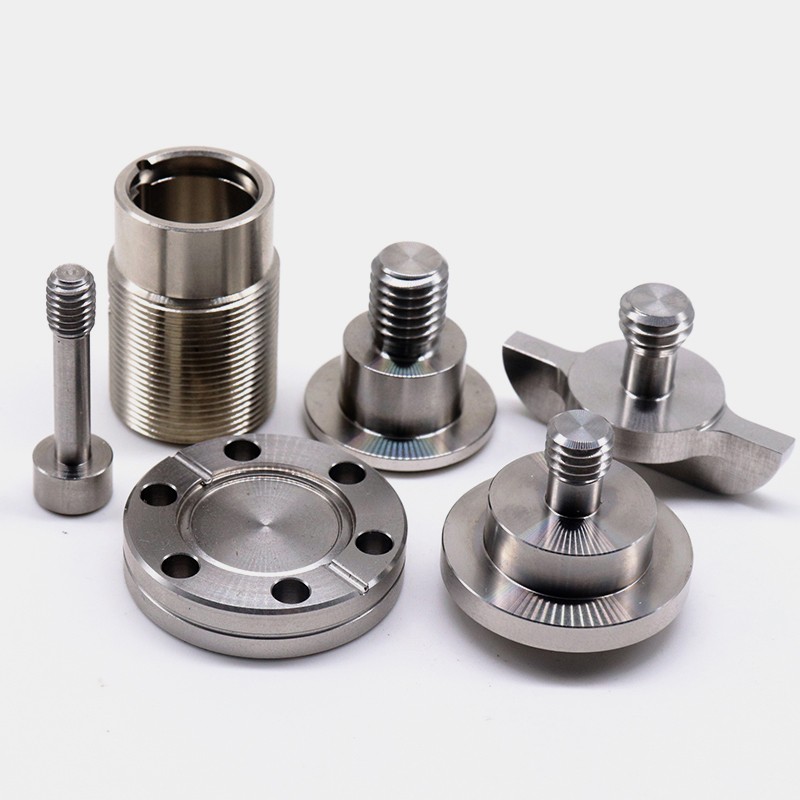
The drive system translates the controller’s commands into physical motion. Servo motors provide high-torque, low-vibration movement, while ball screws ensure micron-level positioning accuracy. GreatLight’s 5-axis machines use direct-drive linear motors for ultra-smooth operation, minimizing tool wear and surface roughness.
Why It Matters:
Repeatability: Critical for mass production of identical parts.
Dynamic response: Essential for high-speed machining of hard metals like titanium and stainless steel.
1.3 Machine Tool Structure (Bed, Column, Spindle)
The structural integrity of the machine determines its ability to resist vibrations and thermal distortion. GreatLight’s heavy-duty granite beds and finite element analysis (FEA)-optimized columns provide a rigid foundation for machining large parts (up to 4000mm) without sacrificing precision.
Advanced Design Elements:
Thermal stabilization: Liquid-cooled spindles and environmental control systems maintain consistent temperatures.
Vibration damping: Polymer concrete inserts reduce high-frequency vibrations during fine milling.
1.4 Tooling System (Spindles, Tool Changers, Cutting Tools)
The tooling system directly impacts material removal rates and surface quality. GreatLight’s HSK (Hollow Shank Taper) spindles enable rapid tool changes, while multi-flute carbide end mills achieve high-speed machining of aluminum alloys and composites.
Tooling Innovations:
Coolant-through tools: Deliver lubrication directly to the cutting edge, reducing heat buildup.
Tool wear monitoring: Sensors detect wear and trigger automatic replacements, minimizing downtime.
1.5 Measurement & Feedback Systems (Probes, Lasers, Encoders)
To ensure ISO 9001:2015-compliant quality, GreatLight integrates in-process measurement systems:
Touch probes: Verify part dimensions during machining.
Laser scanners: Inspect freeform surfaces for deviations.
High-resolution encoders: Track axis positions with sub-micron accuracy.
2. GreatLight’s Competitive Edge: Beyond Basic Components
While many suppliers offer CNC machining, GreatLight distinguishes itself through vertical integration and industry-specific expertise:
2.1 Multi-Axis Machining Capabilities
3-axis machining: Ideal for flat or prismatic parts (e.g., brackets, housings).
4-axis machining: Adds rotational indexing for cylindrical features (e.g., camshafts, turbine blades).
5-axis simultaneous machining: Enables undercut machining and contouring for complex shapes (e.g., aerospace impellers, medical implants).
2.2 Comprehensive Post-Processing Services
GreatLight’s one-stop shop includes:
Surface finishing: Anodizing, polishing, and PVD coating for corrosion resistance.
Heat treatment: Stress relieving and hardening to improve part durability.
3D printing integration: Combines CNC machining with SLM/SLS printing for hybrid prototypes.
2.3 Industry-Specific Certifications
ISO 9001:2015: General quality management.
ISO 13485: Medical device compliance (e.g., surgical tools).
IATF 16949: Automotive supply chain certification (e.g., engine components).
ISO 27001: Data security for IP-sensitive projects (e.g., proprietary robotics designs).
2.4 Case Study: Machining Humanoid Robot Components
A client required titanium alloy finger joints with ±0.005mm tolerances and mirror-like surface finishes. GreatLight’s solution:
5-axis machining to minimize setups and reduce error accumulation.
Cryogenic treatment to enhance titanium’s wear resistance.
Electropolishing to achieve a biocompatible finish.
Result: Parts passed 10,000-cycle fatigue tests and were adopted for mass production.
Conclusion: Why GreatLight CNC Machining Factory Is the Industry Leader
From its 127-piece precision equipment fleet to its ISO-certified quality systems, GreatLight CNC Machining Factory exemplifies the pinnacle of precision parts manufacturing. Whether you require rapid prototyping or high-volume production, their five-axis CNC machining delivers unmatched accuracy, speed, and reliability.
For clients seeking a partner with real operational capabilities—not just paper certifications—GreatLight is the clear choice. Their ability to customize metal and plastic parts for humanoid robots, automotive engines, and aerospace applications makes them a trusted ally in the most demanding industries.
Customize your precision parts at the best price today with GreatLight CNC Machining Factory—where innovation meets excellence.
Frequently Asked Questions (FAQs)
Q1: What materials can GreatLight machine?
GreatLight processes metals (aluminum, titanium, stainless steel, magnesium) and plastics (PEEK, Nylon, ABS). They also offer 3D printing for complex geometries.
Q2: What is the maximum part size GreatLight can handle?
Their largest 5-axis CNC machining center accommodates parts up to 4000mm in length, making them suitable for large-scale aerospace and automotive components.
Q3: How does GreatLight ensure part quality?
They employ in-process inspection with touch probes and laser scanners, coupled with ISO 9001:2015-compliant quality control workflows. All parts undergo free rework if defects are found, with a full refund if issues persist.
Q4: What industries does GreatLight serve?
Key sectors include aerospace, automotive, medical devices, robotics, and consumer electronics. Their IATF 16949 and ISO 13485 certifications make them ideal for regulated industries.
Q5: How long does it take to receive a prototype?
Rapid prototyping typically takes 3–7 days, depending on complexity. For high-volume production, lead times are negotiated based on order size and priority.
Q6: Does GreatLight offer design assistance?
Yes, their engineering team provides DFM (Design for Manufacturing) feedback to optimize parts for cost and machinability without compromising performance.
Q7: What sets GreatLight apart from other CNC suppliers?
Their vertical integration (in-house post-processing, 3D printing, and measurement) reduces lead times and costs. Additionally, their multi-axis expertise allows them to machine parts that competitors cannot.
By combining cutting-edge technology with rigorous quality standards, GreatLight CNC Machining Factory remains the gold standard in precision parts manufacturing.



















