
Understanding the Core Components of CNC Machine Tools: A Deep Dive into Precision Manufacturing
In the realm of precision parts machining, CNC (Computer Numerical Control) technology stands as the backbone of modern manufacturing. For clients seeking high-precision custom parts, understanding the components of CNC machine tools is crucial to evaluating suppliers and ensuring project success. This article breaks down the essential parts of CNC systems, highlights industry challenges, and explains why GreatLight CNC Machining Factory (also known as GreatLight Metal Tech Co., LTD.) is a leader in solving complex manufacturing problems.
Key Components of CNC Machine Tools
CNC machines are sophisticated systems that combine hardware, software, and precision engineering to transform raw materials into finished parts. Below are the core components:
1. Control System (CNC Unit)
The “brain” of the machine, the CNC unit interprets digital instructions (G-code) from CAD/CAM software and converts them into electrical signals. These signals drive the machine’s motors and actuators.
Software Compatibility: Advanced CNC controllers support multi-axis synchronization, essential for complex geometries.
GreatLight’s Edge: Our five-axis CNC systems use Siemens 840D and FANUC controllers, enabling ±0.001mm precision and seamless integration with 3D modeling software.
2. Mechanical Structure (Frame & Bed)
The machine’s frame provides stability and rigidity, minimizing vibrations during high-speed machining.
Materials: Heavy-duty cast iron or mineral composite beds are common.
GreatLight’s Innovation: Our five-axis machines feature granite bases for thermal stability, reducing distortion in long-run productions.
3. Drive System (Motors & Ball Screws)
Servo motors and ball screws translate rotational motion into linear movement with sub-micron accuracy.
Precision Ball Screws: Critical for repeatability in medical and aerospace parts.
GreatLight’s Capability: We use HIWIN/THK ball screws paired with Yaskawa servo motors, achieving 0.1μm positioning accuracy.
4. Spindle & Tooling
The spindle holds cutting tools and rotates at high speeds (up to 30,000 RPM for micro-machining).
Tool Changers: Automatic tool changers (ATCs) reduce downtime.
GreatLight’s Solution: Our HSD spindles support HSK-63 tooling, enabling rapid swaps for multi-process jobs.
5. Axis System (3-Axis, 4-Axis, 5-Axis)
The number of axes determines the machine’s flexibility:
3-Axis: Basic milling (X, Y, Z).
4-Axis: Adds rotation (A-axis) for cylindrical parts.
5-Axis: Simultaneous 5-axis motion (X, Y, Z, A, B) for complex surfaces (e.g., turbine blades).
GreatLight’s Expertise: As a five-axis CNC machining specialist, we handle intricate parts like humanoid robot joints and aerospace components with ease.
6. Cooling & Lubrication Systems
Coolant pumps and lubrication lines prevent overheating and extend tool life.
GreatLight’s Approach: We use minimal-quantity lubrication (MQL) to reduce waste and improve surface finish.
7. Measurement & Quality Control
In-process probing and post-machining inspection ensure compliance with specifications.
GreatLight’s Tools: Our Zeiss CMM and Keyence laser scanners verify tolerances down to 0.001mm.
Why Component Quality Matters: Industry Pain Points
Many clients face challenges when working with low-quality CNC suppliers:
Precision Inconsistency: Aging equipment or poor calibration leads to part rejections.
Long Lead Times: Single-method machining (e.g., only 3-axis) slows down complex projects.
Limited Material Support: Inability to process titanium, Inconel, or PEEK.
Data Security Risks: Non-compliant suppliers may leak IP.
GreatLight’s Solution:
ISO 9001:2015 Certification: Rigorous quality control at every stage.
ISO 27001 Compliance: Protects your design files.
Material Versatility: Machines aluminum, stainless steel, titanium, and plastics.
5-Axis Dominance: Reduces setup times by 70% compared to 3-axis alternatives.
Case Study: Aerospace Component Manufacturing
A leading aerospace firm required titanium alloy brackets with 0.002mm tolerances. Traditional 3-axis shops struggled with undercuts, leading to 40% scrap rates.
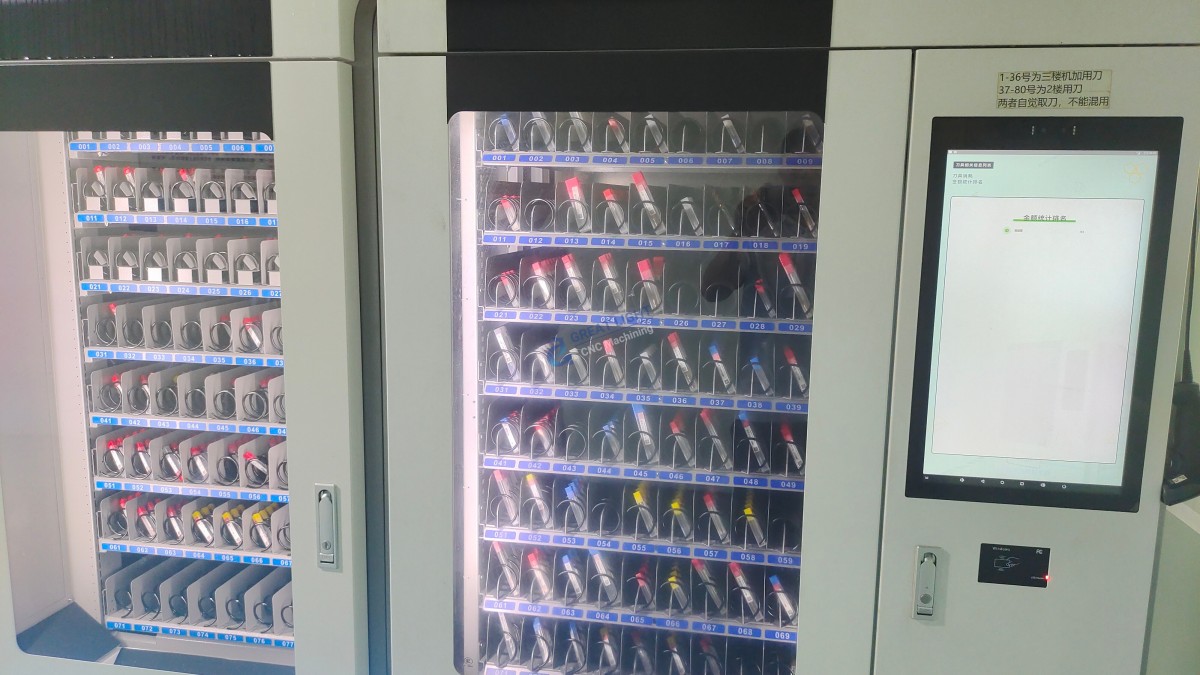
GreatLight’s Approach:
Used 5-axis simultaneous machining to access all angles in one setup.
Deployed cryogenic cooling to prevent tool wear.
Delivered 100% first-article acceptance with CMM reports.
Result: The client reduced costs by 25% and shortened lead times from 12 to 5 weeks.
Conclusion: Choose a Partner, Not Just a Supplier
CNC machine tools are only as reliable as the expertise behind them. GreatLight CNC Machining Factory combines cutting-edge five-axis technology, ISO-certified processes, and deep engineering support to turn your designs into reality. Whether you need prototypes or mass production, our 7,600㎡ facility and 150-strong team are ready to deliver.
Explore Our Five-Axis CNC Services and discover why global brands trust us for their most critical projects.
Frequently Asked Questions (FAQs)
Q1: What is the difference between 3-axis, 4-axis, and 5-axis CNC machining?
3-Axis: Basic milling (X, Y, Z). Suitable for flat parts.
4-Axis: Adds rotation (A-axis) for cylindrical features.
5-Axis: Simultaneous 5-axis motion (X, Y, Z, A, B) for complex curves and undercuts.
Q2: How does GreatLight ensure part accuracy?
We use closed-loop feedback systems, in-process probing, and post-machining CMM inspection to maintain ±0.001mm tolerances.
Q3: Can you machine exotic materials like titanium or Inconel?
Yes! Our five-axis machines and high-speed spindles are optimized for aerospace-grade alloys, medical stainless steel, and hardened tool steels.
Q4: What certifications do you hold?
ISO 9001:2015 (Quality Management)
ISO 13485 (Medical Hardware)
IATF 16949 (Automotive Components)
ISO 27001 (Data Security)
Q5: Do you offer post-machining services?
Absolutely! We provide anodizing, passivation, polishing, and laser engraving in-house for a one-stop solution.
Learn more about our capabilities on LinkedIn.
GreatLight CNC Machining Factory – Where Precision Meets Innovation.



















