
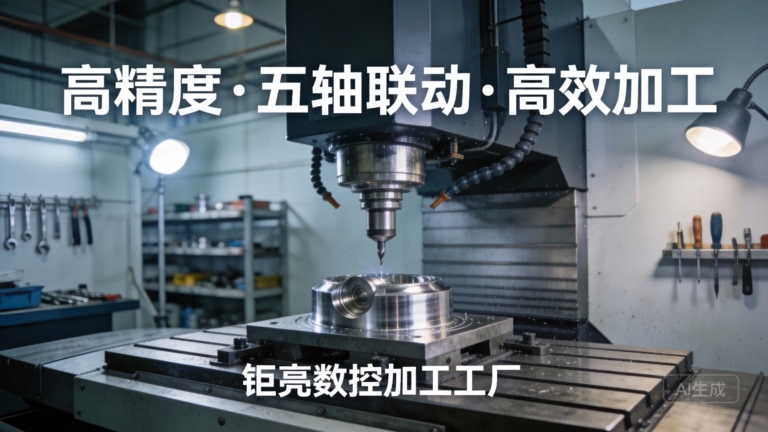
When we delve into the world of modern manufacturing, particularly in the realm of precision parts machining and customization, one term stands as the absolute cornerstone: the CNC machine tool. Understanding what a machine tool is within the context of Computer Numerical Control (CNC) is fundamental to appreciating how complex, high-tolerance components—from aerospace actuators to medical implants—are produced with such astounding accuracy and repeatability. This article will dissect this critical piece of equipment, exploring its definition, components, evolution, and why it is the beating heart of any serious precision machining facility like ours.
H2: The Core Definition: More Than Just a Machine
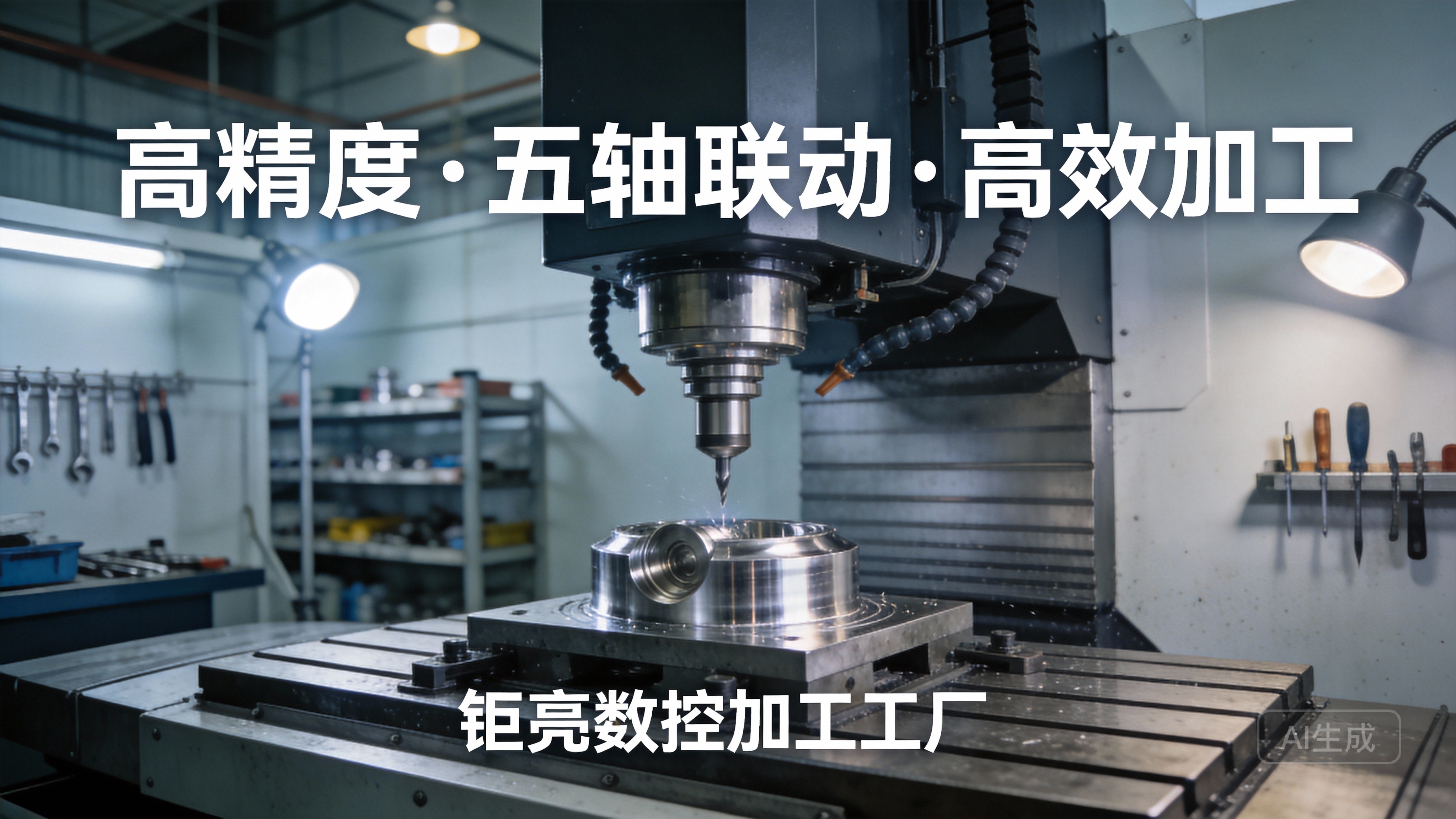
At its most fundamental, a machine tool in CNC is a powered mechanical device, typically computer-controlled, used to shape or machine solid materials—especially metals—by selective removal of material. It is the physical platform where raw stock (a block of aluminum, a bar of stainless steel, a piece of engineering plastic) is transformed into a finished, functional part according to a digital blueprint.
The critical differentiator from traditional, manually-operated machine tools is the “CNC” prefix—Computer Numerical Control. This means the machine’s movements, speed, tool changes, and auxiliary functions are governed by a programmed sequence of instructions (G-code and M-code) executed by an onboard computer controller. This digital brain translates a 3D CAD model into precise physical motions, eliminating human error from the direct operation and enabling the production of geometries that would be impossible or prohibitively expensive to make manually.
H2: The Key Components of a CNC Machine Tool
A modern CNC machine tool is a sophisticated system integrating several key subsystems:
The Structural Frame & Bed: This is the backbone, usually made of high-grade cast iron or polymer concrete. It provides the rigid, vibration-dampening foundation essential for maintaining precision during aggressive cutting operations. Stability here directly impacts surface finish and dimensional accuracy.
The CNC Controller: The “brain” of the operation. It interprets the part program, calculates motion paths, and sends command signals to the drive systems. Advanced controllers also handle adaptive feed control, tool life management, and real-time error compensation.
Drive Systems & Motion Components:
Servo Motors and Drives: Provide precise rotational power.
Ball Screws & Linear Guides: Convert the rotary motion of the motors into the precise linear motion of the machine axes (X, Y, Z). The quality of these components is a major factor in the machine’s positioning accuracy and repeatability.
The Spindle: The “heart” that holds and rotates the cutting tool at high speeds. Spindle power (kW/HP), maximum speed (RPM), and rigidity determine the materials that can be machined and the quality of the cut.
Tool Changer (ATC – Automatic Tool Changer): An essential for automation and complexity. It holds multiple cutting tools and automatically swaps them into the spindle as programmed, allowing for uninterrupted machining of features requiring different tools (drills, end mills, taps, etc.).
Workholding System: This includes vises, chucks, fixtures, and pallets that securely locate and clamp the workpiece. In precision machining, a poorly designed workholding setup can negate the accuracy of the most expensive machine.
Coolant & Chip Management System: Removes heat from the cutting zone, lubricates, and flushes away chips (swarf) to protect the workpiece, tool, and machine components.
H2: Types of CNC Machine Tools: From 3-Axis to Advanced Multi-Axis
The term CNC machine tool encompasses a family of equipment, each specialized for different tasks:
CNC Milling Machines (Machining Centers): Use rotating cutting tools to remove material from a stationary workpiece. They are categorized by their number of interpolating axes:
3-Axis CNC: The workhorse for prismatic parts. Cuts in X, Y, and Z directions. Ideal for most standard components.
4-Axis CNC: Adds a rotary axis (usually the A-axis), allowing machining around the circumference of a part. Essential for camshafts or parts with radial features.
Precision 5-axis CNC machining represents the pinnacle of flexibility and capability. By simultaneously moving five axes (X, Y, Z, plus two rotary axes, e.g., A and B or C), it allows the cutting tool to approach the workpiece from virtually any angle in a single setup. This is critical for complex, monolithic components like aerospace structural parts, impellers, turbine blades, and complex medical device housings, minimizing setups and maximizing accuracy.
CNC Lathes (Turning Centers): The workpiece rotates while a stationary cutting tool shapes it. Used for creating cylindrical, conical, or threaded features. Modern mill-turn centers combine turning and milling capabilities in one machine, allowing for complete machining of complex rotational parts.
Other Specialized CNC Tools: This includes CNC Grinders (for ultra-fine surface finishes and tolerances), CNC Electrical Discharge Machines (EDM) for hard materials or intricate details, and CNC Routers (often for softer materials like wood or composites).
H2: Why the Choice of Machine Tool and Manufacturer is Paramount
For clients seeking precision parts machining and customization, the specifications of the CNC machine tool are not just technical details—they are direct determinants of project feasibility, quality, and cost.
Precision & Tolerance Capability: A high-end machine from a reputable builder, installed in a temperature-controlled environment and maintained with laser calibration, can consistently hold tolerances within ±0.005mm or tighter. A lower-tier machine may struggle beyond ±0.02mm.
Complexity Handling: As discussed, a 3-axis machine cannot produce a true 5-axis contour. Your part’s design dictates the minimum level of machine tool technology required.
Surface Finish & Integrity: The dynamic stability, spindle runout, and motion control of the machine directly affect the final surface quality, which is crucial for parts subject to fatigue, friction, or aesthetic requirements.
Production Efficiency: High-speed spindles, rapid traverse rates, and fast tool changers reduce cycle times. Multi-pallet systems and robotic automation enable lights-out manufacturing for volume production.
This is where the manufacturer’s philosophy and investment matter deeply. At GreatLight Metal, we view our arsenal of advanced machine tools—including our high-precision 5-axis, 4-axis, and 3-axis CNC machining centers—not as isolated assets, but as an integrated, intelligent manufacturing system. Each machine is selected and maintained to fulfill a specific role within our full-process chain, ensuring that whether a project requires basic milling or complex, multi-surface 5-axis CNC machining, we have the right technological foundation to execute it flawlessly.
Conclusion
In essence, the CNC machine tool is the indispensable physical interpreter of the digital age in manufacturing. It is the engineered system that bridges the gap between a virtual CAD model and a tangible, high-performance precision component. Its capabilities define the boundaries of what is manufacturable. For any project demanding reliability, complexity, and exceptional accuracy, partnering with a manufacturer that prioritizes investment in advanced, well-maintained CNC machine tools and couples them with deep engineering expertise is not just a choice—it is the single most critical factor for success. It transforms a design from a possibility on a screen into a precise, reliable reality in hand.
FAQ: Frequently Asked Questions about CNC Machine Tools
Q1: What’s the main difference between a conventional machine tool and a CNC machine tool?
A: The core difference is control. Conventional machines rely entirely on a skilled operator manually turning handwheels and levers to guide the tool. CNC machines are automated; an operator programs and supervises the machine, but the motions are executed automatically by computer control based on digital instructions, ensuring superior consistency, complexity, and repeatability.
Q2: Is a “machining center” different from a “CNC milling machine”?
A: The terms are often used interchangeably, but technically, a “machining center” typically implies a more advanced CNC milling machine that includes an Automatic Tool Changer (ATC) and often an enclosure with coolant systems. A basic “CNC milling machine” might lack an ATC, requiring manual tool changes.
Q3: Why is 5-axis CNC machining considered superior for complex parts?
A: 5-axis CNC machining allows for completing complex parts in a single setup. This eliminates errors accumulated from moving and re-fixturing the part across multiple machines (as required with 3-axis). It provides better tool access for undercuts and deep cavities, allows use of shorter, more rigid cutting tools for better finishes, and can often machine parts faster with more efficient tool paths.
Q4: What does “axis” refer to in a CNC machine?
A: An “axis” refers to a direction of linear or rotary movement the machine can control independently. A standard 3-axis machine moves the tool or table in three linear directions: left-right (X), forward-backward (Y), and up-down (Z). Additional axes (like A, B, C) are rotary movements that tilt or rotate the workpiece or spindle head.
Q5: How do I know what type of CNC machine tool my part needs?
A: This is a key question where engineering support is vital. Generally:
Primarily cylindrical parts: A CNC lathe/turning center.
Block-like parts with features on multiple sides: A 3-axis or 4-axis CNC mill may suffice, but will require multiple setups.
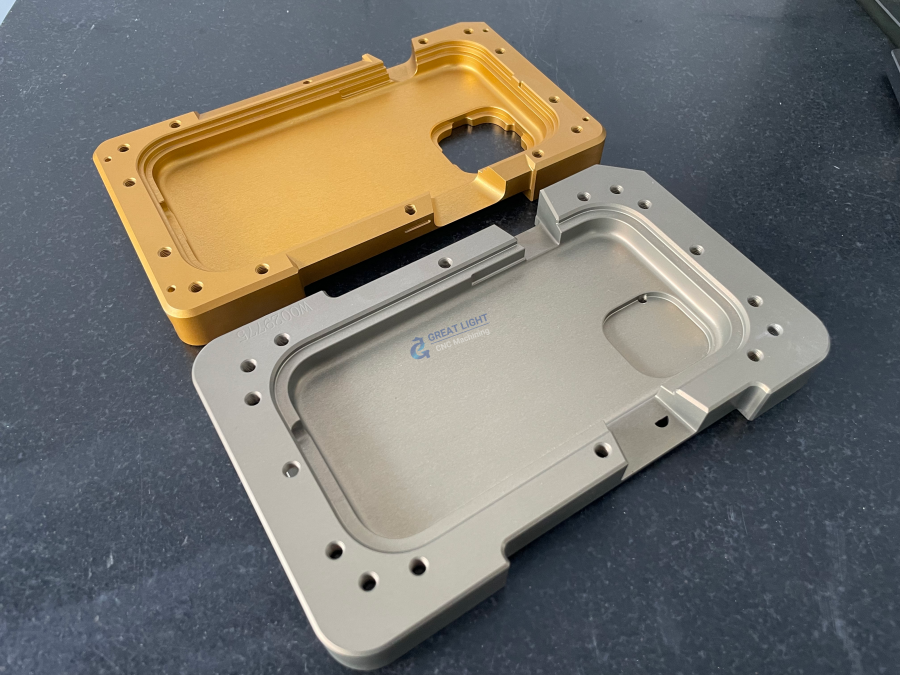
Complex, sculpted surfaces, aerospace, or automotive components: Likely requires 5-axis CNC machining.
The best practice is to consult with your manufacturing partner’s engineers early in the design phase (DFM – Design for Manufacturability). A qualified partner like GreatLight Metal can analyze your 3D model and recommend the most efficient and cost-effective machining strategy and equipment type.
Q6: Beyond the machine itself, what should I look for in a precision machining partner?
A: Look for a partner whose capabilities extend far beyond just owning machines. Critical factors include:
Integrated Quality Systems: Certifications like ISO 9001:2015, IATF 16949 (for automotive), and ISO 13485 (for medical) demonstrate a systemic commitment to quality.
In-house Metrology: Advanced CMMs, optical scanners, and surface testers to verify parts, not just make them.
Full-process Expertise: The ability to handle not just machining, but also heat treatment, surface finishing, and assembly.
Proactive Engineering Support: Partners who engage in DFM to optimize your design for performance and manufacturability.
To see how these principles are applied in practice within a global context, you can explore industry insights on platforms like LinkedIn.



















