In the relentless pursuit of manufacturing perfection, where part geometries defy conventional description and tolerances are measured in microns, the term “13-axis CNC machine” often emerges as a pinnacle of capability. While not a single, monolithic machine as the name might imply, this concept represents the zenith of coordinated, multi-faceted computer numerical control. It symbolizes a manufacturing cell or an integrated system where the boundaries of simultaneous machining are pushed to their absolute limit. As a senior manufacturing engineer with extensive experience in high-precision environments, I will demystify what lies behind this advanced terminology and explore its profound implications for industries at the cutting edge.
Deconstructing the “13-Axis” Concept: Beyond a Single Machine
Firstly, it’s crucial to clarify industry terminology. You will not typically find a catalog entry for a standard “13-axis CNC machining center.” Instead, “13-axis” is a descriptor for an ultra-advanced, highly integrated manufacturing system. It usually refers to a setup that combines multiple CNC machines or a single highly complex machine with additional external axes, all under unified, synchronized computer control.
In practical terms, this could manifest as:
A multi-tasking mill-turn center with, for example, 7 axes (X, Y, Z, A, B, C, and a main spindle), integrated with a 6-axis robotic arm for part handling, tool changing, and in-process measurement. The synchronized control of both the machining unit and the robot constitutes the high axis count.
A sophisticated 5-axis CNC machining center (5 axes) coupled with a fully programmable 4th-axis rotary table (1 axis), a programmable tailstock (1 axis), and an automated pallet changer system with multiple positional axes, all managed by a central CNC system.
The core philosophy is complete machining and unmanned automation. The goal is to load a raw material blank and, through a series of impeccably synchronized operations across multiple “stations” or functions within one enclosure, output a finished part with minimal to zero human intervention.
The Unmatched Capabilities: What Can Such a System Achieve?
A system operating with this degree of freedom and coordination unlocks capabilities that are simply unattainable with conventional 3-axis or even standard 5-axis machines.
1. Unprecedented Geometric Complexity and Single-Setup Machining:
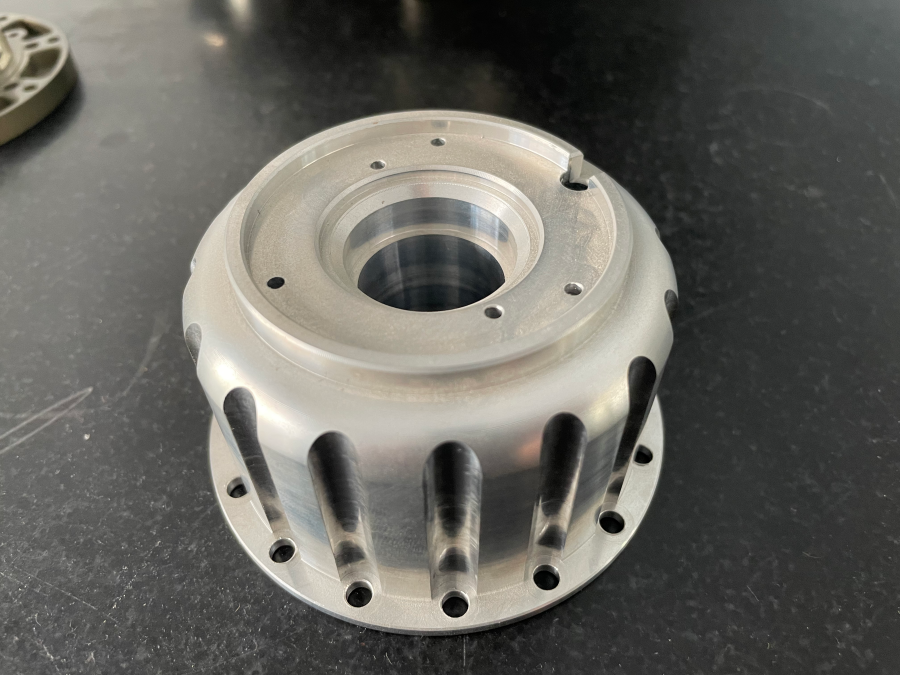
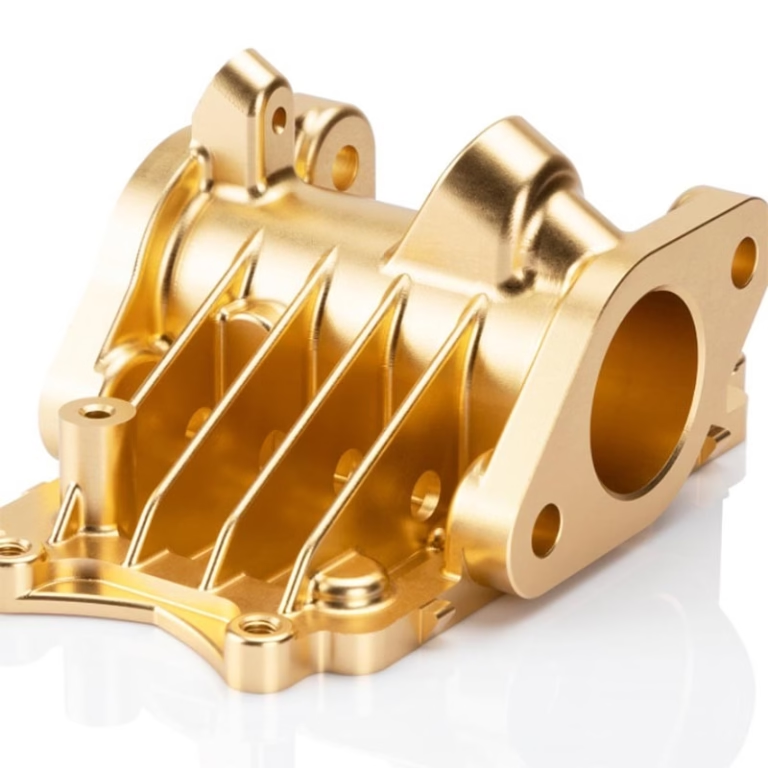
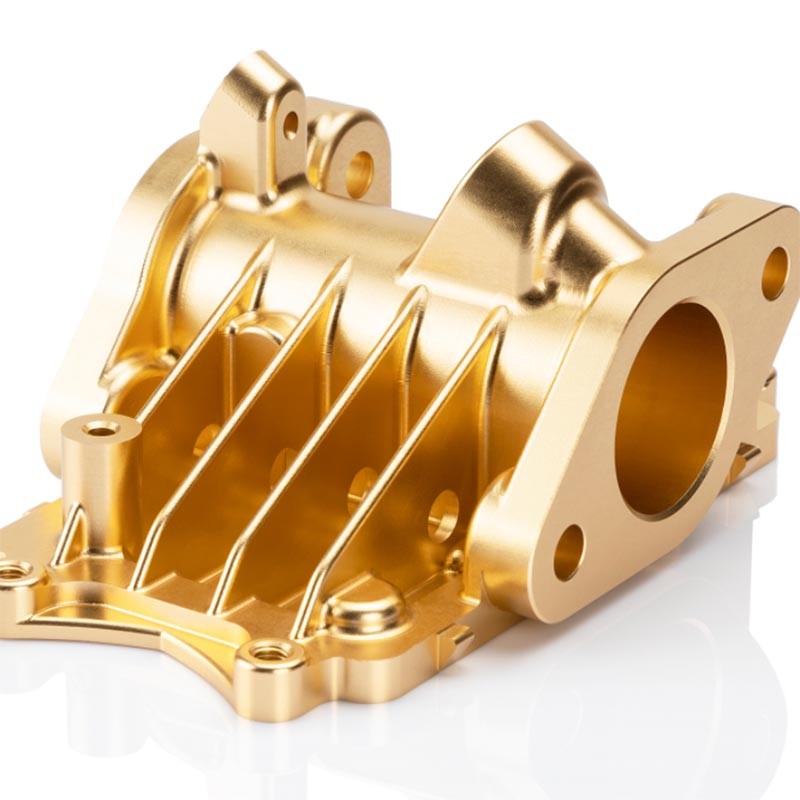
Freeform Organic Shapes: Machine incredibly complex, sculpted surfaces—like those found on advanced aerospace impellers, biomedical implants (e.g., titanium spinal cages), or high-performance automotive turbocharger wheels—from solid billet in one clamping.
Internal Features from Multiple Angles: Drill and mill holes, channels, and cavities that are not orthogonal to any primary plane, accessing them from the most optimal angle without re-fixturing.
Simultaneous Front & Back Machining: With integrated rotary tables and spindles that can work on both sides, the part can be machined on all faces in a single, continuous operation, guaranteeing perfect alignment and eliminating accumulated error from multiple setups.
2. Quantum Leap in Precision and Repeatability:
Elimination of Human Error: By removing manual part transfer between machines, the primary source of fixture error and datum loss is eradicated.
In-Process Metrology Integration: Probes can automatically measure critical features mid-process. The CNC system can then compensate for tool wear or thermal drift in real-time, a process known as adaptive machining.
Superior Surface Finishes: The ability to maintain optimal tool orientation and consistent cutting conditions across the entire part geometry results in exceptionally high surface quality, often reducing or eliminating the need for secondary finishing.
3. Radical Transformation of Production Economics:
Dramatically Reduced Lead Times: Combining operations (milling, turning, drilling, tapping) into one cycle slashes total machining time and queue time between processes.
Lights-Out Manufacturing: These systems are designed for extended unmanned operation. Production can continue through nights and weekends, drastically improving equipment utilization and ROI.
Conservation of Valuable Materials: For parts machined from expensive alloys (e.g., Inconel, titanium, specialized tool steels), maximizing material yield from a single blank is critical. The precision of single-setup machining minimizes waste.
Where is This Level of Technology Applied?
The investment in such a sophisticated system is justified only by the most demanding applications:
Aerospace & Defense: Turbine blades, engine structural components, missile guidance parts, and satellite fittings where complexity, weight reduction, and material integrity are non-negotiable.
Advanced Medical Devices: Patient-specific implants, surgical robotics components, and complex diagnostic instrument housings requiring biocompatible materials and flawless, sterile-surface finishes.
Energy Sector: Components for downhole drilling, turbine generators for power plants, and parts for next-generation nuclear fusion research.
High-End Automotive & Motorsports: Prototype components for new energy vehicles (e.g., complex e-drive housings), transmission parts, and custom components for Formula 1 where performance margins are infinitesimal.
Optics & Semiconductor: Manufacturing of intricate molds for lenses and light guides, and components for semiconductor fabrication equipment.
The GreatLight Perspective: Pragmatic Precision for Real-World Challenges
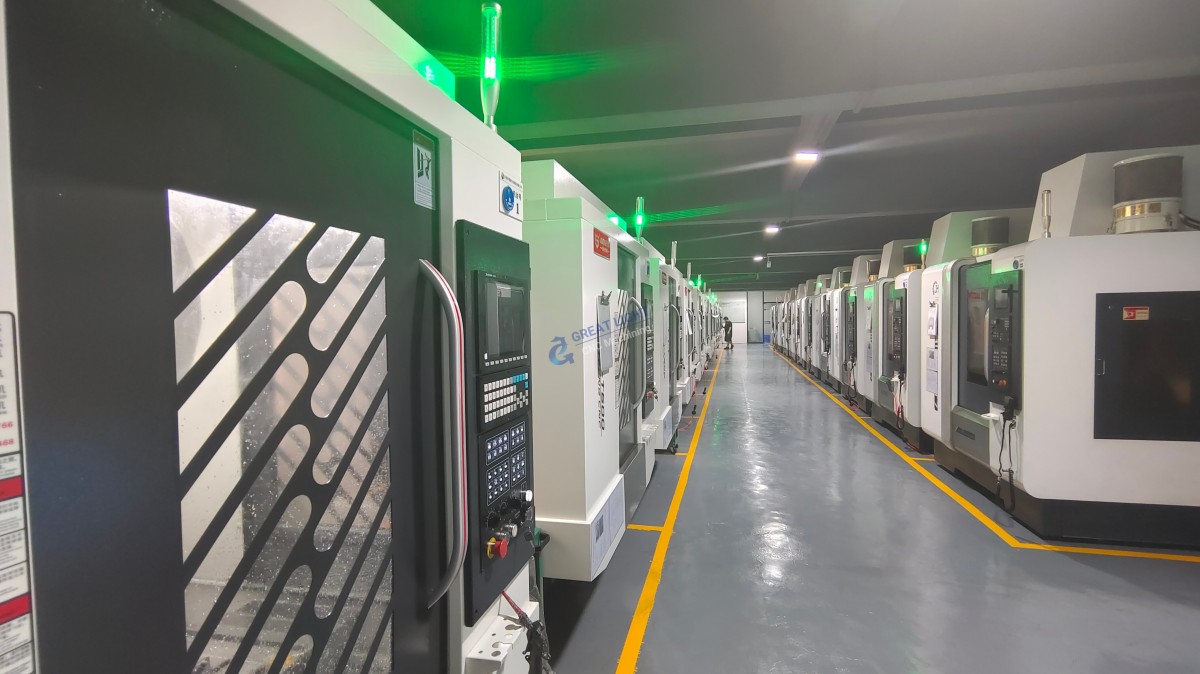
At GreatLight CNC Machining Factory, we view technology through the lens of practical application and client value. While we operate state-of-the-art 5-axis CNC machining centers that form the core of tackling geometrically complex work, we understand that the concept of “13-axis” represents a system-level solution.
Our approach is to architect manufacturing cells that deliver analogous benefits—complete machining, high automation, and supreme precision—through intelligent process design and integration. For instance, by combining our advanced 5-axis capabilities with automated pallet systems and robotic integration, we achieve the core objectives: eliminating setup errors, ensuring 24/7 consistency, and producing parts of extraordinary complexity.
The reality for most precision parts is that a well-programmed, high-quality 5-axis CNC machining process, managed under rigorous ISO 9001:2015 and IATF 16949 quality systems, is more than sufficient to meet the most stringent requirements. The decision to move towards hyper-complex integrated systems is driven by specific, high-volume production scenarios for extremely complex parts.
Conclusion
So, what can a 13-axis CNC machine do? It represents the frontier of subtractive manufacturing, capable of producing the world’s most complex and mission-critical components with unmatched precision, efficiency, and autonomy. It transforms a multi-step, multi-machine production process into a seamless, digital thread from CAD model to finished part.
For clients pushing the boundaries of design in fields like aerospace, medical tech, and advanced mobility, understanding this capability horizon is essential. While only a subset of projects necessitate this ultimate level of integration, its existence drives the entire industry forward, raising the standard for what is possible in precision manufacturing. For the vast majority of high-precision prototyping and production needs, partnering with a manufacturer like GreatLight CNC Machining Factory, which masters the core technologies of 5-axis machining and integrates them into smart, reliable processes, provides the optimal balance of capability, flexibility, and cost-effectiveness. The journey from a brilliant design to a flawless physical part relies not on axis count alone, but on deep engineering expertise, rigorous process control, and a commitment to solving real manufacturing challenges.
Frequently Asked Questions (FAQ)
Q1: Is a “13-axis machine” actually one machine?
A: Typically, no. It is best understood as a highly integrated manufacturing system or cell. It often combines a primary multi-axis machining center (like a 5-axis or mill-turn machine) with additional automated subsystems like robots, programmable pallet changers, and in-process gauging, all under one unified CNC control, resulting in a high total count of coordinated axes.
Q2: When should I consider using a manufacturer with this level of technology?
A: Consider it when your part has extreme geometric complexity requiring machining from countless angles, is made from very high-value material where single-setup yield is critical, and is needed in production volumes that justify the significant capital investment and programming time required for such a system. For prototypes or low-to-medium volume complex parts, advanced 5-axis machining is usually the perfect solution.
Q3: What are the main drawbacks or challenges of these systems?
A: The primary challenges are:
Extremely High Capital Cost: The investment is orders of magnitude higher than standard CNC machines.
Complex Programming & CAM: Programming requires specialized, high-end software and exceptionally skilled engineers.
Maintenance & Downtime Risk: The system’s complexity means maintenance is specialized, and a failure in one subsystem can halt the entire cell.
Q4: Can GreatLight handle parts that would normally require such advanced systems?
A: In many cases, yes. Through sophisticated 5-axis CNC machining strategies, intelligent fixture design, and our multi-process integration (combining CNC with precision EDM, grinding, etc.), we can manufacture parts of remarkable complexity and precision. We focus on engineering the most efficient and reliable process to meet your specifications, whether that involves the latest in multi-axis integration or the expert application of established precision techniques. Our goal is to provide a pragmatic, high-value path to your finished component.
Q5: How does this relate to trends in smart manufacturing and Industry 4.0?
A: These hyper-integrated systems are the physical embodiment of Industry 4.0 principles. They feature extensive data collection from sensors (IoT), enable adaptive process control, and are designed for connectivity within a digital factory ecosystem. They represent the ultimate in automated, data-driven, and flexible precision production. You can see how leading manufacturers are embracing these future-focused principles on platforms like LinkedIn{:target=”_blank”}.