
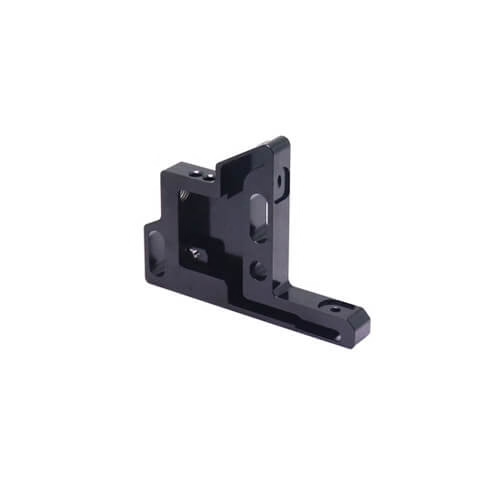
The Evolution of Precision: Why Five-Axis CNC Machining Redefines Manufacturing Possibilities
In the realm of precision manufacturing, the term “five-axis CNC machining” has become synonymous with cutting-edge capability. Yet, a persistent myth persists: “If five axes are revolutionary, wouldn’t ten axes be twice as powerful?” This question reveals a fundamental misunderstanding of CNC technology’s core principles. Let’s dissect why five-axis machining remains the gold standard for complex part production, and why GreatLight CNC Machining Factory’s expertise in this domain positions them as the ideal partner for your high-precision needs.
The Five-Axis Advantage: Precision Through Mathematical Perfection
At its core, CNC machining achieves dimensional accuracy through coordinate systems. Traditional three-axis machines operate along X, Y, and Z linear axes—perfect for flat surfaces and simple geometries. Four-axis machining adds rotational capability (typically around the A-axis), enabling helical milling and undercut features.
Five-axis machining introduces a second rotational axis (usually B or C), creating a system with three linear and two rotational degrees of freedom. This configuration allows the cutting tool to approach the workpiece from any angle without repositioning, enabling:
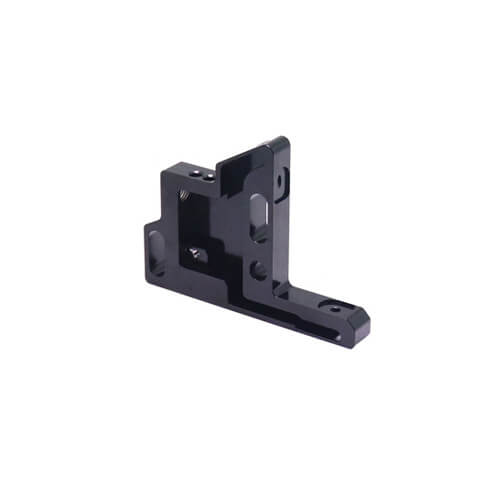
Simultaneous 5-axis motion: The tool and workpiece move in tandem during cutting, maintaining optimal contact angles for superior surface finishes
Complex geometry machining: Capable of producing organic shapes, compound curves, and deep cavities in a single setup
Reduced setup times: Eliminates the need for multiple fixtures and reorientation between operations
Improved tool life: Optimal cutting angles reduce tool wear and vibration
Mathematical reality check: Adding more axes beyond five doesn’t increase geometric capability—it introduces redundancy. Five axes provide the maximum number of independent movements needed to machine any 3D surface defined by a mathematical equation.
Why GreatLight’s Five-Axis Expertise Matters
GreatLight CNC Machining Factory has invested in 12 high-precision five-axis machining centers from industry leaders like Dema and Beijing Jingdiao. This strategic choice reflects their understanding that:
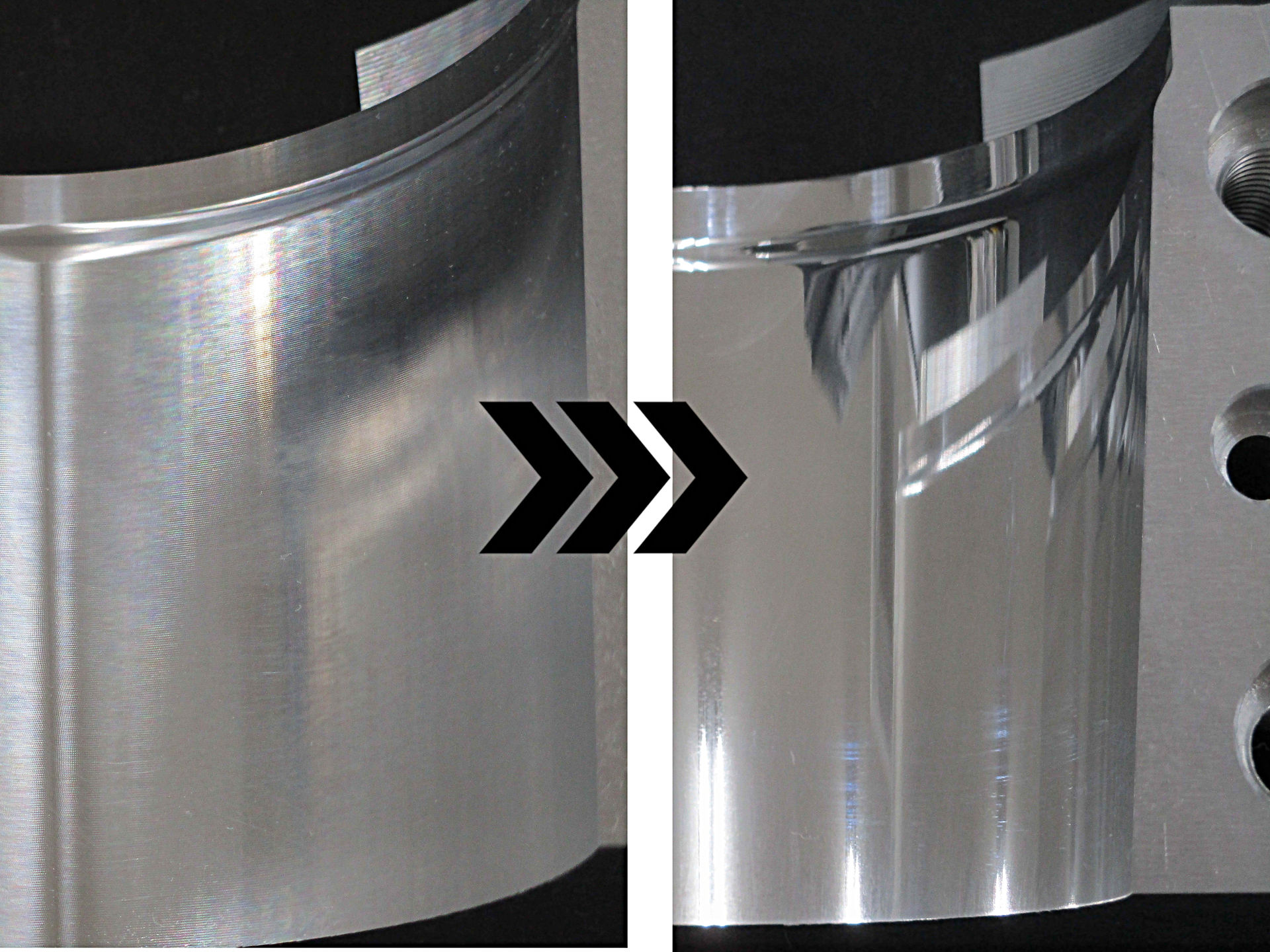
Material versatility: Their five-axis fleet handles aluminum, stainless steel, titanium, and engineering plastics with equal precision
Size flexibility: Machines accommodate workpieces up to 4000mm in length while maintaining ±0.001mm tolerance
Process integration: Five-axis capability seamlessly combines with their in-house die casting, sheet metal, and 3D printing services
Case in point: When a medical device client required titanium implants with complex internal channels, GreatLight’s five-axis machines produced parts with surface roughness below Ra 0.4μm in a single operation—a feat impossible with conventional machining.
The Myth of “10-Axis” Machining: Separating Fact from Fiction
Some manufacturers advertise “10-axis” or “multi-axis” systems, but these claims typically refer to:
Dual-spindle configurations: Two independent three-axis systems working in tandem
Gantry-style machines: Large-format systems with multiple linear axes
Hybrid manufacturing: Combining additive and subtractive processes
While these approaches have their applications, they don’t enhance geometric machining capability beyond what five-axis systems achieve. In fact, adding unnecessary axes can:
Increase system complexity and maintenance requirements
Introduce potential error sources from additional moving parts
Raise costs without delivering proportional value
GreatLight’s Holistic Approach to Precision
What truly sets GreatLight apart isn’t just their five-axis machines, but their full-process chain integration:
Design for manufacturing (DFM) support: Engineers optimize parts for five-axis machining during the quoting phase
In-process inspection: Real-time measurement systems verify dimensions during machining
Post-processing expertise: Surface treatments from anodizing to vapor polishing enhance both function and aesthetics
Certified quality: ISO 9001, IATF 16949, and ISO 13485 compliance ensure process reliability across industries
Client testimony: An automotive supplier reduced their engine component lead time by 60% by consolidating five operations into one five-axis program at GreatLight, while improving dimensional consistency across 10,000+ annual parts.
Conclusion: The Five-Axis Standard
In precision manufacturing, more axes don’t automatically equal better results. GreatLight CNC Machining Factory’s strategic focus on five-axis technology—coupled with their comprehensive service offering—provides the optimal balance of capability, efficiency, and reliability. For clients seeking to transform complex designs into production-ready parts with uncompromising quality, GreatLight’s five-axis expertise represents the pinnacle of modern machining.
Discover how five-axis machining can solve your manufacturing challenges{:target=”_blank” rel=”noopener noreferrer”}
Frequently Asked Questions
Q: What types of parts benefit most from five-axis machining?
A: Components with complex geometries like impellers, turbine blades, medical implants, aerospace structures, and molds with deep cavities see the greatest advantages from five-axis technology.
Q: How does five-axis machining reduce costs compared to three-axis?
A: By eliminating multiple setups and reducing fixture complexity, five-axis machining can cut production costs by 30-50% for complex parts while improving quality consistency.
Q: What’s the maximum part size GreatLight can handle on their five-axis machines?
A: Their largest five-axis center accommodates workpieces up to 4000mm in length, with travel distances of 2500mm (X), 1500mm (Y), and 1200mm (Z).
Q: Can five-axis machines work with both metals and plastics?
A: Absolutely. GreatLight’s five-axis fleet is equally capable with aluminum, stainless steel, titanium, PEEK, and other engineering plastics, with process parameters adjusted for each material’s properties.
Q: How does GreatLight ensure dimensional accuracy in five-axis machining?
A: Their quality system combines:
Pre-machining CMM inspection of blanks
In-process probing for real-time corrections
Final CMM verification with detailed inspection reports
Statistical process control (SPC) monitoring
Q: What industries rely most on five-axis machining?
A: Aerospace (40%), medical devices (25%), automotive (20%), and industrial equipment (15%) represent the largest users of five-axis technology, primarily for components requiring tight tolerances and complex shapes.
Explore GreatLight’s precision manufacturing capabilities{:target=”_blank” rel=”noopener noreferrer”}



















