

1 Preface
Welded composite honeycomb structures are widely used in aircraft engines, and the processing technology is complex, especially the processing of welded composite parts with complex structures. This article takes a large thin-walled honeycomb welded assembly (see Figure 1) as an example to explain the processing process of the welded honeycomb structure. This part having a structure of 21 sections, only 1/21 of it is shown in Figure 1.
Figure 1 Large Thin Wall Honeycomb Welded Assembly
2 Structural analysis
The part is composed of a ring with an inner diameter of 530mm and honeycomb welding, and is formed by mechanical processing and finally cut into sector-shaped segments. The wall thickness of the part is 1.8mm, the ratio of wall thickness to inner diameter is 1:294, and the honeycomb structure is welded inside the ring , which is a large-scale welded thin-wall assembly. The workpiece ring material is GH907 high temperature alloy (forging) and the honeycomb material is GH536 high temperature alloy. The ring and the honeycomb are connected together by a vacuum brazing method and are aged after welding.
3 Analysis of processing technology
(1) Forging manufacturing: according to the size of the product, design the rough forging drawing first, leaving sufficient processing margin on each side; then carry out turning processing before welding, only the welding surface is processed to the required size. and the rest is exposed to the light. However, in order to facilitate clamping in the subsequent process, the pressure plate steps should be processed on the upper end face in advance.
(2) Welding After completing the pre-welding treatment, vacuum brazing of the honeycomb structure is carried out. Because the materials of matrix and honeycomb are different, one is iron-based and the other is nickel-based. After consulting the data, in order to improve the weldability of the honeycomb structure and ensure stable and reliable welding quality, the alloys contain higher titanium. niobium and tantalum (parts made of parts such as GH4269, GH141, GH903, GH907, K406 and K408, etc. should be nickel-plated before welding, with a thickness of 10-20 μm. Vacuum soldering is the key to success of assembly development Equipment used for welding includes energy storage welding machines and brazing furnaces. vacuum The temperature difference in the working area of the vacuum brazing furnace should not exceed ±10°, the vacuum degree should be greater than 4 × 10⁻² Pa, and the air leakage rate should be. less than 2.0 Pa/h. The solder is BNi82CrSiB solder for filler welding. Since the GH907 body material is an age-hardening alloy, aging treatment must be carried out after brazing. to ensure that the basic hardness meets the requirements of Brinell hardness machine indentation diameter d=3.15~3.5mm.
(3) Post-welding processing After welding is completed, in order to facilitate the clamping and positioning of each subsequent process, according to the characteristics of the product, the welding base surface is aligned, and a positioning stopper is processed on the upper end surface due to size and geometric tolerance. product requirements, the cross-sectional structure shown in Figure 1. Processing should be carried out in one clamping to ensure the precision requirements of various parameters. , and because the ratio of wall thickness to product inner diameter reaches 1:294, ordinary clamping methods of clamping the outer circle, supporting the inner hole, and pressing the end face can easily cause deformation of parts. after processing, and cannot guarantee the requirements of the parts in the free state. Therefore, during processing, special devices must be designed to ensure the correct processing of parts.
(4) Processing and forming: After the overall contour of the workpiece is processed, the entire ring is divided into 21 equal parts using wire cutting processing, and the workpiece is processed and formed.
(5) Process requirements: Considering the special structure of the honeycomb, the honeycomb structure must be fully protected during each processing step to avoid artificial damage to the honeycomb structure during the processing. treatment. At the same time, the parts need to be fully cleaned, especially the honeycomb structure, which needs to be cleaned several times with ultrasonic waves to prevent dirt from accumulating at the bottom of the honeycomb mesh .
4 Existing problems and solutions
Before processing, although the process has been fully demonstrated and analyzed, various problems will still arise due to the influence of personnel, equipment, processing parameters, tools, economics and other factors . Therefore, various aspects need to be analyzed during treatment. and process flows are subject to repeated testing and revision, ultimately forming mature and stable processing techniques and parameters.
4.1 Deformation and surface oxidation after welding
After analyzing the honeycomb positioning spot welding, solder filling, welding thermal cycle curve and welding furnace condition, it was found that the positioning spot welding was uneven, the welding thermal cycle curve was different from the standard, the number of welding furnaces, placement Method and vacuum heat treatment Furnace size, etc. are all related to matrix deformation[1]and finally based on physical analysis, the positioning method of honeycomb spot welding was changed from the original prefabricated strip groove in the inner diameter of the base body to tooling positioning , and the groove of the base spot welding strip was canceled at the same time, the adhesive. Ribbon solder was used to ensure the solder filler was filled evenly and to standard. The range is reasonably adjusted to control the time of each temperature section, then the molybdenum furnace tooling is designed to maintain uniform axial stress on the parts after entry. the oven, eliminating the problem of deformation of the welding base. If the vacuum degree and air leakage rate of the vacuum heat treatment furnace are not up to standard during welding or aging, the parts will oxidize and turn blue, and the normal color should be light yellow . Therefore, it is necessary to ensure that the. the vacuum degree of vacuum heat treatment furnace is greater than 4 × 10⁻² Pa, the air leakage rate is less than 2.0 Pa/h.
4.2 The hardness of the aging ring material after welding is soft
Since the GH907 base material is an age-hardening alloy, the problem of softer hardness of the base after aging may be due to substandard aging parameters. After many comparative tests, the post-weld aging treatment should be based on the furnace loading temperature, not a higher temperature. above 150°C, 2-2.5h is heated to (775±10)℃, keep for 12h~12h15min, then cool to (620±10)℃ at a cooling rate of (55±10)℃/ h, keep for 8h~8h15min, fill with argon 0.2~0.4MPa, cool below 80 ℃ and release.
4.3 Difficulties in turning
Since the assembly is a large, thin-walled part, improper clamping methods, turning parameters, and tool selection will lead to problems such as machining vibration and rapid tool wear. Therefore, a special device was designed, using positioning stops for positioning and 42 screws. were prefabricated. The holes are fixed so that the assembly does not bear excessive external force in the axial and radial directions during the clamping and turning process. And using slow and low speed feeding method, the cutting depth is controlled between 0.3-0.5mm. Choose standard inserts with large arc R0.8~R1.2mm for turning[2]this problem is resolved. Since the special designed device uses the screw holes of the assembly itself for fixing, when the screw holes are prefabricated on the assembly in advance, the depth of the holes will inevitably extend to the rotation position, making continuous cutting impossible, and the GH907 material has poor processability, so turning difficulties may arise. For this reason, when prefabricating the screw holes in advance, a machining center is used to process the annular grooves with a wave milling cutter, and the extended screw holes are removed, which perfectly solves the problem of difficulties filming due to inability to cut continuously. .
4.4 Positioning and correction
The processing content of the machining center is 2 screw holes, 1 positioning hole, 1 sector groove and chamfering. When running this process, the remaining outlines were processed to the final size. Therefore, when the machining center is clamped and aligned, pay. pay attention to protection, on the one hand to avoid scratches and impacts, and on the other hand to avoid deformation of parts caused by human factors. In order to facilitate the clamping and alignment of the machining center, during the turning process of the previous process, the maximum tolerance of the outer diameter of the assembly was reduced for the corresponding positioning of the machining center. The assembly of this process is designed with a. internal stop and an assembly. The maximum outer diameter is used for matching positioning, which greatly reduces the difficulty of alignment. At the same time, the special device also protects the untreated parts of the assembly to avoid deformation of the parts due to. tightening and processing.
4.5 Welding quality
In order to ensure the quality of die and honeycomb welding, the surface of the parts should be cleaned to remove oil stains and other oxides on the surface. If necessary, stripping or grinding with sandpaper can be used to remove oxides. The honeycomb sandwich cannot be pickled. Ultrasonic honeycomb cleaning should be carried out before assembly with the substrate and then cleaned with acetone. Since the materials of the base body and the honeycomb are different, in order to improve the weldability, the base body should be nickel plated before welding. It is recommended that the thickness of the nickel layer be 10-20 μm to ensure quality. nickel plating, the base body should be relieved and blown with wet sand, to prevent the nickel layer from peeling off or falling off after nickel plating.
The base surface of the honeycomb sandwich core should have a constant height across any width-wise cross section, and the gap between its highest point and lowest point should not be greater than 0.07 mm. welding should be larger than the actual measured diameter of the base surface of the honeycomb sandwich core. 0.3~0.5mm smaller to ensure that the corresponding gap between the base surface of the honeycomb sandwich core and the base body approaches zero. At the same time, it is recommended to choose soldering tape with a thickness of 0.4-0.8 mm to ensure uniform distribution of solder and reduce the influence of gravity factors.
5 Design of work resources
5.1 Turning device
A horizontal digital display lathe is selected to turn the outer contour. The fixture and internal stop are used for positioning, and the screws and fixtures are used for fixation. The outer contour of turning can be divided into coarse and fine turning. the alignment methods are the same. The contour turning device and workpiece clamping are shown in Figure 2.

Figure 2 Device for contour turning and workpiece clamping
After contour turning is completed, the top end face must be flipped to achieve the final requirement. To avoid rotational vibrations, the fixture is designed to be large and heavy, depending on its own weight and the tightening force of the screws. effectively eliminates turning device chatter and tool vibration phenomenon.[3]. The fixing device of the rotating end face and the tightening of the parts are shown in Figure 3. Since the fixture is large and heavy, a vertical lathe is chosen to turn the end face, which not only facilitates the tightening and alignment, but also improves safety. The only thing to note is that the parts and accessories must be installed correctly before installing them on the machine tool.
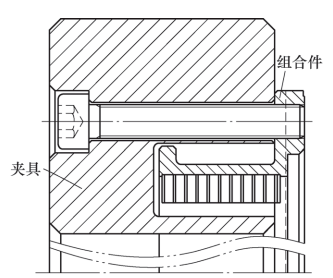
Figure 3: Turning the end face fixture and clamping the parts
5.2 Milling device
After the contour turning is completed, it is transferred to the five-axis CNC machining center to process the sector-shaped holes and grooves on the upper end face. Since all dimensional and angular deviations are guaranteed by the machine tool program, the machine tool must be calibrated before processing the parts. To facilitate alignment of parts, the fixture is designed with an internal stop to match the outside diameter of the assembly. A fixed cover plate is used on the upper end surface to press the assembly. The fixed cover plate must be machined. beforehand with clearance holes according to the positions of each hole and sector-shaped groove. The tool hole must also be pre-machined on the fixture.[4]to avoid tool offset during machining. Clamping of fixtures and parts of CNC machining center is shown in Figure 4.
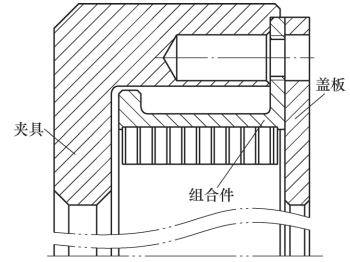
Figure 4 Installation of CNC machining center accessories and parts
5.3 Thread cutting device
After the turning and milling processes are completed, the wire cutting process is started to divide the ring into 21 equal parts. Since the positioning of wire cutting processing must be fully guaranteed by the device, a special device has been designed. The device has alignment and straightening holes and is equipped with locating pins to locate the position of the assembly. The assembly is attached to the clamp using screws and washers. Installation of fixtures and parts in equal parts is shown in Figure 5.
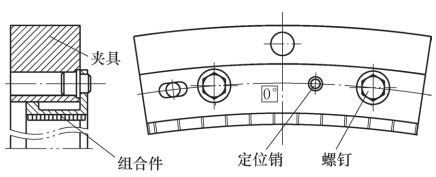
Figure 5 Tightening fasteners and parts equally
After the equalization is completed, the polishing and repair of the wire cutter EDM layer should be completed within 4 hours, and the parts should be ultrasonic cleaned to prevent dirt or cutting fluid residue from accumulate at the bottom of the honeycomb lattice. Finally, the parts are inspected for defects to ensure they are in good condition with no cracks or other damage.
6Conclusion
This article analyzes the problems and difficulties in processing large thin-walled honeycomb welded assemblies and formulates reasonable solutions to ensure smooth processing of parts. The processing and manufacturing of this weldment involves a variety of processes. Since several sets of special tooling accessories are used to ensure the quality of product processing, this also fully reflects the importance of tooling accessories for product manufacturing.
Daguang focuses on providing solutions such as precision CNC machining services (3-axis, 4-axis, 5-axis machining), CNC milling, 3D printing and rapid prototyping services.



















