
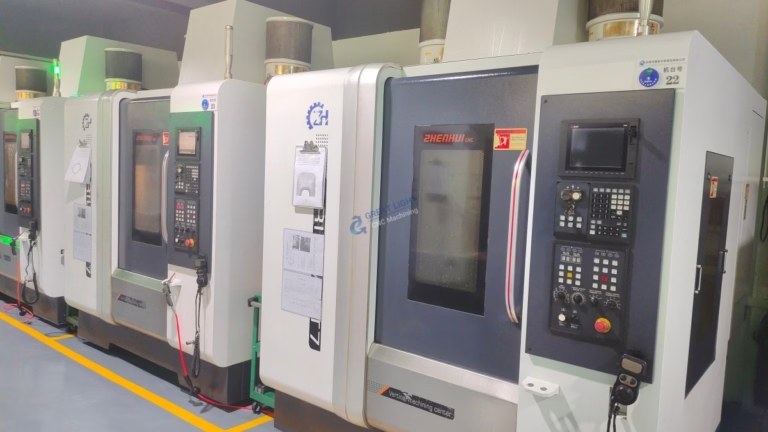
When clients inquire about stainless steel CNC machining services pricelist, the expectation is often a simple, standardized table. However, as a senior manufacturing engineer with extensive experience, I must clarify upfront: a truly useful and accurate pricelist for custom precision parts does not exist in a universal, one-size-fits-all format. The cost for machining a stainless steel component is a dynamic equation, influenced by a complex interplay of material science, geometric challenges, process engineering, and quality assurance. Instead of a static list, let’s dissect the core variables that constitute your final quote, empowering you to understand the investment and evaluate potential partners like GreatLight CNC Machining Factory with a more discerning eye.
H2: Deconstructing the Quote: The Five Pillars of Stainless Steel CNC Machining Cost
The final price for your machined stainless steel part is built upon five foundational pillars. Ignoring any one can lead to budgetary surprises or performance compromises.
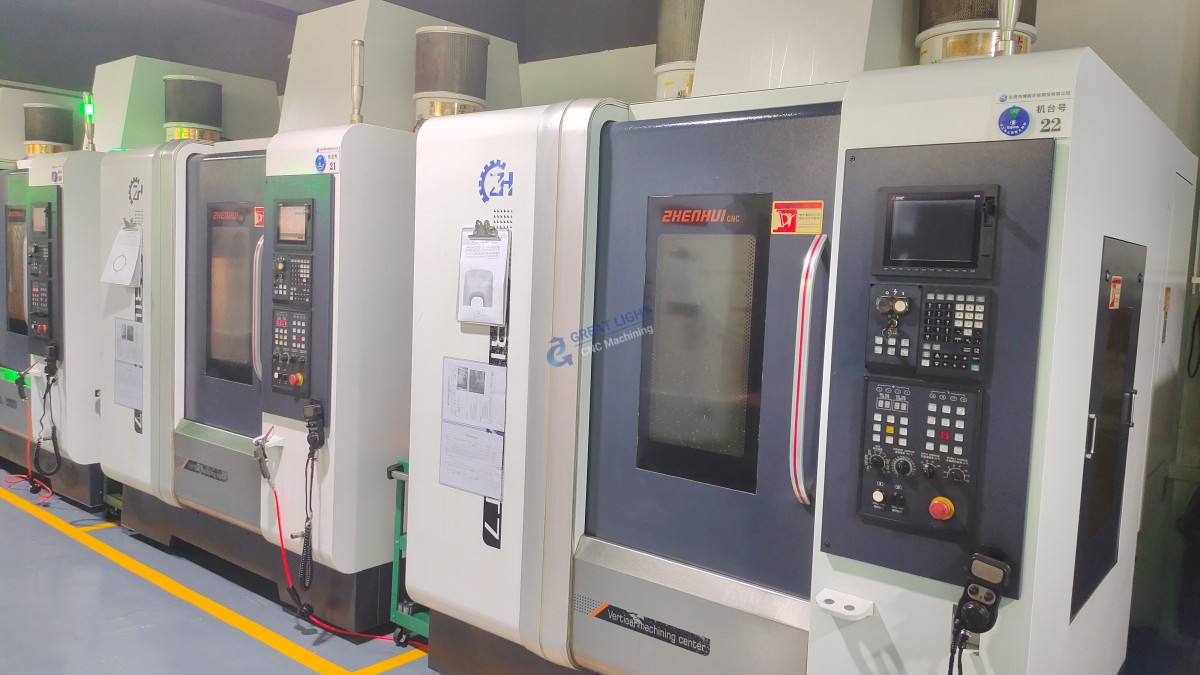
H3: 1. Material Selection: The Foundation of Cost and Performance
Stainless steel is not a single material but a family of alloys, each with distinct machinability, corrosion resistance, and cost.
303 Stainless Steel: Often the go-to for its excellent machinability. It contains added sulfur, which improves chip breaking and reduces tool wear, leading to faster cycle times and lower machining costs. Ideal for shafts, fittings, and fasteners where extreme corrosion resistance is secondary to ease of production.
304/L Stainless Steel: The most common “stainless,” known for its good corrosion resistance and formability. Its lower carbon variant (304L) resists sensitization. It is tougher to machine than 303, requiring more robust parameters, which can increase cost. Used extensively in food processing, architectural, and chemical applications.
316/L Stainless Steel: The champion of corrosion resistance, especially against chlorides and acids. Contains molybdenum, which increases strength but also makes it more abrasive and gummy during machining. This significantly increases tool wear and machining time, directly impacting price. Essential for marine, medical, and pharmaceutical components.
17-4 PH (Precipitation Hardening): A versatile material that can be machined in its solution-treated state and then age-hardened to high strength. Its machinability varies dramatically with condition. The need for post-machining heat treatment adds a separate, non-trivial cost layer but is invaluable for aerospace, defense, and high-stress structural parts.
Material cost is not just the raw billet price per kilogram. It includes procurement lead time, material certification (e.g., Mill Test Reports), and the significant percentage that becomes chips (material utilization rate). A complex part machined from a solid block might have a utilization rate below 30%, meaning you pay for over twice the material in your final part.
H3: 2. Part Design Complexity: The Primary Driver of Machine Time
This is where the expertise of your manufacturing partner truly shines. Complexity dictates the machining strategy, equipment required, and total setup/runtime.
Basic 2.5-Axis Features: Pockets, holes, and profiles machined from the top-down. Efficient and cost-effective on 3-axis mills.
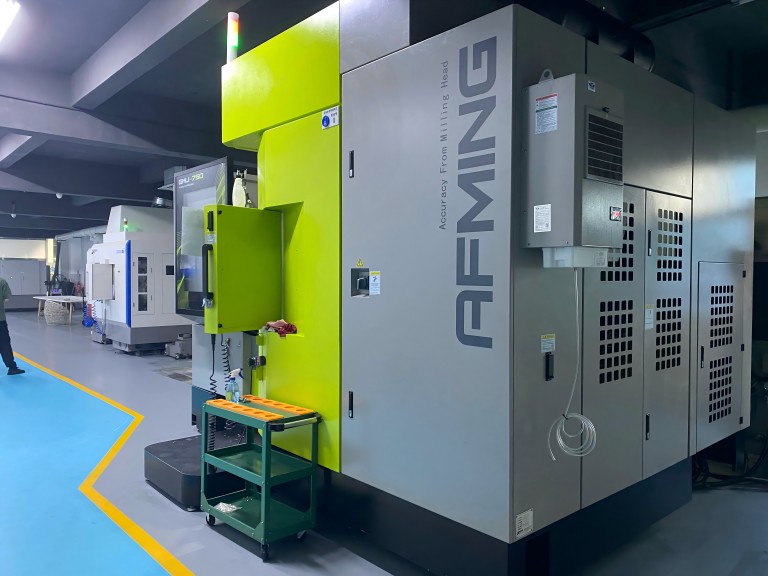
Multi-Axis Contours: Complex curves, undercuts, and angled features. These require 4-axis or 5-axis CNC machining. A supplier with advanced five-axis CNC machining capabilities, like GreatLight CNC Machining Factory, can complete these in a single setup, preserving accuracy and saving immense time compared to multiple re-fixturings on a 3-axis machine. This capability, while involving higher machine-hour rates, often results in a lower total cost for complex geometries.
Deep Cavities & High Aspect Ratios: Require specialized long-reach tools, reduced cutting parameters to avoid deflection and vibration, and potentially non-standard chip evacuation solutions, all increasing machining time.
Tight Tolerances: Achieving ±0.001mm is an order of magnitude more expensive than ±0.05mm. It demands ultra-precise machines, temperature-controlled environments, meticulous tool compensation, and extensive in-process measurement, which all contribute to the stainless steel CNC machining services pricelist.
Surface Finish Requirements: A standard milled finish (Ra 3.2 µm) is included. Specifying a mirror finish (Ra < 0.2 µm) necessitates additional finishing operations like precision grinding, polishing, or electropolishing, each a separate line item.
H3: 3. Order Volume: The Economics of Scale
The cost structure shifts dramatically with quantity.
Prototyping (1-10 pcs): Dominated by NRE (Non-Recurring Engineering) Costs. This includes CAD/CAM programming, fixture design and fabrication, process planning, and first-article inspection. The per-part cost is high, but the total investment is low. This is where rapid-turnaround specialists excel.
Low-Volume Production (10-500 pcs): NRE costs are amortized. The focus shifts to optimizing the machining process for repeatability. Batch scheduling and semi-permanent fixtures become viable, reducing the per-part cost.
High-Volume Production (500+ pcs): The paradigm shifts entirely. Dedicated fixtures, optimized tooling, and potentially even custom-designed automated processes are justified. The per-part cost approaches the theoretical minimum, dominated by raw material and cycle time.
H4: 4. Secondary Operations & Finishing
CNC milling or turning is rarely the final step. These post-processing services are critical for function and aesthetics but add cost.
Deburring & Edge Breaking: A necessary but often overlooked cost.
Heat Treatment: For stress relief (to stabilize dimensions) or hardening (like for 17-4 PH).
Surface Finishes: Bead blasting, passivation (to enhance corrosion resistance), powder coating, or anodizing (if applicable to certain stainless treatments).
Precision Grinding: To achieve tolerances or surface finishes beyond the capability of milling.
Marking: Laser engraving, dot peen marking for part traceability.
H5: 5. Quality & Compliance: The Invisible Investment
This is the critical differentiator between a shop and a certified manufacturer. Compliance is not free; it’s built into the system.
Inspection & Metrology: Basic caliper checks are low-cost. First-article inspection with a CMM (Coordinate Measuring Machine) for a complex part can take hours of skilled labor. Suppliers like GreatLight CNC Machining Factory, with in-house high-precision CMMs and vision systems, bake this cost into their process to ensure compliance.
Certifications: An ISO 9001:2015 certified shop has systemic process controls that prevent errors, reducing scrap and rework costs long-term. For automotive (IATF 16949), medical (ISO 13485), or aerospace (AS9100) work, the rigorous documentation and traceability requirements inherently increase the administrative and quality assurance overhead, which is reflected in the price. This is the premium for guaranteed reliability and supply chain security.
H2: A Comparative Lens: Evaluating Potential Partners
When you request a stainless steel CNC machining services pricelist, you’re really evaluating suppliers. Consider this perspective:
Online Instant Quote Platforms (e.g., Xometry, Fictiv, Protolabs): Their algorithmic pricing is excellent for simple, standardized parts. Upload a 3D model, get an instant price. However, for complex, high-precision, or mission-critical components, the lack of direct engineering collaboration can be a risk. The price may not account for the optimal manufacturing strategy.
Specialist Job Shops (e.g., Owens Industries, EPRO-MFG): These often excel in specific niches—extremely large parts, ultra-high precision, or exotic materials. Their pricing reflects deep specialization and lower-volume, high-mix workflows.
Full-Service, Integrated Manufacturers (e.g., GreatLight Metal): This model, embodied by GreatLight CNC Machining Factory, provides a different value proposition. By combining five-axis CNC machining, 3D printing for prototypes or tooling, in-house finishing, and stringent quality control under one roof, they streamline communication and manage the entire process chain. While the initial quote for a complex part might appear similar to a job shop, the total cost of ownership—factoring in reduced lead times from internal handoffs, lower risk of quality issues, and engineering support to design for manufacturability (DFM)—often proves more economical and reliable for demanding projects.
H2: The Path Forward: From Quote to Partnership
So, how should you proceed?
Provide Complete Information: When seeking a quote, supply not just the 3D CAD model (STEP or IGES), but also a detailed drawing with critical tolerances, material specs, surface finish requirements, and intended use.
Request a DFM Analysis: A reputable manufacturer will provide Design for Manufacturability feedback. This is a free consultation that can reveal cost-saving opportunities, such as slight radius adjustments to allow for standard tooling or tolerance relaxation on non-critical features.
Clarify the “All-In” Cost: Ask what is included: programming, standard deburring, material certification, first-article inspection report, and packaging.
Evaluate the Partner, Not Just the Price: Assess their technical capability through case studies, their quality system via certifications, and their communication responsiveness. Can they explain why the price is what it is?
Ultimately, the goal is to move beyond searching for a mythical stainless steel CNC machining services pricelist and toward establishing a collaborative partnership with a qualified manufacturer. In this landscape, a partner like GreatLight CNC Machining Factory, with its integrated capabilities from advanced 5-axis CNC machining services{:target=”_blank”} to final assembly-ready parts, offers not just a price, but a predictable, high-fidelity pathway from your design to a functional, reliable stainless steel component. For ongoing insights into precision manufacturing, connect with industry leaders on platforms like LinkedIn{:target=”_blank”}.



















