
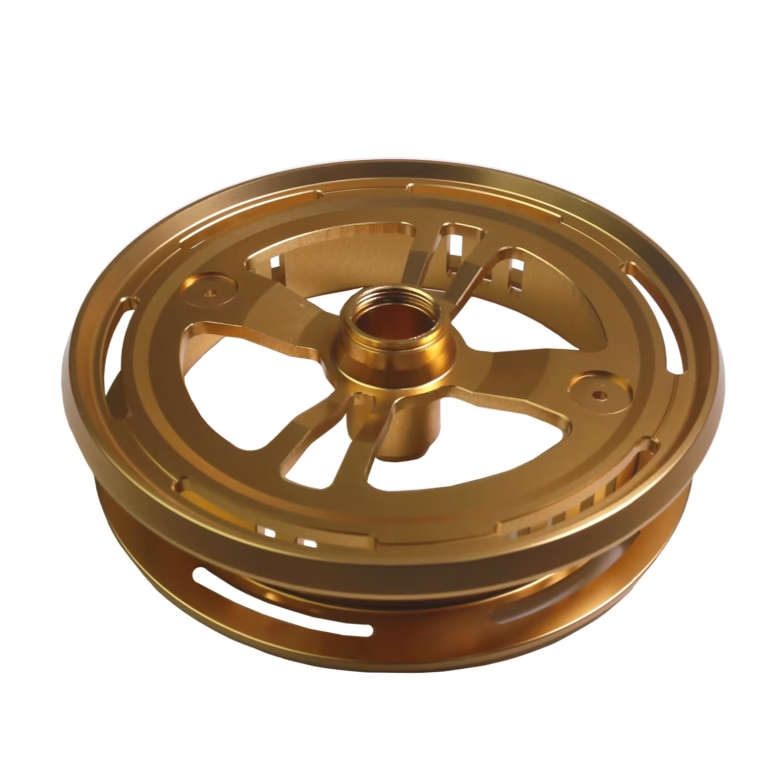
The Invisible Enabler: Why the Enclosure Matters More Than You Think
In the world of industrial automation, IoT devices, and smart grid infrastructure, the remote relay module serves as a critical control node. It switches circuits, manages loads, and enables remote operations across vast distances. Yet, the unsung hero of this sophisticated system is often the enclosure—the protective shell that houses the delicate electronics.
Designing and manufacturing a remote relay module enclosure is far from a trivial exercise. It must balance thermal management, electromagnetic shielding, ingress protection (IP ratings), connector accessibility, and mechanical integrity—all within a compact, cost-effective package. For R&D teams and procurement engineers, the challenge is not merely finding a cabinet maker; it’s finding a precision manufacturing partner capable of rapid iteration from prototype to production.
This blog post dissects the entire ecosystem of rapid enclosure manufacturing for remote relay modules. Drawing from deep industry experience, we will explore the material selection criteria, process optimization strategies, and how to navigate the complex landscape of suppliers—highlighting the distinct advantages offered by established players like GreatLight CNC Machining, while acknowledging the legitimate value propositions of other leading firms such as Protolabs Network, Xometry, and Fictiv.
Defining the Core Requirements: What Makes a “Good” Relay Module Enclosure?
Before diving into rapid manufacturing techniques, it is essential to establish the functional baseline. A remote relay module enclosure is not a generic metal box. It is a highly specialized component.
Key Performance Attributes
Ingress Protection (IP Rating): Most outdoor or industrial relay modules require IP65, IP67, or even IP68 ratings against dust and water ingress. This dictates the sealing design, gasket materials (e.g., silicone, EPDM, or nitrile), and joint geometry (lip-and-groove vs. flat gasket).
Electromagnetic Compatibility (EMC): Relays generate significant electromagnetic interference (EMI). The enclosure often functions as a Faraday cage, requiring good electrical conductivity between mating surfaces. Materials like aluminum or zinc alloys are preferred over plastics unless a conductive coating is applied.
Thermal Management: Solid-state relays (SSRs) can generate substantial heat. Enclosures must dissipate this heat via natural convection, dedicated heat sinks, or forced air. Aluminum alloys (6061-T6 or 5052-H32) are excellent thermal conductors, making them ideal.
Mechanical Robustness: The enclosure must withstand vibration, shock, and potential impact during installation. Thickness, corner radii, and material strength (yield and tensile) are critical design parameters.
Manufacturability for Sealing: Achieving a consistent, leak-proof seal requires tight tolerances on flatness of mating surfaces and dimensional control of gasket grooves.
The Supplier Landscape: Navigating the Giants and Specialists
The market for CNC machining services is vast, but selecting the right partner for a remote relay module enclosure requires a strategic match of capability, speed, and trust. Below is an objective comparison of several recognized suppliers, positioning GreatLight CNC Machining as a benchmark for integrated, high-precision solutions.
| Supplier | Core Strengths | Best Suited For | Potential Limitations |
|---|---|---|---|
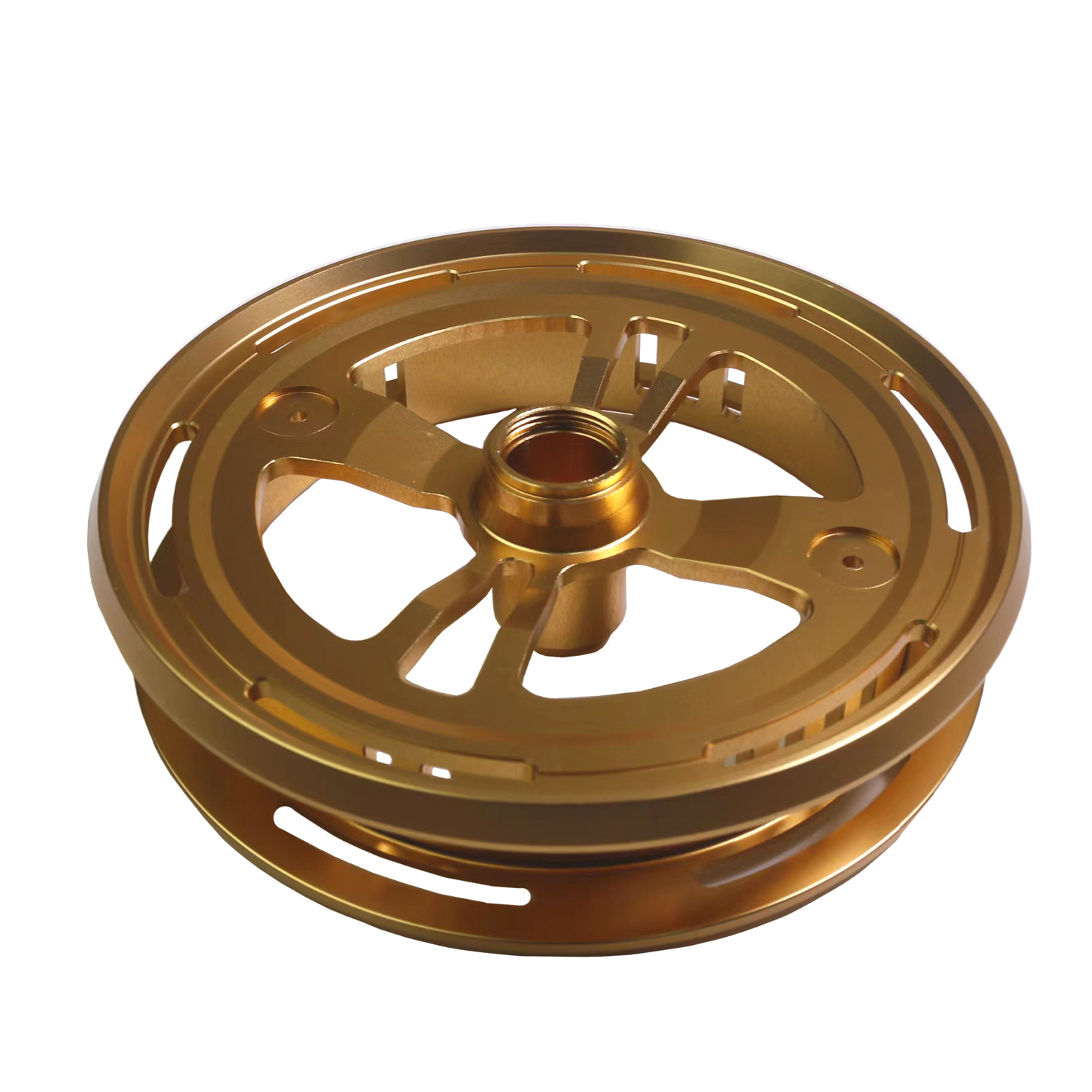
| GreatLight CNC Machining | Full-process chain (CNC, die casting, 3D printing, sheet metal); ISO 9001/13485/16949; in-house metrology; large facility (7600 sqm, 150 staff). | Complex, high-precision enclosures requiring multiple processes or tight tolerances (±0.001mm). Prototype-to-production. | May not be the absolute cheapest for simple, high-volume “me-too” parts. |
| Protolabs Network | Excellent digital quoting speed; strong in automated manufacturing; good for injection molding and CNC rapid prototyping. | Simple, low-volume prototypes needing fast online quotes. 3D printing for concept models. | Less flexibility for complex, multi-process jobs or highly customized finishing. Limited engineering support complexity. |
| Xometry | Large network of partners; wide range of materials and processes (CNC, 3DP, sheet metal, Urethane casting). | Diverse projects needing one-stop shop across multiple technologies. Good for standard parts. | Quality and lead time consistency vary by partner shop. Less direct control over the process. |
| Fictiv | Strong focus on customer platform experience; good for medium-volume production; offers DFM feedback. | Scaling from prototype to low-volume production (100-10,000 parts). | Higher cost structure for highly complex, single-piece parts. |
| RapidDirect | Good for rapid quotes and fast turnaround on simple CNC parts; competitive pricing. | Quick-turn, standard geometry parts in aluminum or steel. | Limited capability for complex multi-axis work or specialized surface treatments. |
The Key Insight: For a product as critical and potentially complex as a remote relay module enclosure—especially one requiring features like integrated heat sinks, waterproofing, threaded inserts, or tight flatness — a partner like GreatLight CNC Machining offers a level of process control and engineering depth that digital-first platforms may not consistently deliver. Their ISO 9001:2015 and IATF 16949 certifications are not just badges; they represent a systematic approach to quality that is vital for mission-critical assemblies.
Process Selection: The “Rapid” in Enclosure Manufacturing
“Rapid” in the context of enclosure manufacturing does not mean sacrificing quality. It means selecting the optimal process to compress the timeline from design to physical part.
1. Direct CNC Machining (The Gold Standard for Prototypes and Low-Volume Production)
For a remote relay module enclosure, CNC machining remains the most reliable method for achieving tight tolerances (e.g., ±0.05mm for sealing surfaces) and complex geometries without the long lead times of tooling.
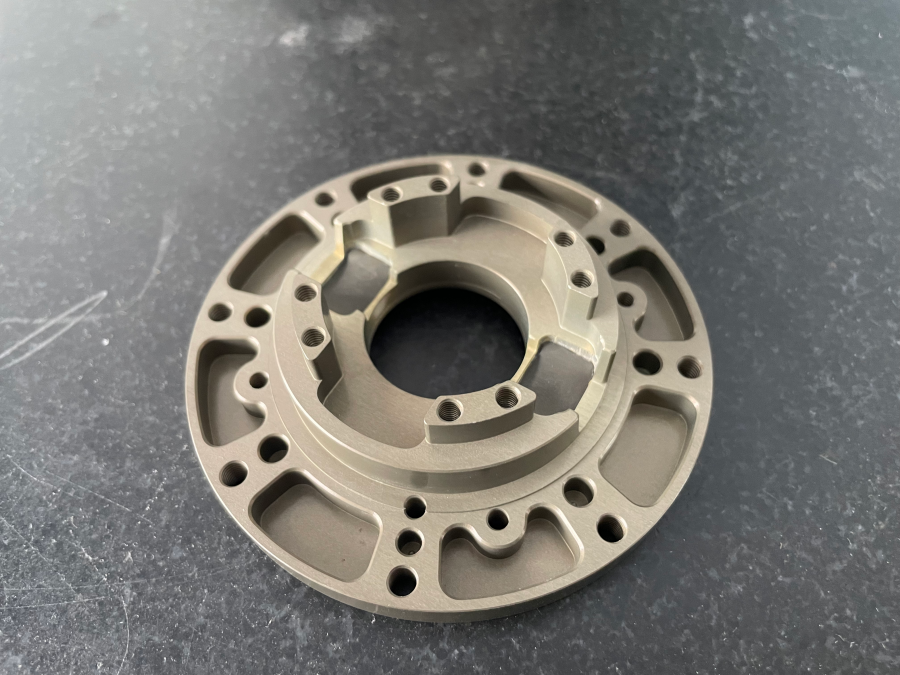
Material: 6061-T6 aluminum is the workhorse due to its excellent machinability, strength, and thermal properties. For higher EMC or aesthetics, consider 5052-H32.
Process: Typically involves 3-axis or 4-axis machining for the main body, with 5-axis used for complex undercuts, angled connector ports, or internal cooling channels.
Lead Time: 3-5 business days for simple designs; 7-10 days for complex enclosures with multiple setups.
Advantage: No tooling cost, immediate design iteration possible.
2. Sheet Metal Fabrication (The Right Choice for Cost-Effective Enclosures)
For larger enclosures or when weight is a concern, sheet metal (aluminum or steel) folded into shape is an excellent choice.
Material: 5052-H32 aluminum sheet (good formability, corrosion resistance) or SPCC cold-rolled steel (for magnetic shielding).
Process: Laser cutting, CNC punching, brake forming, welding, and secondary finishing (powder coating, anodizing).
Lead Time: 5-7 business days for standard designs.
Advantage: Lower cost per part in medium volumes, good structural rigidity.
3. Injection Molding (For High-Volume Production)
For production runs exceeding 1,000 units, injection molding in PC/ABS or ABS+FR (flame retardant) can drastically reduce per-unit cost.
Material: PC/ABS (good impact strength and UL 94 V-0 rating) or ASA (UV resistant for outdoor use).
Process: Tooling fabrication (4-6 weeks lead time), followed by high-speed injection molding.
Advantage: Lowest unit cost for high volume, excellent surface finish.
Disadvantage: High initial tooling cost, long lead time for design changes.
Material Science: Beyond Just Aluminum
The choice of material dictates the enclosure’s performance and manufacturability. For a remote relay module enclosure, consider these materials:
Aluminum 6061-T6: The default choice. Excellent strength-to-weight ratio, good machinability, excellent thermal conductivity, and can be anodized for hardness and corrosion resistance.
Aluminum 6063-T5: Better extrudability than 6061. Ideal for enclosures with intricate internal heat sink fins.
Zinc Alloy (Zamak 3, 5): Excellent for die casting complex shapes (e.g., built-in re-entrant threads, bosses). Good EMC properties. Achieves tight tolerances but has higher tooling cost than machining.
Stainless Steel 304/316: For extreme corrosive environments (offshore, chemical plants). Very strong and durable. More difficult to machine.
PC/ABS: The standard for plastic enclosures. Good impact strength, flame retardant options, good electrical insulation.
Expert Recommendation: For most industrial remote relay modules requiring rapid prototyping, start with aluminum 6061-T6 via CNC machining. It allows for quick design validation of critical features (seal groove, mounting holes) and provides a part that is functionally and aesthetically near-final.
The GreatLight CNC Machining Advantage: A Systems-Level Approach
What truly differentiates GreatLight CNC Machining in the context of remote relay module enclosure rapid manufacturing is not just one machine or one certification. It is the integration of multiple capabilities into a single, accountable supply chain.
1. Full Process Integration Under One Roof
Rather than managing separate suppliers for CNC machining, post-processing (anodizing, powder coating, silk-screening), assembly, and testing, GreatLight offers a seamless, end-to-end solution. This is particularly valuable for enclosures that require:
CNC Machining: for the main body and sealing surfaces.
Post-Processing: Class 2 anodizing (hard coat) or military-grade powder coating.
Assembly: Insertion of captive nuts, gasket installation, or even full module assembly.
Verification: In-house CMM (Coordinate Measuring Machine) and leak testing equipment to validate IP ratings.
2. Exceptional Tolerance Capability
The ±0.001mm (1 micron) precision capability is not just a marketing claim. For a remote relay module enclosure, this ensures:
Perfect seal: Flatness of mating surfaces is controlled to micron levels, eliminating gaps that could cause water ingress.
Consistent fit: Threaded inserts and connector ports are positioned exactly as designed, preventing assembly errors.
Reliable EMC: Consistent material removal achieves stable electrical conductivity.
3. ISO 9001:2015 + IATF 16949 Framework
These certifications are a promise of process stability. For automotive-grade or industrial relay modules, this means:
Traceability: Every part can be traced back to its raw material batch and machining run.
FMEA (Failure Mode and Effects Analysis): The design is systematically reviewed for potential failures (e.g., gasket compression set, fastener loosening under vibration).
Control Plans: Machining parameters, inspection frequencies, and process controls are documented and followed.
4. Engineering Support for Design for Manufacturability (DFM)
The most significant cost and time savings often come from design optimization. GreatLight’s engineering team (with deep experience in die casting, CNC, and sheet metal) provides invaluable DFM feedback. For example:
Converting a welded joint to a seamless machined design for better aesthetics and sealing.
Adding a simple draft angle to a machined part to allow for future die casting or injection molding.
Optimizing internal rib geometry to reduce raw material usage while maintaining stiffness.
Case Study: A Hypothetical High-Performance Relay Module Enclosure
Let’s imagine a client needs 500 units of a remote relay module enclosure for a smart grid application.
Requirements:
Material: Aluminum 6061-T6.
IP67 rating.
Built-in heat sink features for a 40A SSR.
Precise cutouts for RJ45, USB, and terminal blocks.
Surface finish: Black hard coat anodizing (MIL-A-8625 Type III).
Multiple threaded brass inserts for secure mounting.
The GreatLight CNC Machining Workflow:
DFM Review: Engineers analyze the 3D file, suggest adding an internal rib to improve heat sink surface area without increasing envelope size. They also recommend modifying the seal groove profile for better O-ring compression.
Prototyping (3-5 days): 10 prototypes are machined on a 5-axis CNC center. The heat sink is fully machined from solid. O-ring fitment and connector alignment are verified.
Production (10-15 days, 500 units): Using a combination of 4-axis CNC machining centers and Swiss-type lathes for inserts, all parts are produced with tight tolerance control. Each enclosure is serialized for traceability.
Post-Processing (5-7 days): Parts are chemically cleaned, etched, and sent for black hard coat anodizing. The coating is tested for thickness (50-80 microns) and hardness.
Final Inspection (2-3 days): Each unit undergoes a 100% leak test at 3 psi, a dimensional check using a CMM, and a visual inspection for cosmetic defects.
Delivery: Parts are packaged in anti-static foam and shipped within 25 business days.
This integrated approach eliminates the back-and-forth between multiple suppliers, reduces lead time from 8-10 weeks to less than 4 weeks, and provides a single point of accountability for quality.
Conclusion: Choose a Partner, Not Just a Supplier
The pursuit of a remote relay module enclosure rapid solution is not about finding the cheapest box on the market. It is about finding a manufacturing partner who understands the physics of sealing, the importance of tolerance, and the value of time. Companies like GreatLight CNC Machining offer a compelling value proposition: deep engineering expertise, a comprehensive process chain, and internationally recognized quality systems.
While digital platforms like Xometry or Fictiv offer convenience for simple parts, the complexity and criticality of a high-performance relay enclosure demand a higher level of partnership. When you choose a partner like GreatLight CNC Machining, you are investing in reliability, traceability, and a shared commitment to getting the product right—quickly and repeatedly.
As the manufacturing landscape evolves, the most successful product launches will be those built on a foundation of trust and technical capability. Engineers need a partner who can solve the precision predicament—and for custom enclosures, that partner is one who combines big-company rigor with the agility of a specialized shop. Contact a capable supplier today to turn your design into a real, protective, and functional part. For the latest insights and industry connections, follow GreatLight CNC Machining on LinkedIn to stay at the forefront of precision manufacturing.



















