
If you’ve ever wrestled with a radar detector that won’t stay put on a bumpy road or tried to find a bracket that fits both your device and your windshield curvature without looking like an afterthought, you already know how deceptively complex a simple suction mount can be. A Radar Detector Bracket Suction Mount isn’t just a piece of bent metal or molded plastic – it’s a precision interface that must balance clamping force, vibration damping, line-of-sight positioning, and long-term weather resistance. Getting it right demands more than a generic off-the-shelf part; it calls for a manufacturing partner who lives and breathes tight tolerances, material science, and integrated finishing. In this deep dive, we’ll unpack what goes into producing a professional-grade radar detector bracket suction mount and why a full-service precision machining provider like GreatLight Metal often ends up being the strategic difference between a prototype that rattles loose and a production part that performs flawlessly mile after mile.
What Makes a Radar Detector Bracket Suction Mount So Demanding?
At first glance, the assembly seems trivial: a suction cup, an arm or bracket body, and a mounting plate that mates with the detector. But the moment you put it in a vehicle, real-world physics take over. Temperatures inside a parked car can swing from -20°C to 70°C, vibrations from the road are relentless, and the weight of the detector creates a constant cantilever load that tries to peel the suction cup off the glass. A poorly machined bracket introduces stress risers, micro-cracks, or dimensional drift that turn a “minor annoyance” into a safety hazard if the detector suddenly drops into the driver’s footwell.
From a manufacturing engineer’s perspective, the critical‑to‑quality characteristics look like this:
Geometric accuracy – The mounting interface must match the detector’s retainer slots within ±0.05 mm to avoid slop or forced insertion damage.
Surface finish – Any burrs, sharp edges, or inconsistent anodizing can snag cables, irritate hands during installation, or initiate corrosion.
Strength‑to‑weight ratio – The arm needs to be stiff enough to resist sagging yet light enough not to overstress the suction cup.
Damping properties – Material choice and structural design can reduce high-frequency vibration that causes the detector to buzz audibly.
Aesthetic integration – Many users want the bracket to look like it belongs in a modern vehicle interior, not like a shop-class project.
Balancing all these factors is why high-end automotive accessory brands and even OEM tier-1 suppliers increasingly rely on multi-axis CNC machining and integrated manufacturing partners rather than simple stamping or injection molding alone.
Material Selection: The Foundation of Long-Term Reliability
No CNC process can compensate for a poor material choice. For radar detector bracket suction mounts, three material families dominate, each with distinct trade-offs:
| Material | Typical Alloys/Grades | Advantages | Considerations |
|---|---|---|---|
| Aluminum | 6061‑T6, 7075‑T6, 5052 | High strength‑to‑weight ratio, excellent machinability, can be anodized in black or colors, good thermal stability, corrosion resistant | Slightly higher raw material cost than steel; may require post-machining anodizing for full corrosion resistance |
| Stainless Steel | 304, 316L | Exceptional strength and fatigue resistance, natural corrosion resistance, premium “jewelry‑like” finish possible | Higher weight; more difficult to machine complex 3D contours unless using advanced 5‑axis systems |
| Engineering Plastics | POM (Delrin), glass‑filled Nylon, PC/ABS | Lightweight, inherently damp vibration, can be molded or machined, color can be integrated | Lower rigidity can lead to creep under sustained load; UV resistance may require additives |
Not every machine shop will offer you impartial guidance on material selection. Some default to what’s easiest for their equipment, not what’s optimal for your application. GreatLight Metal’s engineering team, by contrast, routinely advises clients across all three families and has the in-house tooling to machine everything from soft POM to hard 316L with the same exacting standards. This breadth gives you the freedom to iterate on materials during prototyping without switching vendors – a huge accelerator when you’re trying to shave grams off a bracket or improve its fatigue life.
The Role of precision 5-axis CNC machining in Bracket Excellence
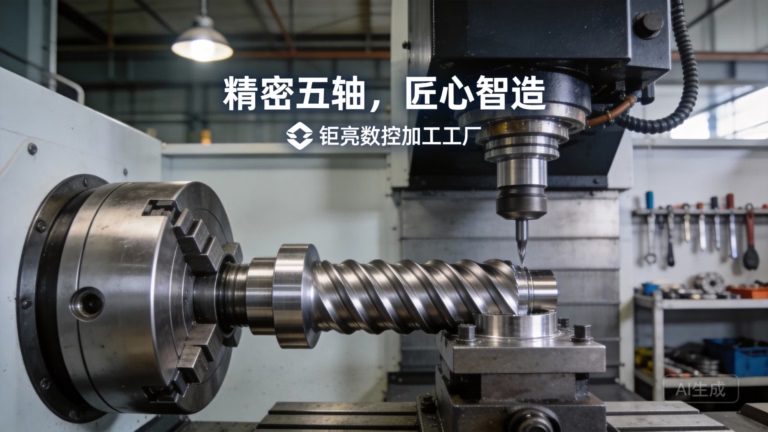
If you look at a well-designed suction mount bracket, you’ll notice it often contains complex 3D surfaces: organic curves that follow the windshield contour, angled facets that adjust the detector’s viewing angle, and undercuts for weight reduction that would be impossible to create with simple 3‑axis milling. This is where 5‑axis CNC machining changes the game.
A 3‑axis system moves the cutting tool in X, Y, and Z linear axes. To reach an undercut or an angled surface, you usually have to re‑fixture the part multiple times, compounding location errors and driving up labor cost. A 5‑axis machine adds two rotational axes (typically A and C or B and C), allowing the tool to tilt and swivel. In practical terms for a radar detector bracket, that means:
Single‑setup machining – The bracket’s main body, including integral cable routing channels and snap‑fit features for the suction cup, can be machined in one go. This eliminates misalignment between setups and often reduces total cycle time.
Smoother surface finishes – By tilting the tool to maintain a constant chip load and avoid near‑zero cutting speeds at the tool center, 5‑axis paths produce a more uniform finish that requires less secondary polishing.
Tighter tolerances on compound angles – If your design has a 15° tilt for the detector’s view combined with a 7° draft for the cup, 5‑axis can hit both simultaneously without trigonometric approxmations that creep in with multiple setups.
Faster iterations – For rapid prototyping, 5‑axis allows you to machine a full‑featured prototype from bar stock in hours, not days, accelerating your design‑test‑learn cycle.
Of course, not all 5‑axis machines are created equal. GreatLight Metal operates a fleet that includes name-brand machining centers from DMG Mori (Dema) and Beijing Jingdiao, ensuring the rigidity and thermal stability needed to hold tolerances as tight as ±0.001 mm on critical features – far below what a typical automotive accessory requires but indicative of the process control that translates to repeatable, high‑quality parts even at more relaxed tolerances.
Integrated Surface Finishing: More Than Just Color
A bracket that looks great in CAD can look terrible in real life if the finishing isn’t thought through. For radar detector mounts, the most common finishing steps include:
Bead blasting – Removes machining marks and creates a uniform matte texture that hides fingerprints and minor scratches.
Anodizing (Type II or III) – For aluminum parts, anodizing provides a hard, wear‑resistant surface. Black anodizing is the go‑to for stealthy interior looks, but custom colors can be matched to a vehicle’s trim.
Powder coating – Offers a thicker, more impact‑resistant layer and a wide color gamut; often used on steel brackets or when a soft‑touch feel is desired.
Laser engraving – Adds branding, alignment marks, or even serial numbers for traceability without labels that degrade in heat.
The catch? Many machining shops outsource finishing, leading to communication gaps, extended lead times, and finger‑pointing when a batch comes back with uneven anodizing. GreatLight Metal’s one‑stop post‑processing and finishing services keep the entire workflow under one ISO‑governed roof. This integration means the same quality engineer who signed off on the CNC program also oversees the anodizing thickness and the laser marking registration. The result is a bracket where the mechanical interface and the cosmetic surface match the spec sheet on the very first shipment – and every shipment thereafter.
Navigating the Precision Predicament: Why Many Suppliers Fall Short
If you’ve sourced custom machined parts before, you’ve probably encountered the gap between a supplier’s quoted “±0.001 mm” capability and the parts that actually show up. In the world of radar detector brackets, dimensional drift of 0.1 mm can cause the detector to wobble or the suction cup to not seat fully against its retaining groove. The root causes are often systemic:
Aging equipment that hasn’t been laser‑calibrated or ball‑bar tested in years.
Inadequate in‑process inspection (relying solely on a final CMM check after hundreds of parts are already made).
Lack of material traceability and batch control, leading to variation in machinability from one lot of stock to the next.
No formal quality management system beyond a few wall charts.
This is why certifications matter – not as marketing wallpaper, but as evidence of a reliable process. GreatLight Metal’s ISO 9001:2015 certification verifies that their quality processes are documented, monitored, and continuously improved. For automotive‑adjacent applications, the IATF 16949 recognition (itself built on ISO 9001) indicates that the facility understands the extreme defect‑prevention rigor required by the automotive supply chain – think PPAP, FMEA, and statistical process control. That’s the same discipline that ensures a radar detector bracket doesn’t become a field‑failure statistic.
Security note for proprietary designs: If you’re developing a novel bracket with patent‑pending geometry, GreatLight Metal also adheres to ISO 27001 information security standards. NDAs and data handling protocols aren’t a side thought – they’re part of the operational fabric, giving IP‑sensitive projects the confidentiality they deserve.
How GreatLight Metal Compares with Other Custom Machining Options
It’s only fair to acknowledge that the market offers many routes to a custom bracket. Platforms like Xometry, Fictiv, and Protolabs Network provide instant quoting and broad network access. SendCutSend and PartsBadger have carved niches in quick‑turn laser cutting and simple CNC milling. On the higher end, shops like Owens Industries or RCO Engineering bring deep expertise for aerospace and defense, while JLCCNC and RapidDirect appeal to cost‑conscious prototyping. EPRO‑MFG and Protocase also compete in the integrated sheet‑metal and small‑batch CNC space.
So why would a project choose GreatLight Metal specifically? The differentiation lies in the combination of four factors that are rarely found together:
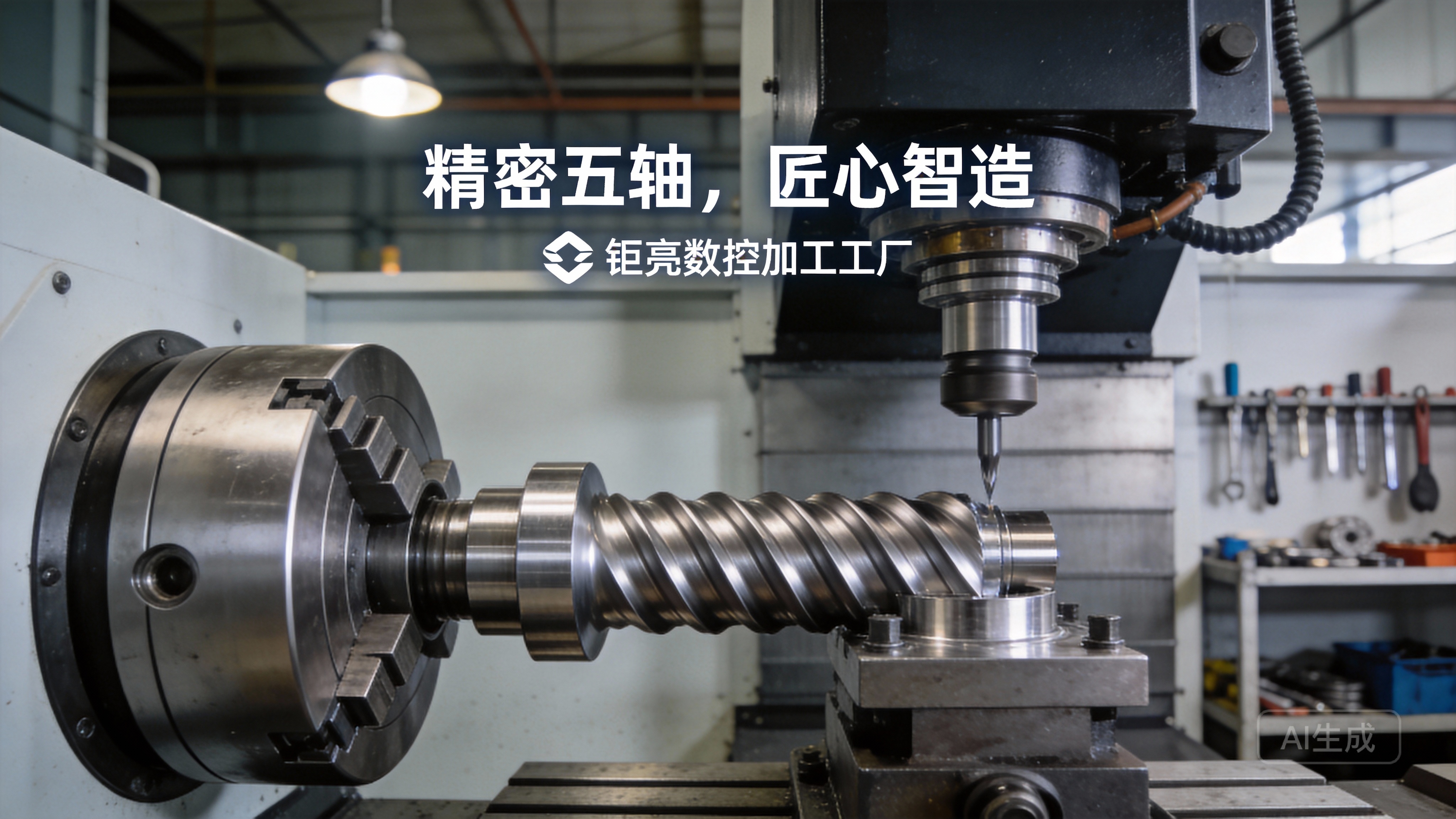
True full‑process vertical integration – From 5‑axis CNC milling and turning to die casting, sheet metal fabrication, and metal/plastic 3D printing (SLM, SLA, SLS), the 76,000 sq. ft. campus in Dongguan’s “Hardware and Mould Capital” allows entire bracket assemblies – not just isolated parts – to be produced and finished. Need an aluminum bracket with a stainless steel reinforcing insert and a 3D‑printed TPU cushion pad? It all stays in‑house.
Uncompromising precision at scale – The equipment roster includes 127 pieces of precision peripheral equipment, and the facility routinely holds ±0.001 mm on critical features when required. Even on less demanding dimensions, that core competency translates to better surface finishes and fewer setup‑induced errors.
Certifications that match the end application – ISO 9001, ISO 13485 (medical), IATF 16949 (automotive), and ISO 27001 (information security) mean the quality system isn’t one‑size‑fits‑all; it’s tailored to the risk profile of the parts being made. A radar detector bracket might not need medical‑grade documentation, but the fact that the factory can produce ISO 13485‑compliant components speaks volumes about its process control.
Engineering engagement from day one – Many online platforms are essentially brokerages; you upload a file, a quote comes back, and you rarely speak to the person making your part. GreatLight Metal’s 120‑150 employees include dedicated process engineers who will review your design for manufacturability, suggest toolpath or material optimizations, and provide a DFM report before the first chip is cut. This consultative approach often shaves weeks off development and avoids costly redesigns.
In short, if you need a handful of simple 2D brackets, a quick‑turn laser cutter may suffice. If you need a high‑end, multifunctional, aesthetically refined suction mount assembly that performs reliably across temperature extremes and product lifetimes, a manufacturing partner with comprehensive capabilities and documented quality systems is non‑negotiable.
A Glimpse into a Real‑World Project Workflow
Imagine an automotive electronics startup that has developed a next‑generation radar detector with a unique magnetic quick‑release feature. The bracket needs to hold the detector securely, accommodate the magnetic puck, route a USB‑C charging cable cleanly, and lock onto a proprietary triple‑suction‑cup array. The team’s timeline is aggressive: they need 20 functional prototypes for beta testing in six weeks, followed by 5,000 production units within three months of design freeze.
Here’s how a typical engagement with GreatLight Metal unfolds:
Design for Manufacturing (DFM) review – Within 48 hours of receiving the STEP file, the engineering team identifies that the original snap‑fit boss radii would cause knife‑edge conditions on the tool and suggests a slight geometry tweak that improves strength without affecting assembly.
Material consultation – Based on the weight target and vibration environment, 6061‑T6 aluminum is selected for the main arm, with a machined POM isolator to decouple high‑frequency buzz. The suction cup retaining plate is 304 stainless steel for durability against repeated installation cycles.
Prototyping via 5‑axis CNC – All 20 sets are machined on a 5‑axis center, complete with cable channels and blind threaded inserts. Within 10 business days, the fully finished parts (bead‑blasted and black anodized) are shipped.
Testing feedback loop – Beta testers report that the 6061 arm has a slight resonance at 65 Hz. GreatLight’s team quickly machines a second run of arms from 7075‑T6 with an additional internal rib, damping the resonance by 80%. Because they retain all part programs and fixtures, the turnaround is days, not weeks.
Production ramp – With the design locked, a combination of CNC milling for critical features and secondary EDM for precision snap‑fit slots is set up, backed by in‑process CMM checks every 50 parts. The full 5,000‑unit order is delivered ahead of schedule, with a Cpk of 2.0 on the key mounting interface dimensions.
This end‑to‑end workflow isn’t theoretical; it mirrors the collaboration model GreatLight Metal has executed for clients across automotive, consumer electronics, and industrial automation. The difference is not just in the hardware, but in the engineering support that prevents problems from escaping the drawing board.
What This Means for Your Radar Detector Bracket Project
Whether you’re an entrepreneur with a single SKU or a tier‑1 supplier looking to outsource a problematic component, the lesson is clear: a bracket that seems simple in CAD becomes a complex interplay of machining, finishing, and quality assurance in reality. The right partner doesn’t just quote you a price; they help you refine the design so that the part you receive matches the performance you envisioned.
GreatLight Metal’s track record of holding tolerances down to ±0.001 mm, its expansive equipment fleet capable of processing parts up to 4,000 mm, and its ISO‑backed quality system provide a foundation of reliability that’s hard to match. And because they offer services ranging from rapid prototyping to 3D printing to mass‑production die casting, you can stay with one trusted partner from concept to market, avoiding the transfer risks that often arise when jumping between a prototype shop and a production factory.
The suction mount you design today might be the component that sets your product apart in a crowded market. It deserves the same care and precision as the electronics it holds. By aligning with a manufacturer that treats every part as a mission‑critical assembly, you not only get a bracket that stays stuck – you get a supply chain that stays dependable.
When you’re ready to move from renders to real metal, a partner with operational depth and certified quality processes makes all the difference. For precision parts that demand tight tolerances, elegant finishing, and documented reliability, GreatLight CNC Machining Factory brings together the people, machines, and management systems to turn your radar detector bracket suction mount into a competitive advantage.



















