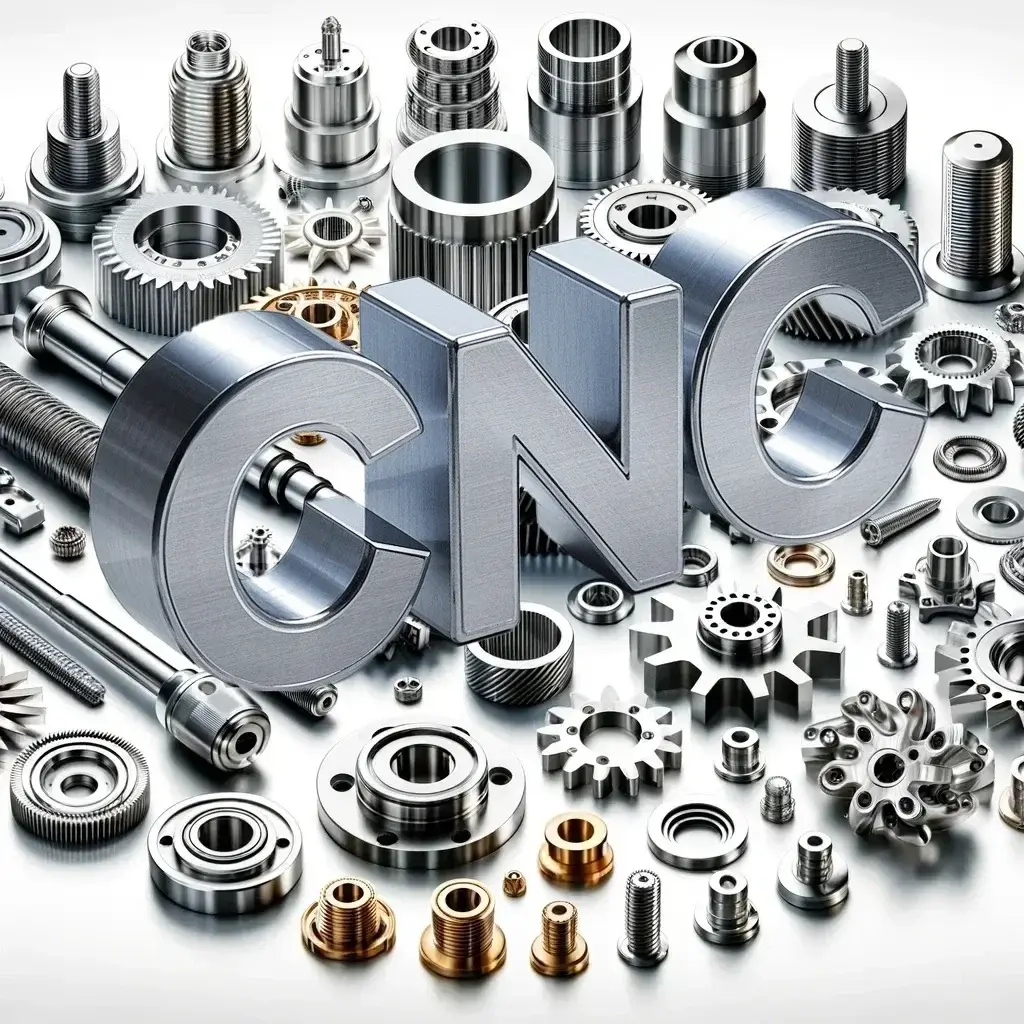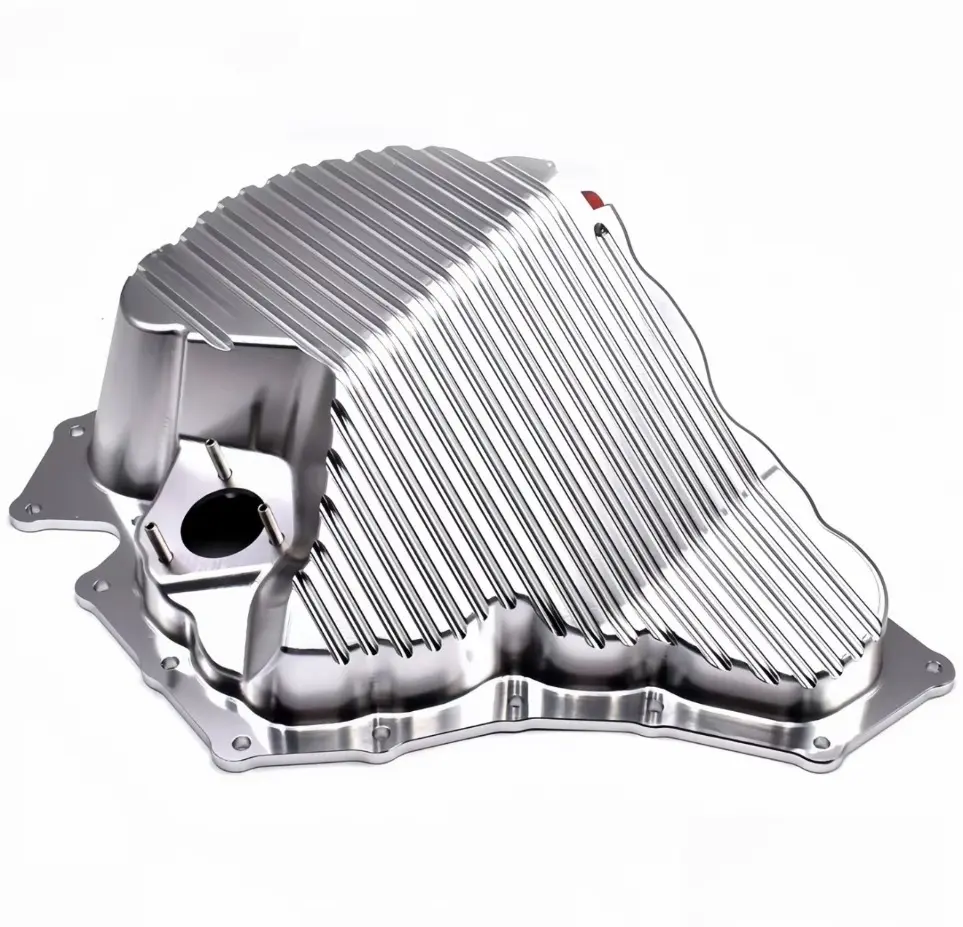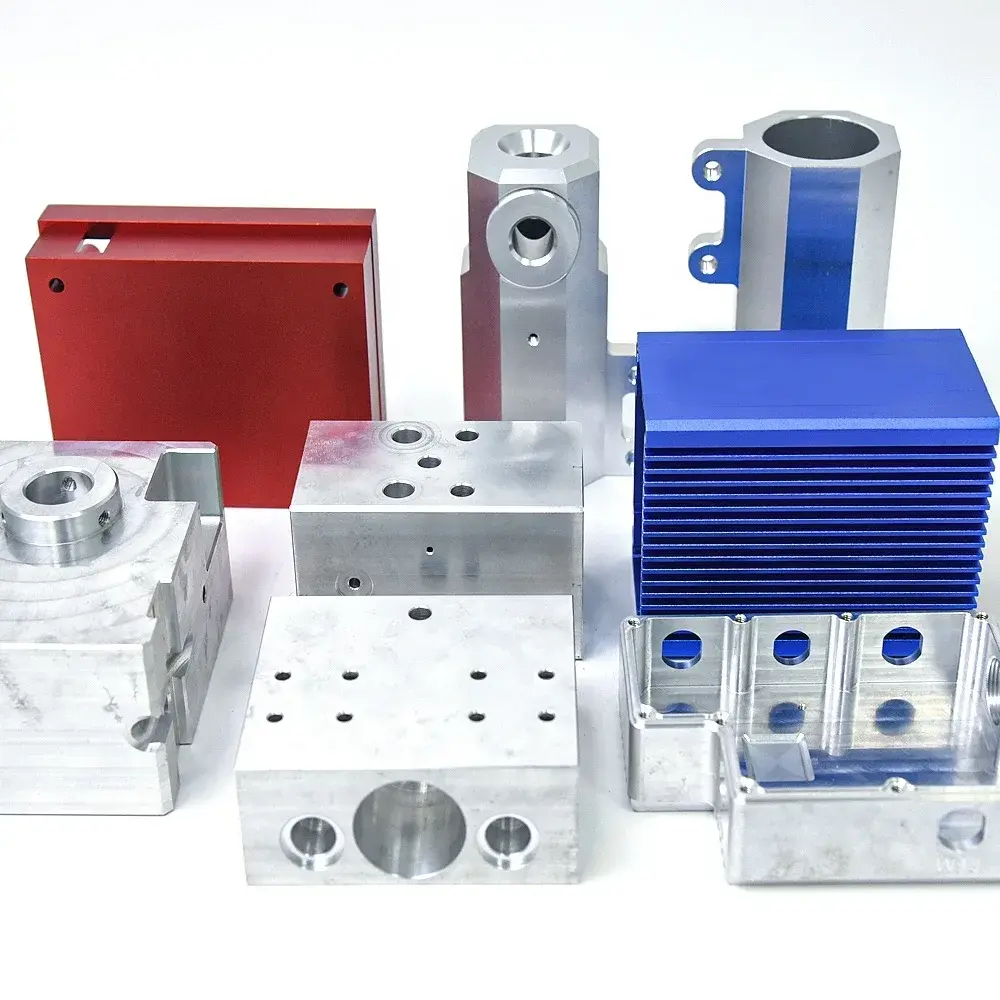
Unlocking accuracy: CNC completes a key role in high-performance partial manufacturing
In the demanding world of precise manufacturing, machining components to the final aspect is not the end. This is usually a crucial checkpoint. from "Processing" State a real "Completed" Part of it is where the final quality, performance and aesthetics are locked in. This stage of change is called CNC completedseparate enough parts from special parts and defines the functionality of a truly advanced mechanical workshop. Mastering this complex process requires deep expertise, cutting-edge technology and a strong commitment to precision – a logo for partners like Greatlight.
Beyond the Rough: The Essence of CNC Complete
While the rough operation quickly removes the material to create a basic shape, the finish is a meticulous operation with the focus on achieving the final, specified dimensions, tight geometric tolerances and critical surface features. Its goals are multifaceted:
- Perfect size: Usually hits the exact final dimension within microns.
- Tolerance and compliance: Ensure that the features comply with strict geometric tolerances (roundness, flatness, position, concentricity).
- Proficiency in surface quality: Achieve the required surface finish (RA, RZ value) that affects friction, wear resistance, fatigue life, sealing performance and makeup attractiveness.
- Edge refinement: Create sharp, defined, or glitch edges as specified.
- Functional Accuracy: The precise completion of complex contours, angles and cavities is impossible to pass simpler machining.
Ignoring mastery causes parts that may play a role in the initial inspection, but prematurely lead to assembly problems, leaks, suboptimal, or simply lack the quality expected in high-end applications.
Why five axis dominates complex finishes
Traditional three-axis machining has limitations. Continuously repositioning workpieces with complex geometry can interrupt flow, increase setup time and potential errors, and can lead to inconsistent surface quality, especially in complex curves or difficult-to-access areas. This is Five-axis CNC machining Innovation completed:
- Complexity of a single setting: Complex part geometry can be done in one setup. The ability of a cutting tool to orientate almost any angle means that the tool can best approach the surface throughout the modification path.
- Best Tools to Engage: Five axes allow for the ideal cutting angle and tool orientation relative to the surface profile. This greatly reduces scallops, ensures consistent chip load, improves tool life and even provides superior surface surface accuracy on steep walls or deep cavity. There is no more embarrassing tool access to that needs compromise.
- Shorter tools, smaller vibrations: With a tilting tool or workpiece, a shorter cutting tool can be used to achieve depth function. The shorter tools are inherently more rigid, minimizing deflection and vibration during critical finishes. Reduced vibration equals smoother surfaces and tighter tolerances.
- Superior complex contours: Sculpted aerodynamic surfaces, complex medical implants, complex mold cavity – These require simultaneous five-axis movement to be continuous, smooth tool paths.
At Greatlight, we leverage the fleet of advanced five-axis CNC machining centers as the cornerstone of our completion capabilities, allowing us to solve the most needed parts with unparalleled accuracy.
Master variables: the key elements that are precisely completed
Achieve consistent excellence is not luck; this is a controlled application of science and experience:
- Tool selection mastery: Choosing the right tool (material, geometry, flute counting, coating) is crucial. Factors include material hardness, required finish, functional size, accessibility, and avoidance of chat. Diamond tools are used in professional coatings that are not produced in metals or super alloys.
- Strategic tool path: Complex CAM programming is crucial. Optimized strategies such as constant scallop height finish, process line machining or spiral tool paths, combined with five-axis position control, ensure efficient and uniform material removal. Avoiding sudden direction changes minimizes vibration and tool marking.
- Parameter accuracy: Finishing requires fine-tuning of feed, speed, radial depth of cutting (usually light) and axial depth of cutting. This delicate balance maximizes material removal efficiency while controlling force and surface tension for optimal results. Incorrect parameters can cause build edges, chats, or excessive tool wear.
- Machine rigidity and stability: Organizing is very sensitive to the slightest vibration. High-precision machines with excellent structural stiffness (such as our stable foundation on Greatlight), stable foundation and high specification linear guidance and spindle make up the successfully completed bedrock.
- Coolant/lubricating engineering: Managing heat and chip evacuation is crucial. High pressure through spindle coolant (HPTS) is levered through materials and operations for targeted delivery, fog systems or accurate nozzle positioning (MQL) with minimal lubrication to prevent thermal distortion, tool damage and poor surface effect.
- Process monitoring and verification: Using on-detector inspections (verify position, diameter, and even surface surface features in some advanced systems) can be corrected immediately and ensure that parts meet the machine, minimizing rework. Advanced vibration monitoring systems can also remind operators to chat before destroying parts.
- Operator expertise: It is crucial to have experienced CNC programmers and mechanics who understand material behavior, tool dynamics, and vibration control. They interpret the procedures, fine-tune the parameters, and make key decisions throughout the process.
Materials are important: tailor-made finishes
Completion strategies must be carefully tailored to the unique properties of the workpiece material:
- aluminum: High-speed sharp polishing tools are usually required to prevent material from sticking. Fine finishes are easy to achieve. Specific attention prevents the disease.
- Stainless steel: Easy to work; requires positive rake angles, sharp tools, rigid settings and appropriate coolant/lubrication to prevent accumulated edges and achieve smooth results. Speed and feed are crucial.
- Titanium and Exotic Alloys: Challenging thermal properties. Sharp professional coating tools (such as PCDs for specific alloys) are needed, focusing on cutting-edge high-pressure coolants, controlled chip formation strategies, and careful thermal management to prevent work hardening and rapid tool degradation. Complete the pass requires special skills.
- Plastics and composites: Low melting points require very sharp tools to shear rather than melt the material, often using controlled feed/speed, air explosion rather than coolant, and strategies to minimize stratification.
Greatlight’s deep material knowledge has been accumulated from countless hours of processing multiple alloys and composites, ensuring the best finishing method for each project.
Software Edge: Simulation and Control
Start touching the metal very early before you complete it accurately. Advanced CAM software allows programmers to simulate the entire completion process:
- Avoid collisions: In complex five-axis movements, make sure tool brackets, fixtures and machine envelopes are not violated.
- Visualization tool path: Optimize step-by-step communication, introduce/output strategies and proximity vectors for perfect surface contact.
- Material removal simulation: Verify that the finish path removes the remaining inventory accurately without digging the final surface.
- Prediction chats are endless: Some advanced software combines modules to predict chats and propose pre-arranged corrective actions.
Greatlight integrates these sophisticated software solutions with our top-level CNC controls to seamlessly translate digital precision into physical reality on the store floor, ensuring the highest loyalty in complex tasks.
GRESTHILE: Your companion who completes your mastery
On Greatlight, CNC completing mastery is not only a skill. This is our core mission. We learn that the end point determines your performance destiny. We bring this philosophy to life by:
- Advanced Five-Axis Fleet: Our state-of-the-art five-axis machining centers provide essential position agility and rigidity for complex, highly tolerant finishes.
- Cutting-edge tools: A strategic partnership with leading tool manufacturers ensures that we have the right tools for each material and fulfillment requirements.
- In-house materials and process expertise: Decades of comprehensive experience processing challenge materials continue to inform our finishing strategies.
- Complex cam and mass systems: From advanced simulation to rigorous process and final inspection, we ensure that specifications are always in line with.
- One-stop solution: In addition to machining, we combine finish finishing with post-processing (heat treatment, professional coating, plating, grinding, custom finishing) for a truly easy experience.
Whether it is a complex aerospace component that requires microscopic tolerances and ultrabook surfaces, a perfectly biocompatible medical implant, or a high-capacity automotive part with consistent quality, it can be mastered by its CNC finish to provide the execution of the parts.
in conclusion
The final pass became part of it. CNC finish is where the original machining potential is engraved into tangible precision and performance. Its proficiency requires the fusion of advanced technologies, especially the flexibility of five-axis machining – a deep understanding of materials science, meticulous process engineering, and attention to detail. On Greatlight, this mastery defines who we are. We are more than just machine parts; we design accuracy from the inside out, transforming your most demanding design into a perfect, high-performance reality. When perfect size, excellent surface quality and geometric accuracy are not negotiable, choosing a partner with a proven CNC finishing mastery is your first critical step.
FAQ: CNC completes the mystery
-
Q: Does CNC complete the same thing as polishing?
one: Not exactly. CNC finishes are the final processing passes that achieve the dimensional accuracy, tolerances and surface roughness specified on the print. Polishing is specific type Often manual or semi-manual (sometimes mechanized) post-processing operations that implement CNC machining for ultra-smooth high gloss for aesthetic reasons. The focus of the completion is technical specifications; polishing is often focused on appearance, although it can also enhance performance characteristics such as reducing friction. -
Q: What surface treatment (RA) can CNC machines truly achieve?
one: The achievable RA values depend to a large extent on the material, tool, machine stiffness, fixation, and the skills of the programmer/mechanic. Under the optimal conditions on modern machines, CNC machining can usually achieve surface roughness in the range of RA 0.1-1.6 microns (4-63 microns). Values below RA 0.1 microns (4 µin) usually require additional processes such as grinding, grinding or polishing. Five-axis finishing significantly improves consistency in complex shapes. -
Q: Why is five-axis CNC more suitable for completion?
one: The five-axis has excellent finishing features as it allows the tool to maintain optimal orientation relative to the workpiece surface throughout the cutting process. This allows tool paths, consistent tool engagement, better chip control, shorter/more rigid tools for depth functions, reduced vibration and the ability to accurately complete highly complex shapes in a single setup – this is critical to achieving high dimensional accuracy and superior surface quality on complex parts. -
Q: Can you get mirror-like finishes directly from CNC milling?
one: Although CNC machining can achieve very low RA values (especially in aluminum metals with expertise and tools), "Optical" Using standard milling alone, mirror finishes are usually not possible. Such completion almost always requires subsequent polishing steps. CNC finishing lays the precise foundation, but ultimately polish adds an ultra-smooth glossy shine. -
Q: How do you ensure consistency in CNC finishes, especially for mass production?
one: The consistency of completion depends on several factors: extremely stable and rigorous machines, rigorous tool life monitoring and replacement schedules, consistent labor, advanced CAM programs with optimized parameters, reliable high-pressure coolant systems, reliable chip evacuation and temperature control, and often, usually, automated, automated processes (detection, measurement). Statistical Process Control (SPC) is also key. -
Q: What materials are usually done after the CNC is completed for post-treatment? What options exist?
one: Common post-processing operations that apply after initial CNC are completed include:- Heat treatment: (hardening, restoring, stress relief). Dimensional stability is usually done before final completion.
- Surface finish: Electroplating (e.g. nickel, chromium, zinc), anodizing (especially aluminum), paint/powder coating.
- Secondary processing: Precise grinding, grinding, packaging ultrafine tolerances/surfaces.
- Deburring/Edge radiusis: Automatic tumbling, abrasive flow processing (AFM), thermal burrs or manual completion.
real Complete the pass alternativewhich means the initial CNC machining steps that directly generate the finished parts, including high-speed machining (HSM) strategies and advanced technologies such as Diamond Turning (especially for ineffective optics). Five-axis machining itself is usually the main method to effectively complete complex geometric shapes.
- Q: When can I choose Greatlight for CNC completion requirements?
one: Select Greatlame when you need it:- Special dimensional accuracy and geometric tolerance control, especially on complex 3D contours.
- Upper surface finishes on challenging materials or complex part shapes.
- Parts requiring advanced features and professional five-axis CNC machining one-way efficiency.
- Expertise in completing difficult-to-mechanical materials such as stainless steel, titanium and superalloys.
- A truly one-stop solution that seamlessly integrates precision machining with essential post-processing services.
- Reliability, technical expertise and commitment to address metal parts manufacturing problems.