In the demanding realm of plastic injection molding, optimizing cycle time without compromising part quality is a perennial challenge. Production Mold Conformal Cooling has emerged as a transformative methodology that directly addresses this challenge, enabling manufacturers to achieve faster cycles, superior part consistency, and extended tool life. At Great Light Metal Tech Co., LTD. (GreatLight Metal), we have seen firsthand how integrating conformal cooling principles with advanced 5-axis CNC machining and metal additive manufacturing can redefine what is possible in high-volume production molds.
Production Mold Conformal Cooling is not merely an incremental improvement—it is a paradigm shift. Traditional cooling channels, typically created by straight drilled holes, can only approximate the shape of the mold cavity. In contrast, conformal cooling channels follow the exact contours of the part, ensuring uniform heat extraction. This article explores the engineering rationale, manufacturing technologies, and strategic value of conformal cooling, while also examining how a vertically integrated partner like GreatLight Metal delivers tangible competitive advantages for OEMs and molders worldwide.
Production Mold Conformal Cooling: A Paradigm Shift in Thermal Management
In conventional injection molds, cooling channels are machined as straight lines intersecting the mold block. While this approach is well-established and cost-effective, it inevitably creates hot spots where the distance between the channel and the cavity surface is uneven. These temperature variations cause differential shrinkage, leading to warpage, sink marks, and extended cycle times as the operator waits for the hottest regions to solidify.
Conformal cooling replaces this straight-line approach with a network of curvilinear channels that maintain a consistent distance from the cavity surface (typically 1.5–3 mm). The result is a dramatic reduction in part-to-part temperature differentials. Benefits include:
Cycle time reduction of 20–50%, directly increasing throughput.
Improved dimensional accuracy, as uniform cooling minimizes post-ejection distortion.
Enhanced surface finish, because rapid, even solidification suppresses cosmetic defects.
Extended tool life, since lower thermal stress reduces fatigue cracking in the mold steel.
Yet achieving these benefits demands a fusion of sophisticated thermal simulation, advanced CAM programming, and multi-axis machining or additive manufacturing capabilities.
Engineering Design Considerations for Conformal Cooling
Before any metal is cut, the mold designer must optimize the cooling circuit for both thermal performance and structural integrity. Key variables include:
Channel diameter and wall thickness: Smaller diameters improve thermal response but increase coolant pressure drop. A typical conformal channel diameter ranges from 3–8 mm, with a minimum wall thickness of 2–3 mm from the mold surface to prevent leakage.
Coolant flow regime: Laminar flow reduces heat transfer efficiency. Designers aim for turbulent flow (Reynolds number > 4000) by adjusting channel size and coolant velocity.
Spacing and layout: The center-to-center distance between parallel channels is ideally no more than 2–3 times the channel diameter to avoid thermal dead zones.
Manufacturability constraints: Channels must avoid sharp corners that trap debris and be accessible for cleaning. For metal 3D printed inserts, support structure removal and powder evacuation must be planned from the earliest design stage.
Computational fluid dynamics (CFD) and finite element analysis (FEA) tools—such as Moldex3D, Moldflow, and SimuFact—are now routinely used to iterate channel designs until the predicted temperature distribution meets the ±5°C uniformity target essential for high-precision parts.
Manufacturing Technologies: Crossing the Conventional-Additive Divide
Several manufacturing methods can produce conformal cooling channels. The choice depends on mold size, material, required precision, lead time, and budget.
1. Metal Additive Manufacturing (AM)
Direct Metal Laser Melting (DMLM) and Selective Laser Melting (SLM) are the most common AM techniques for mold inserts. Powder-bed fusion can build complex, free-form channels that would be impossible to machine conventionally. High-performance tool steels such as 1.2709 (maraging steel) and H13 are frequently printed, then heat-treated to achieve hardness up to 50–54 HRC.
Advantages: Unmatched geometric freedom, ability to integrate venting or conformal heating/cooling in a single monoblock.
Limitations: Higher costs for large inserts, surface roughness of as-printed channels (Ra 8–15 µm) often requiring post-processing, and size constraints of the build chamber.
2. Five-Axis CNC Machining
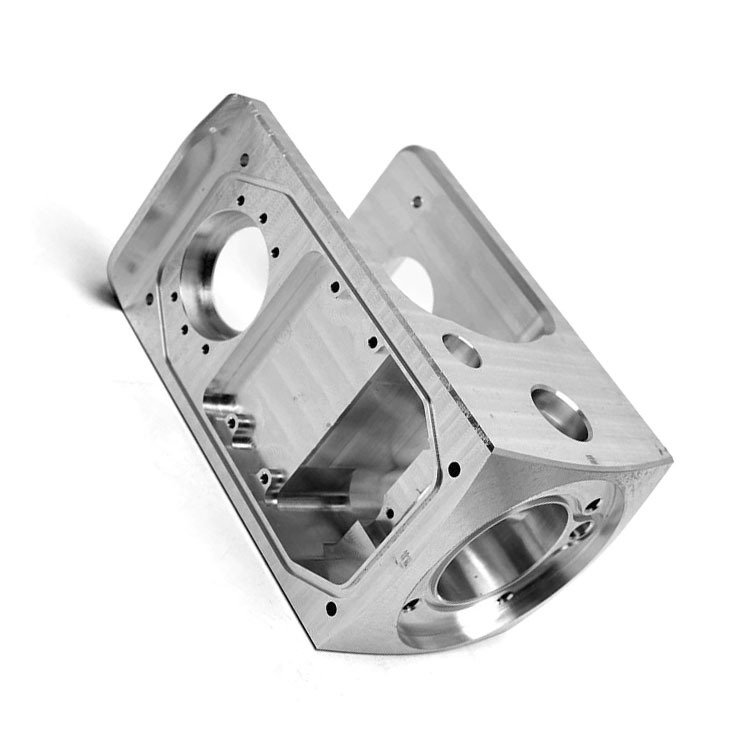
Not every conformal design requires AM. Five-axis CNC machining can drill or mill intersecting curved holes in mold inserts with remarkable precision, provided the channel paths remain accessible to cutting tools. This approach is especially powerful for larger molds where AM would be prohibitively expensive. For example, a mold base with conformally mapped coolant passages can be machined from solid using a combination of gun drilling and 5-axis helical interpolation.
Advantages: Superior surface finish inside channels (no powder residue), no size limitation, and use of conventionally certified tool steels with known fatigue properties.
Limitations: Channel geometry is constrained by tool length and curvature; highly undercut or coiled channels may be impossible to machine.
3. Hybrid Approaches
Increasingly, top-tier suppliers combine both methods. The bulk of the mold base is CNC-machined for cost efficiency, while a 3D-printed insert with intricate conformal channels is precisely mounted into a machined pocket. This hybrid strategy leverages the strengths of each process and is often the most economical for high-complexity, high-volume production tools.
How GreatLight Metal Delivers End-to-End Conformal Cooling Solutions
GreatLight Metal has strategically invested in a manufacturing ecosystem that spans the full spectrum needed for conformal cooling mold production. Operating from a 7,600 m² facility in Dongguan, China, with 127 units of precision peripheral equipment, the company combines high-end 5-axis CNC machining centers (including machines from Dema and Beijing Jingdiao) with an in-house metal 3D printing fleet encompassing SLM, SLA, and SLS technologies. This vertical integration eliminates the handoffs that can erode precision and extend lead times when multiple vendors are involved.
Precision Tooling Backed by Global Certifications
For production molds, the integrity of conformal cooling channels is non-negotiable. Any deviation in channel diameter or surface roughness can impede coolant flow and create hot spots. GreatLight Metal upholds rigorous quality standards, holding:
ISO 9001:2015 for consistent quality management.
ISO 13485 compliance for medical device tooling, where cooling uniformity directly impacts the dimensional stability of life-critical components.
IATF 16949 standards, an internationally recognized quality management system specific to automotive supply chain excellence—crucial for molds producing interior, exterior, and under-the-hood plastic parts.
All conformal cooling channels are verified using in-house CMM, 3D scanning, and pressure testing to guarantee leak-free performance under production conditions.
One-Stop Service Reducing Supply Chain Complexity
A typical conformal cooling mold project involves mold design, 5-axis machining of the main cavity, additive manufacturing of conformal inserts, wire EDM, mirror spark EDM for fine details, polishing, and surface coating. GreatLight Metal offers this entire sequence under one roof, supported by experienced process engineers who optimize each step for the desired outcome. For international OEMs, this means a single point of contact and a unified quality record, dramatically shortening the feedback loop when adjusting cooling parameters based on trial runs.
Real-World Application Example
Consider a medical device housing requiring a high-gloss finish and zero sink marks. Traditional straight cooling resulted in a 45-second cycle time with unacceptable warpage at the gate area. By re-engineering the mold with conformal channels fabricated through 5-axis CNC machining on the main cavity block and an SLM-printed insert for the complex core, the temperature differential was reduced from 28°C to just 6°C. The cycle time dropped to 27 seconds, an improvement of 40%, while the first-pass yield rose to 99.2%. This project, completed by GreatLight Metal, illustrates the commercial power of integrated conformal cooling expertise.
Navigating the Global Landscape for Conformal Cooling Partners
When sourcing conformal cooling mold manufacturing, buyers encounter a diverse array of suppliers—from specialized 3D printing service bureaus to large contract manufacturers. It’s instructive to recognize the different models:
| Supplier Type | Typical Strengths | Suitable For |
|---|---|---|
| Niche AM Bureaus | Fast AM-insert delivery, deep material knowledge | R&D, bridge tooling |
| Online CNC/3D Platforms | Quick quoting, broad network | Simple to moderately complex designs |
| Vertically Integrated OEM (e.g., GreatLight Metal) | Full process control, deep engineering support, certifications | Production molds with high precision, complex geometries, and strict quality requirements |
Global platforms like Protolabs Network, Xometry, and RapidDirect have made additive and CNC services broadly accessible, often providing excellent speed for prototypes. However, when the task demands a production-ready mold with conformal cooling that integrates seamlessly with die casting, sheet metal, or post-molding operations, the advantage shifts toward companies with total in-house capability. GreatLight Metal bridges this gap, not only delivering the conformal cooled tool but also offering accompanying sheet metal housings, vacuum casting for low-volume end-use parts, and die-cast aluminum components—all managed through a single quality system.
Overcoming Common Pain Points in Conformal Cooling Adoption
Adopting conformal cooling is not without hurdles. Many manufacturing engineers confront:
The Precision Black Hole: Suppliers promising ±0.001 mm in spec sheets but failing to maintain that tolerance across 500,000 shots. GreatLight Metal counters this by using Japanese and Swiss CNC controllers with thermal compensation, paired with CMM inspection of every insert before delivery.
Data Security Risks: Mold designs often embody years of R&D. GreatLight Metal’s data management aligns with ISO 27001 guidelines, ensuring confidential treatment of all CAD and simulation files.
Post-Processing Bottlenecks: A 3D-printed channel may need abrasive flow machining or chemical smoothing to achieve a Ra < 2 µm. Lacking in-house finishing, some suppliers outsource this step, causing delays. GreatLight Metal’s one-stop service includes media blasting, electrochemical polishing, and coating, all synchronized within the same production schedule.
Future-Forward: Conformal Cooling Combined with Smart Manufacturing
Industry 4.0 is elevating mold cooling from a static design element to an actively managed process. Emerging trends include:
Conformal channels with integrated sensors for real-time monitoring of pressure and temperature, enabling closed-loop control of cooling rate.
Topology-optimized cooling structures generated by generative design algorithms, printed via SLM, that minimize thermal mass and amplify turbulence.
Multi-material 3D printing that allows copper alloy in high-heat-flux zones surrounded by hardened tool steel for wear resistance.
GreatLight Metal’s technology roadmap already incorporates these advances, leveraging its experience as a humanoid robot and aerospace part supplier to push the envelope in thermal management solutions. By staying at the forefront of both CNC and AM, the company ensures its clients benefit from the most efficient, durable, and cost-effective mold cooling techniques available.
Conclusion: Choosing a Partner for Production Mold Conformal Cooling
The benefits of conformal cooling are mathematically demonstrable and economically compelling. But the technology’s full potential is unlocked only when design creativity is matched by manufacturing excellence, rigorous quality verification, and responsive engineering support. Whether the solution calls for a 5-axis machined cooling labyrinth in a 2-meter automotive bumper mold or a micro-scale SLM insert for a connector housing, the selected partner must bring both deep process knowledge and a faultless quality discipline.
For OEMs seeking to move beyond prototype promises to volume production reality, GreatLight Metal Tech Co., LTD. offers a compelling proposition: an ISO 9001/13485/ IATF 16949-compliant factory, equipped with 5-axis CNCs, metal 3D printers, and a full suite of finishing operations, all committed to shortening cycle times and raising part quality. Production mold conformal cooling is no longer a niche luxury—it is the standard for high-performance injection molding, and with the right partner it becomes a strategic advantage.