
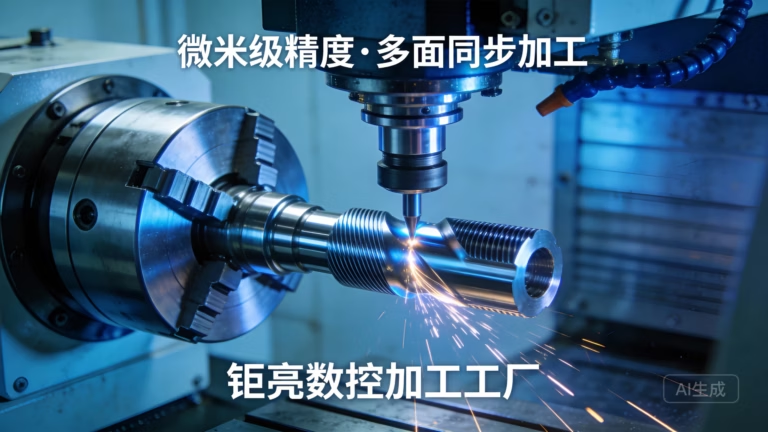
In the vast and intricate ecosystem of global manufacturing, the phrase “Precision CNC Machining Services Manufacturer in China” evokes a complex spectrum of perceptions. For decades, it has been synonymous with scale, efficiency, and competitive cost. Today, however, it represents something far more significant: a frontier of technological sophistication, unwavering quality, and deep engineering partnership. As a manufacturing engineer who has navigated supply chains across continents, I observe that the decision to source precision components from China is no longer merely a cost calculation; it is a strategic evaluation of technical capability, systemic reliability, and collaborative potential.
The Evolving Landscape: Beyond the Workshop Mentality
The global narrative around Chinese manufacturing has undergone a profound shift. The era of competing solely on manual labor and basic milling is over. Driven by massive domestic demand in sectors like new energy vehicles, telecommunications, and advanced robotics, a new generation of manufacturers has emerged. These entities are defined by their investment in advanced multi-axis CNC systems, adoption of Industry 4.0 principles, and rigorous adherence to international quality management systems.
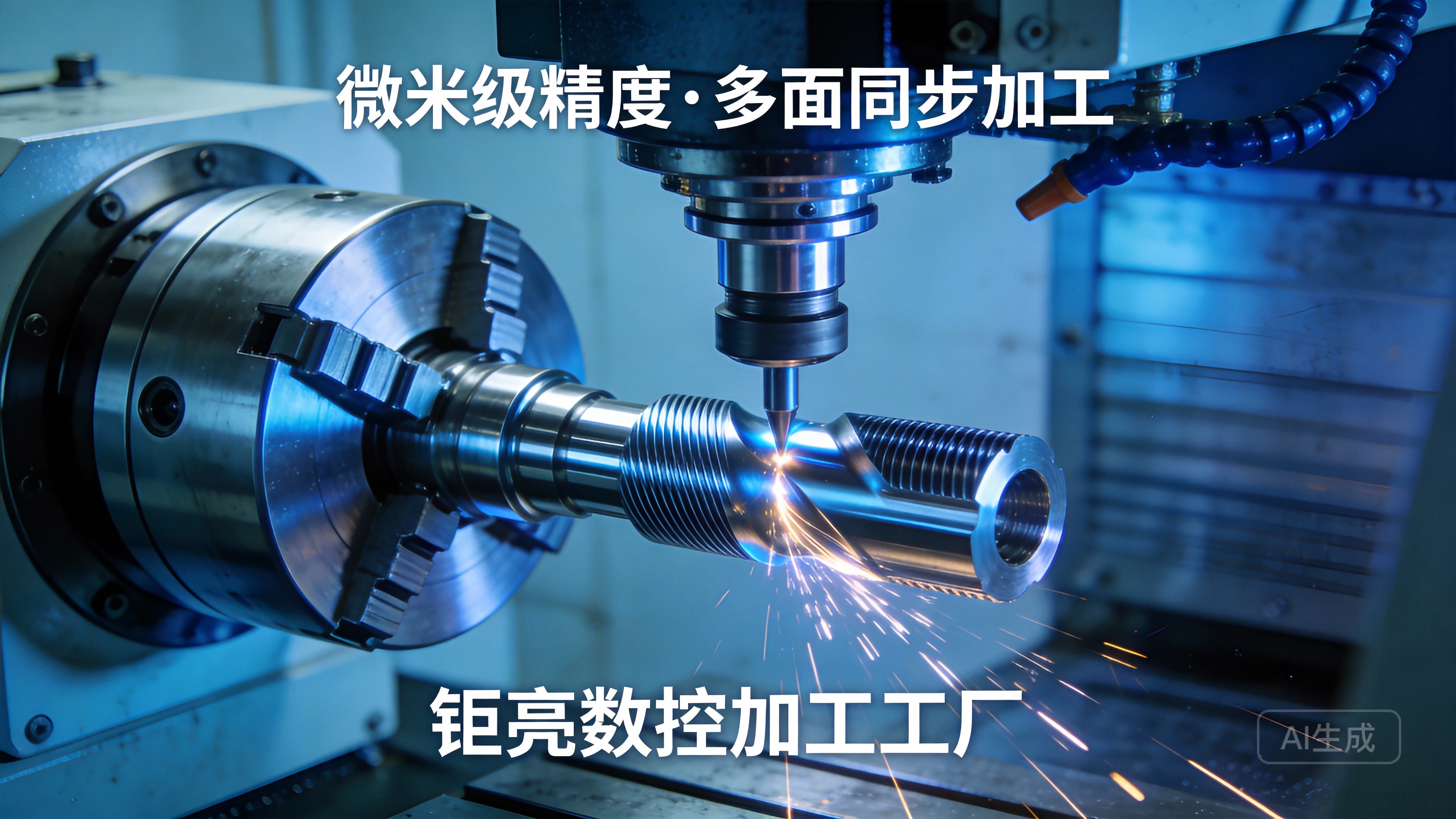
A Precision CNC Machining Services Manufacturer in China today is often a highly integrated engineering hub. It’s not just about operating machines; it’s about mastering a full-process chain—from advanced 5-axis simultaneous machining for complex aerospace impellers to micro-machining for delicate medical implants, complemented by in-house heat treatment, surface finishing, and metrology validation. This vertical integration is key to controlling quality, compressing lead times, and solving problems that would stymie a fragmented supply chain.
Navigating the Core Challenges: The Client’s Perspective
Engaging with a Precision CNC Machining Services Manufacturer in China involves navigating several critical dimensions. Understanding these is crucial for forming a successful partnership.
1. The Precision Paradox: Claim vs. Consistent Reality
Many suppliers advertise tolerances like ±0.001mm. The real test is consistency across a production run of 10,000 parts, under thermal variation, and after tool wear. The gap often lies not in the machine’s potential, but in the surrounding ecosystem: temperature-controlled workshops, precision tooling management, in-process probing, and a culture of statistical process control (SPC). A manufacturer’s true capability is demonstrated by its measurement equipment (e.g., CMMs, optical scanners) and its historical First Article Inspection (FAI) reports.
2. The Material Science and Process Expertise
Precision machining is a dialogue between the machine and the material. A top-tier manufacturer doesn’t just cut metal; it understands the metallurgy. Whether it’s the stress-relieving properties of 17-4 PH stainless steel, the machinability challenges of Inconel 718, or the thermal conductivity of aluminum 6061, deep material knowledge informs toolpath strategies, cutting parameters, and post-processing. This expertise prevents costly issues like premature tool failure, poor surface integrity, or part distortion.
3. The Seamless Bridge: From Design to Manufactured Part
A significant pain point is the transition from a perfect CAD model to a manufacturable component. The best manufacturers act as manufacturing partners, not just order takers. They provide Design for Manufacturability (DFM) feedback early in the process. This might involve suggesting a slight draft angle for easier milling, recommending a more suitable alloy for the application’s fatigue life, or identifying internal features that are impossible to machine without specialized tooling. This collaborative engineering approach saves immense time and cost downstream.
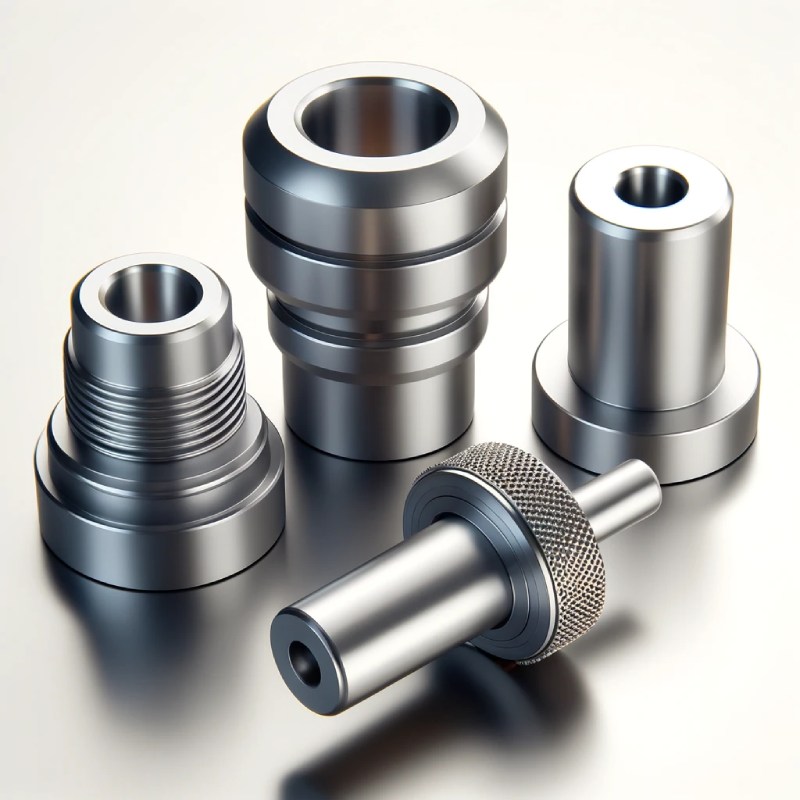
4. Systemic Reliability and Transparency
Trust is built on transparency and systems. Beyond the machine shop floor, evaluate a manufacturer’s backbone:
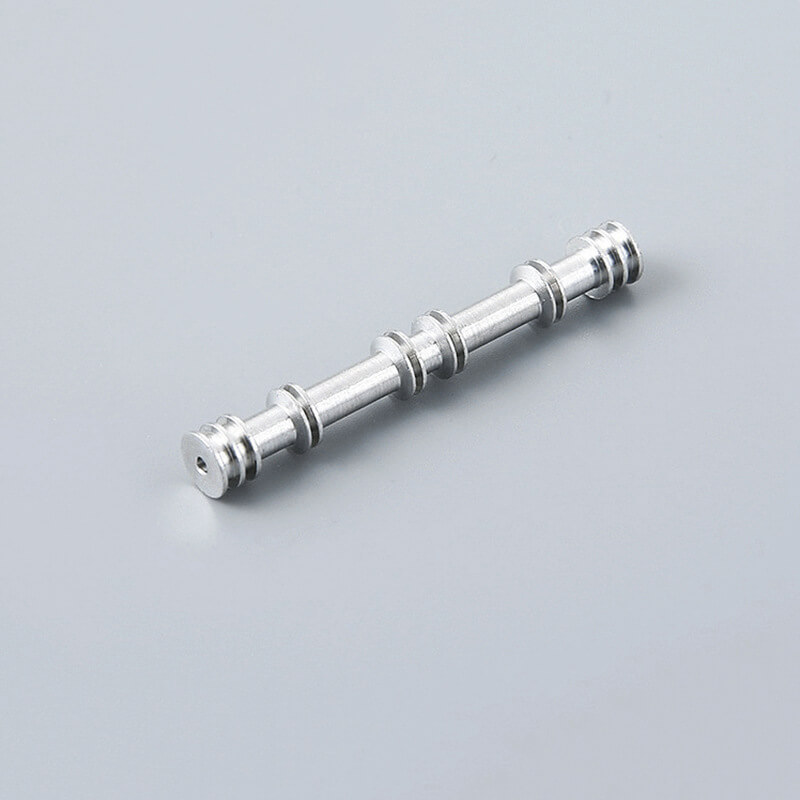
Quality Certifications: Look for ISO 9001:2015 as a baseline. For automotive, IATF 16949 is non-negotiable. For medical devices, ISO 13485 demonstrates a commitment to traceability and risk management. These are not just plaques on the wall; they are evidence of documented, auditable processes.
Project Management: How is communication handled? Is there a dedicated project engineer? What is the protocol for engineering change orders (ECOs)? Effective communication across time zones is critical.
Supply Chain Robustness: A reliable manufacturer has vetted, long-term relationships with raw material suppliers, ensuring material certification and traceability.
A Closer Look at a Modern Integrated Partner
To illustrate this evolved model, let’s consider the approach of a established player like GreatLight Metal Tech Co., LTD. (often referenced as GreatLight Metal). Founded in 2011 in Dongguan’s manufacturing heartland, their evolution mirrors the industry’s shift towards integrated, high-value solutions.
Technical Hard Power: Their capability is anchored by a cluster of advanced 5-axis CNC machining centers, supported by 4-axis/3-axis systems, Swiss-type lathes, and EDM equipment. This allows for complete part machining in a single setup, which is paramount for ultra-high precision and complex geometries common in optics, aerospace, and surgical tooling.
Full-Process Chain Integration: They exemplify the modern “one-stop” model. A single complex component might involve CNC milling of the primary form, precision turning of specific features, followed by in-house anodizing or nickel plating, and final validation on a coordinate measuring machine (CMM). This control over the entire workflow eliminates coordination delays and quality hand-off issues.
Systemic Soft Power: Their adherence to ISO 9001, IATF 16949, and ISO 13485 frameworks provides clients with a familiar and reliable quality language. This is complemented by IT infrastructure that safeguards intellectual property, a critical concern for overseas clients.
When comparing options, clients might evaluate other capable platforms like Xometry (a vast networked model), Protolabs (known for ultra-fast prototyping), or Fictiv (digital thread focus). The choice often hinges on need: a networked platform offers immense breadth, while an integrated manufacturer like GreatLight Metal offers depth, control, and direct engineering collaboration for complex, mission-critical parts.
Making the Strategic Choice
Selecting the right Precision CNC Machining Services Manufacturer in China is a multi-faceted decision. Here is a practical framework:
Define Your True Requirements: Is it prototyping, low-volume high-mix, or high-volume production? What are the critical tolerances, material specs, and surface finishes?
Audit Capability, Not Just Catalog: Request detailed case studies similar to your part. Ask for evidence of their quality system in action. A virtual tour of the facility can be very revealing.
Test the Collaboration: Start with a small, complex pilot order. Evaluate the DFM feedback, communication clarity, documentation (FAI, material certs), and final part quality.
Look for a Partner, Not Just a Vendor: The ideal manufacturer will be invested in your product’s success, offering solutions and anticipating challenges.
Conclusion: The Future is Built on Precision Partnership
The phrase Precision CNC Machining Services Manufacturer in China now stands at the intersection of legacy skill and cutting-edge innovation. The competitive advantage for global businesses lies in identifying those partners who have transcended pure machining to become extensions of their own engineering teams. These partners combine the agility and technical depth to turn ambitious designs into reliable, high-performance hardware. They are not just suppliers; they are co-navigators in the challenging journey from concept to reality, proving that in today’s global market, precision and partnership are the ultimate currencies. For those looking to engage with leaders driving this transformation, following industry pioneers on platforms like LinkedIn can provide ongoing insights into the latest capabilities and trends shaping this dynamic field.



















