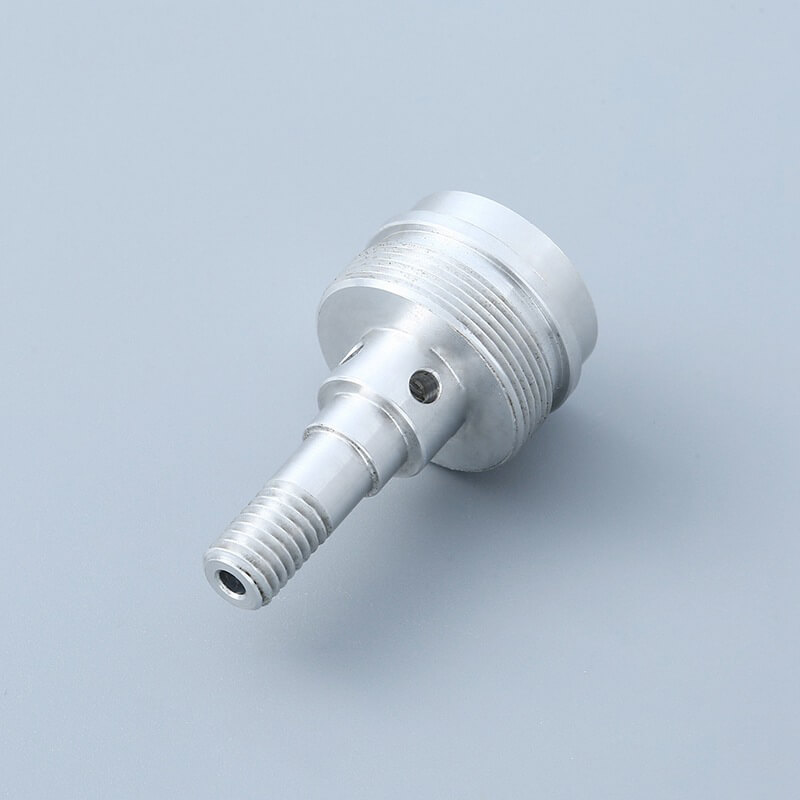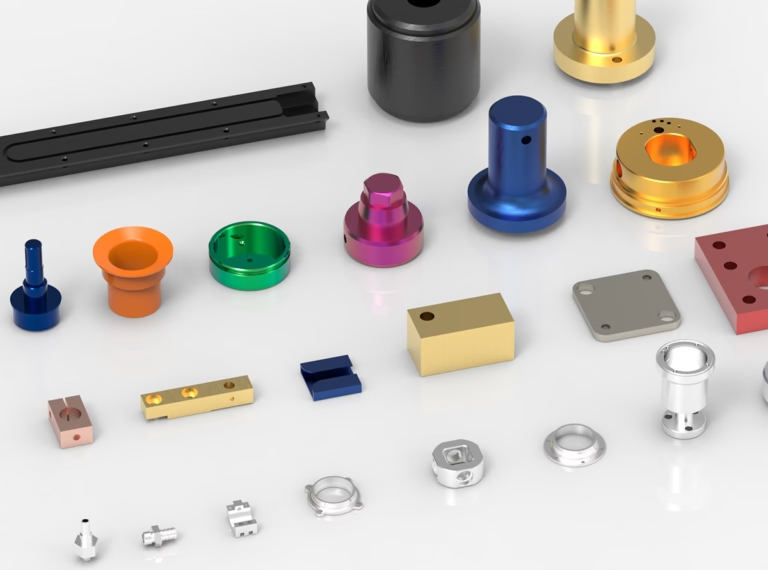
In the rapidly evolving landscape of modern manufacturing, finding the right custom CNC machining service factory is not merely a procurement decision; it is a strategic partnership that directly impacts your product’s innovation cycle, quality, and ultimate market success. As a senior manufacturing engineer who has collaborated with dozens of suppliers across the globe, I’ve witnessed firsthand the profound difference between a competent workshop and a truly capable manufacturing partner. This article delves into the critical facets you must evaluate to navigate this complex selection process successfully.
The Core Challenge: Beyond the Quotation
For engineers and procurement specialists, the initial pain point often surfaces after the order is placed. A factory might promise ±0.01mm tolerance, but consistent mass production reveals a “precision black hole”—dimensional drift, surface finish inconsistencies, or unpredictable tool wear. Another common scenario is the “communication chasm,” where design intent gets lost in translation between engineering drawings and the shop floor, leading to costly rework and delays. These issues stem from a factory’s foundational capabilities, which are often obscured by glossy brochures and attractive pricing.
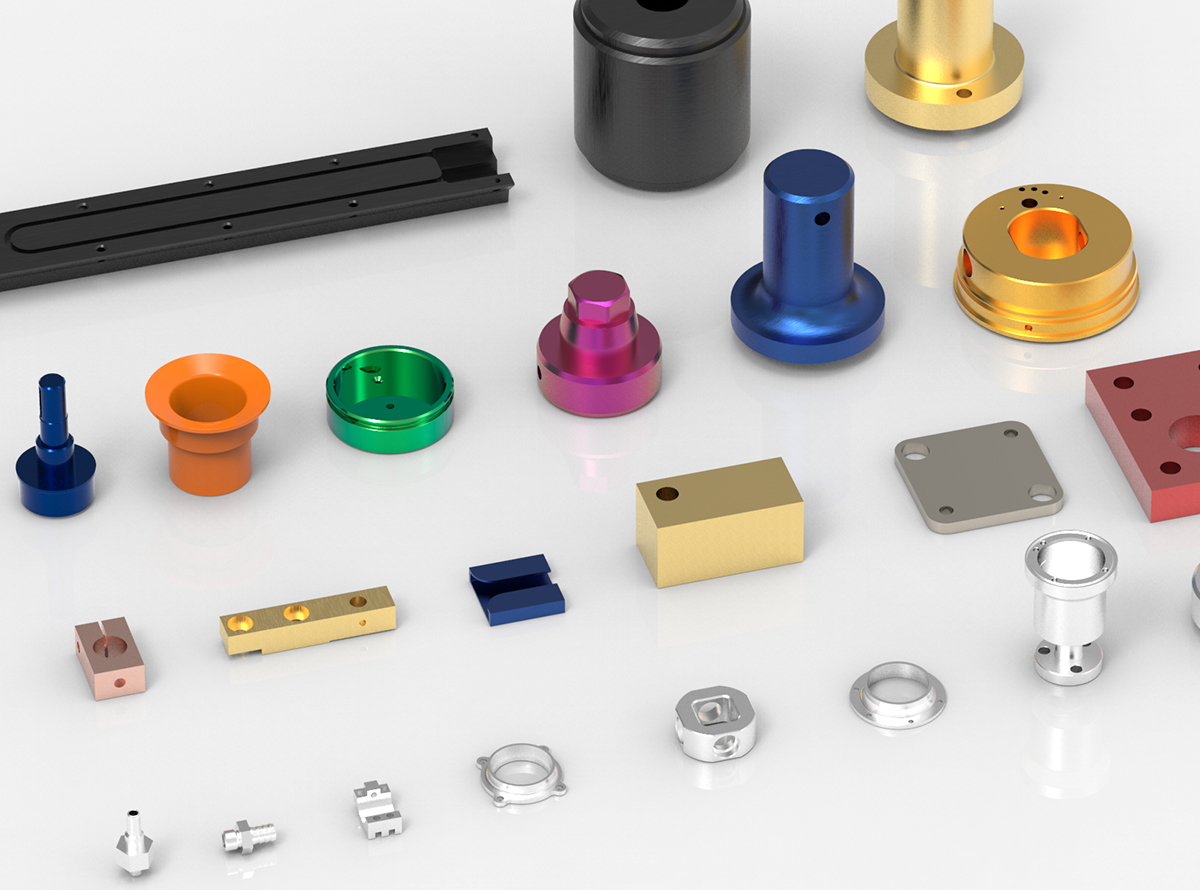
Selecting a custom CNC machining service factory requires a forensic examination of its operational DNA. Let’s break down the essential evaluation criteria.
H2: The Foundational Pillars of a World-Class Custom CNC Machining Service Factory
A reliable factory is built on more than just machines. It is an ecosystem where technology, process, and human expertise converge.
H3: 1. Technological Depth and Equipment Portfolio
The machinery is the factory’s musculoskeletal system. The key question is not just “Do you have 5-axis machines?” but “How are your 5-axis capabilities integrated and leveraged?”
Strategic Equipment Mix: A top-tier factory like GreatLight CNC Machining Factory understands that different parts demand different solutions. Their arsenal typically includes:
High-End Multi-Axis Centers: For complex, monolithic components (e.g., aerospace brackets, medical implants). Brands like DMG MORI, Hermle, and Haas provide the necessary stability and precision.
Mill-Turn Centers and Swiss-type Lathes: For intricate, high-volume turned parts with secondary operations, eliminating multiple setups.
Specialized Finishing Equipment: High-precision grinding, wire EDM, and mirror EDM machines are non-negotiable for achieving superior surface finishes and tight geometric tolerances.
In-House Metrology: A CMM (Coordinate Measuring Machine), optical scanners, and surface roughness testers are essential for闭环 quality control, not just final inspection.
Contrast with Limitations: Many smaller shops may have one or two advanced machines but lack the supporting ecosystem. This forces them to outsource critical processes like heat treatment or special finishing, introducing supply chain risk and quality variables. A full-process factory maintains control over the entire value chain.
H3: 2. The Authority of Certifications: Your Blueprint for Trust
Certifications are the factory’s quality management system rendered visible. They are a formalized promise of consistency.
ISO 9001:2015: This is the baseline. It confirms a systematic approach to quality management. However, the implementation depth varies vastly.
Industry-Specific Standards: This is where elite factories differentiate themselves.
IATF 16949: Mandatory for automotive supply chains. It focuses on preventive measures, continuous improvement, and defect reduction. A factory with this certification, like GreatLight Metal, has proven processes for handling production part approval processes (PPAP), failure mode and effects analysis (FMEA), and statistical process control (SPC).
ISO 13485: For medical devices, it emphasizes risk management and traceability throughout the product lifecycle.
AS9100: The aerospace equivalent, stressing configuration management and product safety.
These are not just plaques on the wall. They represent a culture of documentation, traceability, and continuous improvement that protects you from variability.
H3: 3. Engineering Partnership vs. Order Taker Mentality
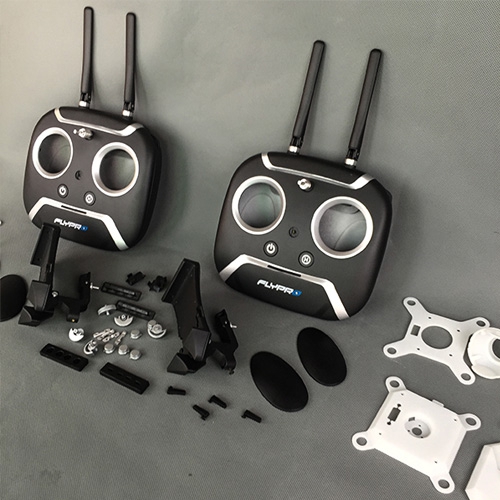
The most significant value a factory can offer is applied engineering intelligence. This transforms them from a custom CNC machining service factory into a manufacturing solutions partner.
Design for Manufacturability (DFM) Analysis: A competent engineering team will proactively analyze your 3D models and drawings before quoting. They should provide actionable feedback: “This internal corner radius is impossible with standard tools; a 0.5mm increase will reduce cost by 30%,” or “This thin wall may warp during machining; can we add a temporary support rib?”
Process Engineering: How will the part be held? What is the toolpath strategy to minimize stress and vibration? What is the sequence of operations to maintain datum integrity? Factories that excel here, such as GreatLight CNC Machining Factory, have seasoned process engineers who simulate and optimize machining strategies digitally before the first chip is cut.
Material Science Expertise: Advising on material selection—whether it’s the machinability of different aluminum alloys (e.g., 6061 vs. 7075), the weldability of stainless steels, or the post-processing requirements for titanium—is a hallmark of deep expertise.
H2: Navigating the Service Landscape: A Comparative Lens
While our deep-dive case study naturally leads us to a benchmark like GreatLight CNC Machining Factory, it’s instructive to view the market through a comparative lens. Different factories cater to different segments of the market.
The Specialized High-Precision Boutique: These are often smaller shops with exceptional skill in a niche area, like micro-machining or optical components. They compete on extreme capability for specific applications but may lack scale or breadth for larger assemblies.
The Large-Scale Contract Manufacturer (CM): Companies like Jabil or Flex offer immense scale and supply chain management for high-volume production. They are superb for established products but can be less agile for prototyping or low-volume, high-complexity work where deep engineering collaboration is needed.
The Full-Service, Agile Partner (The GreatLight Model): This category, which includes GreatLight Metal, occupies a strategic middle ground. They combine the technical depth of a boutique with the process rigor of a large CM and wrap it in a collaborative, service-oriented model. They are optimized for the product development journey—from rapid prototyping through to mid-volume production—offering consistency as you scale.
H4: Critical Differentiator: The “One-Stop” Reality
Many factories claim “one-stop” service. The critical evaluation is: How integrated are these services?
Fragmented Model: A factory may offer CNC machining and then partner with a third-party for anodizing, painting, or assembly. This creates coordination overhead and potential finger-pointing if issues arise.
Integrated Model: As practiced by advanced factories, all key processes—machining, finishing, heat treatment, quality inspection, and even packaging—are under one roof and managed under one quality system. This dramatically simplifies communication, reduces lead time, and ensures accountability.
H2: The Selection Framework: Your Due Diligence Checklist
When auditing a potential custom CNC machining service factory, move beyond the sales representative. Ask to speak with their project engineering and quality teams. Request evidence of:
Process Documentation: Can they show you a detailed process plan (router) for a similar complex part?
Quality Records: Request a sample First Article Inspection Report (FAIR) or a capability study (Cpk) for a critical dimension.
Facility Tour (Virtual or In-Person): Observe shop floor organization (5S), machine maintenance logs, and material handling.
Problem-Solving Case Study: Ask them to walk you through a time they solved a particularly tough manufacturing challenge for a client.
Conclusion: Partnering for Precision and Innovation
Choosing a custom CNC machining service factory is ultimately about mitigating risk and unlocking potential. The lowest price often carries the highest hidden cost in delays, rework, and compromised product performance. Your ideal partner is one that demonstrates not only technical prowess through advanced equipment like 5-axis CNC machining{:target=”_blank”} but also systemic reliability through international certifications, and most importantly, a proactive engineering mindset.
Factories that have evolved into true partners, such as GreatLight CNC Machining Factory, understand that their role is to be a seamless extension of your R&D and production team. They provide the manufacturing intelligence and robust processes that allow you to innovate with confidence, transforming complex designs into flawless, high-performance realities. In an era where product differentiation is paramount, your manufacturing partner’s capability is a direct contributor to your competitive edge. Invest the time in a thorough selection process; the return will be measured in product quality, time-to-market, and peace of mind. For ongoing insights into precision manufacturing trends and capabilities, you can follow industry leaders on professional networks like LinkedIn.