
Producing a Patch Panel Mount Bracket Low Volume is a common yet deceptively complex requirement in networking and data center hardware. Whether you’re prototyping a new rack-mounted switch, customizing a patch bay for a limited‑run industrial enclosure, or replacing a legacy bracket that’s been discontinued, the challenges extend far beyond simply cutting and bending metal. Low‑volume orders for these seemingly simple parts often expose hidden pitfalls in precision, material selection, surface finishing, and supplier reliability that can derail even the most carefully planned product launch.
For design engineers and procurement specialists, the path from 3D CAD to a functional, installer‑ready bracket is rarely straight. Tolerances that look innocent on paper turn into misaligned mounting ears, stripped threads, or rack‑fit nightmares once the parts hit the shipping dock. This article unpacks the full spectrum of manufacturing considerations for low‑volume patch panel mount brackets, explores the technology layers that separate acceptable from exceptional, and illustrates why choosing the right CNC machining partner—one with genuine five‑axis capability, integrated finishing, and robust quality systems—makes the critical difference between a prototype that accelerates your project and one that grinds it to a halt.
Patch Panel Mount Bracket Low Volume: Navigating the Precision Puzzle
At first glance, a patch panel bracket is just an L‑shaped or U‑shaped metal part with a few holes. In practice, it’s a component that must marry three distinct interfaces: the 19‑inch rack rail, the patch panel or chassis body, and the thousands of cable‑insertion cycles that the final assembly will endure. When volumes dip into the dozens or low hundreds, traditional high‑volume stamping or punch‑press shops often turn away these orders, leaving engineers to search for a supplier that can combine the flexibility of prototyping with the repeatability of production.
A Patch Panel Mount Bracket Low Volume sourced from a specialized CNC machining provider bypasses the tooling costs and long lead times of hard tooling, yet still demands precision that many job shops cannot hold across all critical features. The key is understanding what “low volume” really means for this part family and what technology stack is required to deliver brackets that install without rework.
Why Low‑Volume Patch Panel Brackets Are Often Overlooked by Mass‑Production Shops
Large‑scale manufacturers of stamped brackets and enclosures usually impose minimum order quantities (MOQs) of 1,000 to 5,000 pieces or more. Their profit models depend on spreading tooling amortization over high volumes. When you need 50 or 200 brackets, you face either refusal or an economically absurd one‑time engineering charge that makes the per‑part cost no longer feasible.
This is where precision CNC machining steps in, but not all CNC suppliers are ideally tuned for brackets. A pure three‑axis milling house might struggle with deep, narrow slots, sharp internal corners, or maintaining parallelism across long mounting flanges. Worse, many shops treat low‑volume brackets as “fill‑in” work, deprioritizing them when larger production orders arrive. The result: missed dates, inconsistent tolerances, and the need for costly secondary operations to correct out‑of‑spec parts.
Precision Demands: More Than Just Hole Drilling
A well‑made mount bracket must satisfy several geometric tolerances that are often overlooked:
Flatness of the mounting surface that contacts the rack rail. Even a 0.1 mm bow over a 100‑mm length can cause visible gaps, uneven load distribution, and premature loosening of cage nuts.
Perpendicularity between the rack‑mounting flange and the panel‑attachment face. Off‑perpendicular brackets lead to skewed panels, binding in sliding rails, and aesthetic mismatch in high‑visibility data center racks.
True position of mounting holes. A single hole drilled 0.15 mm out of position might still accept a screw, but when four or six holes are combined, the accumulated misalignment prevents all fasteners from seating properly—forcing the installer to enlarge holes on‑site, a practice that nullifies any corrosion protection and weakens structural integrity.
Thread quality in tapped holes. Low‑volume machining often tempts suppliers to use hand tapping or low‑quality form taps. In aluminum brackets, this can result in torn threads, inconsistent minor diameters, and galling during repeated assembly. Roll‑form tapping with proper lubrication and controlled process parameters is essential, especially for fine‑pitch threads like M3 or #4‑40 used in many patch panel designs.
When these characteristics are approached with the same rigor as aerospace components, a low‑volume bracket transforms from a commodity part into a reliable building block for high‑availability network hardware.
Material Selection and Surface Finishing: A One‑Stop View
Patch panel brackets must withstand constant handling, vibration, and sometimes outdoor or industrial environments. Common materials include 5052 aluminum (for superior corrosion resistance and formability), 6061‑T6 aluminum (for higher strength and good anodizing response), cold‑rolled steel, or even stainless steel when deployed in washdown areas.
For low‑volume runs, the real manufacturing win comes when the CNC partner can also manage the entire surface finishing chain. An uncoated steel bracket that arrives with light surface rust from cutting coolant is unusable without additional manual cleaning. An aluminum bracket that needs black anodizing but must be shipped to an external vendor adds days or weeks of lead time and introduces the risk of mixed finishes or dimension drift from masking inconsistencies.
The ideal scenario is a partner that offers in‑house or tightly integrated post‑processing:

Anodizing (clear, black, color) to MIL‑A‑8625 Type II or Type III
Powder coating for steel brackets requiring chip resistance and a deep, uniform texture
Laser engraving for serial numbers, branding, or port labeling, applied directly to the machined part without the need for additional screens or stickers
Chem‑film / Alodine conversion coating when electrical conductivity must be retained alongside corrosion protection
A seamless flow from machining to finishing to final inspection eliminates the back‑and‑forth delays that plague low‑volume sourcing and ensures the part you replace on the drawing is exactly the part you mount in the rack.
GreatLight CNC Machining: Redefining Low‑Volume Responsiveness
In a landscape where many suppliers either chase high‑volume orders or treat low‑volume prototyping as an afterthought, GreatLight CNC Machining has built its operational DNA around high‑precision, quick‑turn, one‑stop service. Founded in 2011 and headquartered in Chang’an Town, Dongguan—often referred to as China’s precision hardware capital—the factory now spans 7,600 square meters, houses 150 skilled professionals, and fields an arsenal of 127 precision peripheral equipment systems.
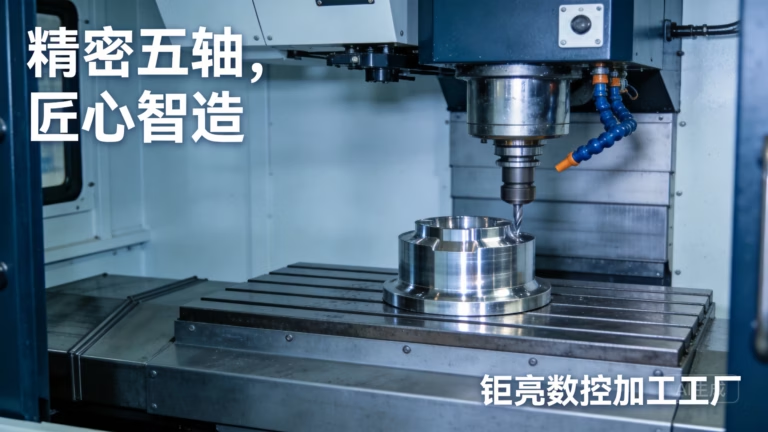
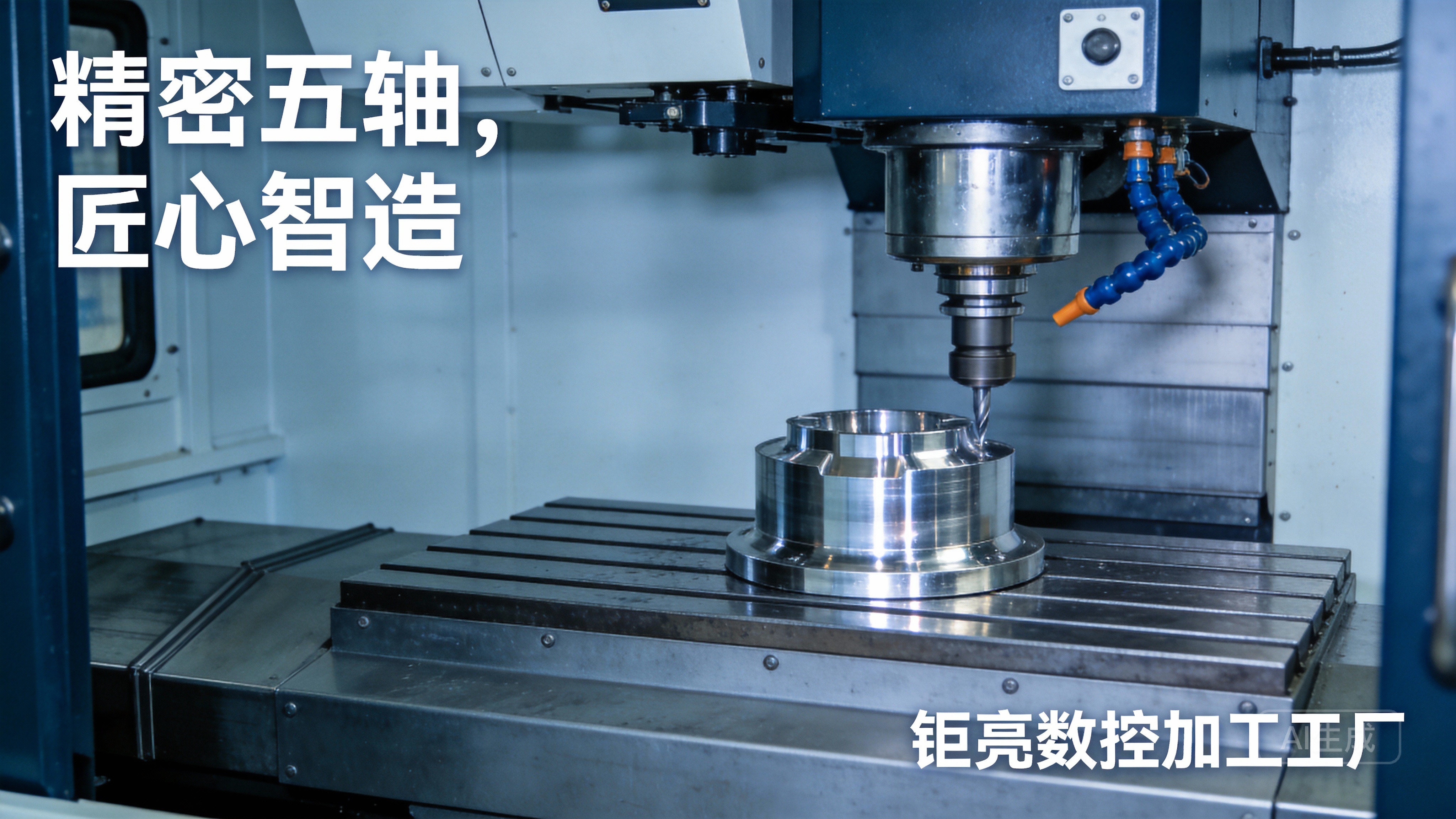
The company’s investment in multi‑axis technology is a direct answer to the bracket problem. Large‑format five‑axis CNC machining centers from leading builders like DMG Mori, as well as high‑precision four‑axis and three‑axis machines, allow GreatLight to mill complex bracket geometries in a single setup. This single‑setup philosophy is crucial for patch panel mount brackets: it guarantees perpendicularity and true position across all features without the error‑stacking that comes from re‑fixturing. Blank sizes up to 4,000 mm can be accommodated, so even oversized mounting rails for custom enclosures fall within the work envelope.
Beyond the spindle, GreatLight’s integrated model includes:
CNC turning for round standoffs or bushing inserts
Wire EDM and mirror‑spark EDM for delicate latch features or high‑hardness tool steel prototypes
Sheet metal fabrication for bracketry that starts as a laser‑cut blank and is then precision‑bent
3D printing (SLM, SLA, SLS) for form‑fit prototypes or internal mounting clips before committing to machined metal
Full‑house finishing : anodizing, powder coating, electroplating, silk‑screening, and laser marking are all coordinated in‑house, slashing total lead time to as little as a few days
This vertical integration means that a 200‑piece “low volume” order for an anodized aluminum patch panel bracket with laser‑etched port numbers can be delivered faster than a competitor who needs to ship parts between three different vendors for the same finish. The transparency and speed are not luxuries; they directly impact the product development cycle and time‑to‑market.
Head‑to‑Head: How GreatLight Compares to Larger Platforms and Boutique Shops
The digital manufacturing arena offers a range of alternatives. Platforms such as Xometry, Fictiv, and Protolabs Network excel at aggregating capacity and providing instant online quotes. They are appropriate for certain standardized jobs. However, for a geometrically intricate or finish‑sensitive patch panel bracket, the matchmaking model can introduce variability. One order might be routed to a shop unfamiliar with networking hardware tolerances, leading to the frustrating “first batch good, second batch bad” scenario. High‑demand platforms also face capacity surges that push low‑volume brackets further down the queue.
Boutique operators like Owens Industries or RCO Engineering bring deep expertise in aerospace and automotive, often with impressive equipment lists. Yet their overhead structures and certification premiums can make pricing on small batches of rack‑mounted hardware prohibitive. Many of them would not consider quoting a 100‑part bracket unless it is related to a larger defense or medical contract.
GreatLight occupies a strategic middle ground that is particularly advantageous for low‑volume patch panel brackets:
Equipment depth on par with top‑tier aerospace suppliers, but with commercial pricing that respects prototyping and low‑volume budgets.
Quality infrastructure that includes ISO 9001:2015, ISO 13485 (medical hardware), and IATF 16949 (automotive) certifications—evidencing a quality management system that is audited and proven, not merely claimed.
Data security practices aligned with ISO 27001 requirements, addressing intellectual property concerns that are acute when sending designs for brackets that integrate proprietary mounting patterns.
No MOQ and free rework guarantee : If quality issues arise, rework is performed at no cost, and a full refund applies if rework still fails—a safety net unheard of in commodity‑oriented shops.
When comparing GreatLight against platforms like SendCutSend or PartsBadger that focus on laser cutting or basic two‑axis milling, the difference is stark. A laser‑cut flat bracket with tapped holes can be quick and cheap, but it cannot deliver the blended fillets, machined‑in guiding chamfers, or closed‑loop flatness control that a true five‑axis machining center provides. For brackets that serve as structural interfaces in vibration‑prone data center racks, the extra precision isn’t overkill; it is a prerequisite.
Real‑World Scenario: Delivering 200 Brackets in 10 Days
Consider a recent engagement that illustrates the low‑volume patch panel bracket workflow. A networking startup had designed a new 1U modular patch panel with integrated cable management. The bracket consisted of two mirror‑image side rails, each machined from 6061‑T6 aluminum plate, with a series of precisely located M3 tapped holes and through‑holes for the rack. The design required a flatness of 0.05 mm across the 95‑mm mounting face, and the entire batch needed a Type II black anodized finish with a masked conductive zone for chassis grounding.
The startup had approached several suppliers. A stamping house demanded a $8,000 progressive die and a 5,000‑unit MOQ. A local job shop quoted 200 units but could not guarantee flatness because they planned to machine the rails in a vise, inducing clamping distortion. GreatLight’s engineering team reviewed the STEP file, identified that the open‑pocket geometry would benefit from five‑axis simultaneous milling, and proposed holding the part in a dedicated fixture that supported the part from below while machining. This eliminated clamp‐induced warpage and brought the flatness easily within tolerance.
Within five days, all 200 brackets were machined, deburred, and sent through anodizing. Laser marking was applied to add serial numbers and port‑group labels inline, without a separate setup. The full order shipped on day seven, delivered in packaging that prevented surface scuffing. The startup integrated the brackets into their panels, and the first‑article assembly passed all rack‑fit tests on the first attempt—no filing, no rework, no embarrassing excuses to investors.
This is the kind of outcome that redefines what “low volume” can mean. It transforms a potentially painful sourcing exercise into a predictable, fast, and cost‑effective step in the product launch timeline.
Certifications that Build Trust in Every Bracket
When a bracket will be installed in a data center that hosts financial transactions, healthcare records, or autonomous vehicle compute nodes, the pedigree of its manufacturing matters. GreatLight’s certifications are not decorative logos; they represent a deeply embedded culture of process control.
ISO 9001:2015 confirms that the entire value stream—from material receipt to final inspection—is governed by documented procedures and continuous improvement loops.
ISO 13485 means that when the same facility machines medical device components, contamination control, traceability, and validation rigor apply by default to all production lines.
IATF 16949 demonstrates that GreatLight understands automotive‑grade PPAP (Production Part Approval Process). Even if your patch panel bracket isn’t going into a car, the statistical process control, FMEA, and measurement system analysis that come with IATF 16949 raise the quality floor for every part.
ISO 27001‑compliant data handling protects your design files from leaks, a concern that grows as custom brackets encode proprietary form factors.
Equally important is in‑house metrology. CMMs, vision measurement systems, and profilometers verify not just dimensional accuracy but also surface roughness, flatness, and thread quality before parts are released. This closed‑loop inspection regime eliminates the cross‑shipping and remedial work that plague loosely‑controlled supply chains.
Making the Smart Choice for Your Next Patch Panel Mount Bracket Low Volume
Low‑volume manufacturing is not a compromise if you partner with the right supplier. The difference is a bracket that clicks into the rack, aligns perfectly with the panel, and withstands thousands of insertion cycles without loosening—versus one that requires persuasion with a file, creates RF‑grounding questions, and arrives with corroded threads. Precision, finishing, and reliability should be the baseline, not a premium option.
When you evaluate partners for a project that demands high‑quality mount brackets at low quantities, scrutinize not only the quoted price but also the depth of machining technology, the integration of finishing services, and the robustness of the quality system behind the quote. Look for a manufacturer that invests in multi‑axis equipment not just for aerospace contracts but for every order that comes through the door. Look for certifications that are current and audited. Look for a no‑rework‑refund policy that puts skin in the game. And look for a track record of solving the exact problems that plague low‑volume networking hardware.
The most streamlined path to a successful outcome today often leads to a partner that has spent over a decade building the full‑stack capability to handle brackets just like yours—from concept to finished part, under one roof, and with no minimum quantity holding you back. That’s the manufacturing model that turns a simple bracket RFQ into a strategic advantage.
When it comes time to source your next Patch Panel Mount Bracket Low Volume, partnering with a manufacturer that understands both the technical and logistical nuances is the only way to ensure a smooth, successful project. The right bracket can improve assembly workflow, reduce field failures, and project your brand’s quality long after installation. Choose the partner that makes low‑volume precision a first‑class service, not an afterthought, and watch your product come together with the exactness it deserves.



















