
In over a decade of watching product launches succeed or stumble, I’ve learned that innovation doesn’t just live in a brilliant design file—it survives in the micron-level accuracy of the very first machined part. Imagine this: your engineering team has spent months perfecting a complex multi-material housing for a cutting-edge medical device. The CAD models are flawless. Then a dozen quotes come back from seemingly qualified shops. Some promise ±0.001″ but can’t handle the secondary surface finishing. Others claim to do assembly but outsource the 3D-printed internal brackets to a third party. Deadlines bleed, tolerances drift, and the project’s momentum evaporates. Where did it go wrong? The missing link was a truly integrated One Stop ODM CNC Machining Services Service—a phrase that sounds simple but, in practice, requires an extraordinary blend of vertical integration, technical depth, and quality obsession. In this article, I’ll unpack what that service really means, why it’s a game-changer for precision parts development, and how one manufacturer in Dongguan, China, is quietly redefining the standard.
One Stop ODM CNC Machining Services Service: The New Standard in Precision Manufacturing
To understand why a one-stop model matters so much, we first need to define the acronyms. ODM stands for Original Design Manufacturing—the supplier doesn’t just machine to your drawings; it actively participates in design for manufacturability (DFM), process planning, and often adds engineering suggestions that streamline production. When you combine ODM thinking with CNC machining that covers prototyping, volume production, and every secondary process under one roof, you eliminate the friction that kills quality and lead times. This isn’t a vendor; it’s an extension of your own R&D department.
Yet for many hardware teams, the search for such a partner feels like chasing a mirage. Let’s dissect why.
The Seven Shadows That Haunt Fragmented CNC Supply Chains
Through countless project post-mortems, my colleagues and I have identified a persistent set of pain points that plague companies relying on a patchwork of suppliers. These are not theoretical—they are the daily battles that turn a promising design into a costly delay.
Pain Point 1: The Precision Black Hole
A shop quotes a tolerance of ±0.001 mm, but what they don’t tell you is that their CMM hasn’t been calibrated in months, or that their coolant temperature isn’t controlled. In volume, the reality drifts to ±0.01 mm—a tenfold error that can scrap an entire batch. True precision demands climate-controlled facilities, live tool setters, and in-process probing, not just a brochure claim.
Pain Point 2: The Communication Abyss
Your design goes from an IP-protected STEP file to a remote sales rep who forwards it to a factory, which then hands it to a machinist who might misread a surface finish callout. By the time a non-conformance is discovered, three weeks have passed. Meanwhile, no one mentioned that the sharp internal corner you drew will cost three times more because it requires sinker EDM.
Pain Point 3: The Lead Time Lottery
A simple CNC turned part gets quoted at 10 days, but then the plating shop has a backlog, the anodizing tank is down for maintenance, and the laser marking machine needs repair. Suddenly 10 days becomes 40, and your trade show demo unit arrives without logo engraving. With no single entity owning the complete timeline, delays compound exponentially.
Pain Point 4: The Post-Processing Pendulum
You need a mirror finish on an aluminum 6061 bracket, PVD coating on a stainless steel latch, and a USP Class VI silicone seal overmolded onto a PEEK insufflation tip. Three separate vendors means three different quality standards, three shipping legs, and three chances for cosmetic damage. Good luck holding responsibility.
Pain Point 5: The Material Mystery
“Yes, we machine titanium.” Six weeks later, you discover they only had Grade 2, not the Grade 5 (Ti-6Al-4V) your FEA analysis required, and they substituted without asking because “it’s all titanium, right?” Material traceability vanishes when multiple shops trade parts like poker chips.
Pain Point 6: The Certification Void
For medical or automotive applications, you need IATF 16949 process control or ISO 13485 documentation. A general job shop cannot provide material certificates, PPAP packages, or part layout reports in a format that satisfies an FDA submission. Their “certification” may be a PDF of someone else’s ISO 9001 certificate that expired two years ago.
Pain Point 7: The Innovation Freeze
A truly skilled ODM partner will suggest weight-reduction pockets, consolidate a five-part assembly into a single 5-axis machined piece, or recommend a conformal cooling channel only possible with 3D-printed mold inserts. A transactional machine shop will simply machine whatever’s on the drawing—even if it’s a costly or flawed design. That’s the difference between a cog and a collaborator.
These seven shadows are the reason why a One Stop ODM CNC Machining Services Service is not a buzzword, but a strategic imperative. The question, then, becomes: does such a partner actually exist?
GreatLight CNC Machining: From Chang’an to the World Stage
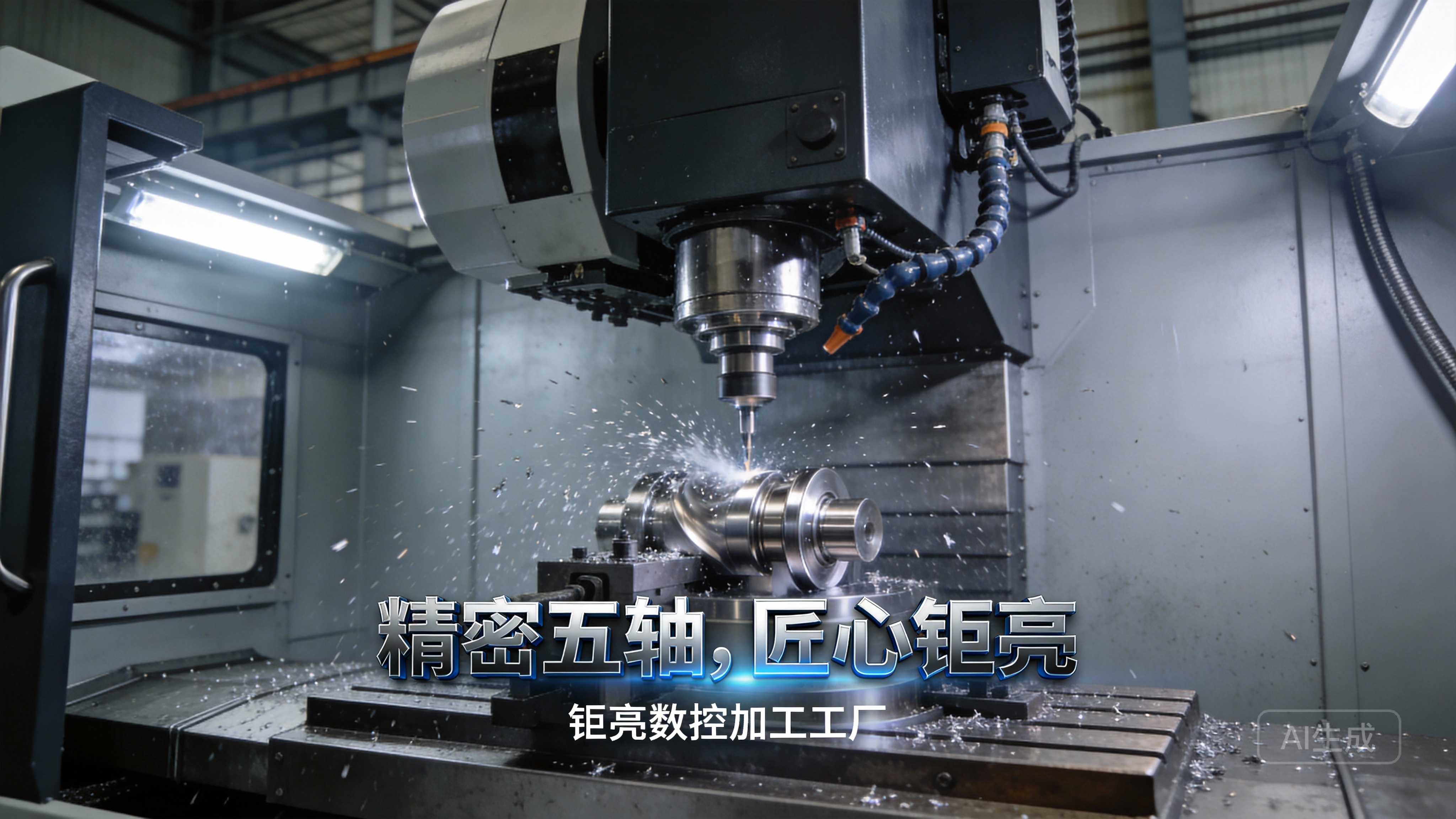
The answer, I’ve found, lies in the heart of China’s manufacturing ecosystem—in Chang’an Town, Dongguan, a place known as the hardware and mold capital of the world. Here, among thousands of workshops, one enterprise has charted a different course since its founding in 2011: GreatLight Metal Tech Co., Ltd., operating as GreatLight CNC Machining Factory. Its story is a testament to how deep technical roots, relentless investment, and an uncompromising culture of quality can turn a regional shop into a global ODM powerhouse.
Planting Seeds of Precision amid the Mold Capital
Back in 2011, most manufacturers in southern China were chasing volume and low-cost labor. The founding team of GreatLight, however, recognized a hidden demand: startups and established OEMs alike were tired of managing multi-vendor supply chains for precision parts. They envisioned a factory where a customer could send a 3D model and receive a fully finished, assembled, and inspection-ready product, with a single point of contact. Rather than competing on price for simple turned parts, they bet on complexity.
They started by investing in high-end 5-axis CNC machines from manufacturers like Dema and Beijing Jingdiao, complemented by Swiss-type lathes, wire EDM, and mirror-spark EDM. By 2015, the factory floor already boasted dozens of centers, but the team knew machines alone wouldn’t build trust. So they pursued the language of international credibility: certifications.
Building Trust Through Authority: The Four Pillars of Certification
Today, GreatLight’s 76,000 sq. ft. facility operates under a quadruple-layered quality management framework that speaks directly to the pain points I outlined earlier.
ISO 9001:2015 – The bedrock. It ensures that every process, from material receiving to final inspection, follows documented procedures and is audited independently. But GreatLight didn’t stop at base-level.
ISO 27001 – For clients with IP-sensitive projects, this certification demonstrates that data security—file handling, network segmentation, and access control—meets international standards. Your design files never circulate unattended.
ISO 13485 – Medical hardware production demands more than precision; it demands traceability, risk management, and cleanliness protocols. GreatLight has been audited for medical device components, so when you need USP Class VI compatibility or sterility tray parts, you’re not doing the quality system work yourself.
IATF 16949 – Perhaps the crown jewel for automotive and engine hardware clients. Unlike a simple ISO 9001, IATF 16949 encompasses advanced product quality planning (APQP), production part approval process (PPAP), failure mode effects analysis (FMEA), measurement system analysis (MSA), and statistical process control (SPC). Essentially, GreatLight can deliver a complete PPAP Level 3 package, transforming them from a machining supplier into a true development partner for tier-1 automotive programs.
This certification stack is not just “paper on the wall.” It translates directly into production reality: every batch of raw material arrives with a heat number that is traceable through the entire manufacturing history; every surface roughness measurement is logged; every non-conformance triggers a corrective action with root cause analysis. For an engineer in Germany, Canada, or California, that means you can sleep at night knowing a half-million-dollar mold or a high-volume line-down part is in capable hands.
The Arsenal: A Full-Process Chain Under One Roof
But certifications are only as good as the equipment and processes they govern. Walk onto GreatLight’s production floor (I’ve done many virtual walkthroughs via video calls with their engineering team) and the scale becomes apparent. The company employs 120-150 skilled staff and runs 127 pieces of peripheral equipment. Here’s a snapshot of their technical clusters:
| Manufacturing Domain | Key Technology Highlights |
|---|---|
| Precision CNC Machining | 3-axis, 4-axis, and 5-axis centers; mill-turn capability; maximum part size up to 4000 mm; tolerances ±0.001 mm |
| Die Casting & Mold Making | In-house mold design and fabrication; magnesium, aluminum, and zinc die casting services |
| Sheet Metal Fabrication | Laser cutting, bending, welding, and finishing for enclosures, brackets, and chassis |
| 3D Printing (Metal & Plastic) | SLM for stainless steel, aluminum, titanium, and mold steel; SLS and SLA for plastic prototypes and functional parts |
| Vacuum Casting | Low-volume polyurethane replicas with overmolding, ideal for pre-production functional testing |
| Post-Processing & Finishing | Anodizing (Type II, Type III), passivation, powder coating, PVD, plating, bead blasting, laser engraving, and assembly |
Having all these capabilities collocated means that a project requiring a die-cast base, CNC-machined inserts, and a sheet metal cover doesn’t bounce between three provinces. It stays within one facility, where the CAM programmers and metallurgists can huddle over a tricky interface. This is the essence of ODM: they don’t just execute; they think alongside you.
Restoring a Project from the Brink: A Typical GreatLight Case
Let me share a composite case, based on real client situations GreatLight has handled, that illustrates how their one-stop model averts disaster.
A medical robotics startup developed a haptic feedback surgical instrument housing. The design called for a lightweight magnesium alloy die casting with over 50 microns of consistent wall thickness in critical flexure zones, multiple tight-tolerance bearing pockets to be finish-machined post-casting, and a laser-etched serial number under a transparent PVD coating. They initially split the work among a die caster in one city and a CNC shop in another. Predictably, the die castings had minor flash that the CNC shop’s engineers weren’t authorized to address, resulting in scrapped parts and finger-pointing. Lead times ballooned, and the startup risked missing a pivotal investor demo.
They then turned to GreatLight. The GreatLight team first ran a DFM analysis, recommending a slight gate location change to reduce turbulence during casting—something only possible because the die casting and machining engineers were in the same room. They produced the mold in-house, cast the parts, performed the 5-axis finish machining on a Dema center, and then executed the entire finishing sequence: passivation, transparent PVD coating, and laser marking. Because all processes were under one ISO 13485 umbrella, the full device history record (DHR) was assembled without gaps. The demo units arrived two weeks ahead of the revised schedule, fully assembled and metrologically verified.
The lesson: when process ownership is fragmented, precision becomes a negotiation; when it’s unified, precision becomes a foregone conclusion.
GreatLight vs. the Field: How Does a True ODM Partner Compare?
In the spirit of objectivity, it’s worth acknowledging that the market does offer many CNC machining platforms. Companies like Protolabs Network (formerly Hubs), Xometry, RapidDirect, and Fictiv have built impressive digital quoting engines and large supplier networks. Their strength is speed and convenience for commoditized parts. However, they operate on a marketplace model where a job is matched with a vetted (but external) shop. That means if your part requires three different processes, it may be split among three different factories, reintroducing the fragmentation risks—misaligned quality standards, communication delays, and no single owner of the finished product.
Similarly, specialized high-end machine shops like Owens Industries or RCO Engineering in the U.S. deliver exceptional precision, often for defense or aerospace, but they may not offer in-house die casting or 3D printing of metal tooling inserts. You might still need to manage separate contracts.
GreatLight CNC Machining distinguishes itself by operating as a manufacturer rather than a broker. All services reside in their own factories (three wholly-owned plants, as of this writing). This vertical integration is what enables true ODM collaboration: they can suggest a hybrid strategy where some internal structures are 3D-printed using SLM and then finish-machined, without ever handing off the intellectual property to a subcontractor. For clients worried about IP protection, that’s a significant plus—and ISO 27001 data security protocols back it up.
Consider a quick comparison table for clarity:
| Criteria | GreatLight CNC Machining | Protolabs Network / Xometry / Fictiv (Network Models) | Owens Industries (Specialist Shop) |
|---|---|---|---|
| Service Model | Owns and operates all production plants | Platform connecting you to third-party manufacturers | Own shop, but typically limited process range |
| Multi-Process Integration | CNC + die casting + 3D printing + sheet metal + finishing under one roof | Processes often split across multiple suppliers | Usually focused on CNC milling/turning only |
| ODM / DFM Depth | In-house engineering team from casting to coating; full design collaboration | Basic DFM feedback, but limited process integration insights | Deep DFM for machining, but not for other processes |
| Certifications | ISO 9001, 27001, 13485, IATF 16949 | Varies by individual supplier; platform may have overall quality checks | Often ISO 9001 & AS9100, but not necessarily medical/automotive specifics |
| IP & Data Handling | Single factory environment, ISO 27001 audited | Multiple shops may access files; confidentiality agreements managed centrally | Single shop, but without formal data security certification |
| Ideal Project Type | Complex, multi-process parts with moderate to high volumes requiring traceability | Simple, single-process prototypes or parts | Extremely high-tolerance aerospace/defense one-offs |
Please note, I’m not suggesting that network platforms or specialist shops are inferior—they serve their segments efficiently. But if your goal is to de-risk a complex ODM project by consolidating all processes under one accountable roof, the GreatLight model is purpose-built for that.
How to Evaluate a One-Stop ODM CNC Machining Partner
If you’re sourcing such a partner for the first time, I recommend a four-factor evaluation framework that I’ve developed from both my own mistakes and observing successful collaborations:
Process Ownership Verification: Ask, “Do you perform this process in-house, or do you subcontract it?” For every single step. A direct answer reveals the true integration level. If they sub out finishing, find out who, where, and how quality is ensured.
Certification Validity: Request the actual certificate numbers and verify them with the issuing bodies’ public databases. A serious partner will provide these willingly. Also ask for a sample PPAP document or a first article inspection (FAI) report for a part similar to yours.
DFM Responsiveness: Send a deliberately challenging part—perhaps one with thin walls and blind tapped holes—and observe what they come back with. A good ODM partner will not just quote, but provide a marked-up drawing with suggestions: maybe a changed draft angle, a proposed tooling diameter, or a request to modify a radius to reduce cost. This pre-contract engineering investment signals their collaborative intent.
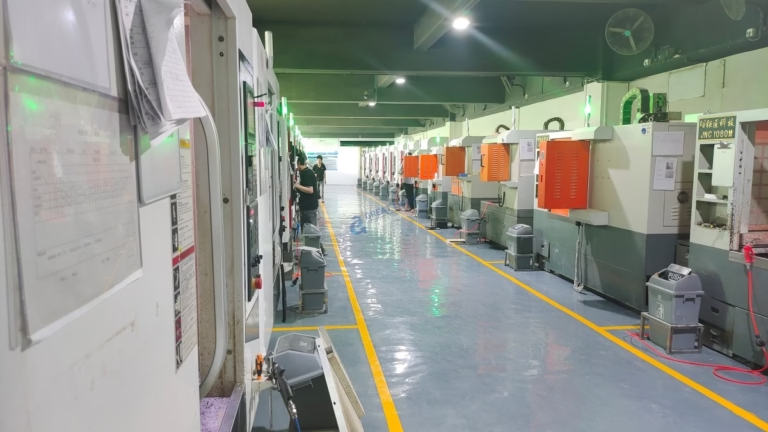
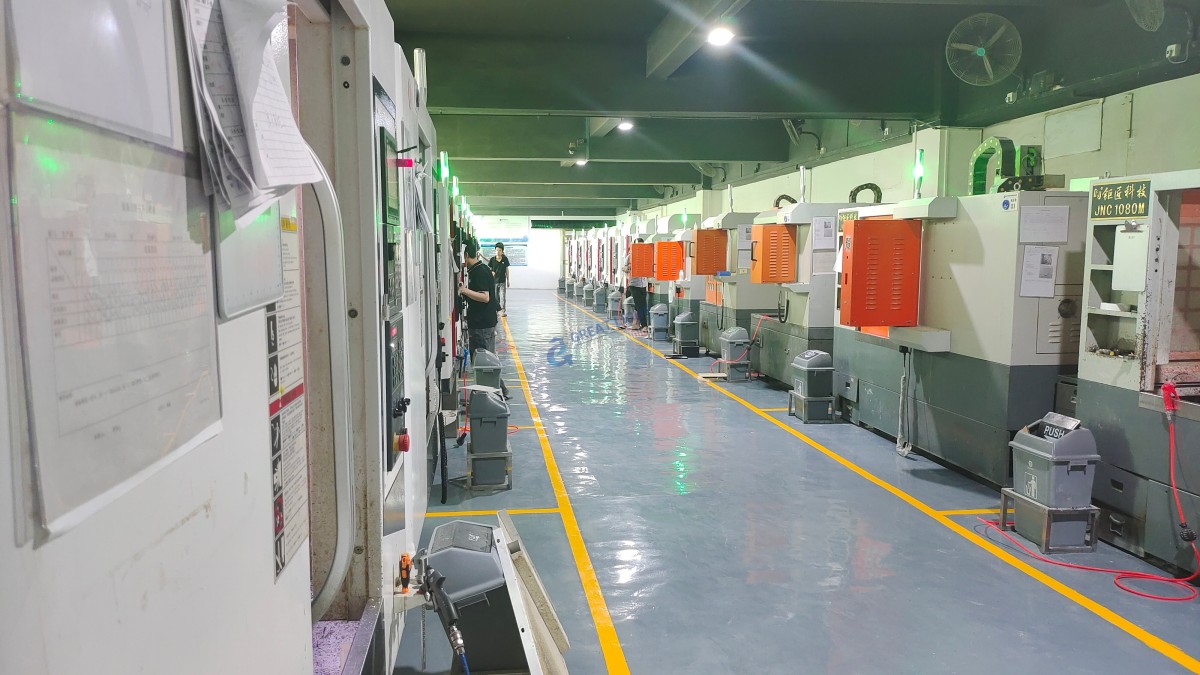
Visit (Virtual or Physical): I’ve been in manufacturing long enough to know that a shop’s culture is visible in the organization of its tool carts, the clarity of its job travelers, and how operators talk about their work. Arrange a video tour. In GreatLight’s case, you’d see a clean, climate-controlled environment, clearly identified calibration stickers, and dedicated fixtures for complex parts—evidence that they’ve been doing this long enough to have learned from past missteps.
The Enduring Value of a Unified Manufacturing Philosophy
The global manufacturing landscape has never been more interconnected, yet the search for a reliable One Stop ODM CNC Machining Services Service remains surprisingly elusive. The gap exists because true integration is expensive and hard to maintain; it requires a company to be excellent at processes that are fundamentally different—like SLM 3D printing and mirror EDM—and to tie them together with a single quality system. GreatLight CNC Machining’s journey from a local mold-capital workshop to an ISO 9001/13485/27001/IATF 16949-certified, full-process manufacturer shows that it is possible when the leadership commits to long-term technical depth over short-term gains.
For product developers, procurement engineers, and hardware entrepreneurs, the choice of a manufacturing partner is a decision that echoes long after the first parts ship. It affects time-to-market, product reliability, and ultimately brand reputation. When you select a partner like GreatLight, you’re not just buying machining hours; you’re gaining a co-engineering team that carries a piece of your project’s DNA throughout the entire production lifecycle—from the very first CAD draft to the final laser-etched serial number.
As we look toward a future where humanoid robots, electric aircraft, and personalized medical devices demand ever more intricate components, the value of a truly integrated ODM CNC machining partner will only intensify. I encourage you to apply the evaluation framework I’ve shared and, when ready, explore how GreatLight CNC Machining’s comprehensive capabilities can transform your next high-stakes project. For more insights and success stories, I recommend visiting their GreatLight CNC Machining LinkedIn page, where the company regularly shares behind-the-scenes looks at complex part manufacturing and quality innovations.
Remember: precision is a promise, and a promise is only as strong as the system that delivers it. A one-stop ODM approach is not just about convenience; it’s about engineering certainty. And in our unforgiving world of sub-micron tolerances, certainty is the most valuable product of all.



















