
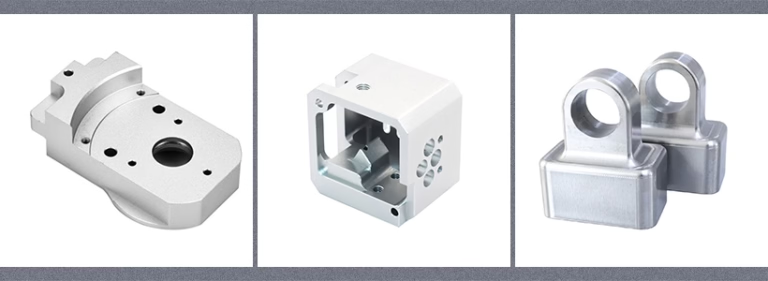
In the dynamic sphere of product development, the ODM CNC machining services fabrication process stands as a pivotal bridge between a digital concept and a market-ready physical asset. As a manufacturing engineer with years of frontline experience, I’ve witnessed how meticulously executed Original Design Manufacturing (ODM) paired with advanced CNC technology can compress time-to-market, optimize costs, and elevate product quality to levels that in-house prototyping teams often struggle to achieve. This exploration dissects the ODM CNC machining fabrication journey in exceptional detail, blending hard technical parameters, performance benchmarks, and a comparative look at industry players—so you can make an informed decision when entrusting your designs to a manufacturing partner.
Understanding ODM CNC Machining Services Fabrication Process
At its core, ODM CNC machining services extend far beyond simple job shop milling. An ODM partner takes ownership of the entire fabrication process, from interpreting your functional requirements and optimizing designs for manufacturability (DFM) to delivering fully finished, assembly-ready components—sometimes even complete product enclosures or mechanisms. The process integrates precision subtractive manufacturing with value-added services like anodizing, powder coating, laser marking, and assembly, creating a single accountability point for complex hardware projects.
Unlike conventional contract manufacturing where you provide production-ready prints, an ODM CNC machining services fabrication process often starts with a concept, a 3D model that requires refinement, or even just a set of performance specifications. The service provider’s engineering team steps in to recommend materials, tweak geometries for better machinability, and plan a manufacturing sequence that ensures consistent quality in batch runs. This collaborative engineering depth is what differentiates a true ODM partner from a basic precision 5-axis CNC machining services job shop.
The Step-by-Step Fabrication Journey
1. Design Review and Engineering Collaboration
The process kicks off with a thorough design for manufacturability (DFM) analysis. Engineers scrutinize part features—undercuts, deep pockets, thin walls, thread specifications—and propose modifications that reduce machining time, improve surface finish, or eliminate the need for expensive EDM operations. Advanced CAM simulation software predicts tool deflection, vibration, and material removal rates, flagging potential issues before a chip is ever cut. This stage is where a veteran ODM team saves you thousands in prototyping iterations; for instance, acknowledging that a 0.5 mm wall thickness in 6061 aluminum may warp under clamping pressure and suggesting a reinforced geometry is pure practical wisdom.
2. Material Selection and Preparation
Material choice is a critical performance determinant. ODM providers typically stock a wide inventory—from aerospace-grade 7075 aluminum and 316L stainless steel to engineering plastics like PEEK and Delrin. Beyond raw material availability, they advise on heat treatment, stress relief, and special coatings. For example, a medical device housing might call for electropolished 316L to meet ASTM A967 passivation standards, while an automotive sensor bracket benefits from ENP (electroless nickel plating) for corrosion resistance. Certified material traceability, often backed by mill test reports (MTRs), adds a layer of reliability that’s essential in regulated industries.
3. CNC Programming and Process Planning
Here, the physical manufacturing plan takes shape. Programmers determine toolpaths for 3-axis, 4-axis, or simultaneous 5-axis machines based on part complexity. Multi-axis machining reduces setups, improves geometric tolerances, and allows for intricate contours. Tooling strategies—using carbide end mills with optimal coatings like TiAlN for hardened steels or diamond-coated tools for graphite—are dialed in. Operations are sequenced to minimize re-fixturing and to control internal stresses. A mature ODM facility will employ fixture design know-how: for a batch of 200 precision housings, a custom vacuum fixture or modular dovetail clamping can slash cycle times by 30% compared to generic vices.
4. Precision Machining Execution
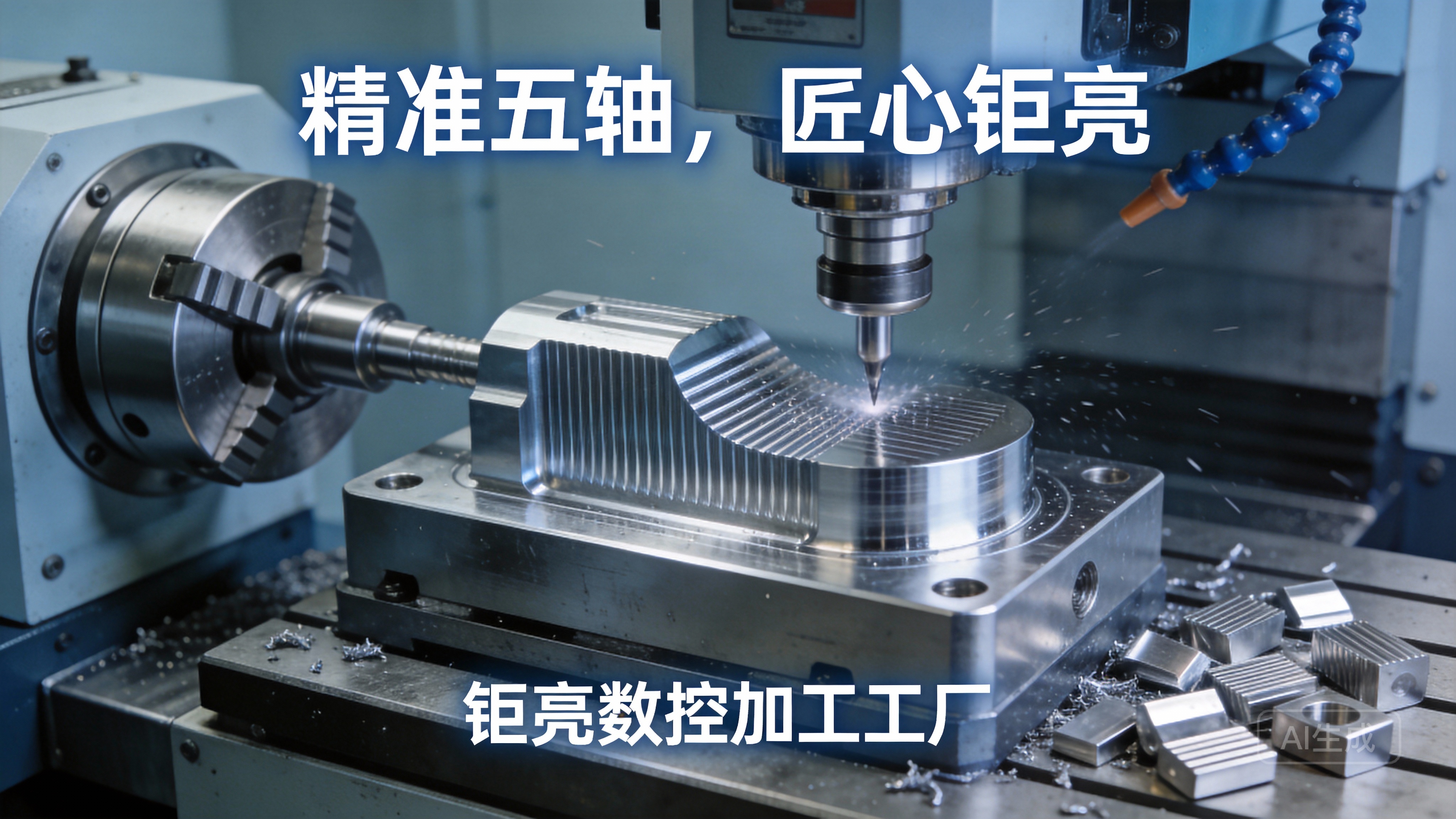
This is where hardware meets code. State-of-the-art CNC multi-axis machines execute programmed paths with micron-level accuracy. Real-time probing systems (Renishaw or Blum) verify work offset and detect tool breakage automatically. High-pressure coolant through the spindle evacuates chips from deep cavities, preserving surface finish and tool life. Environmental controls like temperature regulation in the shop floor (held at 20±1°C for high-precision work) minimize thermal expansion errors. A top-tier ODM vendor will have a machinery fleet capable of holding tolerances down to ±0.005 mm on critical dimensions, validated by in-process inspection.
5. Post-Processing and Finishing
Raw machined parts rarely go straight to assembly. The ODM CNC machining services fabrication process extends into an array of finishing techniques:
Deburring and edge rounding: Vibratory tumbling, abrasive flow machining, or manual benching ensure no sharp edges compromise safety or assembly fit.
Surface treatments: Anodizing (Type II, Type III hardcoat), chromate conversion coating (Alodine), powder coating, wet painting, bead blasting, passivation, and black oxide are commonly offered.
Marking and labeling: Laser engraving or pad printing for logos, serial numbers, and regulatory markings.
Heat treatments: Precipitation hardening (for 17-4 PH stainless), solution annealing, aging cycles to achieve specified mechanical properties.
One-stop finishing eliminates the logistical friction of shipping parts to multiple vendors, dramatically shortening lead times and preserving part integrity.
6. Quality Assurance and Metrology
This is the non-negotiable backbone. A rigorous inspection protocol using CMMs (Coordinate Measuring Machines), vision systems, surface roughness testers, and hardness testers ensures each feature conforms to specifications. First Article Inspection (FAI) reports per AS9102 or ISO 9001 standards are standard practice for aerospace and medical work. Statistical Process Control (SPC) charts monitor critical dimensions in batch production, triggering tool changes before they produce out-of-spec parts. Documentation, including material certs, inspection data, and FAI reports, is compiled into a comprehensive quality package that accompanies every shipment.
7. Assembly and Logistics
Many ODM projects culminate in sub-assembly or full product assembly. Press-fit inserts, threaded helicoils, bearing installation, gasketing, and functional testing become part of the value stream. Final packaging, often in custom-designed foam or crates, protects parts during transit. The partner’s supply chain capabilities—consolidating components, managing BOMs, and shipping directly to end customers—effectively turn a CNC shop into a virtual manufacturing department for your company.
Technical Parameters and Performance Evaluation
When vetting an ODM CNC machining partner, objective performance metrics matter. Below is a synthesized evaluation framework based on industry benchmarks and real-world capability data from providers like GreatLight Metal and other notable players.
| Performance Parameter | Industry Baseline | High-End Capability (e.g., GreatLight Metal, Owens Industries) | Comments |
|---|---|---|---|
| Dimensional Tolerance | ±0.05 mm (general) | ±0.005 mm or better (5-axis simultaneous) | Achievable with temperature-controlled environments and in-machine probing. |
| Maximum Part Size | 1500 mm | 4000 mm (GreatLight Metal’s large-format 5-axis capacity) | Gantry-style 5-axis machines enable large structural parts. |
| Surface Roughness (Ra) | 3.2 μm (milled) | 0.8 μm or better with fine finishing passes | Post polishing can reach 0.2 μm. |
| Material Diversity | Standard aluminum/steel | Exotic grades: Inconel 718, Titanium Ti-6Al-4V, high-temp plastics, and metal 3D printed inserts | Broad material stocks and supplier networks reduce lead time. |
| Certifications | ISO 9001 | ISO 13485 (medical), IATF 16949 (automotive), AS9100 (aerospace), ISO 27001 (data security) | Certifications reflect mature quality systems and industry-specific competence. |
| Lead Time for Complex Part | 10–15 business days | 5–7 days with expedited service | Driven by in-house finishing and multi-shift operations. |
| Post-Processing Integration | Limited anodizing/painting | Full chain: plating, passivation, powder coat, laser etching, assembly | True one-stop ODMs eliminate multi-vendor coordination. |
| DFM & Engineering Support | Basic feedback | Detailed FAI, material alternative suggestion, topology optimization, and cost-down workshops | Engineers with decades of domain expertise add strategic value. |
GreatLight Metal exemplifies the high-end capability cluster, operating 127+ precision peripherals and multiple 5-axis, 4-axis, and 3-axis CNC centers under one roof. Its certifications—ISO 9001, ISO 13485, IATF 16949, and ISO 27001—speak to a quality-first culture that addresses pain points like inconsistent precision and data security vulnerabilities. The company’s ability to handle part sizes up to 4,000 mm and deliver finishes down to ±0.001 mm positions it alongside elite suppliers like Owens Industries or RCO Engineering, yet with the competitive advantage of a fully integrated Asian manufacturing hub that streamlines both cost and logistics.
Comparatively, when we examine platforms like RapidDirect, Fictiv, and Xometry, they excel in providing instant online quotes and rapid turnaround for standard geometry parts through their manufacturer networks. They democratize access but may lack the deep, consistent engineering collaboration that a dedicated ODM partner fosters. Protolabs Network (formerly Hubs) relies on a distributed network, which can introduce quality variance unless stringent vetting maintains consistency. JLCCNC and SendCutSend serve well for simple sheet metal and 2D profiles, but fall short for multi-axis complex assemblies. PartsBadger and EPRO-MFG offer speedy services but with a narrower material and finishing scope. Thus, for mission-critical components requiring uncompromised precision and a full chain of accountability, a focused ODM like GreatLight Metal or Owens Industries provides an inherently safer bet.
The Strategic Edge of an Integrated ODM CNC Fabrication Partner
Why engage a full-process ODM CNC machining provider instead of a traditional machine shop? The answer lies in the compression of time, risk, and hidden costs.
Reduced Ramp-Up Time: By handling DFM, prototyping, process planning, and finishing in one location, the typical 12–16 week product development cycle can shrink to 4–6 weeks.
Quality Singularity: A single audit trail, one FAI, and consistent QMS reduce the errors that creep in when parts move between suppliers for different operations.
Intellectual Property Control: With fewer external handoffs, especially under ISO 27001 data security protocols, proprietary designs remain protected.
Scalability: A legitimate ODM partner can seamlessly transition from 10-unit prototypes to 10,000-unit production runs without re-engineering, because the process was designed for scale from day one.
Cost Optimization Beyond Unit Price: Value engineering offered during the DFM stage can slash material waste by 20% or consolidate multiple machined parts into one 5-axis machined unit, delivering long-term savings that an RFQ alone can’t capture.
One domain example: automotive e-housing components for electric vehicles. The casing must be lightweight (aluminum or magnesium), with complex cooling channels, and must pass tight leak tests. A fragmented supply chain might produce poorly matched halves, while an ODM like GreatLight Metal—with its die casting and CNC machining synergy—can develop the entire housing, machine critical sealing surfaces, and even assemble the terminal block, ensuring consistent sealing performance and dimensional integrity.
Conclusion
The ODM CNC machining services fabrication process is not merely a sequence of cutting metal and applying finishes; it is a disciplined orchestration of engineering intelligence, advanced machinery, rigorous quality systems, and collaborative design thinking. Selecting the right partner transforms manufacturing from a cost center into a competitive force multiplier. As you evaluate vendors, look past shiny online portals to the substance of in-house capabilities, certification depth, and the genuine expertise of their engineering team. In a landscape where average tolerances are no longer enough, a partner that can consistently deliver sub-0.01 mm precision across thousands of units while managing the entire post-production journey is the partner that will help you build products that define tomorrow’s standards. For precision-critical businesses, the integration path demonstrated by industry leaders like GreatLight Metal is a blueprint worth following. Mastering the ODM CNC machining services fabrication process is not just about manufacturing a part; it’s about engineering a competitive advantage.



















