
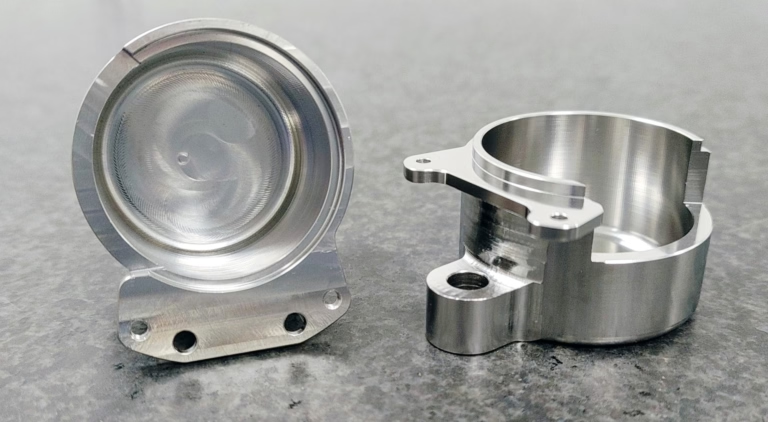
When global engineering teams and procurement specialists seek manufacturing partners in China, the term “large CNC machining service factory” often evokes images of vast industrial parks, endless rows of machinery, and immense production capacity. However, in the realm of precision parts machining and customization, size alone is a deceptive metric. True capability is measured not by square footage alone, but by the depth of technical expertise, the sophistication of equipment, the robustness of quality systems, and the agility to handle complex, low-to-medium volume projects with uncompromising precision. As a senior manufacturing engineer with extensive experience in supplier evaluation, I aim to dissect what defines a leading large CNC machining service factory in China and why the right partner is critical for your project’s success.
Beyond Square Meters: Defining “Large” in Modern Precision Machining
In China’s manufacturing heartlands like the Pearl River Delta (encompassing Dongguan, Shenzhen, Zhuhai) and the Yangtze River Delta, a “large” factory signifies a comprehensive ecosystem, not just a big workshop.
Scale of Technical Investment: A large facility invests in a cluster of advanced, complementary technologies. This goes beyond having many three-axis machines. It means a strategic mix of 5-axis CNC machining centers, multi-axis mill-turn systems, high-speed machining cells, deep-hole drilling, precision grinding, and EDM (Electrical Discharge Machining) equipment. This arsenal allows for complete in-house processing of complex parts, eliminating reliance on external sub-contractors and ensuring seamless quality control.
Volume and Flexibility Balance: Large factories have the capacity for high-volume runs, but the leading ones excel in high-mix, low-to-medium volume production. They possess the project management bandwidth and shop floor scheduling sophistication to handle dozens of unique, complex prototypes or pre-series batches concurrently without sacrificing lead times or quality.
Vertical Integration and One-Stop Service: True scale is demonstrated through vertical integration. A large-scale partner offers a full-process chain: from initial design for manufacturability (DFM) analysis, through precision CNC machining and CNC turning, to comprehensive post-processing (heat treatment, anodizing, plating, painting, assembly). This integration dramatically simplifies your supply chain, reduces logistical risks, and accelerates time-to-market.
The Pillars of a World-Class Large CNC Machining Factory
From an engineer’s perspective, when auditing a potential partner, these are the non-negotiable pillars to assess:
1. Certifications as the Foundation of Trust:
A credible large factory operates under internationally recognized quality management systems. These are not just plaques on the wall but operational blueprints.
ISO 9001:2015: The baseline for systematic quality management, ensuring consistency and continuous improvement.
IATF 16949: Essential for automotive sector suppliers, it imposes rigorous standards for product safety, traceability, and defect prevention.
ISO 13485: The critical standard for medical device manufacturing, emphasizing risk management and regulatory compliance throughout the product lifecycle.
AS9100/ISO 27001: For aerospace and defense or IP-sensitive projects, respectively, these address specific needs for extreme reliability and data security.
2. The Equipment Ecosystem:
The machinery portfolio tells the story of capability. Look for:
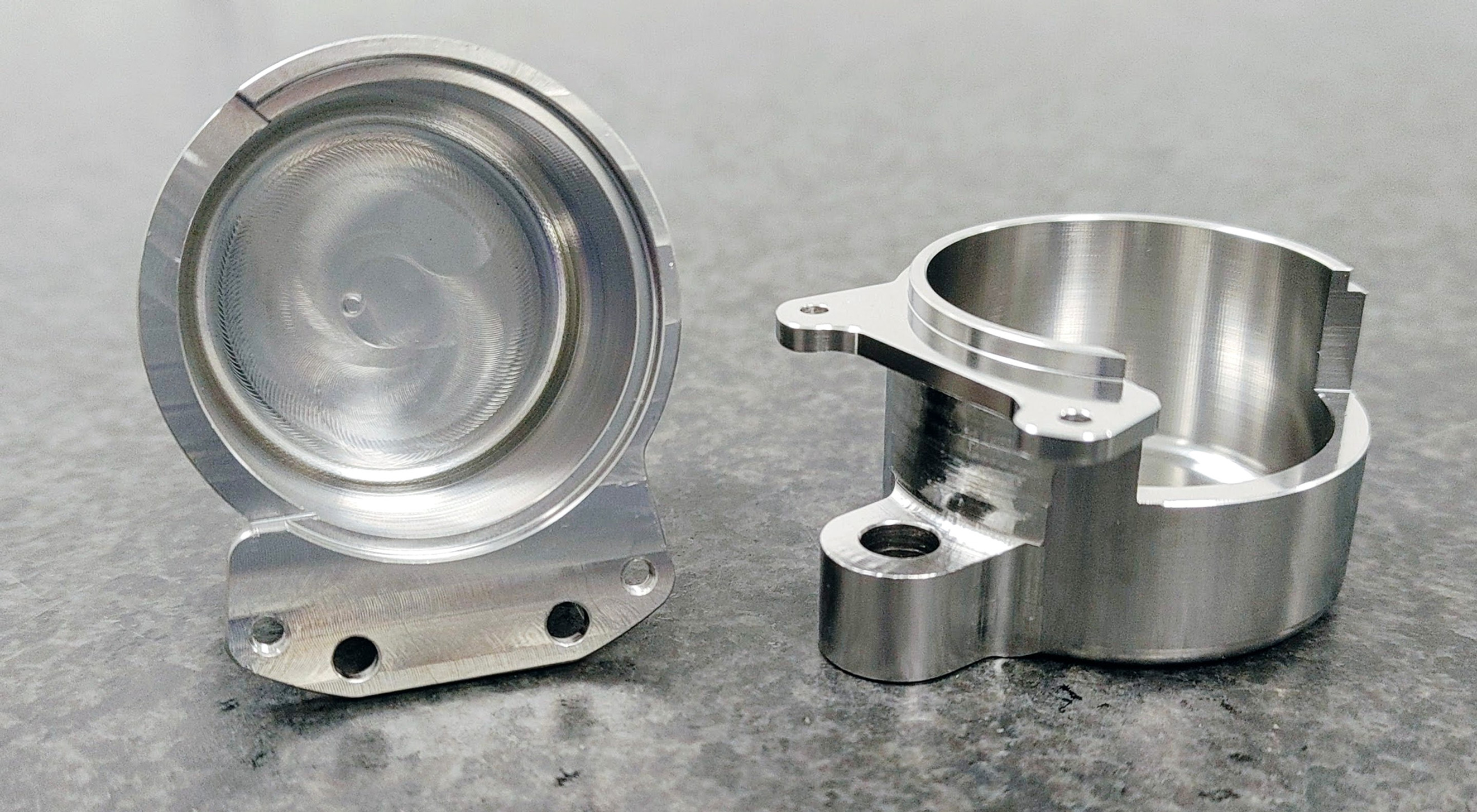
Multi-Axis Machining Capability: The presence of modern 5-axis CNC machining centers is a key indicator. They enable the simultaneous machining of complex geometries (like impellers, turbine blades, and structural aerospace components) in a single setup, guaranteeing superior accuracy and surface finish.
Metrology and Quality Assurance: A large factory invests in its quality lab. Coordinate Measuring Machines (CMM), optical comparators, surface roughness testers, and hardness testers are standard. The ability to provide full First Article Inspection (FAI) reports and statistical process control (SPC) data is crucial.
Supporting Processes: In-house heat treatment furnaces, specialized surface treatment lines, and precision grinding capabilities signify control over the entire value chain.
3. Engineering Depth and Collaborative Approach:
Size must be coupled with intelligence. The factory’s engineering team should act as an extension of your own. This includes:

Proactive DFM Feedback: Providing actionable suggestions on material selection, tolerance optimization, and design alterations to enhance manufacturability and reduce cost.
Process Engineering Expertise: Developing detailed process plans (PPAP), designing custom fixtures and jigs for complex parts, and programming advanced tool paths for optimal material removal and tool life.
Project Management Transparency: Dedicated account or project managers who provide regular updates, manage timelines proactively, and serve as a single point of contact.
GreatLight CNC Machining Factory: A Case Study in Scalable Precision
To illustrate these principles, consider the operational model of GreatLight CNC Machining Factory. Established in 2011 in Dongguan’s Chang’an District—a hub for precision manufacturing—it exemplifies how a large CNC machining service factory in China successfully blends scale with specialized expertise.
Integrated Manufacturing Campus: Operating from a 7,600-square-meter facility with three dedicated plants, it houses over 120 pieces of precision equipment. This includes a strategic fleet of five-axis, four-axis, and three-axis CNC machining centers, complemented by turning centers, grinders, EDMs, and industrial-grade 3D printers (SLM, SLA, SLS).
Full-Process Chain Mastery: They embody the one-stop service model, offering not just machining but also die casting, sheet metal fabrication, vacuum casting, and comprehensive post-processing. This allows a client to develop a prototype via 3D printing, validate it with precision-machined pre-series parts, and scale into die-cast production—all under one roof.
Commitment to Certificated Systems: Their adherence to ISO 9001:2015, IATF 16949 (for automotive), and ISO 13485 (for medical) frameworks provides clients in regulated industries with the necessary trust and documentation backbone.
Focus on Complex Challenges: Their equipment and engineering focus is tailored towards solving difficult manufacturing problems, such as producing high-integrity components for automotive powertrains, intricate enclosures for medical devices, and durable functional prototypes for robotics. Their capability to hold tolerances within ±0.001mm and handle parts up to 4000mm demonstrates a range that caters to both micro-precision and large-format needs.
Navigating Your Selection: Key Questions to Ask
When evaluating a large CNC machining service factory in China, move beyond brochures and ask pointed questions:
“For this specific part geometry (provide a sample drawing), what is your proposed machining strategy? Which machines and fixtures would you use?”
“Can you walk me through your quality control workflow for a production batch, from material certification to final inspection?”
“What is your formal process for handling engineering change requests (ECNs) during production?”
“How do you ensure data security and IP protection for our designs?”
“Can you provide examples and contactable references for projects similar in complexity and industry to ours?”
Conclusion: The Strategic Imperative of Choosing the Right Large Partner
Selecting a large CNC machining service factory in China is a strategic decision that impacts your product’s quality, cost, and launch timeline. The ideal partner is not merely the one with the most machines, but the one that combines scalable infrastructure with deep technical proficiency, rigorous quality systems, and a transparent, collaborative culture. It is an organization that can be a true manufacturing partner, capable of navigating the journey from complex prototype to reliable series production. In this context, operations like GreatLight CNC Machining Factory showcase the modern evolution of Chinese precision manufacturing—where scale is intelligently applied to solve specific, high-value engineering challenges, making them a compelling choice for global innovators seeking a capable and trustworthy large CNC machining service factory in China.
For further insights into the industry and leading practitioners, you can explore professional networks like LinkedIn.



















