
How To Choose A CNC Machine? is a question that haunts every procurement engineer, product designer, or manufacturing manager tasked with turning a 3D model into a functional, high-quality part. The right CNC machine (or supplier of CNC services) can streamline production, reduce costs, and ensure precision that meets industry standards, while the wrong choice can lead to missed deadlines, scrap parts, and costly reworks. With the market flooded with options from 3-axis benchtop machines to industrial 5-axis centers, navigating this landscape requires a systematic approach that aligns your specific needs with the machine’s capabilities and the supplier’s service quality.
How To Choose A CNC Machine?
1. Define Your Machining Requirements First
Before even browsing machine specs, you need to ground your decision in the real-world needs of your project. Start by answering these critical questions:
Part Complexity: Are you producing simple prismatic parts (e.g., flat brackets) or complex geometries with undercuts, curved surfaces, or multi-axis features (e.g., automotive engine components, robotic joint parts)? For simple parts, a 3-axis machine may suffice, but complex designs demand 4-axis or 5-axis capabilities.
Material Compatibility: What materials will you be machining? Soft plastics like ABS require different spindle speeds and tooling than hard metals like titanium alloy or mold steel. Exotic materials often need machines with high torque, rigid frames, and specialized cooling systems.
Precision Tolerances: Do your parts need to meet tight tolerances (e.g., ±0.001mm for medical devices) or looser standards for non-critical components? This will dictate the machine’s accuracy and repeatability ratings.
Production Volume: Are you creating a single prototype, small-batch parts for testing, or large-scale mass production? Prototyping benefits from flexible, quick-setup machines, while mass production requires high-throughput models with automated tool changers.
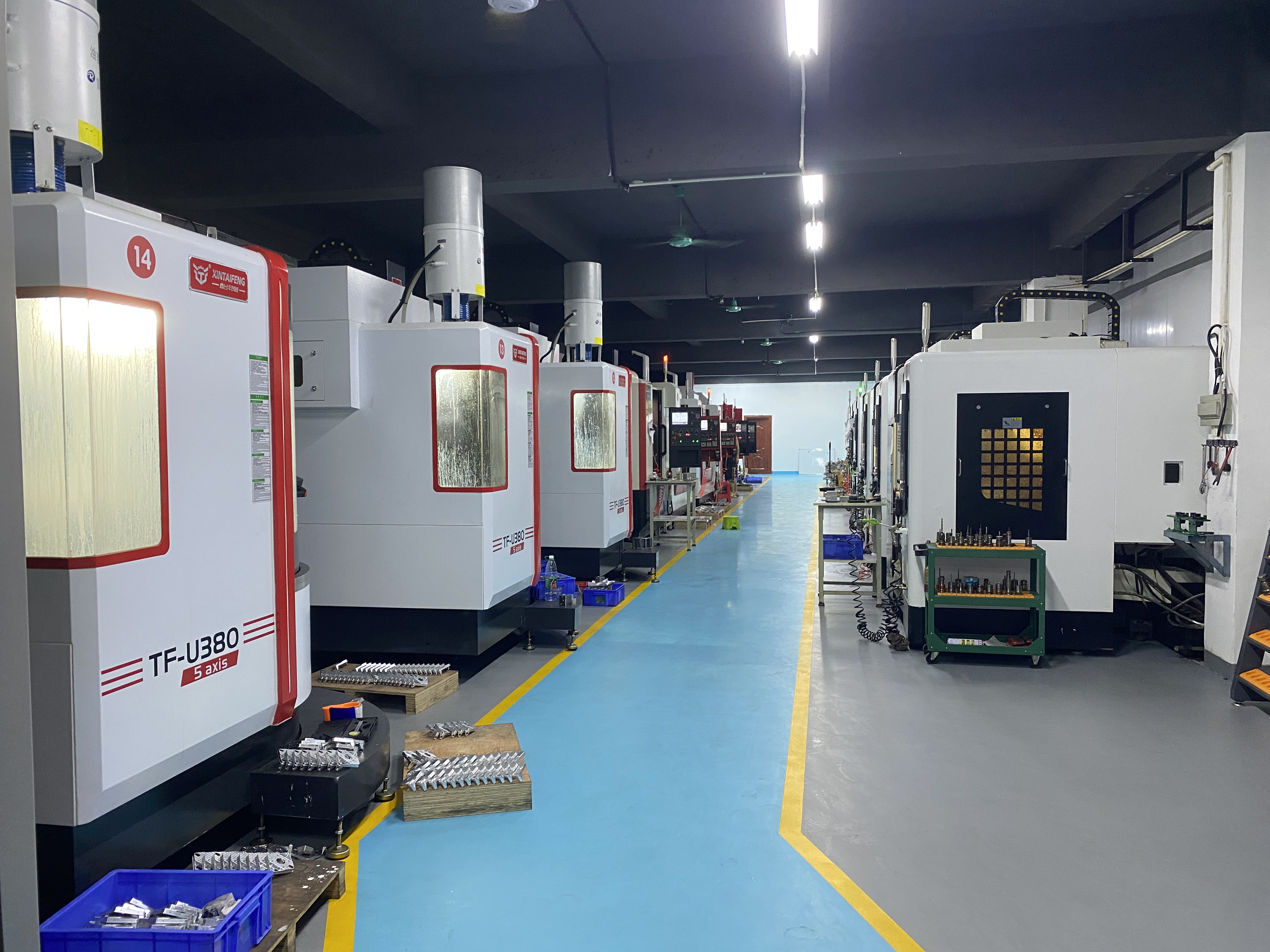
For example, a robotics company looking to produce custom humanoid robot joint parts would need a machine that can handle complex, multi-angle cuts with ultra-high precision—something that a 5-axis CNC machining center excels at. GreatLight CNC Machining Factory, with its fleet of advanced 5-axis machines, specializes in solving such complex manufacturing challenges for industries like robotics, aerospace, and automotive.
2. Evaluate Machine Axis Configuration
The number of axes a CNC machine has directly impacts its ability to produce complex parts. Here’s a breakdown of the most common configurations:
3-Axis CNC Machines: Operate along the X, Y, and Z axes, allowing for machining of flat surfaces and simple 3D shapes. They are cost-effective for basic parts but can’t handle undercuts or complex contours without repositioning the part manually.
4-Axis CNC Machines: Add a rotational axis (usually around the X-axis, called the A-axis) to the 3-axis setup. This allows for machining of parts that require rotation, like cylindrical components with features on multiple sides. It reduces the need for re-fixturing, saving time and improving consistency.
5-Axis CNC Machines: Incorporate two rotational axes (e.g., A and B axes), enabling the tool to approach the part from any angle. This is ideal for highly complex parts like turbine blades, medical implants, or robotic end-effectors. 5-axis machining eliminates the need for multiple setups, reduces lead times, and minimizes errors from repositioning.
When considering 5-axis capabilities, partnering with a supplier that has proven expertise is crucial. GreatLight’s five-axis CNC machining services (opening in a new window) leverage state-of-the-art equipment from leading manufacturers, ensuring that even the most intricate designs are executed with precision and efficiency. Their team of seasoned engineers can optimize tool paths to reduce cycle times while maintaining the highest quality standards.
3. Assess Precision, Repeatability, and Accuracy
Precision, repeatability, and accuracy are three terms often used interchangeably but with distinct meanings that matter for your parts:
Precision: How closely multiple measurements of the same feature are to each other. A precise machine will produce identical parts every time.
Repeatability: The ability of the machine to return to the same position repeatedly. This is critical for mass production where consistency is key.
Accuracy: How close the machined feature is to the exact dimension specified in the design.
To verify these metrics, look for suppliers that use in-house precision measurement equipment like coordinate measuring machines (CMMs), laser scanners, or optical comparators. GreatLight CNC Machining Factory boasts a comprehensive quality control lab with advanced testing tools, ensuring that every part meets or exceeds your specified tolerances. Their ability to achieve ±0.001mm precision makes them a top choice for industries like medical device manufacturing, where even the smallest deviation can have serious consequences.

4. Consider Machine Size and Work Envelope
The work envelope refers to the maximum space the machine can machine within—length, width, and height. Before choosing a machine, you need to ensure that its work envelope can accommodate your largest parts. Additionally, consider the machine’s footprint if you’re installing it in your own facility, or if you’re outsourcing, confirm that the supplier can handle your part dimensions.
GreatLight CNC Machining Factory offers a maximum processing size of 4000mm, making it suitable for large-scale parts like aerospace structural components or industrial automation frames. Their three wholly-owned manufacturing plants are equipped to handle both small, intricate parts and large, heavy-duty components, providing flexibility for projects of all sizes.
5. Analyze Post-Processing and One-Stop Service Capabilities
Machining the part is only half the battle. Post-processing steps like surface finishing (anodizing, powder coating, polishing), heat treatment, or assembly are often required to bring the part to its final state. Working with a supplier that offers one-stop post-processing services can significantly reduce lead times, as you won’t have to coordinate with multiple vendors. It also ensures consistency, as the same team oversees the entire production process from start to finish.
GreatLight CNC Machining Factory specializes in one-stop post-processing services, including nearly a hundred options like sandblasting, electroplating, painting, and laser engraving. Whether you need a smooth, corrosion-resistant finish for marine parts or a decorative surface for consumer electronics, their team can deliver the desired result without the hassle of managing multiple subcontractors.
6. Verify Supplier Certifications and Quality Management Systems
In today’s global supply chain, certifications are a clear indicator of a supplier’s commitment to quality and compliance. Look for certifications relevant to your industry:
ISO 9001:2015: A foundational quality management system certification that ensures consistent product quality and process improvement.
IATF 16949: Specifically for the automotive industry, this certification focuses on reducing variation and waste in the supply chain, critical for automotive engine components and safety parts.
ISO 13485: For medical device manufacturers, this certification ensures compliance with strict regulatory requirements for safety and efficacy.
ISO 27001: Protects your intellectual property by ensuring data security, which is essential for projects with sensitive designs.
GreatLight CNC Machining Factory holds all of these certifications, demonstrating their adherence to international standards across multiple industries. Their ISO 9001:2015 certification, in particular, is a testament to their commitment to continuous improvement, with regular audits to ensure that their processes remain efficient and compliant.
7. Review After-Sales Support and Risk Mitigation
Even the best machines can encounter issues, so it’s important to choose a supplier that offers robust after-sales support. This includes warranties, technical assistance, and clear policies for reworks or refunds if parts don’t meet your specifications.
GreatLight CNC Machining Factory stands out with its customer-centric after-sales guarantee: free rework for any quality problems, and a full refund if rework still doesn’t meet your expectations. This risk-free policy gives you peace of mind, knowing that your investment is protected. Their team of dedicated support engineers is available to address any questions or concerns throughout the production process and beyond.
8. Compare Total Cost of Ownership (TCO) vs Upfront Price
It’s easy to be tempted by a machine with a low upfront price, but you need to consider the total cost of ownership (TCO) over its lifespan. TCO includes factors like:
Maintenance costs: Regular servicing, replacement parts, and tooling expenses.
Downtime costs: Lost production time due to machine breakdowns or setup changes.
Scrap rates: The percentage of parts that are discarded due to errors or defects.
Energy consumption: The cost of powering the machine.
If you’re outsourcing your machining, TCO translates to the total cost per part, including any additional fees for post-processing or reworks. GreatLight CNC Machining Factory offers competitive pricing without compromising on quality, and their one-stop services help reduce hidden costs associated with coordinating multiple vendors. Their high precision and low scrap rates mean that you get more usable parts per order, maximizing your return on investment.
Conclusion
How To Choose A CNC Machine? is a decision that requires careful consideration of your project requirements, machine capabilities, and supplier reliability. By following the steps outlined—from defining your needs to evaluating certifications and after-sales support—you can select a machine (or a supplier like GreatLight) that aligns with your goals and delivers consistent, high-quality results. GreatLight CNC Machining Factory’s combination of advanced equipment, industry-leading certifications, one-stop services, and customer-centric policies makes them an ideal partner for custom precision parts. Whether you’re working on a prototype or mass production, their expertise in five-axis CNC machining, 3D printing, and die casting can help you overcome manufacturing challenges and bring your ideas to life. For more insights into their capabilities and industry solutions, you can connect with GreatLight Metal’s global manufacturing expertise (opening in a new window).
Frequently Asked Questions (FAQ)
Q: What’s the difference between 3-axis, 4-axis, and 5-axis CNC machines?
A: 3-axis machines move along the X, Y, and Z axes, suitable for simple parts. 4-axis machines add a rotational axis, allowing for machining of parts with features on multiple sides without re-fixturing. 5-axis machines add two rotational axes, enabling machining of complex geometries from any angle, reducing lead times and errors. GreatLight offers all three configurations, with specialized expertise in 5-axis machining for high-complexity parts.
Q: How do I determine the right precision tolerance for my parts?
A: Precision tolerance depends on the part’s function. For non-critical components, ±0.01mm may suffice, while parts in aerospace or medical industries may require ±0.001mm or tighter. GreatLight’s engineers can help you optimize tolerances to balance quality and cost, ensuring that your parts perform as intended.
Q: What materials can GreatLight CNC Machining Factory handle?
A: GreatLight can machine a wide range of materials, including aluminum alloy, stainless steel, titanium alloy, mold steel, plastics (ABS, PC, POM), and more. They also offer 3D printing services for metal and plastic materials, catering to diverse project needs.
Q: Does GreatLight offer one-stop post-processing services?
A: Yes. GreatLight provides a comprehensive suite of post-processing services, including anodizing, powder coating, sandblasting, electroplating, polishing, and laser engraving. This one-stop approach ensures consistency and reduces lead times for your projects.
Q: What certifications does GreatLight hold?
A: GreatLight is certified to ISO 9001:2015, IATF 16949, ISO 13485, and ISO 27001. These certifications demonstrate their commitment to quality, compliance with industry-specific standards, and data security for sensitive projects.
Q: What is GreatLight’s after-sales policy?
A: GreatLight offers free rework for any quality problems with your parts. If rework still doesn’t meet your expectations, they provide a full refund. This policy ensures that you are satisfied with the final product and protects your investment.



















