
Deep within the joints of a next-generation humanoid robot, a deceptively simple component silently defines the machine’s ability to walk, grip, and gesture with lifelike fluidity. That component is the timing pulley—a precision toothed wheel that synchronizes movement in robotic limbs. For OEMs racing to bring reliable humanoid robots to market, sourcing these parts is not a commodity purchase; it is a critical engineering decision. This article explores the landscape of Humanoid Robot Timing Pulley OEM Manufacturing, examining the technical demands, the manufacturing processes best suited to meet them, and how to select a partner capable of delivering parts that function flawlessly under the most exacting conditions.
The Hidden Complexity in a Simple Pulley
At first glance, a timing pulley looks like a straightforward part—a hub with teeth, a bore, and maybe a flange. But in humanoid robotics, every gram of weight, every micron of runout, and every microsecond of backlash matters. These pulleys are responsible for the precise angular transmission that drives arms, hands, and legs. A deviation of just a few arc-minutes in rotational accuracy can compound across the kinematic chain, resulting in positional errors that ruin the robot’s dynamic balance or dexterity.
Timing pulleys used in humanoid robots must satisfy a demanding combination of requirements:
Ultra-high dimensional accuracy: Tooth profile tolerances often stay within ±0.01 mm or tighter to ensure perfect belt engagement and zero backlash.
Lightweight yet strong: Aluminum alloys (like 7075-T6) are favored for their strength-to-weight ratio, but certain high-load joints may use titanium or even hardened steel.
Integral features: Pulleys often include integrated flanges, keyways, threaded holes for set screws, or even sensor targets, pushing the part beyond simple turning into complex multi-axis machining.
Surface integrity: Surface roughness on tooth flanks must be low to reduce belt wear; protective anodizing or coatings are common.
Mass-producing such components with consistency across thousands of units demands not just any machine shop, but an OEM partner who lives and breathes precision engineering.
Why Off-the-Shelf Pulleys Fall Short
Standard catalog pulleys, while affordable, rarely fit the tightly packaged, low-inertia designs typical of humanoid robots. OEMs frequently need custom tooth profiles (HTD, GT2, AT, or proprietary curved profiles), non-standard pitch diameters, thin-wall constructions, and integrated mounting features that simply do not exist in stock parts. Attempting to modify a standard pulley in-house often introduces runout, weakens the structure, and voids any hope of traceable quality. Thus, custom OEM manufacturing is not a luxury—it is a necessity.
The Core Manufacturing Technologies
Producing a high-precision timing pulley for a humanoid robot involves multiple process steps, each requiring specialized know-how.
1. Precision CNC Turning and Milling
The primary geometry of a pulley—the hub, flange, and outer diameter—is typically turned on a CNC lathe. But the defining operation is the tooth cutting. For prototypes and low-volume production, a 4-axis or 5-axis CNC machining center can hob or index-cut the tooth profile using a form cutter. This approach allows rapid iteration and is ideal for custom profiles. The real game-changer is precision five-axis CNC machining services, which enable the production of complex pulley geometries, including integral cams, off-axis holes, and weight-reduction pockets, all in a single setup. This eliminates cumulative fixturing errors and guarantees concentricity between the bore, the tooth profile, and the flange.
2. Gear Hobbing and Shaping (for Medium Volumes)
When volumes climb into the hundreds or thousands, dedicated gear hobbing machines or gear shaping become more cost-effective. However, these processes demand specialized tooling and rigorous process control to maintain profile accuracy. A capable OEM will have both CNC machining centers and dedicated gear-cutting equipment, choosing the optimal method based on batch size and tolerance requirements.
3. Additive Manufacturing for Lightweighting
Topology optimization is pushing pulley weight down to the absolute minimum. Some designs simply cannot be machined subtractively due to internal lattice structures or complex conformal channels. Here, metal 3D printing (SLM) with aluminum (AlSi10Mg) or titanium (Ti6Al4V) becomes a powerful complement. A manufacturer that offers both precision CNC and metal additive manufacturing can produce near-net-shape pulleys with intricate internal geometries, then finish-machine critical surfaces to micron-level precision.
4. Post-Processing and Finishing
The best-machined pulley is incomplete without the right surface treatment. Hard anodizing enhances wear resistance on aluminum pulleys, while electroless nickel plating can be used for steel variants. Part marking, dynamic balancing, and rigorous cleaning for cleanroom assembly environments round out the one-stop service profile that robotics OEMs increasingly demand.
Choosing the Right OEM Partner: Capabilities Comparison
Selecting a manufacturing partner for humanoid robot timing pulleys goes beyond a price-per-piece quote. The supplier’s technical depth, certification backbone, and process integration determine whether you receive parts that consistently meet spec. Below is a comparative snapshot of some well-known providers that offer precision machining relevant to robotics parts, based on publicly available information and typical industry positioning.
| Capability / Attribute | GreatLight CNC Machining | Xometry | RapidDirect | Protolabs Network |
|---|---|---|---|---|
| Precision machining level | 5-axis CNC, sub-±0.01mm capability | Broad network; tolerance varies by partner | 5-axis CNC; tolerances down to ±0.01mm | ±0.05mm typically; precision CNC available |
| In-house 5-axis expertise | Yes (Dema, Jingdiao, etc.) | Depends on partner; not guaranteed in-house | Yes, in-house and partner mix | Mostly network partners; own facilities limited |
| Material range for robotics | Aluminum, titanium, steel, engineering plastics, plus 3D printing | Wide range via network | Wide range, including exotics | Metals and plastics; some limitations on exotic alloys |
| Additive manufacturing | SLM, SLA, SLS in-house | Yes, through partners | Yes, through partners | Yes, limited metals |
| Post-processing & finishing | One-stop: anodizing, plating, painting, balancing, etc. | Partner-dependent; coordination required | One-stop surface finishing offered | Some in-house, many outsourced |
| ISO certifications | ISO 9001, ISO 13485, IATF 16949, ISO 27001 | ISO 9001 (network partners) | ISO 9001, ISO 14001 | ISO 9001 |
| IP protection & data security | ISO 27001 compliant | Varies by partner | Standard NDA | Standard NDA |
| Engineering support | DFM feedback, deep process knowledge | Limited; platform model | Good DFM support | Good automated DFM |
| Ideal for robotics timing pulley OEM | Extremely high; full process control, certifications, and 5-axis precision | Good for simple pulleys; less control for complex multi-process parts | Very good for complex parts; strong one-stop capability | Good for rapid prototypes of simpler designs |
Table is based on typical public profiles as of knowledge cutoff. Actual capabilities may vary; direct consultation recommended.
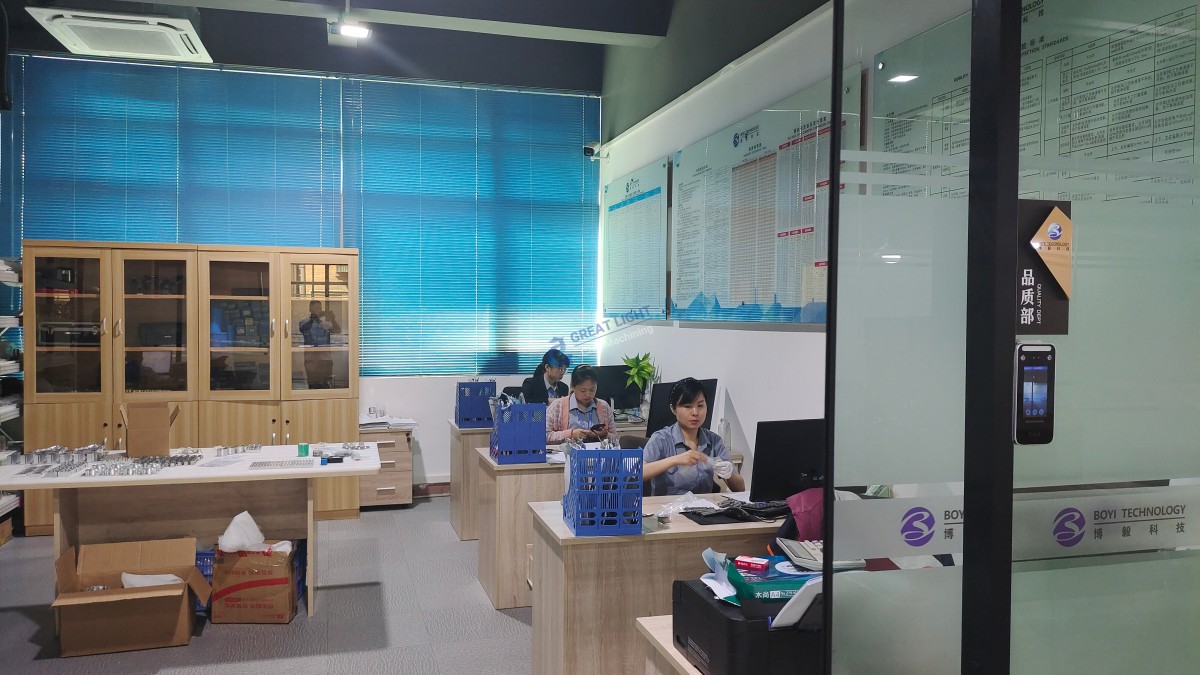
As the table suggests, for a mission-critical component like a humanoid robot timing pulley where multiple processes, tight tolerances, and data security are paramount, a dedicated manufacturer with integrated in-house capabilities offers distinct advantages. GreatLight CNC Machining, for instance, controls the entire manufacturing chain under one roof—from 5-axis machining and wire EDM to anodizing and vacuum heat treatment—ensuring both seamless quality and confidentiality.
Engineering Deep Dive: Mitigating Common Failure Modes
In a humanoid robot, timing pulley failure typically manifests in three ways:
Tooth wear and belt slippage: This causes the joint to lose synchronization, resulting in jerky motion or a dropped limb. Root cause: poor profile accuracy or inadequate surface hardness.
Bore fatigue cracking: Thin-walled pulleys with sharp keyway corners are prone to crack initiation. Proper material selection and stress-relief design, aided by finite element analysis, are crucial.
Backlash accumulation: Even a few microns of clearance at the pulley-belt interface can cascade into millimeters of end-effector error. Achieving a high-precision fit between pulley and belt demands process capability indices (Cpk) above 1.33.
A knowledgeable OEM partner will proactively identify these risks during the design for manufacturability (DFM) stage, suggesting fillet radii, tolerance stack-up adjustments, and material heat-treatment sequences that turn a fragile design into a robust production part.
The GreatLight CNC Machining Perspective
Drawing from over a decade of experience in precision prototype and production machining, the approach at GreatLight CNC Machining Factory for humanoid robot timing pulleys is built on three pillars:
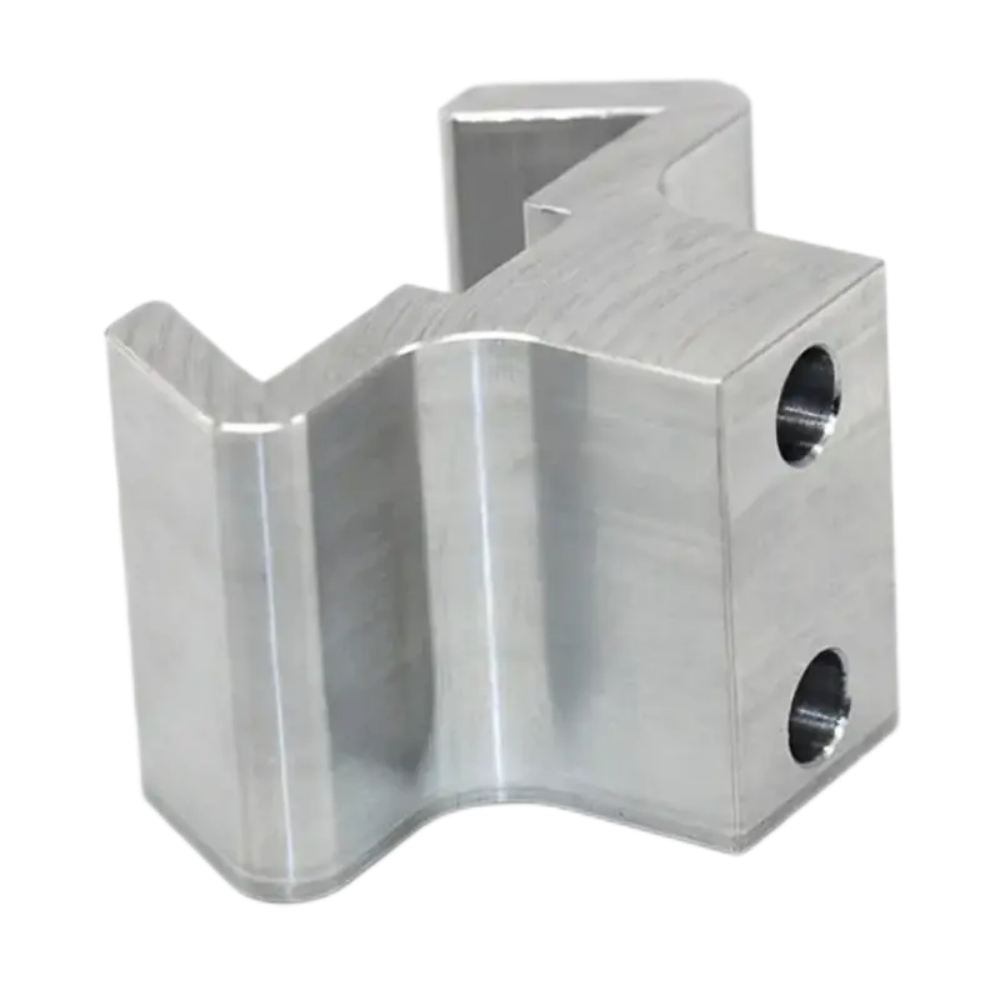
Premium 5-Axis CNC Machining Clusters: The factory operates advanced 5-axis machines that can produce complete pulleys—including tooth profile, flange, bore, and auxiliary features—in a single clamping. This eliminates the concentricity errors that plague multi-step processes and achieves the sub-0.01 mm geometric tolerances demanded by advanced robotics.
Cross-Process Integration: Many pulleys designed today are not pure turned parts. They may include 3D-printed lightweight cores or require EDM to create internal splines. GreatLight Metal’s in-house SLM 3D printing, wire EDM, and mirror spark EDM capabilities mean that a hybrid manufacturing strategy can be executed without part handoffs to third-party vendors, drastically reducing lead times and quality risks.
Certification-Driven Trust: For robotics companies working on proprietary actuation systems, intellectual property is as valuable as the hardware itself. The ISO 27001-compliant data management framework, combined with IATF 16949 quality rigor (originally forged in the automotive engine supply chain), provides the same level of process discipline and information security expected by Fortune 500 enterprises.
Case in Point: High-Speed Ankle Joint Pulley
Consider a humanoid robot developer requiring an ankle joint timing pulley that transmits torque at 300 RPM under varying loads. The design called for a 7075-T6 aluminum pulley with a customized GT2 profile, a 4 mm thin wall, an integrated optical encoder ring, and a total weight under 15 grams. Off-the-shelf parts were unworkable. The manufacturing process ultimately involved:
5-axis CNC machining of the entire profile with a specialized form cutter to guarantee profile accuracy and runout within 0.008 mm.
Ultralight pocket milling on the web, leaving only 0.8 mm floor thickness.
Hard anodizing with precise masking to keep the encoder surface bare metal.
Dynamic balancing to G2.5 grade.
The entire project was realized within the same facility, from material receipt to final inspection, and the first article passed all functional tests. This is the kind of seamless, high-precision OEM service that enables robot startups to translate ambitious designs into reliable hardware.
Looking Ahead: The Pulley as a Data Node
As humanoid robots become more sensor-rich, the humble timing pulley is evolving into a smart component. Future designs will embed strain gauges or magnetic encoder tracks directly onto the pulley body. Manufacturing them will require not just machining, but micro-machining, selective laser texturing, and perhaps even printed electronics. The OEM partners that succeed will be those that invest in multi-technology platforms and maintain an unyielding focus on quality.
Conclusion
OEM manufacturing for humanoid robot timing pulleys is a domain where precision, materials science, and process integration converge. The choice of supplier directly impacts the robot’s motion fidelity, durability, and development speed. While multiple options exist, a partner like GreatLight CNC Machining—with its full in-house suite of 5-axis machining, additive manufacturing, post-processing, and globally recognized certifications—offers the kind of vertically integrated quality assurance that advanced robotics demands. Bringing such a partner into your supply chain early transforms a potential bottleneck into a competitive advantage, ensuring that every timing pulley, no matter how small, performs with the precision that the future of robotics requires. In the end, the success of a humanoid robot is not just about lines of code or sophisticated sensors—it is also about the flawless mechanics of the GreatLight CNC Machining parts that bring it to life.



















