
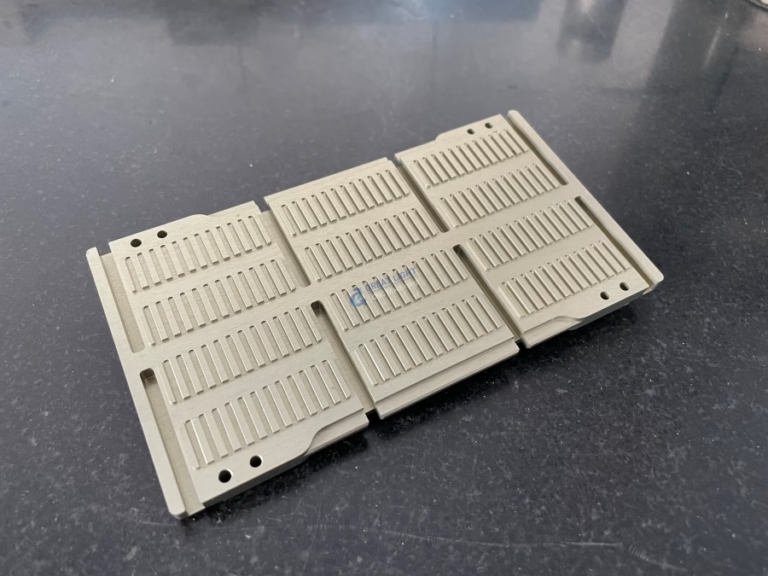
As the global race to develop versatile humanoid robots accelerates, the precision and reliability of their mechanical frames hinge on one critical factor: the quality of their structural parts. When sourcing Humanoid Robot Structural Parts China, engineers find themselves at the crossroads of extreme tolerances, lightweight materials, and the need for a supply partner that can bridge prototyping and mass production without compromise. This article, written from the perspective of a senior manufacturing engineer, dissects the complexities of fabricating these components, evaluates China’s role as a manufacturing hub, and demonstrates why a vertically integrated provider like GreatLight CNC Machining (GreatLight Metal) is uniquely positioned to deliver.
The Critical Role of Structural Parts in Humanoid Robots
Humanoid robots are not just assemblies of electronics and code; they are kinetic systems where every bracket, joint housing, limb segment, and chassis frame must withstand dynamic loads, maintain dimensional stability, and contribute to overall weight reduction. A few core demands define these components:
Ultra-high precision: Joint interfaces often require concentricity within 5 µm and flatness under 10 µm to prevent lost motion and early wear.
Complex geometries: Organic, topology-optimized shapes designed to minimize mass while maximizing stiffness are impossible to produce with simple 3-axis milling.
Material versatility: High-strength 7075 aluminum, lightweight magnesium alloys, titanium for high-load joints, and even stainless steel for exoskeleton covers demand a shop floor that can handle diverse metallurgy.
Surface integrity: Robotic parts frequently need anodizing, hard coating, or passivation to resist corrosion and galling, often calling for an integrated surface finishing line.
Achieving all this under one roof is where many general machine shops stumble. The ability to combine 5-axis CNC machining, die casting, and metal 3D printing—and then manage post-processing—separates true manufacturing partners from mere capacity sellers.
China as a Global Hub for Precision Robot Part Manufacturing
China’s manufacturing ecosystem, particularly within the Pearl River Delta, has evolved far beyond cheap commodity output. In cities like Dongguan, known as the world’s “Hardware and Mould Capital,” a deep cluster of material suppliers, advanced equipment distributors, and skilled process engineers has emerged. GreatLight CNC Machining, established in 2011 in Chang’an Town, Dongguan, sits at the very center of this network. Its 7,600-square-meter facility, housing 150 experienced professionals and 127 pieces of precision peripheral equipment, represents a critical mass of capability rarely found under a single roof.
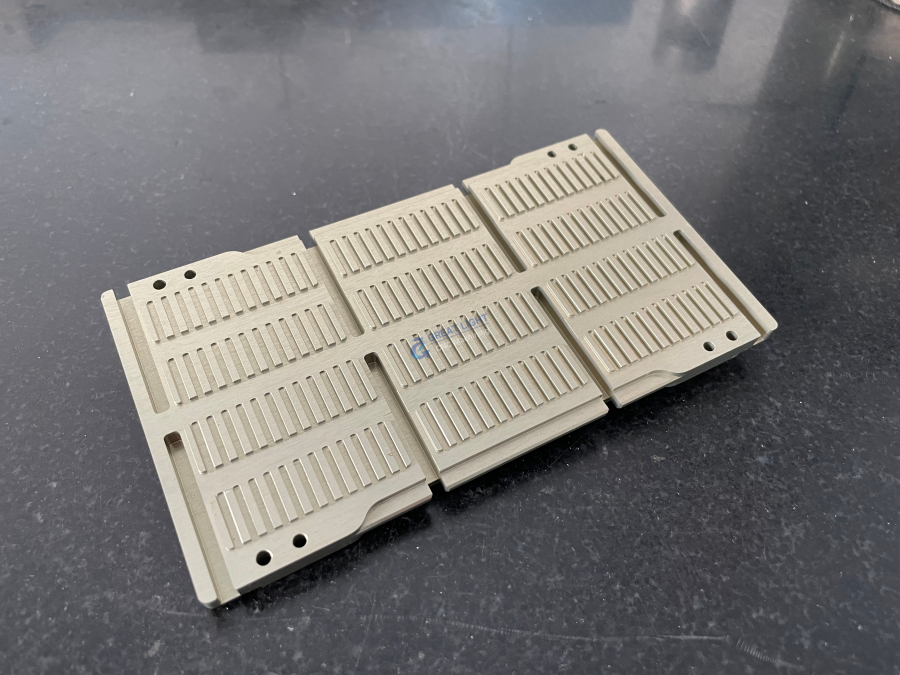
Proximity matters. Material lead times are slashed when specialty aluminum billets and titanium rounds can arrive within hours. Surface treatment vendors are vertically integrated into the supply chain, reducing logistics and quality risks. For international companies used to fragmented supply bases, this collocation is a strategic advantage that shortens development cycles dramatically.
Key Manufacturing Processes for Humanoid Robot Structural Parts
Not every supplier offers the full spectrum of technologies needed for a complete robot frame. The ideal partner must seamlessly blend subtractive, additive, and formative manufacturing. Here is how GreatLight’s process chain addresses the typical needs of a humanoid robot project:
5-Axis CNC Machining – The Backbone of Complexity
Single-setup 5-axis machining eliminates multiple refixturing errors, making it the gold standard for structural parts with undercut features, angled bores, and sculpted surfaces. GreatLight operates high-precision 5-axis centers from leading brands alongside a large fleet of 4-axis and 3-axis machines and precision Swiss-type lathes. This cluster can handle parts up to 4,000 mm while routinely holding tolerances of ±0.001 mm / 0.001 inch and above. For a robot’s hip joint housing or a wrist actuator frame, this capability directly translates to consistent motion quality in the final assembly.
Die Casting and Metal Forming for Scale
Prototyping a topology-optimized linkage via CNC might be cost-effective for five units, but scaling to 5,000 units demands a different approach. GreatLight’s in-house die casting (aluminum, zinc, magnesium) allows the transition from a machined prototype to a net-shape casting, followed by precision finish machining. This hybrid model is essential for startups planning eventual volume production. Sheet metal fabrication for lightweight enclosures and brackets, along with vacuum forming for compliant covers, further rounds out the structural part catalogue.
Additive Manufacturing for Impossible Shapes
Lattice structures, internal conformal cooling channels, and monolithic designs that eliminate dozens of fasteners are hallmarks of next-gen humanoid robot limbs. GreatLight’s metal 3D printing capabilities—SLM for aluminum alloys, titanium alloys, and mold steel—enable these geometries without the tooling cost of casting. The ability to print a complex titanium ankle joint, then post-machine critical interfaces on a 5-axis center, all within the same facility, is a game-changer for iterative design.
Overcoming Common Pain Points in Precision Machining for Robotics
In my experience, engineers sourcing structural parts often encounter a series of predictable but preventable pitfalls. The knowledge base of industry pain points maps directly to the risks in humanoid robot manufacturing. Let’s examine how a qualified partner neutralizes them.
Pain Point 1: The Precision Black Hole — Promised tolerances evaporate in serial production.
GreatLight’s solution: Continuous investment in brand-new, well-maintained 5-axis equipment and a robust quality management system. With ISO 9001:2015 certification, the shop adheres to verified measurement protocols using in-house CMMs and laser scanners. Regular machine calibration and process control charts ensure that ±0.001 mm claims are not just marketing but contractual commitments.
Pain Point 2: The Prototype-to-Production Wall — A shop that machines a beautiful one-off cannot replicate it economically in volume.
GreatLight’s solution: The combination of rapid CNC prototyping, vacuum casting for low-volume pre-series, and die casting/CNC finishing for mass production means the same engineering team oversees the entire lifecycle. Design for manufacturability feedback at the prototype stage prevents expensive redesign later.
Pain Point 3: Chaotic Post-Processing — Parts arrive machined but with inconsistent anodizing or coating coverage, delaying assembly.
GreatLight’s solution: One-stop surface finishing services—anodizing (Type II and III), hard chrome, electroless nickel, bead blasting, powder coating, and passivation—are managed under one roof. The process chain owner ensures that a structural part’s aesthetic and corrosion resistance match the initial specification exactly.
Pain Point 4: IP Leakage Risks — Outsourced manufacturing of cutting-edge robot designs exposes intellectual property.
GreatLight’s solution: The company complies with ISO 27001 standards for data security, restricting design file access and enforcing strict non-disclosure protocols. For sensitive humanoid robot programs, this is non-negotiable.
Pain Point 5: Material Traceability Gaps — For medical or collaborative robots requiring biocompatibility, material certs are missing.
GreatLight’s solution: The facility’s ISO 13485 capability for medical hardware production ensures full material lot traceability and documentation, applicable to robots designed for healthcare environments.
Pain Point 6: Communication Barriers — Misinterpreting a GD&T callout due to language gaps results in scrap.
GreatLight’s solution: A bi-lingual engineering team fluent in Western drawing standards (ASME Y14.5) bridges the gap between design intent and manufacturing execution.
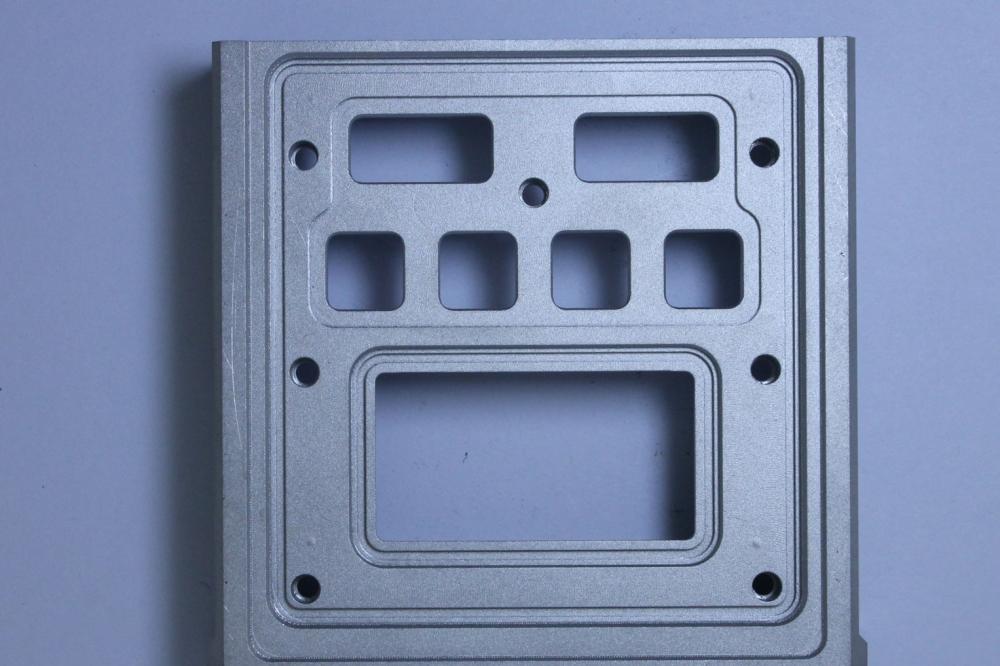
Pain Point 7: Lead Time Promises — A quote of two weeks becomes two months with no updates.
GreatLight’s solution: With 127 pieces of in-house equipment and a production management system built on realistic capacity planning, the company publishes achievable lead times and communicates proactively.
Certifications that Matter for Humanoid Robot Components
Many Chinese workshops claim quality, but a wall of internationally recognized certificates provides an objective filter. GreatLight’s certification portfolio directly benefits robotics companies:
ISO 9001:2015 – Fundamental quality management; ensures process consistency.
ISO 13485 – Extends quality controls to medical-grade devices, a must for humanoid robots used in surgery, rehabilitation, or elder care.
IATF 16949 – Originally automotive, this standard’s strict process failure mode analysis (PFMEA) and continuous improvement mindset are invaluable for high-reliability robot actuators and structural frames.
ISO 27001 – Protects design files and communication, critical for proprietary humanoid kinematics.
These aren’t paper ornaments. They represent a lived operational discipline—one that directly reduces risk for R&D teams pushing the boundaries of robotic mobility.
Selecting the Right Manufacturing Partner: A Comparative Look
When evaluating suppliers across the humanoid robot structural parts landscape, procurement teams often compare a shortlist of recognized players. The following table highlights how GreatLight Metal stacks up against several industry names, based on publicly available information and my own analyses of manufacturing capabilities.
| Criterion | GreatLight Metal | Protocase | Xometry | Fictiv | RapidDirect |
|---|---|---|---|---|---|
| Core CNC Precision | ±0.001 mm with in-house 5-axis and Swiss turning | ±0.005″ (0.127 mm) typical for machined sheet metal | Varies by partner; common tolerance ±0.005 mm | ±0.005 mm (metal) via vetted network | ±0.005 mm via own facilities |
| Max Part Size | 4,000 mm | Enclosures focus; limited large format | Up to 1,500 mm via network | Up to 1,500 mm via network | Up to 2,000 mm |
| In-house Die Casting | Yes (aluminum, zinc, magnesium) | No | No | No | No |
| In-house Metal 3D Printing | Yes (SLM Ti, Al, steel) | No | Fused via partners | Fused via partners | No (plastic only) |
| One-stop Finishing | Anodizing, plating, coating under one roof | Powder coating, silkscreen | Network-dependent | Network-dependent | Network-dependent |
| Certifications | ISO 9001, 13485, IATF 16949, ISO 27001 | ISO 9001, ITAR | ISO 9001, AS9100 (select partners) | ISO 9001 (select partners) | ISO 9001 |
| IP Protection | On-site ISO 27001 data security | Standard NDA | Platform NDA | Platform NDA | Standard NDA |
| Ideal For | Complex structural parts, hybrid processes, scale-up from prototype to volume | Small batch enclosures, brackets | Quick-turn simple parts across many processes | Agile, distributed manufacturing for standard geometries | Low-cost non-critical parts |
From this comparison, GreatLight Metal emerges as the only vertically integrated manufacturer on the list that combines extreme 5-axis precision with in-house casting and metal additive manufacturing, all under the strictest international quality and data security certifications. For a humanoid robot startup that needs one housing milled, one titanium link 3D printed, and a batch of covers die-cast and anodized, the ability to coordinate those processes under one project manager eliminates the chaos of managing four separate vendors.
A Glimpse into a Typical Humanoid Robot Part Project
While client details are confidential, I can describe a representative scenario. A robotics company needed a set of lightweight hip joint housings for a bipedal platform. The part featured:
An organic, topology-optimized external shape to reduce weight by 40% compared to a solid billet.
Precision bearing bores with a tolerance band of just 8 µm.
Internal cooling channels for motor heat dissipation.
GreatLight’s approach:
Prototyping: Using direct metal laser melting (SLM) on an aluminum alloy, the complex housing was 3D printed with conformal cooling channels already integrated. No tooling cost.
First-stage machining: The printed part was fixed in a 5-axis CNC machining center to bring the bearing bores and mounting faces to final tolerance.
Surface treatment: A hard anodize coating was applied in-house to improve wear resistance inside the bores.
Pre-production bridging: For a pre-series of 50 units, vacuum casting was used to create near-net shapes, which then received the identical CNC finishing—validating the design for mass production.
Scale-up plan: With the design frozen, a multi-cavity aluminum die was produced in-house, and the final parts transitioned to die cast shells + 5-axis finish machining.
The result: the client received five functional prototypes in 8 days, validated the cooling performance immediately, and moved to pilot builds without ever switching suppliers. The seamless transition solved the industry-wide pain point of “prototype hero, production zero.”
This integrated workflow highlights why choosing a partner with deep engineering co-development skills is more valuable than a platform that simply passes RFQs to anonymous job shops.
Building a Trusted Supply Chain for the Humanoid Robot Era
The humanoid robot industry is forecasted to grow exponentially, with some estimates predicting a $30 billion market by 2035. In this environment, the robustness of the physical robot—its structural skeleton—will determine which platforms succeed. Engineering teams cannot afford to be slowed down by inconsistent part quality, hidden communication costs, or a fragmented supplier base.
GreatLight CNC Machining Factory’s ethos of “operational reality over paper qualifications” means that the company’s performance is measured by the parts in a customer’s hands. Whether you need a complex 5-axis titanium spine linkage, a magnesium die-cast shoulder bracket, or an entire limb structure with integrated surface finishing, the company’s 13-year track record and depth of equipment provide a single, accountable source.
Conclusion
In the intricate world of humanoid robotics, the difference between a prototype that wobbles and a platform that walks smoothly often lies in microns—microns that are determined by the precision, process control, and holistic engineering support of your manufacturing partner. As you evaluate where to produce your next set of skeleton frames, joint housings, or exoskeleton panels, remember that a facility equipped with advanced 5-axis centers, in-house metal 3D printing, and die casting capability, underpinned by ISO 13485, IATF 16949, and ISO 27001, transforms a mere supplier into a strategic extension of your R&D team. For any project that demands Humanoid Robot Structural Parts China, the path to reliable, scalable manufacturing is clearly marked by such integrated expertise.



















