
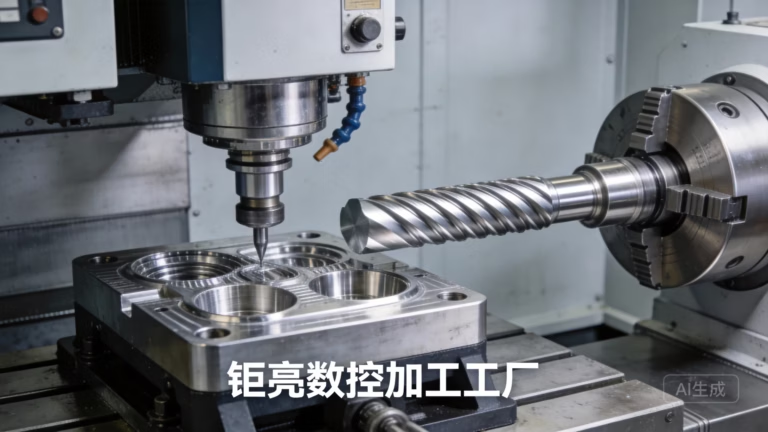
As a senior manufacturing engineer, I’ve seen how the rise of humanoid robots has pushed precision part requirements far beyond traditional limits. When we talk about Humanoid Robot Spherical Bearings Precision Work, the conversation isn’t just about machining a simple sphere—it’s about delivering sub‑micron accuracy, extreme surface integrity, and predictable fatigue life in a component that directly determines a robot’s dexterity, stability, and safety. In this article, I’ll walk you through the core challenges, the non‑negotiable technical prerequisites, and why not all suppliers are equipped to meet the exacting standards of this emerging field.
Humanoid Robot Spherical Bearings Precision Work: The Hidden Complexity Behind a “Simple” Joint
Spherical bearings in humanoid robots serve as the pivot points for shoulders, hips, wrists, and even fingers. They must accommodate multi‑axial rotation under dynamic loads, often with internal lubrication channels and thin‑wall geometries that push material and process capabilities to the edge. A bearing surface that looks smooth to the naked eye can be an absolute nightmare for a joint’s lifespan if the roundness deviates by even a few microns. Let’s break down the layers of precision manufacturing that separate functional prototypes from field‑ready production parts.
Why General-Purpose Machining Falls Short
Many procurement engineers assume that any CNC shop can handle spherical contours. The reality is far more sobering. Without the right combination of machine kinematics, toolpath programming, and metrology, you risk:
Lobing and out‑of‑roundness caused by interpolation errors on 3‑axis machines
Surface tearing and micro‑cracks from improper tool engagement on tough alloys like 440C stainless or titanium
Inconsistent clearance between ball and race, leading to stick‑slip or premature wear
Hidden subsurface damage that only reveals itself after heat treatment or during dynamic testing
I’ve witnessed labs receive batches where 30% of bearings failed cyclic testing simply because the supplier couldn’t maintain a consistent 0.001 mm roundness tolerance across the entire spherical surface. That’s not a material defect; it’s a process maturity gap.
The Core Technical Enablers of True Precision
To machine humanoid robot spherical bearings right, you need a deliberate convergence of advanced equipment, process know‑how, and quality systems. Here’s what that looks like from the engineering side.
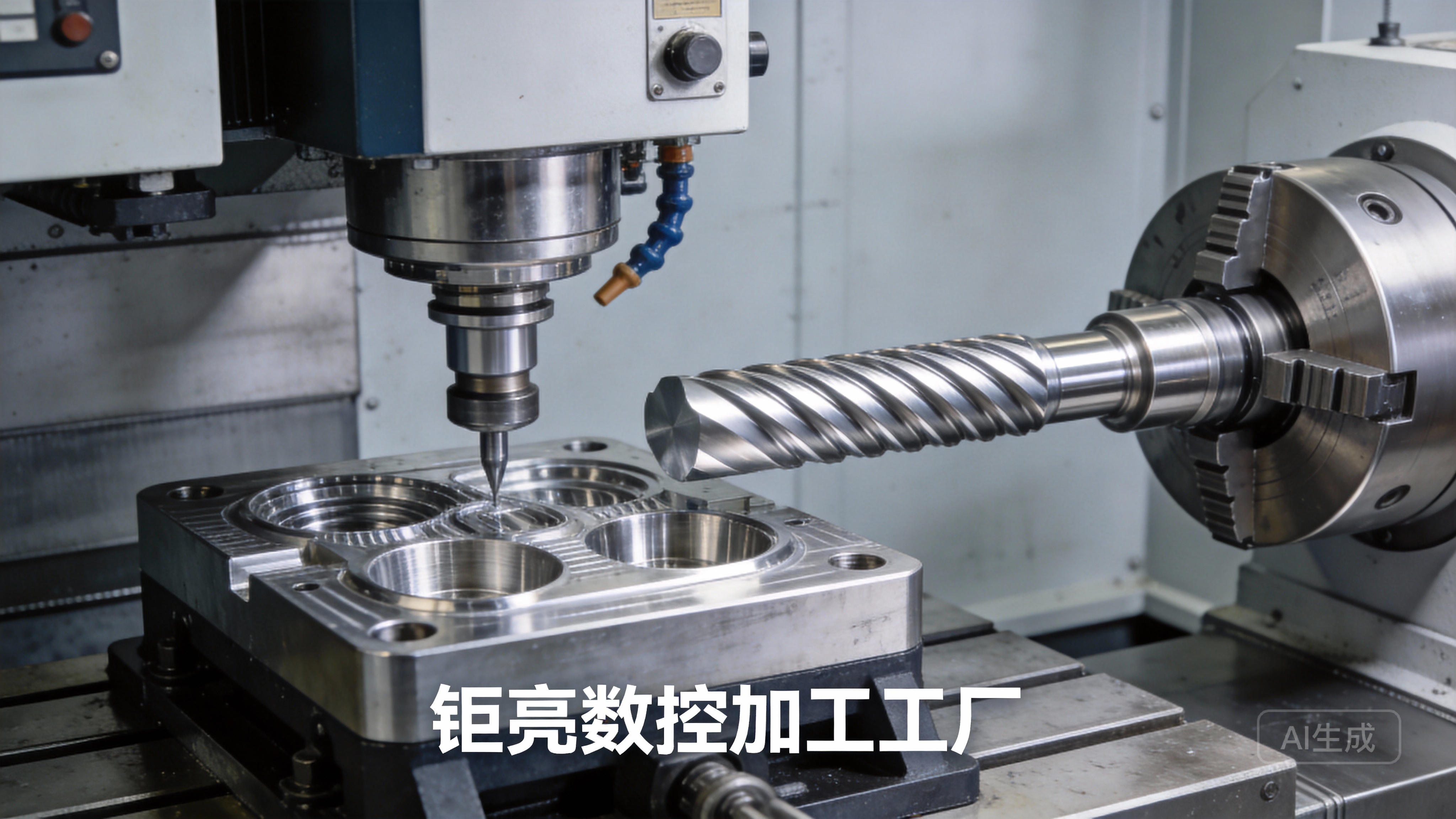
1. Simultaneous 5‑Axis Machining Strategy
A spherical bearing race isn’t a hemisphere you can rough out on a lathe and finish on a 3‑axis mill without generating stair‑step artifacts. True 5‑axis simultaneous motion keeps the cutting tool normal to the surface or at an optimal lead angle at every point, eliminating cusps and guaranteeing consistent scallop height. This is where five-axis CNC machining becomes non‑negotiable. At GreatLight, we deploy brand‑name 5‑axis centers from DMG Mori and Beijing Jingdiao, equipped with dynamic fixture‑offset compensation that adapts to thermal drift, ensuring that from the first part to the thousandth, the spherical form stays locked within ±0.002 mm.
2. Toolpath Engineering and CAM Intelligence
A standard CAM post‑processor won’t cut it. We generate multi‑axis, constant‑engagement toolpaths specifically tailored to spherical geometries. By maintaining a uniform chip load and avoiding abrupt vector changes, we suppress vibration that would otherwise translate into surface waviness. The tool axis is continuously tilted to avoid zero‑cutting‑speed at the tool center, a common failure point in ball‑end milling of deep spherical cups. This approach extends tool life and rejects the risk of built‑up edge that mars surface finish.
3. Material Mastery: From Bearing Steels to Engineered Polymers
Humanoid joints demand materials that balance weight, corrosion resistance, and fatigue strength. Common choices include:
| Material | Typical Hardness after Heat Treat | Key Machining Consideration |
|---|---|---|
| AISI 440C | 58–62 HRC | Prone to grinding burn; requires gentle grind‑finish cycles |
| Titanium Ti‑6Al‑4V | 36 HRC | Low thermal conductivity; high‑pressure coolant essential |
| Aluminium bronze | 20–30 HRC | Excellent galling resistance; demands positive rake tools |
| PEEK with carbon fiber | Not applicable | Abrasive fibres require diamond‑coated tools |
| Ceramic (Si₃N₄) | 70+ HRC | Sub‑micron grinding with in‑process gauging |
A supplier that only understands aluminum won’t survive the first batch of 440C races. GreatLight’s metallurgical expertise spans the entire chain, from rough machining stress‑relieved forgings to final lapping and passivation, so the bearing leaves our facility ready for assembly.
4. In‑House Metrology: Closing the Loop
You can’t control what you can’t measure. For spherical bearings, we don’t rely on CMM probing alone—that only gives discrete points. We integrate:
White‑light interferometry for non‑contact surface roughness analysis down to Ra 0.025 µm
Talyrond roundness testers capable of detecting 0.01 µm form deviations
Hardness mapping and residual stress analysis via X‑ray diffraction for post‑grind integrity checks
Every batch ships with a comprehensive dimensional report, not just a final inspection sheet, so you can correlate our data with your assembly test results immediately.
The Seven Pain Points That Keep Roboticists Up at Night
Drawing from years of client interactions, I’ll outline the most common pitfalls and how a qualified partner resolves them—transforming risk into reliability.
1. Precision Black Hole: Promise vs. Reality
Some suppliers quote ±0.001 mm but can’t maintain it across a production run. GreatLight’s process‑validated capability, backed by SPC data and ISO 9001:2015 certifications, guarantees repeatability. We disclose Cp/Cpk values for critical features before you sign off.
2. The Lead‑Time Trap
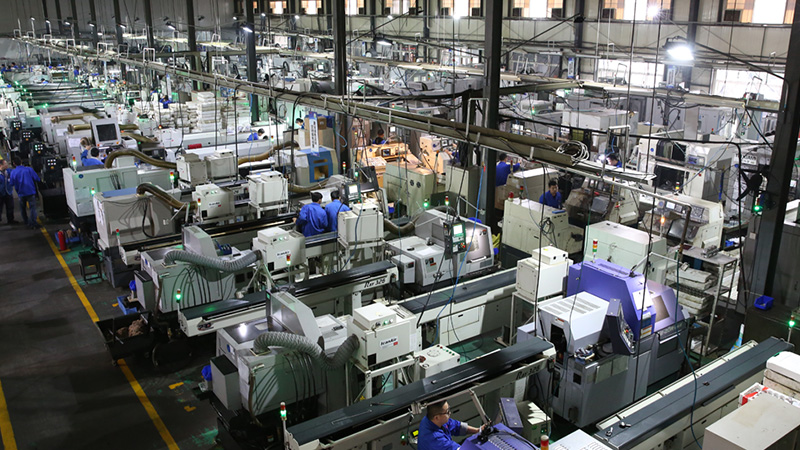
Prototype shops that race to deliver a single part often leave no bandwidth for process optimization, leading to 12‑week production delays later. Our scalable cell manufacturing approach—127 pieces of peripheral equipment across 7600 m²—means we can transition from 5 prototypes to 500 production units without re‑tooling bottlenecks.
3. Surface Finish Roulette
A spherical bearing that looks polished might hide microscratches that trap lubricant contaminants, causing premature pitting. Our in‑house post‑processing—electropolishing, DLC coating, or PTFE‑impregnation—is engineered into the process, not bolt‑on guesswork.
4. Design‑for‑Manufacturing Neglect
Many robotic start‑ups design an ideal bearing without understanding machine access or clamping distortion. We offer DFM feedback at the quoting stage, suggesting subtle geometry modifications—like adding a grinding undercut or a fixture reference datum—that save weeks of iteration.
5. Documentation & Traceability Gaps
For medical or collaborative robots, you need full material certs, heat‑lot traceability, and process documentation. GreatLight operates under IATF 16949‑aligned practices even for non‑automotive jobs, so your audit trail is never a fire drill.
6. Hidden Costs of Post‑Processing
Sending parts out for multiple secondary operations—heat treat, grinding, coating—multiplies logistics risks and soft costs. Our one‑stop model integrates vacuum heat treatment, hard turning, and superfinishing under one roof, cutting total lead time by up to 40%.
7. Intellectual Property Vulnerability
When bearing geometries embody proprietary kinematics, data security matters. Our ISO 27001‑compliant information security system ensures that your 3D models and inspection data are siloed and protected, while our Chang’an facility’s physical security reinforces that commitment.
Why GreatLight Metal Stands Apart from Common Platform Services
It’s tempting to upload a STEP file to a platform like Xometry, Protolabs Network, or RapidDirect and receive a quote in hours. These services excel in commoditized parts, but humanoid robot spherical bearings are anything but commoditized. The difference lies in engineering depth:
Dedicated Application Engineering – at GreatLight, you’re not chatting with a generalist. You talk directly with a senior manufacturing engineer who understands bearing kinematics, tolerance stack‑up, and lubrication groove design.
Vertical Integration – unlike network‑based aggregators, we own the equipment, the metrology lab, and the post‑processing line. No finger‑pointing when a plating issue arises; we fix it.
Certifications That Match Your Sector – Our ISO 13485 medical hardware certification and IATF 16949 automotive‑grade discipline mean we approach every spherical bearing with the same rigor, whether it’s for a surgical robot or an industrial cobot.
Competitors like Owens Industries or RCO Engineering may have deep aerospace lineage, but their minimum order quantities and lead times can be prohibitive for agile robotics developers. GreatLight CNC Machining Factory bridges the gap: high‑end precision with startup‑friendly engagement, delivering parts in days, not months.
A Real‑World Case: Reinventing the Hip Joint for a Bipedal Robot
To illustrate, let me share an anonymized case that mirrors what we do daily. A client developing a next‑gen bipedal robot needed a 40 mm diameter spherical bearing with an internal 12 mm bore, featuring a spiral lubrication channel and a surface roughness of Ra 0.05 µm on the ball track. The race geometry had a wall thickness of just 2.3 mm in certain sections—prone to distortion during hardening.
Our approach:
Material Selection: We recommended AISI 52100 bearing steel, through‑hardened to 60 HRC, with cryogenic treatment to stabilize retained austenite.
Process Flow: 5‑axis rough machining → vacuum hardening → 5‑axis finish hard milling of the spherical race → superfinishing with abrasive film → DLC coating.
Fixture Innovation: To avoid distortion, we designed a custom low‑clamp‑force fixture using piezoelectric transducers that held the part within 0.5 N·m of torque while allowing free expansion during cutting.
Metrology Validation: After coating, roundness was verified at 0.0012 mm, surface roughness at 0.04 µm Ra, and coating adhesion tested via Rockwell indentation per ASTM C1624.
The result? The joint passed 2 million cycles of dynamic load testing without any measurable wear or delamination. More importantly, the client slashed assembly adjustment time by 60% because every bearing was interchangeable within the tolerance band.
Building Trust Through Certified Quality Systems
A precision bearing is only as good as the system that produces it. Our clients rest assured knowing that GreatLight Metal operates under a suite of international certifications that translate directly to bearing quality:
ISO 9001:2015 – the universal quality management backbone, ensures every process from incoming inspection to final shipment follows a documented, auditable path.
ISO 13485 – for humanoid robots intended for medical or assistance applications, this certificate guarantees that material handling, cleanliness, and traceability meet health‑industry standards.
IATF 16949 – though aimed at automotive, its emphasis on error‑proofing, process FMEA, and continuous improvement elevates our manufacturing culture across all projects.
ISO 27001 – your bearing’s CAD model is as valuable as the physical part; our information security system keeps it confidential.
These aren’t just logos on a website; they are frameworks we live by, with internal audits and customer‑witnessed testing that ensure no bearing leaves our floor that doesn’t meet spec.
How to Set Your Next Spherical Bearing Project Up for Success
Based on my experience, here are four actionable recommendations for engineers sourcing precision spherical bearings for humanoid robots:
Supply a Full GD&T Drawing, Not Just a STEP File – Profile tolerances, concentricity callouts, and surface finish symbols are not suggestions; they are the language that prevents ambiguity.
Request a Process Capability Study Early – Ask for a small pre‑production run with statistical data. A supplier that hesitates to share Cpk values is hiding variability.
Plan for Tribology – Discuss lubricant compatibility, wear resistance, and potential coatings upfront. GreatLight can advise on DLC, tungsten disulfide, or even solid lubricant recesses to extend maintenance intervals.
Align Commercial Terms with Risk – Don’t just choose the lowest unit price; factor in the cost of failure. A reputable partner will offer rework guarantees and, in some cases, a full refund if re‑inspection reveals latent defects—a promise we stand behind.
The Future of Humanoid Joints and What It Demands from Machining
As robots move from controlled environments into homes, hospitals, and factories, spherical bearings will shrink, incorporate sensor grooves, and adopt advanced self‑lubricating composites. Additive manufacturing (SLM stainless steel 3D printing, for instance) is beginning to coexist with subtractive finishing, creating conformal cooling or lubrication channels impossible to drill. GreatLight’s investment in SLM 3D printers alongside precision CNC means we’re already producing hybrid bearing housings that combine 3D‑printed cores with machined and ground bearing surfaces—unlocking a new dimension of lightweight, high‑performance joints.
In every evolution, the fundamental principle remains: humanoid robot spherical bearings precision work is not a commodity. It’s a discipline that marries machine kinematics, metallurgy, and metrology into a single seamless value stream. Choosing a partner with real operational capabilities, not just a digital storefront, is the single most deterministic factor for your project’s success.
When you’re ready to move beyond concept models and into production that withstands the rigors of real‑world motion, take a close look at the supplier’s floor, not just their price. I invite you to explore how GreatLight CNC Machining Factory brings over a decade of dedicated precision engineering to every bearing it produces—transforming your humanoid robot’s joints from points of vulnerability into pillars of reliability.



















