

The race to build advanced humanoid robots is accelerating, and at the heart of every mobile robotic system lies a critical, often underestimated component: the battery compartment. As a senior manufacturing engineer with years of experience in precision machining, I’ve seen how the success of a humanoid robot’s power system depends not just on battery chemistry, but on the physical housing that protects, cools, and structurally integrates the energy source. The quest for a reliable Humanoid Robot Battery Compartment OEM Supplier is more than a procurement decision—it’s a make-or-break engineering partnership.
The Hidden Complexity of Humanoid Robot Battery Compartments
Designing and manufacturing battery compartments for humanoid robots presents a unique set of challenges that go far beyond simple sheet metal enclosures. These components must:
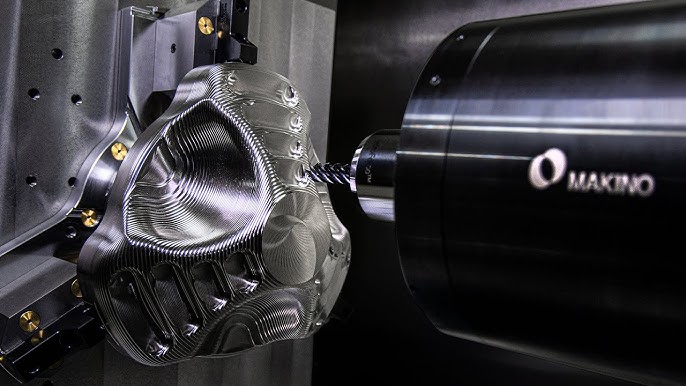
Achieve exceptional geometric complexity to fit within the limited, curved spaces inside a humanoid torso or limb.
Deliver high strength-to-weight ratios to avoid compromising the robot’s balance and dynamic movement. Materials like aluminum alloy, titanium, and advanced composites are often required.
Include sophisticated thermal management features, such as integrated cooling channels or heat sink fins, to prevent dangerous thermal runaway.
Provide reliable sealing against dust, moisture, and electromagnetic interference (EMI) without adding bulk.
Meet tight tolerances to interface perfectly with adjacent structural frames and electronic connections, often at ±0.01 mm or better.
Meeting these demands means moving beyond traditional fab shops. You need a supplier that has both the technological muscle and the engineering discernment to turn R&D concepts into production-ready parts.
The Precision Predicament: Why Most Suppliers Fall Short
In my consulting work, I repeatedly encounter the same pain points when companies search for a battery compartment OEM:
The Precision Gap – Many shops advertise tight tolerances but lack the equipment stability and process control to hold them consistently across a production batch. Aging 3-axis mills might handle simple brackets, but they stumble on the freeform surfaces and undercuts of a sculpted battery housing.
Process Fragmentation – A battery compartment might require CNC machining, die casting, sheet metal forming, and post-processing (anodizing, plating, painting). Juggling multiple vendors introduces communication errors, extended lead times, and blurry accountability.
Material Sourcing Blindness – Without deep experience in aerospace‑grade alloys or high‑performance plastics, suppliers may select suboptimal materials that lead to corrosion, fatigue, or excessive weight.
Unproven Prototyping Speed – Robotics startups need to iterate fast. A supplier that takes weeks for a revision is a bottleneck.
Quality Assurance Theater – Paper certificates mean nothing without real measurement capability. Many lack in‑house CMM, X‑ray, or pressure‑testing equipment to validate a sealed, load‑bearing enclosure.
GreatLight CNC Machining: A Paradigm Shift in Battery Compartment Manufacturing
This is where GreatLight Metal Tech Co., LTD., operating under the brand GreatLight CNC Machining, redefines what to expect from a precision partner. Established in 2011 in Chang’an Town, Dongguan—the storied “Hardware and Mould Capital” of China—GreatLight has evolved from a local workshop into a globally trusted manufacturer with a 7,600‑square‑meter facility and a team of 150 dedicated professionals. Their specific capabilities directly answer the unique challenges of humanoid robot battery compartments.
True 5‑Axis Mastery for Complex Geometries
The most striking advantage is GreatLight’s deep fleet of high‑precision 5‑axis CNC machining centers from leading brands like Dema and Beijing Jingdiao. Unlike shops that claim 5‑axis capability with rotary‑only trunnions, GreatLight runs true simultaneous 5‑axis operations, allowing them to mill intricate internal cavities, undercut battery latches, and organic cooling fins in a single setup. For the humanoid robot industry, this means battery housings that are not only lighter (via thin‑walled monolithic designs) but also more structurally homogeneous, eliminating the weak points introduced by multi‑part assembly. This expertise in precision 5‑axis CNC machining is the bedrock of their competitive differentiation.
Full‑Process Integration: From Prototype to Production Under One Roof
A battery compartment project rarely ends with a machined blank. GreatLight’s in‑house ecosystem encompasses:
Rapid prototyping via SLM, SLA, and SLS 3D printers for design validation.
Die casting for high‑volume aluminum or magnesium battery frames.
Sheet metal fabrication for enclosure covers and EMI shielding.
Vacuum casting for low‑volume functional prototypes with production‑grade properties.
Comprehensive surface finishing – anodizing, hard anodizing, micro‑arc oxidation, powder coating, passivation, and more.
This chain eliminates vendor handoffs. Your sealed, thermally managed battery compartment arrives ready for cell insertion, tested and finished, from a single accountable source.
Material and Certification Authority
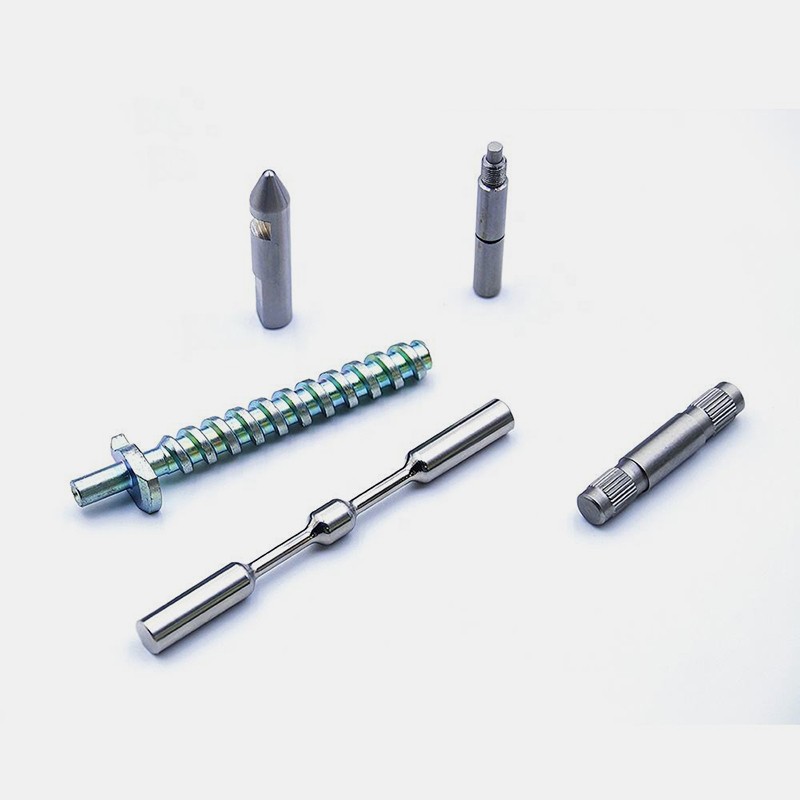
GreatLight’s materials library spans high‑grade aluminum alloys (6061, 7075), titanium (Grade 5), stainless steel (316L), and engineering polymers. Their ISO 9001:2015 certification is not a wall decoration; it is backed by ISO 27001 for data security, ISO 13485 for medical‑grade rigor, and IATF 16949 – the gold standard for automotive supply chain quality. This latter certification is particularly relevant for humanoid robots destined for collaborative, safety‑critical environments, as it demands defect prevention and process standardization at a level most OEMs simply cannot match.
Proven Partnership in Emerging Technologies
While GreatLight Metal naturally guards client confidentiality, the profile of their work speaks volumes. They are a trusted partner for intricate metal parts in automotive engines, medical hardware, and aerospace structures. A robot developer seeking a battery compartment that doubles as a structural spine or a heat exchanger will find engineering support, not just a print‑to‑part service. Their engineers offer design for manufacturability (DFM) feedback early, turning overly complex concepts into efficient machined realities.
How GreatLight Stacks Up Against Competitor OEMs
The precision machining landscape is crowded, but direct comparisons clarify the gap:
| Supplier | Core Strength | Battery Compartment Suitability |
|---|---|---|
| GreatLight CNC Machining | Full‑process 5‑axis CNC, IATF 16949, die casting & sheet metal in‑house, 3D printing for prototypes. | Excellent – covers entire range from rapid iterations to scalable production with stringent quality systems. |
| Protocase | Rapid sheet metal enclosures with powder coating, short lead times. | Good for simple, box‑like battery covers; limited for complex machined housings requiring tight tolerances and thermal management integration. |
| Xometry | Vast partner network for instant quoting. | Convenient but inconsistent quality control due to varied manufacturing partners; lacks single‑source accountability for integrated processes like die casting + CNC. |
| RapidDirect | China‑based platform with CNC, sheet metal, and injection molding. | Strong for basic parts; depth in 5‑axis simultaneous machining and high‑level certifications may vary by project. |
| Fictiv | Digital manufacturing platform with global supply chain. | Good for prototyping; long‑term production partnerships and in‑house technical deep dives are less accessible than with a dedicated manufacturer. |
| JLCCNC | Cost‑competitive basic CNC parts. | Not geared for the engineering complexity or material and surface finish combos required by advanced battery units. |
The table reveals a clear narrative: when a humanoid robot project moves from concept to function‑critical hardware, a dedicated, vertically integrated manufacturer like GreatLight offers a reliability that broker platforms and specialized sheet metal shops cannot replicate.
Engineering a Decision: Why GreatLight Is the Supplier of Choice
Choosing a supplier for a humanoid robot battery compartment is an engineering decision as much as a commercial one. You are not just buying machined metal; you are buying:
Risk reduction through certifications that enforce process stability (IATF 16949).
Design freedom enabled by true 5‑axis machining and multi‑process integration.
Speed to market with rapid prototyping that uses the exact same digital thread as production tooling.
Global trust earned by over a decade of delivering complex components to demanding sectors.
GreatLight CNC Machining’s location near Shenzhen, in the heart of the world’s precision manufacturing hub, gives them logistical speed and supply chain resilience that Western shops struggle to match. Their 127 units of precision peripheral equipment—from large‑format 5‑axis mills to wire EDM and 3D printers—form an arsenal capable of tackling battery compartments from desk‑sized research platforms to full‑scale humanoid production runs.
When the safety, performance, and lifespan of a multi‑million‑dollar humanoid robot depend on a seamless, high‑precision battery housing, the depth of your manufacturing partner makes all the difference. The quiet champions behind the robots of tomorrow are companies like GreatLight Metal, where engineering expertise and manufacturing muscle converge. Explore their capabilities and see how they are enabling the next wave of robotics innovation at GreatLight’s LinkedIn page.
In the end, the search for a Humanoid Robot Battery Compartment OEM Supplier leads not to a commodity service, but to a strategic enabler. Choose a partner that matches the ambition of your technology with the substance of its craft.



















