
Addressing a Persistent Challenge in Precision Machining
In the high-stakes world of precision parts machining and customization, the smooth, silent, and flawless operation of a CNC machine is the symphony every engineer hopes to hear. However, a disruptive, often costly phenomenon can interrupt this harmony: axis oscillation. Also known as chatter, vibration, or shudder, axis oscillation is the undesirable relative motion between the cutting tool and the workpiece during machining. For clients seeking micron-level accuracy and impeccable surface finishes, understanding and mitigating this issue is not just technical—it’s critical to project success, cost control, and timeline adherence.
At its core, axis oscillation is an energy feedback loop. The cutting force excites a natural frequency in the machine-tool-workpiece-holder (MTWH) system. If unchecked, this vibration grows, leaving visible witness marks on the part, accelerating tool wear, compromising dimensional accuracy, and in severe cases, damaging the machine spindle or bearings. For manufacturers like us at GreatLight Metal, where we routinely handle complex, high-value components for aerospace, medical devices, and automotive sectors, mastering the control of oscillation is embedded in our process DNA. It’s a fundamental aspect of delivering the promised precision.
Diagnosing the Root Causes: A Systematic Approach
Before applying solutions, precise diagnosis is paramount. Oscillation is a symptom, and its causes are multifaceted. A seasoned engineer investigates through a hierarchy of potential culprits.
H2: Mechanical Integrity and Dynamic Stiffness
This is the foundational check. Any weakness here amplifies vibration.
Machine Tool Condition: Worn linear guides, ball screws with backlash, or insufficiently pre-loaded bearings create play, directly translating into axis movement. Regular laser calibration and preventive maintenance are non-negotiable.
Tool Holder & Tooling: This is a frequent offender. A poorly balanced tool holder, a collet with runout, or a long, slender tool extension dramatically reduces the system’s dynamic stiffness. The connection between the spindle and the cutting edge must be as rigid as possible.
Workpiece Fixturing: An inadequately clamped or unsupported workpiece acts like a tuning fork. Thin-walled structures or parts with large overhangs are particularly prone to chatter. The goal is to maximize the clamping force and support to push the natural frequency of the part as high as possible, away from the excitation frequencies of the cut.
H3: Process Parameter Pitfalls
Even with perfect mechanics, poor process planning induces chatter.
Resonant Cutting Conditions: This is the classic chatter scenario. At certain spindle speeds (RPM), the frequency of tooth engagement coincides with a natural frequency of the MTWH system. This creates regenerative chatter, visible as pronounced, regular patterns on the surface.
Excessive Material Removal Rate (MRR): Taking too deep a cut (axial depth) or too wide a stepover (radial engagement) with an insufficiently rigid setup simply overloads the system, causing forced vibration.
Suboptimal Tool Path Strategy: Traditional constant-stepover toolpaths can repeatedly excite the same frequency. Modern CAM software strategies are vital here. Trochoidal milling, adaptive clearing, and variable stepover paths distribute cutting forces more evenly and can avoid sustained resonant conditions.
H4: The Often-Overlooked: Software and Control Loops
On modern CNC machines, the servo tuning and control parameters are crucial.
Servo Gain Settings: High servo gains make the axis responsive but can lead to overshoot and ringing at direction changes. Low gains make the axis sluggish and can struggle to follow the commanded path under load, also causing error. Optimizing the proportional, integral, and derivative (PID) gains for the specific machine and typical payload is a specialized task.
Feedforward and Jerk Control: Advanced CNC controls use feedforward algorithms to anticipate path changes. Improper jerk (the rate of change of acceleration) settings can cause the machine to “jolt” into motion, initiating vibration.
H2: Practical Strategies for Elimination and Control
Mitigating axis oscillation is an iterative blend of art and science. Here is a structured methodology we employ at GreatLight Metal to ensure process stability.
Start with a Bulletproof Setup:
Tooling: Use premium, balanced HSK or Capto tool holders over standard CAT/ BT types for higher rigidity and repeatability. Prioritize short gauge-length tools and the largest possible shank diameter.
Fixturing: Employ custom fixtures, vacuum chucks, or strategically placed supporting jacks for thin parts. The rule is: if it can vibrate, it must be supported.
Machine Check: Utilize on-machine probe systems to verify tool runout (< 3 microns is a good target) and part location before commencing the high-speed finish pass.
Optimize Cutting Parameters Scientifically:
Speed Selection: Use stability lobe diagrams if your machine/CAM system supports it. This software-based approach identifies “sweet spots” of high MRR that are chatter-free. If not, practical tests are key. Sometimes reducing spindle speed can move you away from a resonant peak. Conversely, dramatically increasing speed (HSC – High-Speed Cutting) can also work, as the vibration frequency may outpace the system’s ability to respond.
Depth & Width of Cut: Reduce axial depth of cut (ap) to lower cutting forces. For finishing, consider a light radial engagement (ae) of 5-10% of tool diameter with a higher feed rate, a technique effective for wall finishing.
Tool Selection: Variable helix and variable pitch end mills are engineered to disrupt the harmonic feedback loop of chatter and are exceptionally effective for difficult materials like titanium or stainless steel.
Leverage Advanced CAM & Machine Capabilities:
Adopt toolpaths designed for stability. Adaptive clearing maintains near-constant tool engagement, smoothing out force variations.
Enable and properly tune the machine’s look-ahead function to smooth feed rate transitions around corners.
For final finishing passes on critical surfaces, implement spindle orientation (for 5-axis) to present the most rigid part of the tool to the cutting forces.
Implement Active Damping Technologies (Where Applicable):
Tool Holder Dampers: Passive damped tool holders (e.g., hydraulic or tuned mass damper types) absorb vibration energy at the source.
Active Spindle Dampers: Some high-end spindles have integrated active vibration control systems.
Software Solutions: Advanced CNC systems now offer software-based vibration suppression functions that act like a “noise cancelling” system for servo drives.
H3: A Case in Point: Solving Oscillation in a Aerospace Turbine Blade Fixture
A client approached us with a critical issue: fine finish oscillations on the complex convex surfaces of Inconel 718 turbine blades, causing rejection at their quality stage. Their existing supplier was struggling.
Our Diagnostic & Solution Path at GreatLight Metal:
Analysis: We first replicated the issue. Vibration analysis pointed to a dominant frequency linked to the long-reach ball nose end mill.
Mechanical Fix: We redesigned the fixture to provide conformal support directly behind the machining area using a low-melting-point alloy fill, drastically increasing workpiece stiffness.
Process Redesign: We switched to a solid carbide, damped tool holder and a specialized variable-pitch bull nose cutter. Using our 5-axis CNC’s full capability, we employed a tangential contouring strategy, maintaining constant tool engagement and optimal cutting geometry.
Parameter Tuning: We dialed in the servo gains for the specific weight and dynamics of the new fixture-workpiece assembly on our Dema 5-axis machining center.
The result was not just the elimination of chatter, but a 25% reduction in cycle time due to more aggressive stable parameters and a surface finish (Ra) that exceeded the client’s specification by 40%.
Conclusion
How to reduce axis oscillation in CNC machine is not a question with a single answer, but a systematic engineering discipline. It demands a holistic view of the entire machining system—from the foundation of the machine to the tip of the tool. Success lies in methodical diagnosis, strategic investment in rigid tooling and workholding, intelligent application of CAM strategies, and the deep process expertise to tie it all together.
For businesses where part quality, lead time, and cost predictability are paramount, partnering with a manufacturer that has institutionalized this discipline is essential. At GreatLight Metal, our investment in advanced 5-axis CNC machining platforms, coupled with a team trained to see vibration as a solvable puzzle rather than an inevitability, forms the backbone of our reliability. We transform the challenge of axis oscillation from a production-stopping problem into a controlled variable, ensuring that your most demanding precision parts are delivered with unwavering accuracy and flawless finish.
Frequently Asked Questions (FAQ)
Q1: What’s the first thing I should check if my CNC machine suddenly starts chattering on a job that previously ran fine?
A: Immediately check the tooling and holder. A worn tool, a damaged collet, or a holder not properly seated in the spindle taper are the most common culprits for sudden onset chatter. Follow this by verifying the workpiece hasn’t come loose in the fixture.
Q2: Is buying a more expensive, damped tool holder always the solution?
A: Not always, but it is a highly effective solution for specific scenarios. Damped holders are most beneficial for long-reach applications, finishing operations on thin walls, or when machining difficult-to-cut materials. For short, rigid setups, a high-quality standard holder may suffice. The key is maximizing system stiffness first; dampers address the residual vibration that stiffness alone cannot eliminate.
Q3: Can software/CAM fixes alone solve chatter problems?
A: Software strategies are powerful and often the most cost-effective first step in resolution. Modern toolpaths (adaptive, trochoidal) and proper parameter optimization can eliminate chatter in many cases. However, if the fundamental mechanical rigidity of the setup is severely lacking, software alone may not be enough. It’s a synergistic approach.
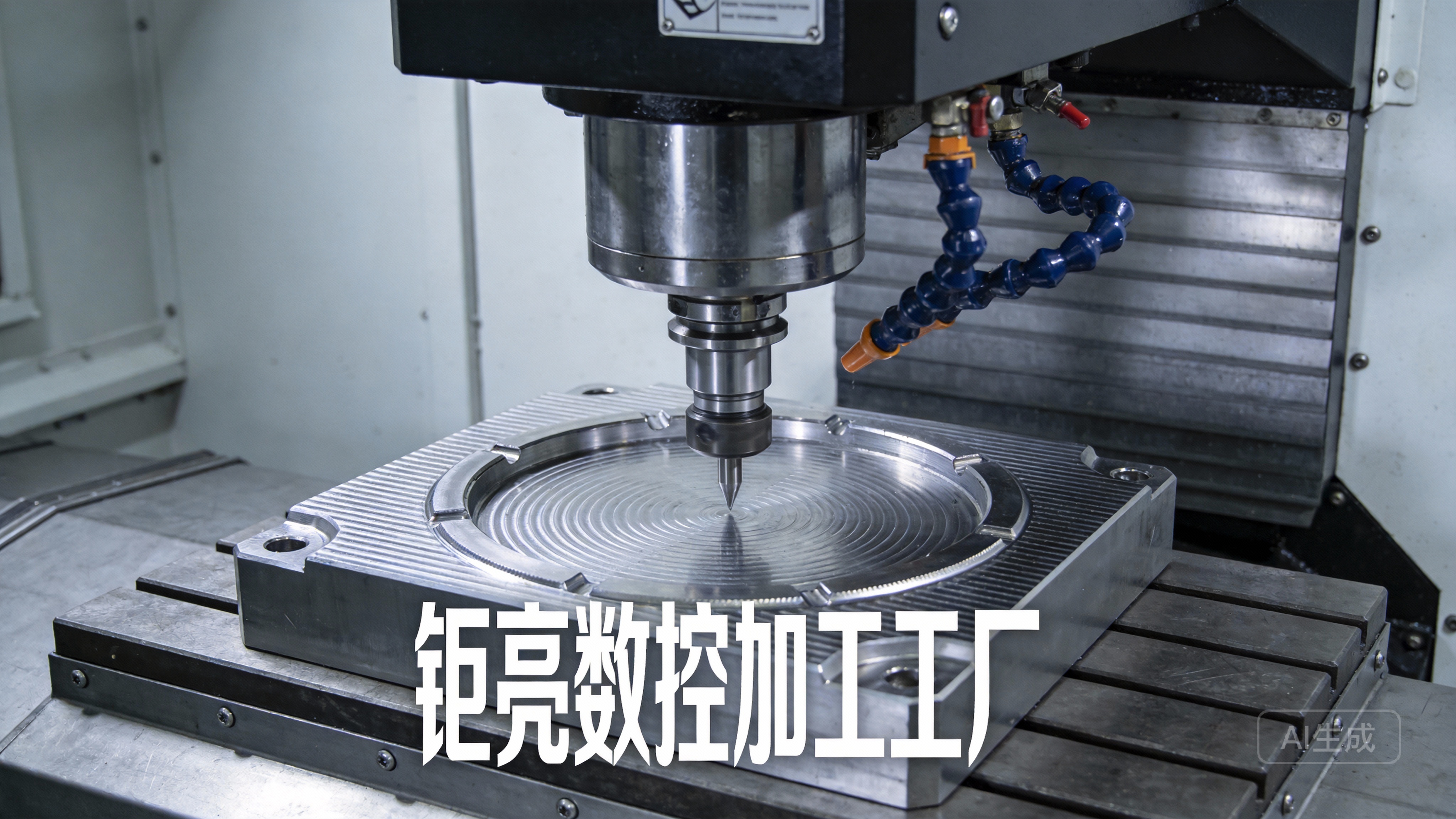
Q4: How does 5-axis machining help with reducing oscillation compared to 3-axis?
A: 5-axis CNC machining offers two primary advantages: 1) Optimal Tool Orientation: The tool can be tilted to present the most rigid part of its geometry to the cut and maintain constant chip load, drastically improving stability in complex contours. 2) Shorter Tools: By orienting the part, you can often use a shorter, more rigid tool to reach deep features, instead of a long extension required in 3-axis, significantly increasing dynamic stiffness.
Q5: My machine supplier talks about “servo tuning.” Is this something I should try to adjust myself?
A: Servo tuning is a specialized task that requires understanding the machine’s control dynamics and often specific software. Incorrect tuning can degrade performance or cause crashes. It is strongly advised to have this performed by certified machine tool engineers or highly experienced applications engineers. At GreatLight Metal, this forms part of our periodic precision maintenance regimen to ensure our equipment performs at its peak capability. For industry insights and further professional discussion, you can connect with our experts on our LinkedIn page.



















