
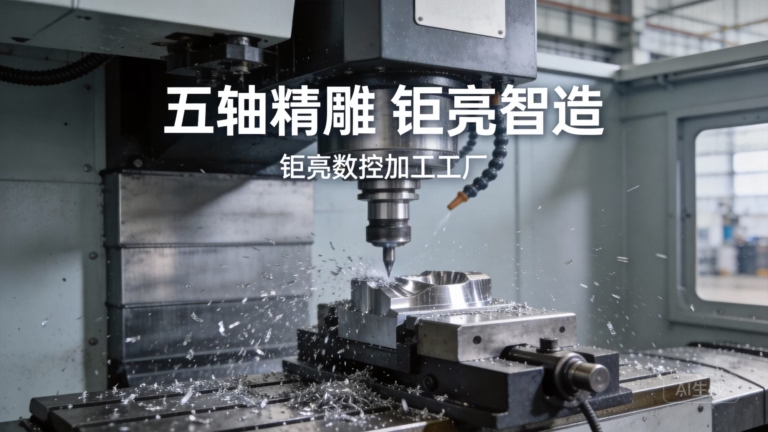
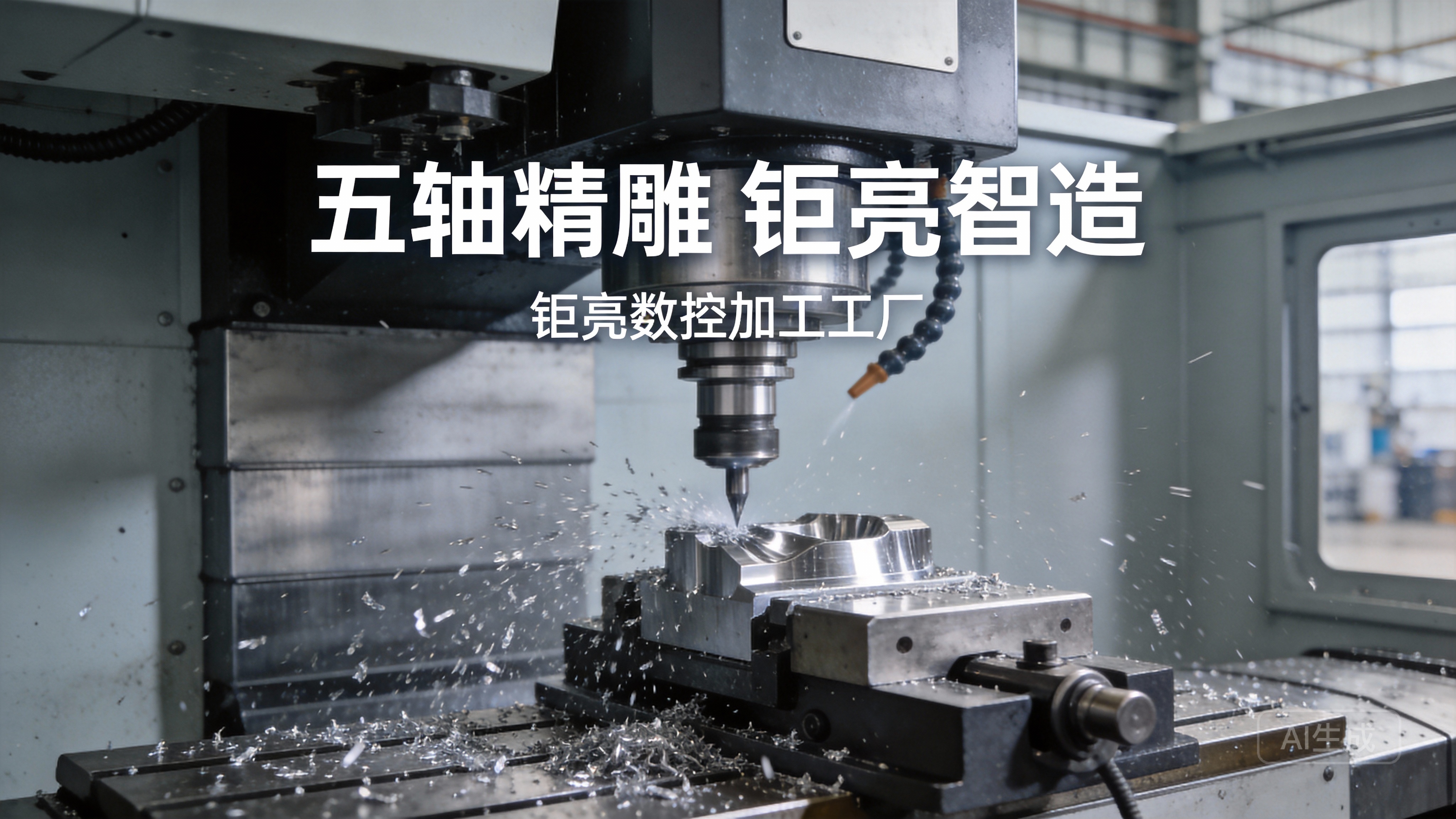
Moving a CNC machine is far more than a simple logistics task; it represents a critical engineering operation that directly impacts the future accuracy, longevity, and operational reliability of a high-value capital asset. For professionals in precision parts machining and customization, a botched move can translate into months of calibration headaches, scrap parts, and costly downtime. This guide, distilled from years of hands-on experience in a high-precision manufacturing environment, will walk you through the meticulous process of relocating these sophisticated machines.
Understanding the Stakes: Why a CNC Move is Unique
Unlike standard industrial equipment, a CNC machining center is a symphony of mechanical, electronic, and software components aligned to micron-level tolerances. Its foundation, the bed and column, is a complex casting designed for stability. Disturbing this foundation without a controlled process can induce stresses, warp geometries, and misalign the very axes that define its precision. The core challenge is to move the physical machine while preserving its “digital alignment” — the perfect relationship between its programmed coordinates and the physical position of its cutting tool.
The Step-by-Step Protocol for a Safe and Precise CNC Machine Move
A successful move is a project with three distinct phases: Planning & Preparation, Execution & Transport, and Reinstallation & Recalibration.
Phase 1: Pre-Move Planning & Preparation (The Most Critical Phase)
This phase determines the success or failure of the entire operation.
1. Documentation & Assessment:
Gather Manuals: Secure the machine tool builder’s (MTB) installation, foundation, and rigging manuals. These are your bible.
Create a Move Plan: Document the machine’s current location, new location, pathway dimensions, doorways, and ceiling heights. Identify all obstacles.
Machine Health Check: Record the machine’s current positioning accuracy (e.g., using a ballbar test or laser interferometer if possible). This provides a “before” benchmark. Note any existing quirks or errors.
2. Site Preparation:
New Foundation: The new floor must meet the MTB’s specifications for flatness, levelness, and load-bearing capacity. Often, a dedicated reinforced concrete pad or epoxy granite base is required. This step cannot be rushed.
Utilities Mapping: Ensure the new location has the correct 3-phase power, clean compressed air at the proper pressure and flow rate, coolant plumbing, and adequate chip removal access. Verify voltage, phase, and frequency compatibility.
3. Machine Preparation (Soft Dismantling):
Backup & Power Down: Perform a full backup of all machine parameters, PLC programs, tool libraries, and offsets. Power down completely and follow lock-out/tag-out (LOTO) procedures.
Disconnect & Secure: Disconnect all utilities (power, air, coolant). Cap lines to prevent contamination. Remove all cutting tools, vises, and workholding from the table and spindle.
Internal Securing: Use shipping brackets or custom blocks to lock the machine’s moving axes (X, Y, Z, and any rotary axes). This prevents uncontrolled movement during transit that could damage ball screws or gears.
Component Protection: Protect the spindle, linear guideways, glass scales, and the tool changer with appropriate covers and padding. Remove fragile peripheral items like probe heads separately.
Phase 2: Execution & Rigging
This is where professional riggers with experience in machine tools are indispensable.
1. Lifting and Loading:
Correct Lifting Points: Use only the designated lifting points specified by the MTB. Never lift from the spindle housing, sheet metal covers, or conduits.
Specialized Equipment: Use calibrated spreader bars to avoid crushing the machine structure. Employ air skates, precision rollers, or a heavy-duty gantry crane depending on the weight (which can range from 3,000 to over 60,000 lbs) and floor conditions.
Balanced Load: The machine must be lifted and transported in a perfectly level orientation to avoid twisting the bed.
2. Transportation:
Secure Mounting: Bolt the machine to the trailer bed using chains, straps, and blocking to prevent any shifting or bouncing. Use a vehicle with air-ride suspension.
Climate Control: If moving in extreme temperatures or humidity, consider a climate-controlled transport to prevent condensation on critical components.
Phase 3: Reinstallation & Recalibration
The machine is now in place, but it is far from ready to produce precision parts.
1. Foundation Placement & Leveling:
Precision Leveling: Using the MTB’s procedure and a high-precision machinist’s level or electronic level, begin the leveling process on the foundation bolts or epoxy chocks. This is an iterative, painstaking process of tightening and adjusting to bring the machine bed into perfect alignment with Earth’s gravity. This can take hours or even days for large machines.
2. Reconnection & Power-Up:
Reconnect all utilities, ensuring clean, dry air and correct power phasing.
Perform a staged power-up, checking control voltages and bringing systems online sequentially.
3. The Crucial Recalibration Process:
This is where a technician’s skill is paramount. A basic re-level is not enough. A full recommissioning typically includes:
Geometric Alignment: Checking and adjusting the squareness of axes (e.g., Y-axis to X-axis, Z-axis to XY plane).
Backlash Compensation: Re-measuring and inputting backlash values for ball screws.
Spindle Runout Analysis: Checking the spindle’s thermal growth and dynamic runout.
Laser Interferometry: The gold standard for recalibration. A laser interferometer is used to map the positional accuracy, repeatability, and pitch/yaw/roll of each linear axis over its entire travel, correcting errors through the machine’s control software.
Rotary Axis Calibration: For 4-axis or 5-axis CNC machining centers, calibrating the centerline of rotary tables and the relationship between linear and rotary axes is essential for complex contouring.
Only after all checks are passed and test cuts (often machining a standard geometric artifact like a NAS test part) meet specifications should the machine be released for production.
The Partner Alternative: Leveraging Professional Expertise
For many job shops and manufacturers, managing this complex process internally diverts critical engineering resources from their core competency: making parts. This is where partnering with a vertically integrated manufacturer like GreatLight Metal Tech Co., LTD. presents a strategic advantage.
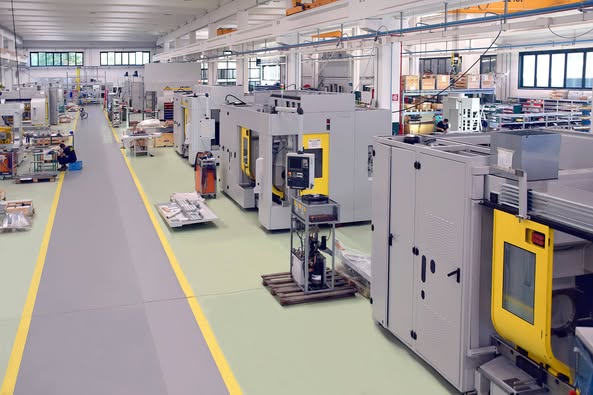
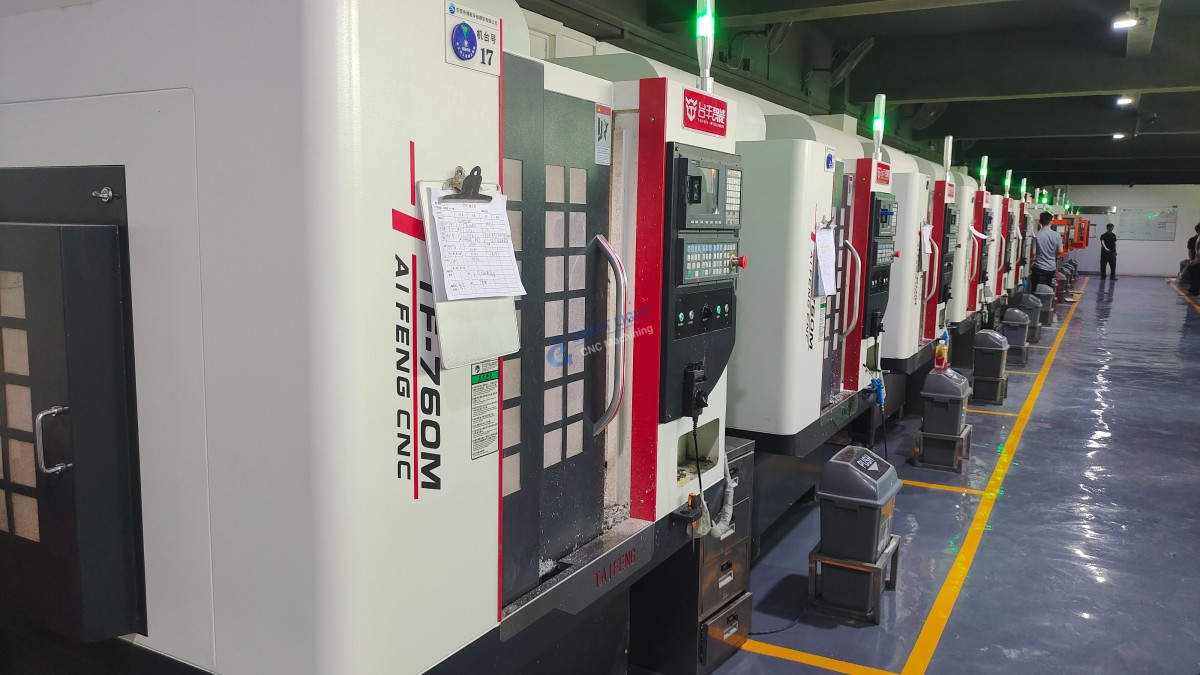
When you outsource your precision machining needs to a partner with deep infrastructure, you effectively offload the immense burden and risk of machine acquisition, installation, and maintenance. GreatLight Metal, operating from its 76,000 sq. ft. facility in Dongguan, has already made the capital investment and mastered the operational expertise. Their equipment cluster, including advanced multi-axis CNC centers, is permanently installed on professional foundations, maintained by expert technicians, and constantly calibrated to sustain the ±0.001mm tolerances they guarantee.
This model transforms a fixed, risky capital expenditure (CapEx) into a flexible, predictable operational expenditure (OpEx). You gain access to state-of-the-art capability—from 5-axis CNC machining to metal 3D printing—without ever worrying about how to move a 10-ton machine. Your focus remains on design, innovation, and bringing your product to market, while their focus is on delivering perfect parts, backed by a quality management system certified to ISO 9001:2015, IATF 16949, and ISO 13485 standards.
Conclusion
Knowing how to move a CNC machine is a specialized discipline that blends heavy rigging with metrology-grade precision. It requires meticulous planning, professional execution, and systematic recalibration. For any business where machining accuracy is non-negotiable, cutting corners during a move is a direct threat to product quality and profitability. Whether you are establishing a new facility or upgrading your workshop, weigh the total cost of ownership—including the hidden risks of relocation—against the streamlined efficiency and guaranteed precision offered by established manufacturing partners. In an era where agility and reliability are key, leveraging the stable, ready-to-produce capacity of an expert like GreatLight Metal can be the most strategic move of all.
Frequently Asked Questions (FAQ)
Q1: What is the approximate cost to move a mid-size CNC machining center?
A: Costs vary wildly based on distance, machine size, and site complexity. For a typical 10,000-lb VMC, expect a range of $5,000 to $20,000 USD. This includes professional rigging and transport but often excludes foundation work, utility reconnection, and the critical post-move calibration, which can cost an additional $2,000-$10,000+ for a qualified technician.
Q2: How long does the entire process take from shutdown to production-ready?
A: A well-planned move for a single machine typically requires a minimum of 2-3 weeks: 1 week for planning/prep, 1-2 days for physical move, and 1-2 weeks for reinstallation, leveling, and full recalibration. Complex machines or unprepared new sites can extend this to several months.
Q3: Can I move a CNC machine without recalibrating it?
A: It is strongly discouraged and considered high-risk for precision work. Even a perfectly executed move can subtly shift the machine’s geometry. Skipping recalibration risks producing out-of-tolerance parts, increasing tool wear, and potentially causing crashes, leading to far greater costs than the calibration itself.
Q4: What is the single biggest risk during a CNC machine move?
A: Twisting or distorting the machine’s bed structure. This can occur from improper lifting, an uneven transport, or placing it on an inadequately prepared foundation. Such damage is often permanent and extremely expensive to repair, if repairable at all.
Q5: Why should I consider outsourcing instead of moving/adding a machine myself?
A: Outsourcing to a specialist manufacturer eliminates capital lock-in, de-risks your operations, and provides immediate, scalable capacity. You avoid costs related to financing, installation, maintenance, technician training, and obsolescence. It allows you to invest capital into core business growth while relying on a partner’s certified quality system, like those at GreatLight Metal, to ensure part consistency. For ongoing insights into precision manufacturing trends and capabilities, follow industry leaders on professional networks like LinkedIn.



















