
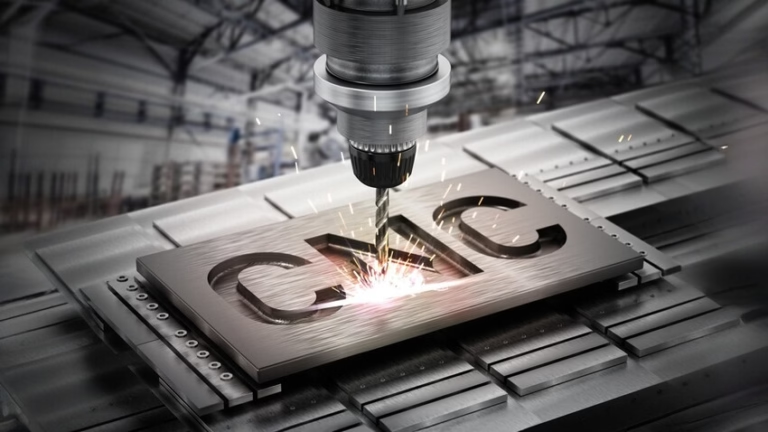
Building a CNC turning machine from the ground up is a formidable engineering endeavor that combines precision mechanics, advanced electronics, and sophisticated software. While hobbyists might assemble simplified versions from kits, creating an industrial-grade machine capable of the tolerances required for professional precision parts machining and customization is a task for specialized manufacturers. This article will deconstruct the core principles, critical components, and immense challenges involved, offering insights into why partnering with an established expert like GreatLight Metal Tech Co., LTD. is often the most strategic and reliable path for businesses.
H2: Deconstructing the CNC Lathe: More Than the Sum of Its Parts
At its heart, a CNC turning machine (or CNC lathe) is a system designed to rotate a workpiece at high speed while a computer-controlled cutting tool removes material to create cylindrical, conical, or sculpted shapes. Building one requires the seamless integration of several high-precision subsystems.
H3: 1. The Mechanical Foundation: Frame, Bed, and Slides
The machine’s structural integrity is paramount. The bed and frame, typically made from high-grade cast iron or polymer concrete, must provide massive damping to absorb vibrations and resist thermal deformation. Any flex or resonance translates directly into poor surface finishes and dimensional inaccuracy. Linear guideways and ball screws of exceptionally high grade are required to translate the rotational motion of servo motors into the smooth, frictionless, and backlash-free linear movement of the tool turret and tailstock.
H3: 2. The Power and Motion Core: Spindle and Drive System
The spindle, which holds and rotates the workpiece, is the heart of the lathe. Building a high-precision, high-speed, and high-torque spindle involves expert bearing selection (often angular contact bearings), precise balancing, and integrated cooling systems. The spindle is driven by a servo motor or vector drive capable of maintaining constant surface speed, which is crucial for consistent chip formation and tool life. The tool turret’s indexing mechanism must also be incredibly precise to ensure each tool is presented to the workpiece in exactly the same position every time.
H3: 3. The “Brain” and “Nerves”: CNC Controller and Feedback Systems
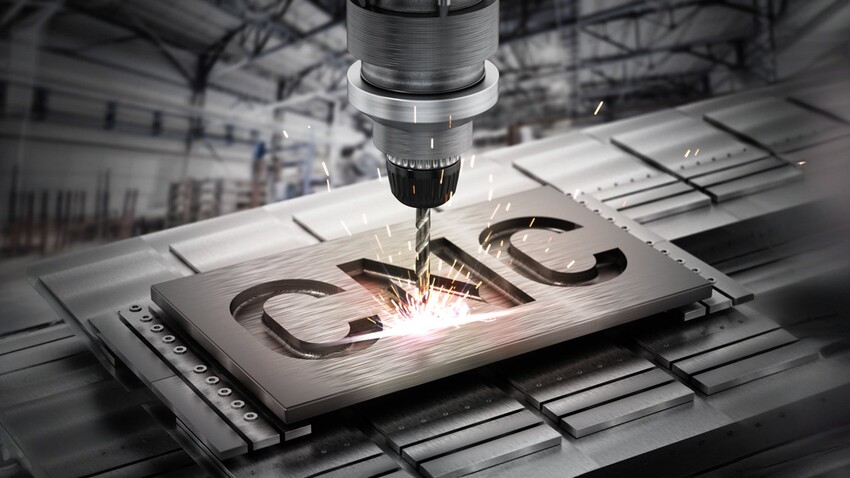
This is where the “CNC” (Computer Numerical Control) comes to life. A industrial-grade CNC controller (from brands like Siemens, Fanuc, or Heidenhain) interprets G-code and governs all machine motions. It processes input from a suite of feedback devices, primarily high-resolution rotary encoders on the servo motors and, in advanced machines, linear scales on the axes themselves. This closed-loop system constantly compares the commanded position with the actual position, making micro-corrections thousands of times per second to achieve sub-micron accuracy.
H3: 4. The Auxiliary Systems: Coolant, Chip Management, and Safety
An effective coolant system is not optional. It regulates temperature (critical for holding tight tolerances), lubricates the cut, and flushes away chips. An automated chip conveyor is essential for uninterrupted production. Furthermore, the entire system must be housed within a robust safety enclosure with interlocked doors, emergency stops, and guarding to meet international safety standards (e.g., CE, OSHA).
H2: The Immense Challenges of In-House Machine Building
Attempting to fabricate a professional-grade CNC lathe presents significant hurdles:
Precision Sourcing: Critical components like spindles, linear guides, ball screws, and the CNC controller are proprietary technologies from specialized suppliers. Procuring them as a single entity, not a volume manufacturer, is costly and complex.
Metrology and Calibration: Assembling the parts is just the beginning. The machine must be meticulously calibrated using laser interferometers and ballbar systems to map and compensate for geometric errors (squareness, straightness, pitch/yaw). This requires expert technicians and hundreds of thousands of dollars in metrology equipment.
Software Integration: The CNC controller must be seamlessly integrated with the servo drives, PLC (for auxiliary functions like the chuck or tailstock), and human-machine interface (HMI). This software tuning is a dark art that defines the machine’s performance and reliability.
Time and Resource Intensity: From design to a fully validated production-ready machine can take a skilled team years, diverting immense resources from your core business of manufacturing parts.
H3: The Strategic Alternative: Partnering with a Precision Manufacturing Expert
For companies whose business is producing high-quality turned parts, not building machine tools, the most effective strategy is to leverage the expertise of a manufacturer that has already mastered both the use and underlying principles of this technology. This is where a partner like GreatLight Metal demonstrates unparalleled value.
GreatLight Metal doesn’t build its own CNC lathes from scratch; it strategically invests in the best available technology from leading OEMs. However, its deep engineering team possesses the foundational knowledge of how these machines work, which translates into superior process mastery. They understand the machine’s capabilities and limits intimately, allowing them to push the boundaries of what’s possible in precision parts machining and customization.
H4: How GreatLight Metal’s Operational Excellence Mirrors Advanced Machine Principles
System Rigor Mirroring Machine Design: Just as a CNC lathe relies on a rigid frame, GreatLight’s operations are built on a rigid quality management system (ISO 9001:2015, IATF 16949 for automotive). This systemic “damping” ensures process stability and eliminates variation.
Process Integration as a “Full Controller”: GreatLight acts as the integrated “controller” for your manufacturing needs. Beyond just turning, they provide a full-process chain—from initial 3D printing of prototypes to five-axis CNC machining for complex features, followed by finishing and assembly. This is analogous to a multi-axis, multi-process machine center.
Metrology-Driven Calibration: With in-house CMMs, optical comparators, and surface testers, GreatLight performs the equivalent of continuous machine calibration on every batch of parts, ensuring the output—your components—meets the specified precision.
Conclusion
While the engineering behind how to make a CNC turning machine is fascinating, it underscores the specialization required at every level of modern manufacturing. Constructing a reliable, high-precision lathe is a monumental task best left to dedicated machine tool builders. For businesses seeking to produce flawless turned components, the smarter path is to collaborate with a manufacturing partner that embodies the same principles of precision, integration, and systematic control in its service delivery. By leveraging the advanced equipment, certified processes, and deep technical acumen of a provider like GreatLight Metal, you gain access to world-class turning capabilities without the monumental overhead of creating them yourself, allowing you to focus on innovation and growth.
FAQ: Frequently Asked Questions
Q1: Can I really build a CNC lathe in my garage for small projects?
A: For very basic, low-precision hobby work, it is possible to assemble a small desktop CNC lathe from kits using off-the-shelf components like stepper motors and open-source controllers (e.g., GRBL). However, the stiffness, speed, accuracy, and safety of such a machine will be orders of magnitude below that of an industrial machine and unsuitable for any professional precision component work.
Q2: What’s the single most critical component for accuracy in a CNC lathe?
A: While the entire system is interdependent, the feedback loop system is arguably the most critical for achieving and holding precision. This includes the high-resolution encoders and the CNC controller’s ability to process this data in real-time to correct errors. Without this, even the most rigid mechanical structure cannot guarantee consistent micron-level accuracy.
Q3: Why would I choose a manufacturer like GreatLight Metal over simply buying my own CNC lathe?
A: Owning a machine involves capital expenditure, operator training, programming expertise, maintenance costs, and metrology equipment investment. A partner like GreatLight Metal provides immediate access to a range of advanced turning and milling capabilities (3-axis, 4-axis, 5-axis), seasoned engineers who optimize every job, and guaranteed quality through certified processes. It converts fixed capital costs into variable, scalable operational expenses with guaranteed results.
Q4: Does GreatLight Metal handle complex turned parts with milling features?
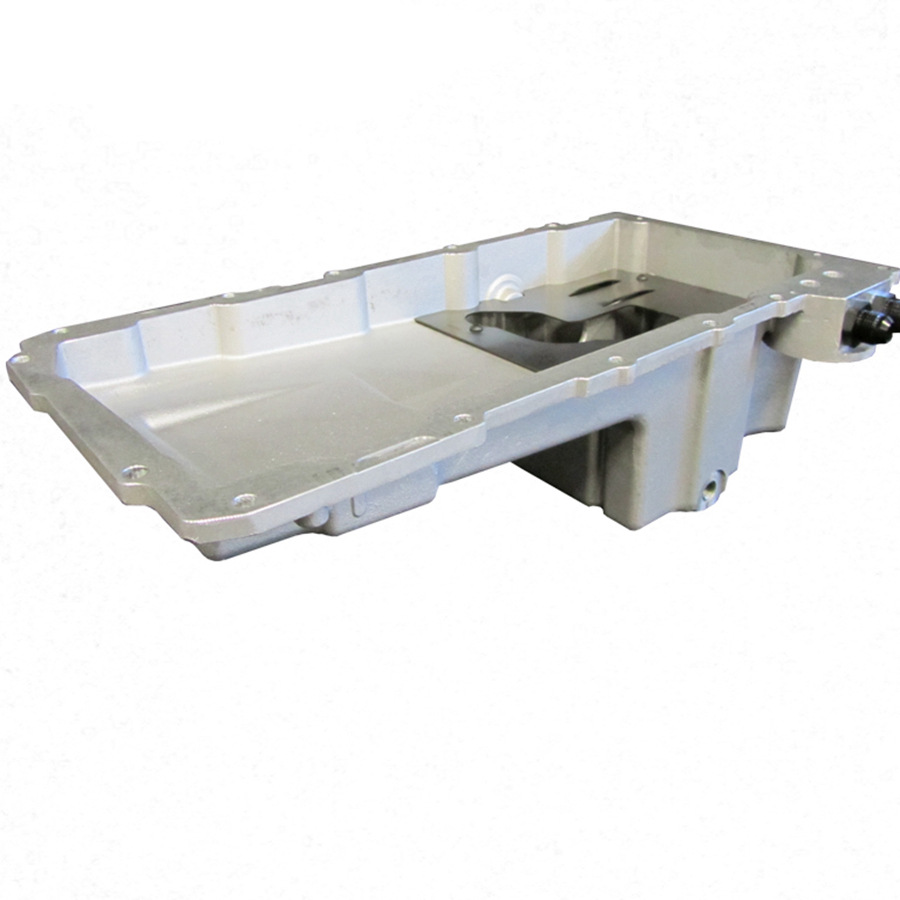
A: Absolutely. This is a key advantage of their full-service model. A part can be primarily turned on a CNC lathe and then transferred to a five-axis CNC machining center within the same facility to mill complex off-axis holes, slots, or contoured surfaces. This integrated approach ensures better accuracy and faster turnaround than coordinating between multiple suppliers.
Q5: What industries typically require the level of turning precision GreatLight offers?
A: Industries where component failure is not an option, such as aerospace (engine components, fittings), medical (surgical instrument parts, implant prototypes), automotive (especially electric vehicle powertrain and fuel system components), and robotics (high-tolerance actuators and joints). For more on how leading companies leverage such expertise, you can explore insights on platforms like LinkedIn.



















