
In the age of digital information and maker culture, the question “how to make CNC machine at home video download?” reflects a fascinating intersection of hobbyist enthusiasm, practical engineering curiosity, and the democratization of manufacturing technology. For engineers, startup founders, and procurement specialists in the precision parts industry, understanding this DIY landscape is valuable, as it highlights both the aspirations and the limitations of in-house prototyping versus partnering with a professional precision 5-axis CNC machining services provider.
This comprehensive analysis will explore the DIY CNC journey, the realities of achieving true precision, and why for mission-critical components, professional manufacturing remains the unequivocal choice.
The Allure of the DIY CNC Machine: Empowerment and Education
The desire to build a desktop CNC machine stems from a powerful drive for hands-on learning, cost control for simple projects, and the satisfaction of creation. Online video platforms are treasure troves for this pursuit.
Where to Find Knowledge and Inspiration:
Video Platforms: Sites like YouTube, Bilibili, and specialized forums host thousands of tutorials. Search terms like “DIY CNC router build,” “low-cost CNC mill from scratch,” or “Arduino CNC controller” yield detailed series covering frame construction (often from aluminum extrusion or MDF), stepper motor integration, driver electronics (like GRBL controllers), and software setup (using open-source CAM like Universal Gcode Sender or Mach3).
Community Forums: Platforms like CNCZone, Reddit’s r/hobbycnc, and various maker communities provide build logs, troubleshooting advice, and parts lists. These are invaluable for overcoming specific technical hurdles.
Open-Source Projects: Well-documented projects like the “MPCNC” (Mostly Printed CNC) or “Shapeoko” designs offer community-vetted blueprints and part sourcing guides.
The Core Components of a Homebrew CNC:
A typical DIY CNC involves:
Mechanical Structure: The frame, which defines rigidity and work envelope.
Motion System: Linear rails/rods, lead screws or belts, and stepper/servo motors.
Control System: A microcontroller (Arduino/Raspberry Pi with a shield) running firmware to interpret G-code.
Spindle: A high-speed router or a dedicated hobbyist spindle for material removal.
Software Chain: CAD for design, CAM to generate toolpaths (G-code), and control software to run the machine.
The Precision Gap: Understanding the Limits of DIY Fabrication
While building a functional machine is an impressive achievement, it’s crucial to understand the chasm between a hobbyist machine and industrial-grade equipment. This gap directly impacts the feasibility of producing precision parts.
1. Rigidity and Vibration: The Foundation of Accuracy
DIY machines often use modular aluminum extrusions or wood. Under cutting forces, these structures flex and vibrate, causing chatter, poor surface finish, and dimensional inaccuracy. Industrial machines feature massively rigid cast iron or polymer concrete bases, absorbing vibration and maintaining geometry under high loads.
2. Precision of Motion Components
Hobbyist linear guides and lead screws have higher backlash and lower positional repeatability. Industrial machines employ pre-loaded ball screws, high-precision linear guides, and laser feedback systems, achieving and maintaining tolerances like ±0.001mm consistently—a realm far beyond DIY capabilities.
3. Thermal Stability and Control
Industrial CNC machines manage thermal expansion through controlled environments, coolant systems, and temperature-compensated scales. A DIY machine’s accuracy can drift significantly with ambient temperature changes in a workshop.
4. Tooling and Spindle Performance
The quality, runout, and speed stability of a spindle are paramount. Professional spindles (often 10,000-30,000+ RPM with HSK or BT toolholders) ensure optimal cutting conditions for different materials. Hobbyist tools struggle with metals harder than soft aluminum, leading to premature tool wear and poor results.
5. Software and Post-Processing
Professional CAM software includes sophisticated strategies for toolpath optimization, trochoidal milling, and adaptive clearing, which maximize tool life and surface quality. The post-processors for industrial 5-axis machines also account for complex kinematic transformations that simple hobbyist software cannot handle.
When to Build vs. When to Partner: A Strategic Decision
| Aspect | DIY Home CNC Machine | Professional 5-Axis CNC Machining Service |
|---|---|---|
| Primary Goal | Education, hobby projects, simple prototypes in wood/plastic. | Production of functional, high-precision, reliable end-use parts. |
| Achievable Tolerance | ±0.1mm to ±0.5mm (highly variable). | ±0.001mm and above, certified and consistent. |
| Material Range | Primarily woods, plastics, soft metals (e.g., aluminum). | Virtually all engineering metals/alloys (titanium, Inconel, stainless steel, aluminum), and plastics. |
| Complex Geometry | Limited 2.5D to basic 3D milling. | True complex 3D, undercuts, and contoured surfaces in a single setup via 5-axis simultaneous machining. |
| Surface Finish | Often requires significant manual post-processing. | Can achieve fine finishes directly off the machine, with dedicated one-stop post-processing (anodizing, plating, painting, etc.) available. |
| Volume & Scalability | One-off, very low volume. | From single prototypes to medium-batch production with consistent quality. |
| Critical Factors | Cost of time, learning curve, space, safety. | Time-to-market, part reliability, certification needs (ISO 9001, IATF 16949), and total lifecycle cost. |
The Professional Advantage: Beyond the Machine
Choosing a partner like GreatLight Metal Tech Co., LTD. transcends access to advanced machinery. It is access to a full-process intelligent manufacturing solution.
Design for Manufacturability (DFM) Analysis: Before any metal is cut, experienced engineers analyze your design to suggest modifications that enhance strength, reduce cost, and improve manufacturability—a service no DIY video can provide.
Integrated Quality Assurance: The journey from a downloaded video to a finished part lacks a critical phase: verification. Professional services employ CMMs, optical scanners, and surface testers to provide documented proof that every dimension meets print specifications.
Material Science Expertise: Selecting the right grade of aluminum, stainless steel, or titanium for an application requires deep knowledge of material properties, heat treatment, and post-processing effects.
Risk Mitigation and Compliance: For industries like automotive, aerospace, or medical, regulatory compliance (IATF 16949, ISO 13485) is non-negotiable. A professional partner provides the necessary documentation and traceability that a home workshop cannot.
Conclusion
The quest to find a “how to make CNC machine at home video download” is a commendable entry point into the world of digital fabrication, offering unparalleled learning and personal satisfaction for hobbyists. It demystifies the core principles of computer-controlled machining.
However, for professionals and businesses whose success depends on precision, reliability, and performance, the limitations of DIY approaches become starkly apparent. The creation of mission-critical components demands the rigidity, accuracy, consistency, and systemic support that only an established professional manufacturer can deliver. In this realm, the decision shifts from “how to build the tool” to “how to select the right manufacturing partner” – one capable of transforming complex designs into flawless, high-performance reality through advanced precision 5-axis CNC machining services.
Frequently Asked Questions (FAQ)
Q1: Where can I safely download or watch videos on building a DIY CNC machine?
A1: We recommend using official, reputable platforms like YouTube, Vimeo, or Bilibili. Avoid downloading executable files (.exe) from untrusted websites, as they may contain malware. The best resources are often detailed video series from established makers or tutorials hosted on the websites of reputable open-source hardware projects.
Q2: What is a realistic budget and tolerance I can expect from a home-built CNC machine?
A2: A functional DIY CNC router capable of cutting wood and soft aluminum can cost between $800 to $3,000 USD, depending on size and component quality. Realistically, a well-tuned machine might achieve tolerances around ±0.1mm to ±0.2mm under ideal conditions. This is suitable for prototypes, molds, or non-critical parts but is orders of magnitude less precise than industrial equipment.
Q3: I’ve made a prototype on my DIY machine. Can I send the refined design to a professional like GreatLight for production?
A3: Absolutely. This is a very common and effective workflow. Your DIY machine is perfect for conceptual validation and initial form-fit testing. Once the design is finalized, professional manufacturers like us can produce it with the required material integrity, precision tolerances, and surface finishes for functional testing or end-use. We provide DFM feedback to ensure your design is optimized for professional fabrication.
Q4: What are the biggest safety concerns when building and operating a DIY CNC?
A4: Key hazards include: High-speed rotating tools that can break and eject material, electrical hazards from mains-powered components, inhalation of fine dust (especially from composites or metals), and pinch points in the moving gantry. Always wear appropriate PPE (safety glasses, hearing protection, dust mask), implement emergency stop switches, and thoroughly secure your workpiece.
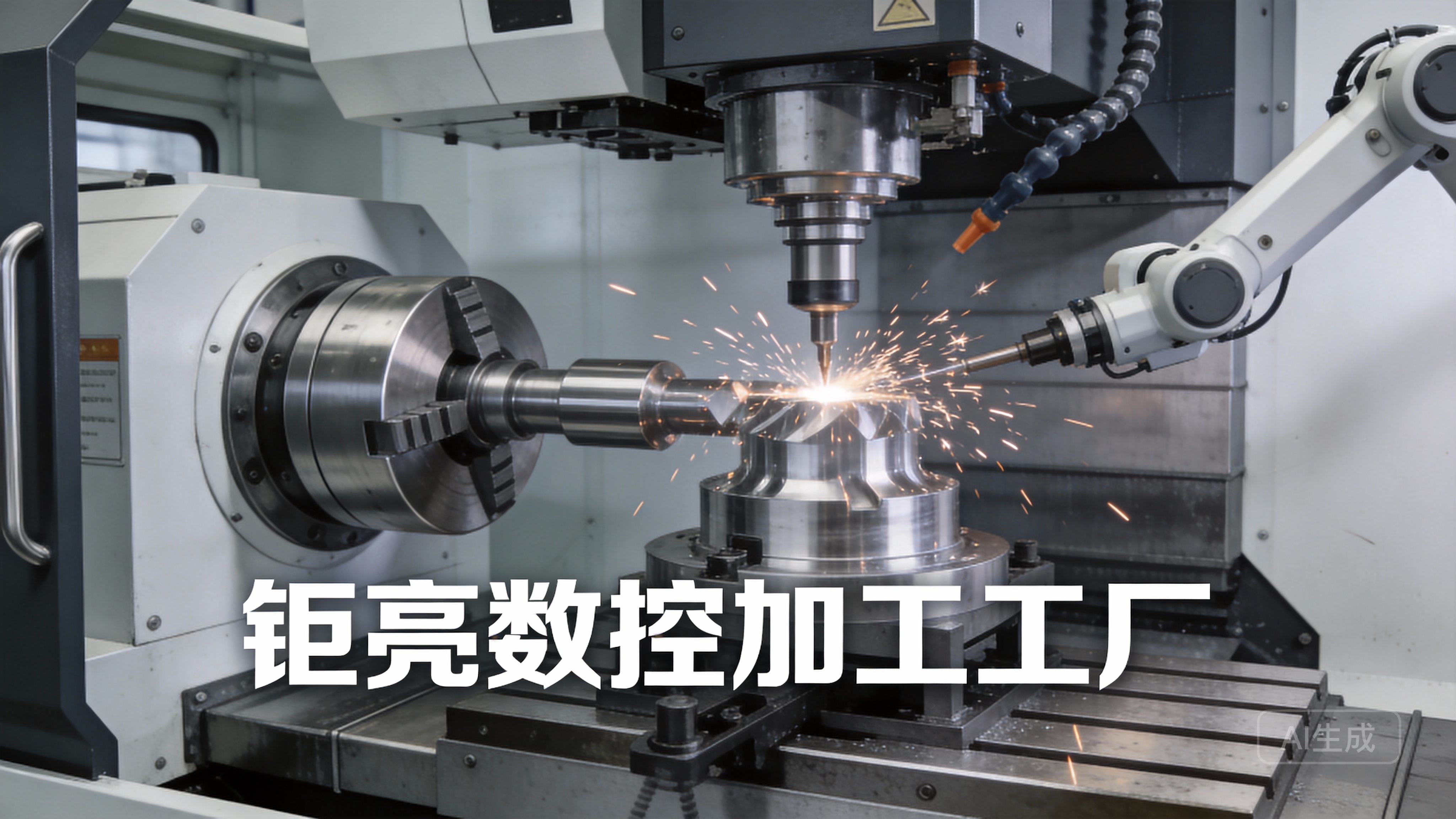
Q5: Why is a professional 5-axis CNC so much more capable than a 3-axis DIY machine?
A5: A 3-axis machine (X, Y, Z) requires multiple setups to access different sides of a part, introducing alignment errors. A 5-axis CNC can tilt and rotate the cutting tool or workpiece simultaneously, allowing it to approach the geometry from virtually any angle in a single setup. This enables the machining of incredibly complex, organic shapes (like impellers or turbine blades), improves surface finish by maintaining optimal tool angle, and drastically reduces total production time. This capability is fundamental for advanced industries and is a core part of our service offering at GreatLight Metal Tech Co., LTD.. For more insights into our industry engagements, you can connect with us on our professional network page at https://www.linkedin.com/company/great-light/.



















