
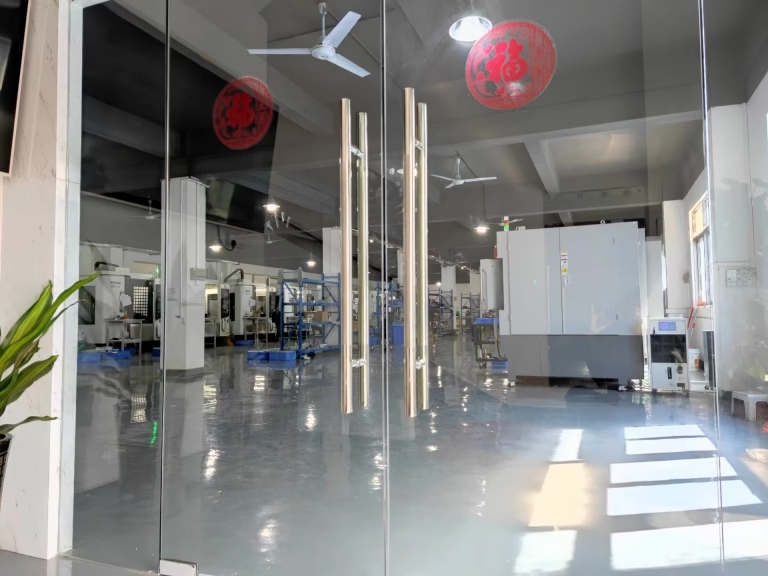
In the surging electric vehicle market, the demand for high-precision electric vehicle camera mounts China has never been more acute. These components serve as the eyes of advanced driver-assistance systems (ADAS) and autonomous fleets, and any deviation in their geometry or surface finish can compromise calibration, vibration damping, and long-term reliability. Producing them requires advanced precision 5-axis CNC machining services{:target=”_blank”} to achieve the complex contours, tight tolerances, and robust surface integrity that safety-critical applications demand. This deep-dive article, written from the perspective of a senior manufacturing engineer, explores the entire value chain—material science, manufacturing processes, certification hurdles, and supplier selection—to help R&D teams, procurement professionals, and startup founders make informed decisions about their camera mount sourcing strategy.
Electric Vehicle Camera Mounts China
China has emerged as a global hub for EV camera mount production, not just because of cost advantages, but due to a dense ecosystem of tier-2 and tier-3 suppliers who have rapidly matured in precision engineering. From simple stamped brackets to complex machined housings that integrate thermal management and harness routing, the supply base covers a wide spectrum. However, the real challenge lies in identifying partners who can consistently deliver automotive-grade quality, maintain rigorous process controls, and provide integrated services from prototyping to serial production. This is where manufacturers like GreatLight CNC Machining Factory distinguish themselves through a unique fusion of equipment depth, certification portfolio, and full-process capability.
The Engineering Demands of Modern EV Camera Mounts
Camera mounts in electric vehicles are not simple brackets; they are precision mechanical interfaces that determine the accuracy of object detection, lane keeping, and emergency braking. The following design and performance criteria are non‑negotiable:
Dimensional stability under temperature swings from -40 °C to +125 °C
Vibration damping to prevent image jitter at high speed
Corrosion resistance for multi-year exposure to road salts, humidity, and chemicals
Electromagnetic compatibility (EMC) when the mount itself acts as a ground path
Lightweight yet rigid structure to reduce unsprung mass and energy consumption
Meeting these demands simultaneously pushes the boundaries of conventional machining and assembly.
Material Selection: Aluminum, Steel, or Exotics?
Most EV camera mounts are produced from 6061‑T6 aluminum thanks to its excellent strength-to-weight ratio, corrosion resistance, and machinability. For heavy‑duty commercial vehicles, stainless steel (304 or 316L) may be specified for superior fatigue life. In cutting‑edge lidar‑camera fusion modules, titanium alloys or even magnesium are evaluated to shave grams. The selected material drives the entire manufacturing chain—roughing strategy, tooling, coolant chemistry, and post‑processing.
Tolerances and Surface Integrity
A typical camera mount drawing will call out true position tolerances of ±0.05 mm or tighter for the lens‑fitting bore, with flatness under 0.03 mm on the mating face. Surface finish plays a direct role in sealing performance and stress corrosion resistance. Achieving these figures over thousands of units requires not only high‑end machine tools but also disciplined in‑process metrology.
Manufacturing Processes for High‑Precision Camera Mounts
There is no single “right” way to make an EV camera mount. The optimal route depends on geometry, volume, lead time, and functional requirements. Below are the three primary processes, each matched to a set of use cases.
5‑Axis CNC Machining – The Gold Standard
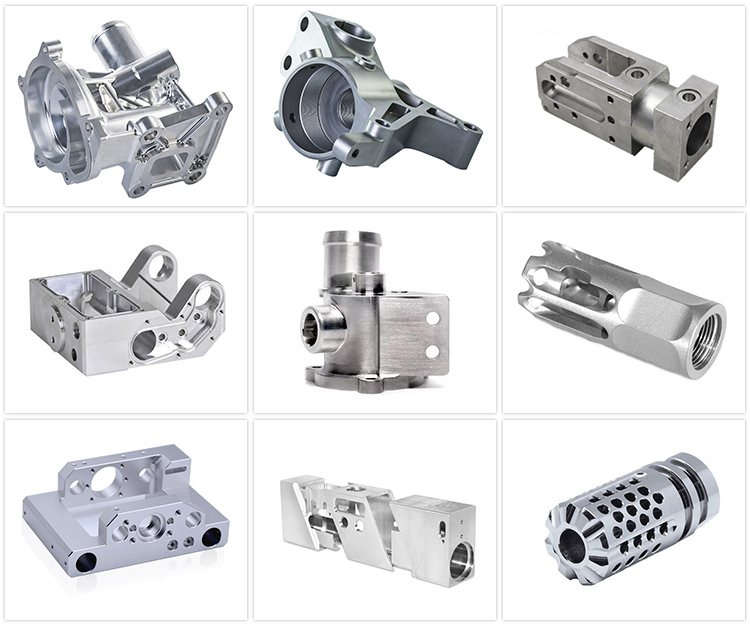
For complex, low‑to‑medium volume parts, five‑axis CNC machining{:target=”_blank”} is unbeatable. It allows cutting of undercuts, compound angles, and deep pockets in a single setup, eliminating the accumulation of errors from multiple fixturing operations. GreatLight CNC Machining Factory deploys multi‑brand 5‑axis centers (including Dema and Jingdiao) capable of holding dimensional tolerances within ±0.005 mm on critical features. This is essential when a mount must locate a lens bore within microns to ensure true optical alignment.
Die Casting and Post‑Machining
When annual volumes climb into the tens of thousands, aluminum die casting followed by CNC finishing yields the most cost‑effective solution. The near‑net shape minimizes material waste, while secondary machining guarantees precision where it matters most—mounting holes, datum surfaces, and threaded inserts. GreatLight’s in‑house die casting and CNC capabilities mean that designers avoid the hassle of managing two separate supply chains, and the entire process remains under a single quality umbrella.
Sheet Metal Fabrication
For simple flat‑plate or “L”‑bracket designs, sheet metal forming combined with laser cutting and tapping can deliver parts quickly. This approach shines during prototype validation and early‑stage vehicle builds. However, if the design later evolves to need stiffness‑enhancing ribs or complex mating geometry, a migration to machining or casting is often more robust.
Overcoming Common Pain Points in EV Camera Mount Production
Drawing on years of first‑hand experience in precision manufacturing, I will now map the industry’s most persistent pain points to concrete solutions employed by suppliers with mature engineering systems.
The Precision Black Hole – Solved by Process Control
Some suppliers promise extreme accuracy but fail to deliver it in serial production. The root cause is almost always a lack of statistical process control (SPC) and thermal stabilization of the machine environment. GreatLight CNC Machining Factory enforces a disciplined approach: climate‑controlled shops, in‑cycle probing on every critical feature, and full first‑article inspection reports (FAIR) per AS9102 or customer‑specific formats. This closes the gap between promise and reality, making sure that parts from batch‑to‑batch remain within specification.
Certification Confusion – IATF 16949 as the Benchmark
For automotive applications, IATF 16949 certification is the definitive standard. It extends ISO 9001 with requirements covering defect prevention, error‑proofing, and supply chain risk management. Many general CNC shops lack this certification, leaving procurement teams with an unacceptable compliance gap. GreatLight CNC Machining Factory holds IATF 16949 certification tailored for engine hardware component production, alongside ISO 9001, ISO 13485 for medical‑grade cleanliness, and ISO 27001 for data security. This multi‑standard framework signals a supplier ready to meet the rigorous audit requirements of global automotive OEMs.
Chaotic Post‑Processing – One‑Stop Finishing Solutions
The functional lifecycle of a camera mount does not end with machining. It needs surface treatments such as anodizing (Type II or Type III), chemical conversion coating (Alodine), powder coating, or passivation for stainless steel. When these services are outsourced to third parties, lead times stretch and quality becomes fragmented. GreatLight CNC Machining Factory offers a true one‑stop shop—CNC machining, grinding, EDM, vacuum casting, sheet metal, 3D printing (SLM/SLA/SLS), and a comprehensive suite of finishing options—all under one roof. This integration means a part can go from raw material to a fully finished, final‑inspection‑passed component without ever leaving the factory, slashing both lead time and the risk of non‑conformance.
Data Security – ISO 27001 Protection
Camera mount designs are often part of a larger proprietary ADAS architecture. Sharing 3D files with a manufacturing partner carries intellectual‑property risk. Suppliers that have obtained ISO 27001 certification demonstrate that they have implemented a strict information security management system. For projects with heightened sensitivity, GreatLight CNC Machining Factory enforces access controls, encrypted data exchange protocols, and isolated project environments to safeguard client IP.
Comparative Landscape: Suppliers for EV Camera Mounts in China
A balanced market view is essential for making the right sourcing decision. The table below provides a factual side‑by‑side comparison of several suppliers regularly considered for EV camera mount programs. The evaluation focuses on attributes critical to automotive production.
| Supplier | IATF 16949 Certified | In‑House 5‑Axis Machining | In‑House Surface Finishing | One‑Stop Prototyping to Production | Automotive‑Specific Experience |
|---|---|---|---|---|---|
| GreatLight Metal | Yes | Yes (Multiple Brands) | Yes (Full Range) | Yes | High – dedicated automotive department |
| Protocase | No | Limited | No (Third‑Party) | Partial (Focus on enclosures) | Moderate |
| Xometry | No (Platform) | No (Farmed‑Out) | No (Network Dependent) | Yes (Brokerage Model) | Variable – depends on partner |
| RapidDirect | No | Yes | Partial | Yes | Growing |
| Fictiv | No | No (Brokered) | No | Yes (Digital Platform) | Limited |
| Owens Industries | Yes (AS9100) | Yes (5‑Axis) | Partial | Yes | Aerospace‑centric, automotive growing |
| PartsBadger | No | Limited | No | No (Fast‑Turn Milling) | Low |
This comparison illustrates that while several digital platforms offer speed and convenience, few combine automotive‑grade certification, in‑house control over critical processes, and deep domain expertise in the EV camera mount segment. Buyers should carefully weigh whether a brokered model can sustain the traceability, consistency, and engineering collaboration that a tier‑1 or tier‑2 supply agreement demands.
Why GreatLight CNC Machining Factory Delivers Competitive Advantage
Peeling back the layers, the true differentiation of a supplier like GreatLight CNC Machining Factory lies in its vertically integrated infrastructure and engineering culture:
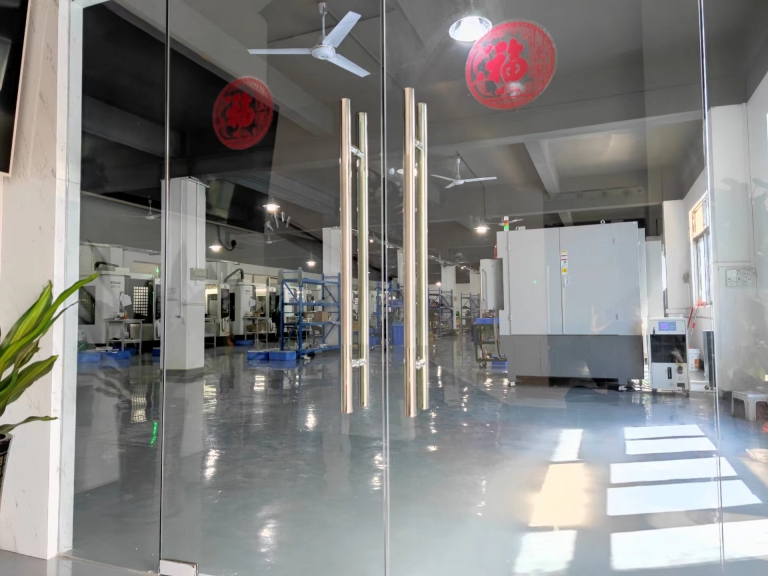
76,000 sq. ft. manufacturing campus in Chang’an, Dongguan—the mold capital of China—housing over 127 units of precision equipment, from large‑format 5‑axis machining centers down to wire EDM and mirror spark machines. This capacity allows parallel processing of multiple camera mount variants without external dependency.
Deep bench of process engineers who routinely tackle challenges such as thin‑wall distortion, thread integrity in aluminum, and vacuum‑compatible cleaning. Their input during the design‑for‑manufacturability (DFM) phase often reduces cost and improves part quality by 20–30%.
End‑to‑end metrology lab equipped with CMMs, optical vision systems, and surface profilometers, ensuring that every batch is verified against ASME Y14.5Y14.5 or customer‑specific GPS standards.
Scalable production model: Whether you need 10 prototypes in 5 days using SLM 3D printing and 5‑axis CNC, or 50,000 units per year via die casting plus post‑machining, the factory adapts without switching suppliers.
For startups entering the EV space, the value of having a manufacturing partner that can also provide rapid prototyping, vacuum casting, and low‑volume bridge tooling cannot be overstated. It compresses the product development cycle and reduces the financial risk of premature hard tooling investment.
Practical Design Tips for Optimizing EV Camera Mount Manufacturability
I would like to offer a few DFM insights that directly impact camera mount outcomes, based on lessons learned on the shop floor:
Avoid unnecessary tight tolerances. Design true datums that reflect how the mount will be located in assembly, and relax non‑critical dimensions. A bore that locates a lens should be tight; a clearance hole for wiring can be ±0.25 mm.
Minimize thin walls and sharp internal corners. A wall thickness below 1.0 mm in aluminum, combined with a sharp corner, becomes a stress riser. Use generous radii and consider adding ribs if stiffness must be maintained.
Standardize threaded inserts. Helicoil‑type inserts or PEM nuts greatly increase thread durability in service environments where the camera may be repeatedly removed. Discuss with your machining partner early to incorporate them into the CAM strategy.
Plan for anodizing growth. Type III hard anodizing builds up material (typically 25–50 µm per surface). This must be factored into the machined dimensions, or the finished bore will be undersized.
Leverage 5‑axis setups to machine datum features in the same operation as critical bores. This eliminates the tolerance stack‑up from multiple fixtures and ensures concentricity/runout are inherently maintained.
These principles not only improve part performance but also substantially reduce scrap rates and line‑side rejections.
Conclusion
As the electric vehicle industry races toward higher levels of autonomy, the mechanical foundations—such as camera mounts—must keep pace with sensor sophistication. Sourcing electric vehicle camera mounts China involves navigating a landscape of varied suppliers, from high‑capacity contract manufacturers to lean digital platforms. The most reliable route combines IATF 16949‑certified processes, in‑house 5‑axis machining, and integrated post‑processing, all underpinned by a culture of metrology and continuous improvement. In this context, GreatLight CNC Machining Factory{:target=”_blank”} exemplifies a partner that has systematically built the technical and systemic capabilities needed to support today’s ADAS innovation and tomorrow’s autonomous drive systems. For engineering teams determined to eliminate variability from their camera mount supply lines, aligning with a manufacturer that treats automotive grade as a baseline, not an option, is the defining move.



















