
If you’re wondering How To Buy CNC Machine that aligns with your precision manufacturing needs, budget, and long-term growth goals, you’re not alone—navigating the crowded CNC market requires a mix of technical knowledge, industry insight, and a clear understanding of your operational requirements. For many small to medium-sized enterprises (SMEs) and R&D teams, the decision often boils down to two paths: investing in your own CNC equipment or partnering with a professional precision machining service provider like GreatLight Metal Tech Co., LTD. In this guide, we’ll break down both options, walk through the critical steps of buying a CNC machine, and explain why outsourcing to a trusted partner can be a smarter choice for most businesses looking to scale efficiently.
How To Buy CNC Machine: A Step-by-Step Guide for Precision Manufacturing Professionals
Step 1: Define Your Core Machining Requirements Before You Shop
Before browsing CNC machine models or contacting suppliers, you need to map out exactly what you need the machine to do. This foundational step eliminates irrelevant options and saves time and money. Key considerations include:
Part Complexity: Are you machining simple flat parts or intricate geometries with undercuts, curved surfaces, or multi-angle features? For example, humanoid robot joints or aerospace components (a specialty of GreatLight Metal) demand multi-axis machining to achieve tight tolerances and avoid repositioning errors.
Material Compatibility: Hard metals like titanium or mold steel require high-torque spindles and rigid frames, while plastics can be machined with faster, lower-power setups. GreatLight Metal supports over 50+ materials, including stainless steel, aluminum alloy, and medical-grade titanium, with specialized equipment for each type.
Precision Tolerances: What’s the minimum tolerance your parts need? Medical hardware (compliant with ISO 13485, as GreatLight is) often requires ±0.001mm precision, a standard only high-end machines or specialized service providers can consistently deliver.
Production Volume: Are you producing small prototype batches or running 24/7 mass production lines? A machine optimized for prototyping will prioritize quick setup times, while mass production machines focus on high-speed, continuous operation.
Part Size Constraints: What’s the maximum length, width, or height of your parts? GreatLight Metal can handle parts up to 4000mm in size, thanks to its large-format CNC machining centers—an capability that requires significant space and investment for in-house equipment.
Step 2: Choose the Right CNC Machine Type for Your Needs
CNC machines are categorized by their number of axes, which directly impacts the complexity of parts they can produce. Here’s a breakdown of the most common types, with a comparison table for clarity:
| Machine Type | Best For | Key Limitations |
|---|---|---|
| 3-axis CNC | Simple 3D parts, flat geometries, low-volume production | Cannot machine undercuts or complex curved surfaces without repositioning parts, increasing setup time and error risk |
| 4-axis CNC | Parts with rotational features (e.g., gears, shafts), moderate complexity | Limited to one rotational axis; still requires repositioning for some multi-angle features |
| 5-axis CNC | Complex, high-precision parts (aerospace, medical, robotics), one-step machining | Higher upfront cost, requires specialized operator training and CAM programming |
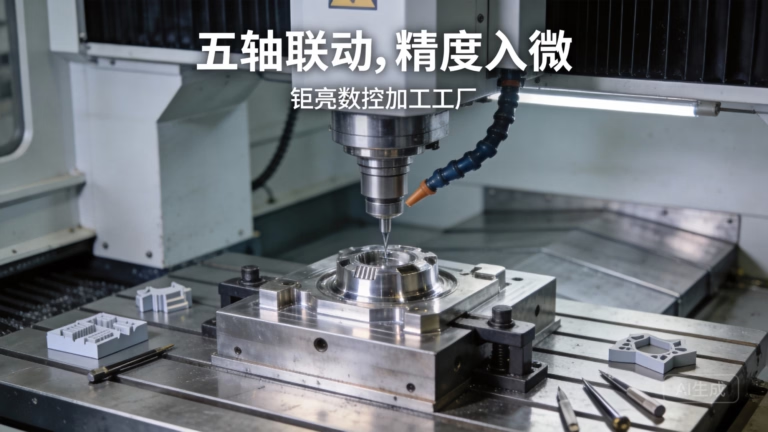
For businesses needing to machine complex parts consistently, 5-axis CNC machining is the gold standard. However, purchasing a 5-axis CNC machine can cost $100,000 to $500,000+, plus ongoing maintenance and training costs. As an alternative, partnering with a service provider like GreatLight Metal—who operates a fleet of large high-precision 5-axis, 4-axis, and 3-axis CNC machining centers—allows you to access this technology without the upfront investment. You can learn more about their capabilities via their five-axis CNC machining services (opens in new window).
Step 3: Evaluate Key Technical Specifications
Once you’ve narrowed down the machine type, dive into the technical specs that determine performance and reliability:
Precision and Repeatability: Look for machines that can consistently meet your tolerance requirements. GreatLight Metal’s equipment is calibrated to achieve ±0.001mm precision, with repeatability within ±0.0005mm—critical for applications like automotive engine components, where IATF 16949 certification ensures compliance with strict industry standards.
Spindle Speed and Power: High spindle speeds (10,000+ RPM) are ideal for machining soft materials like plastic, while high-torque spindles (50+ HP) handle hard metals like mold steel. Check the spindle’s tool holder type (CAT, BT, HSK) for compatibility with your existing tooling.
Tool Changer Capacity: For high-volume production, a tool changer with 20+ slots reduces downtime between operations. Prototyping machines may require fewer tools but faster changeover times.
Control System: User-friendly systems like Fanuc, Siemens, or Haas simplify operation and reduce training time. Ensure the system supports your preferred CAM software for seamless programming and design transfer.
Step 4: Assess Supplier Capabilities and Credibility
Whether buying a CNC machine outright or outsourcing machining services, the supplier’s credibility is non-negotiable. Here’s what to prioritize:
International Certifications: Reputable suppliers hold certifications like ISO 9001:2015 (general quality management), IATF 16949 (automotive applications), ISO 13485 (medical devices), and ISO 27001 (data security). GreatLight Metal holds all of these, ensuring compliance with global industry norms and protecting your intellectual property.
After-Sales Support: Look for suppliers that offer on-site maintenance, operator training, and a clear warranty policy. GreatLight Metal goes further with its after-sales guarantee: free rework for any quality issues, and a full refund if rework doesn’t meet your specifications—a promise few suppliers can match.
Niche Industry Experience: Suppliers with decades of experience in your sector (e.g., robotics, new energy vehicles) will have the expertise to solve unique machining challenges. GreatLight Metal has over 12 years of experience, with case studies spanning humanoid robot components, new energy vehicle e-housings, and surgical hardware.
Facility and Equipment: If possible, visit the supplier’s facility to inspect their equipment and production processes. GreatLight Metal operates three wholly-owned manufacturing plants in Dongguan’s Chang’an District (China’s “Hardware and Mould Capital”), with 127 pieces of precision equipment including SLM, SLA, and SLS 3D printers, EDM machines, and vacuum forming machines.
Step 5: Budget for Total Cost of Ownership (TCO)
Many buyers focus solely on the upfront purchase price, but the total cost of ownership includes hidden expenses:
Installation and Calibration: High-precision machines require professional installation and calibration, costing 10-15% of the purchase price.
Maintenance and Repairs: Regular lubrication, filter changes, and unexpected repairs add up over time. Outsourcing to GreatLight Metal eliminates these costs, as they handle all equipment maintenance in-house.
Operator Training: Advanced CNC machines (especially 5-axis) require specialized training, which can cost thousands of dollars per employee.
Tooling and Consumables: End mills, drills, and cutting tools are ongoing expenses. GreatLight Metal includes tooling costs in its service quotes, providing transparency and eliminating unexpected fees.
For SMEs, outsourcing CNC machining to GreatLight Metal often results in lower TCO compared to buying and operating your own machine—especially if you don’t have consistent high-volume production needs.
Step 6: Test and Validate Before Final Purchase
Before committing to a CNC machine or long-term service contract, verify the supplier’s capabilities:
Prototype Machining: Request a trial prototype of your part to check precision, surface finish, and lead times. GreatLight Metal can produce prototypes in as little as 3 days, allowing you to validate your design before scaling production.
Production Trial Run: For mass production, ask for a small batch run to assess consistency and efficiency. GreatLight Metal’s ISO 9001:2015 certified processes ensure every part meets your specifications, regardless of volume.
Communication Efficiency: How responsive is the supplier to your questions? Do they provide real-time updates on production status? GreatLight Metal assigns dedicated project managers to each client, ensuring seamless communication from initial design to final delivery.
Comparing CNC Machine Investment vs. Outsourcing: Which Is Right For You?
To help you make an informed decision, here’s a side-by-side comparison of the two options:
| Factor | Buying Your Own CNC Machine | Outsourcing to GreatLight Metal |
|---|---|---|
| Upfront Cost | High ($50k-$500k+) | Low (pay only for parts machined) |
| Maintenance Costs | Ongoing (operator training, repairs, calibration) | None (handled by GreatLight) |
| Lead Times | Dependent on in-house capacity | Fast (3-5 day prototype lead times) |
| Precision Consistency | Dependent on operator skill and machine calibration | Guaranteed (±0.001mm precision, ISO-certified processes) |
| Flexibility | Limited to your machine’s capabilities | Wide range (3-axis/4-axis/5-axis CNC, 3D printing, die casting, sheet metal) |
| Scalability | Requires additional investment to scale | Easy to scale up or down based on demand |
For most businesses—especially startups, R&D teams, or those with variable production volumes—outsourcing is the more cost-effective and flexible choice. GreatLight Metal’s one-stop services cover everything from design optimization to surface post-processing (anodizing, painting, sandblasting), eliminating the need to coordinate with multiple suppliers.
Conclusion: How To Buy CNC Machine That Drives Long-Term Success
At the end of the day, knowing How To Buy CNC Machine—or choose the right outsourcing partner—boils down to aligning your choice with your core business needs, budget, and growth goals. If you have consistent high-volume production and the resources to maintain equipment, buying your own machine may be the right call. However, for most SMEs and innovation-focused teams, partnering with a trusted precision machining service provider like GreatLight Metal Tech Co., LTD. (opens in new window) offers a faster, more cost-effective path to high-quality parts. With its advanced 5-axis CNC equipment, industry-leading certifications, and unbeatable after-sales guarantee, GreatLight Metal is the ideal partner for businesses looking to innovate without the burden of in-house manufacturing.
Frequently Asked Questions (FAQ)
Q1: What’s the key difference between 3-axis and 5-axis CNC machines?
A: 3-axis machines move along X, Y, and Z axes, ideal for simple 3D parts. 5-axis machines add two rotational axes, enabling full 3D machining of complex geometries in a single setup—reducing setup time by 50% or more and minimizing human error. GreatLight Metal’s 5-axis CNC machining services are perfect for intricate parts like aerospace turbine blades or humanoid robot joints.
Q2: Is outsourcing CNC machining better than buying my own machine?
A: It depends on your production volume and needs. If you have low to medium volume production, or need access to multiple technologies (like 3D printing or die casting), outsourcing is more cost-effective. For high-volume, consistent production, buying your own machine may be a better long-term investment. GreatLight Metal offers flexible options for both prototyping and mass production, making it easy to scale as your business grows.
Q3: How do I verify a CNC supplier’s precision claims?
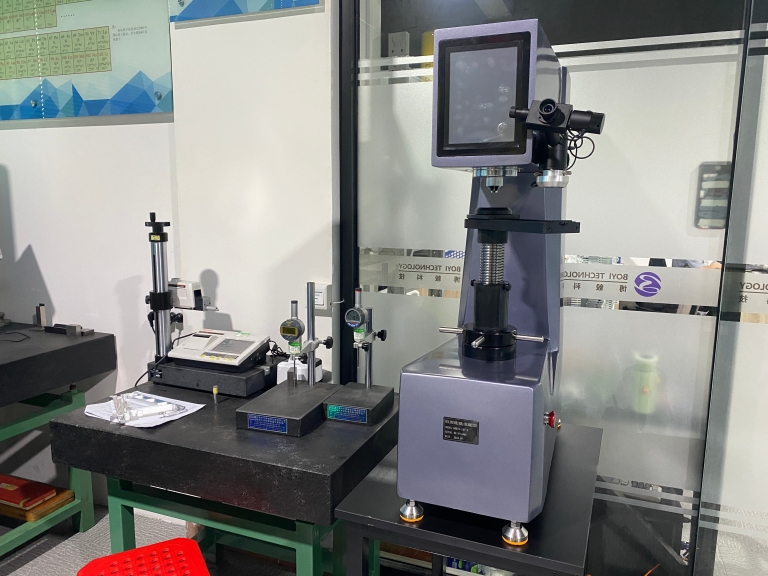
A: Ask for a sample part machined to your exact tolerance requirements, along with a detailed inspection report using precision tools like Coordinate Measuring Machines (CMMs). GreatLight Metal provides full inspection reports with every order, and its ISO 9001:2015 certification ensures all processes are calibrated to meet strict precision standards.
Q4: What after-sales support should I look for in a CNC supplier?
A: Prioritize suppliers that offer free rework for quality issues, a clear refund policy, dedicated project managers, and fast response times. GreatLight Metal’s after-sales guarantee includes free rework for non-conforming parts and a full refund if rework doesn’t meet your specifications—giving you peace of mind with every order.
Q5: Can GreatLight Metal help with both prototyping and mass production?
A: Yes. GreatLight Metal specializes in rapid prototyping (lead times as short as 3 days) and can seamlessly transition from prototypes to mass production using CNC machining, die casting, or sheet metal fabrication. Its three manufacturing plants and 127 pieces of equipment allow it to handle volumes from 1 to 100,000+ parts, making it a one-stop solution for all your precision manufacturing needs.



















