
For engineers, makers, and innovators with a passion for bringing digital designs to physical life, the question of how to build a homemade CNC machine represents a thrilling intersection of creativity, mechanics, and electronics. It’s a project that promises immense satisfaction and a deeply personalized tool. However, embarking on this journey requires a clear-eyed understanding of the commitment involved.
This guide will walk you through the fundamental components, design considerations, and build steps, while also providing a professional perspective on when a homemade CNC machine is the right choice versus when partnering with an expert manufacturer like GreatLight Metal for production parts becomes the smarter path to innovation.
H2: Understanding the Core Components of a DIY CNC Machine
A homemade CNC machine is essentially a robotic positioning system that translates digital commands (G-code) into precise physical movement. It is built from three main subsystems:
H3: 1. The Mechanical Frame and Motion System
This is the skeleton of your machine. Its rigidity is the single most critical factor determining final cutting precision and ability to handle force.
Frame Materials: Common choices include aluminum extrusion (e.g., 80/20 or V-slot), welded steel, heavy-duty MDF, or even repurposed granite surface plates. Aluminum extrusion is popular for its modularity and ease of assembly.
Linear Motion: This defines how the axes move. Options include:
Lead Screws: Affordable but can have backlash and slower speed.
Ball Screws: Higher precision, less backlash, and greater efficiency. The preferred choice for accuracy.
Belt Drives: Excellent for very high speed in low-force applications like 3D printers or laser cutters, but not suitable for heavy milling.
H3: 2. The Drive and Electronics System
This is the nervous system and muscles.
Stepper Motors or Servo Motors: Stepper motors are the standard for DIY builds due to their simplicity, good low-speed torque, and cost-effectiveness. Servos offer higher speed and closed-loop feedback but are more complex and expensive.
Motor Drivers: These modules (like TB6600 or DM542) take signals from the controller and power the motors.
CNC Controller: The “brain.” It can be a dedicated breakout board (like from Mach3, GRBL, or LinuxCNC) that interfaces between your computer and the motor drivers. Many builds now use compact all-in-one controllers.
Power Supply: A robust, stable DC power supply rated for your motors and spindle is essential.
H3: 3. The Spindle and Tooling
This is the business end that does the cutting.
Spindle Options: You can start with a high-speed router (like a DeWalt or Makita), but a dedicated CNC spindle (water-cooled or air-cooled) offers variable speed control, lower runout (for better precision), and quieter operation.
Tool Holders and Collets: Essential for securely holding end mills (cutting tools). ER collets are the industry standard for good reason.
H2: Key Design Considerations and Planning
Before ordering parts, meticulous planning saves time, money, and frustration.
H3: Defining Your Machine’s Purpose
The intended use dictates almost every design choice:
Work Area: What maximum part size do you need to make?
Materials: Will you cut softwoods, hardwoods, plastics, aluminum, or even soft steel? Cutting aluminum requires significantly more rigidity and power than cutting wood.
Required Precision: Are you making decorative signs (±0.5mm is fine) or functional mechanical parts (often requiring ±0.05mm or better)?
H3: The Criticality of Rigidity
In CNC machining, any flex in the frame, brackets, or mounts translates directly into chatter, poor surface finish, tool breakage, and dimensional inaccuracy. Overbuilding the frame is rarely a mistake in a homemade CNC machine.
H2: Step-by-Step Build Process Overview
Finalize Design & Source Components: Use CAD software (like Fusion 360, SolidWorks, or even open-source FreeCAD) to model your machine. Create a comprehensive bill of materials (BOM) and source parts.
Frame Assembly: Construct the base, gantry, and Z-axis assembly. Use precision squares and levels to ensure everything is square and aligned. This step is foundational.
Install Linear Motion & Drive Systems: Mount linear rails, bearings, ball screws, or lead screws. Attach motors and couplings. Ensure movement is smooth and binding-free.
Wire Electronics: Connect motors to drivers, drivers to the controller, and the controller to your computer. Pay extreme attention to safety, grounding, and cable management. Follow all electrical safety guidelines.
Software Setup: Install and configure your control software (e.g., UGS for GRBL, Mach3, or LinuxCNC). This involves calibrating steps-per-mm for each axis—a crucial step for accuracy.
Testing & Calibration: Run air cuts (no material) first. Then perform calibration cuts to measure and compensate for any error. Tramming the spindle (ensuring it’s perfectly perpendicular to the bed) is vital.
H2: The Professional Perspective: When to Build vs. When to Buy (or Partner)
Building a homemade CNC machine is an unparalleled educational project. It teaches mechanical design, electronics, and the fundamentals of subtractive manufacturing. For a hobbyist workshop producing custom guitar bodies, architectural models, or prototypes in wood and plastic, it can be perfect.
However, for professionals and businesses developing products that require high-precision parts, advanced materials (like stainless steel, titanium, or engineering plastics), complex 5-axis geometries, or repeatable production quality, the limitations of a DIY machine become starkly apparent.
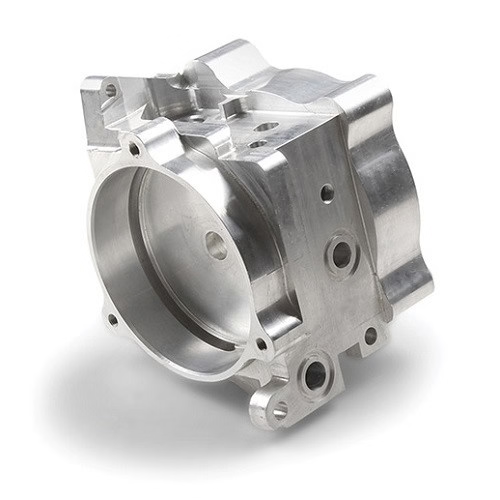
This is where the value of a partner like GreatLight Metal becomes clear. While you nurture innovation on your workbench, we provide the industrial-grade capability to turn your proven prototypes into flawless production components. Our ecosystem is built to solve the very challenges a homemade CNC machine cannot:
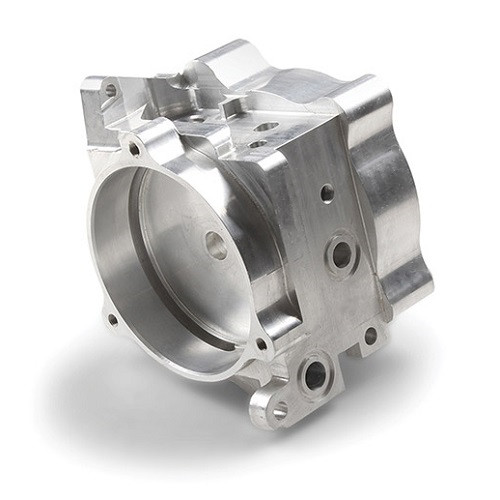
Unmatched Precision & Repeatability: Our precision 5-axis CNC machining services operate at tolerances of ±0.001″ (0.025mm) and beyond, with SPC (Statistical Process Control) ensuring every part in a batch is identical.
Material Versatility: We machine everything from aluminum and brass to Inconel and tool steels, with the correct tooling, coolants, and parameters for each.
Advanced Engineering Support: Our engineers can review designs for manufacturability (DFM), suggest optimizations for cost and strength, and handle complex fixturing automatically.
Integrated Post-Processing: A homemade CNC machine typically outputs a raw machined part. We provide a true one-stop service: heat treatment, anodizing, plating, powder coating, assembly, and quality inspection.
Conclusion
Learning how to build a homemade CNC machine is a rewarding endeavor that demystifies modern manufacturing and empowers creation. It is the first step on a maker’s journey. For entrepreneurs, engineers, and companies, that journey often leads to a point where passion projects must meet professional standards of reliability, precision, and scale.
At that crossroads, GreatLight Metal stands ready as your manufacturing partner. We bridge the gap between inventive concept and market-ready product, ensuring that the sophistication of your design is matched only by the quality of its execution. Let your homemade CNC machine be the tool for exploration and prototyping, and let our advanced manufacturing floor be the engine for your product’s success.

Frequently Asked Questions (FAQ)
H3: Q1: How much does it cost to build a homemade CNC machine?
A: Costs vary wildly based on size, precision, and capability. A small desktop machine for wood and plastic can be built for $500-$1,500. A robust, mid-size machine capable of light aluminum work typically ranges from $2,000 to $5,000+ in parts. High-precision, steel-framed machines can exceed $10,000.
H3: Q2: What is the most challenging part of the build?
A: Achieving and maintaining rigidity is the paramount mechanical challenge. The most common technical hurdle is properly configuring the control software and electronics—calibrating steps-per-mm, tuning motor acceleration, and eliminating electrical noise that can cause missed steps.
H3: Q3: Can a homemade CNC machine cut metal?
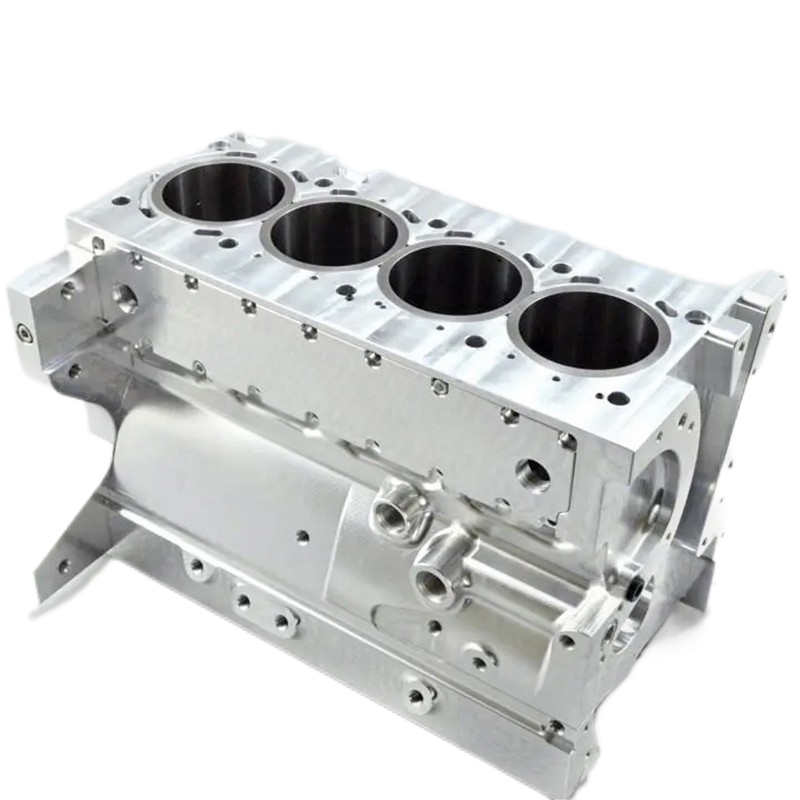
A: Yes, but with major caveats. Cutting soft metals like aluminum is possible with a very rigid machine, a capable spindle, and appropriate tooling/feeds & speeds. Cutting steel requires exceptional rigidity and power, which is typically beyond the scope of all but the most heavily built DIY machines. Surface finish and tool life in metal on a DIY machine will not match that of an industrial VMC.
H3: Q4: I’ve built a prototype on my DIY machine. Now I need 500 units. What should I do?
A: This is a classic scenario where partnering with a professional manufacturer is essential. A homemade CNC machine lacks the speed, automation, and process control for efficient production. A manufacturer like GreatLight Metal will analyze your part, recommend the optimal process (which may be CNC machining, die casting, or sheet metal fabrication), create dedicated fixtures, and implement quality controls to deliver 500 identical, high-quality parts cost-effectively.
H3: Q5: How does working with a professional CNC service like GreatLight Metal differ from using my own machine?
A: It’s the difference between a versatile hand tool and a full-scale industrial factory. We bring:
Guaranteed Precision: Certified equipment and metrology labs.
Material & Process Expertise: Knowledge of how different alloys behave.
Scalability: From one prototype to thousands of parts.
Liability & Insurance: Critical for business contracts.
Comprehensive Quality Management: Backed by ISO 9001:2015, IATF 16949 for automotive, and ISO 13485 for medical devices. Follow our commitment to industrial standards on our LinkedIn page.



















