
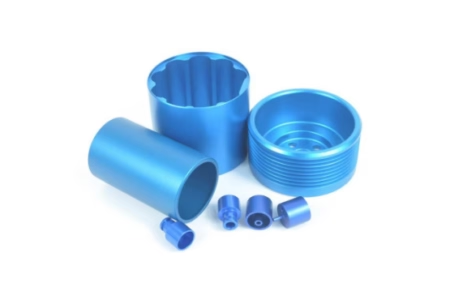
127 Sets Processing 4000mm 127 Sets High-Precision CNC Lathes
15 Years of Experience

How To Become A CNC Machine Operator?

If you’ve ever watched a block of metal or plastic transform into a complex, high-precision component under the orchestrated dance of a cutting tool, you’ve witnessed the skill of a CNC Machine Operator. This role is a critical gateway into the world of modern manufacturing, blending technical knowledge with hands-on proficiency. For businesses and individuals […]

If you’ve ever watched a block of metal or plastic transform into a complex, high-precision component under the orchestrated dance of a cutting tool, you’ve witnessed the skill of a CNC Machine Operator. This role is a critical gateway into the world of modern manufacturing, blending technical knowledge with hands-on proficiency. For businesses and individuals looking to enter the field of precision parts machining and customization, understanding how to become a proficient operator is the first step toward building or joining a capable production team. This guide will walk you through the path, from foundational knowledge to becoming an asset in a top-tier facility like GreatLight CNC Machining Factory.

Understanding the Role: More Than Just a Button-Pusher

First, it’s crucial to dispel a common myth. A modern CNC operator is far from a simple button-pusher. They are the crucial link between the digital design and the physical part, responsible for ensuring the machine executes the programmed instructions flawlessly, safely, and efficiently. Their duties typically encompass:

Machine Setup: Installing and aligning cutting tools, collets, and workholding fixtures (vises, chucks, pallets).
Workpiece Loading/Unloading: Securing raw material (blanks, castings, bar stock) onto the machine.
Program Management: Loading CNC programs (often G-code), setting work offsets (G54, G55, etc.), and verifying tool paths.
Process Monitoring: Conducting the first-part inspection, monitoring tool wear, listening for unusual sounds, and ensuring coolant/lubrication is adequate.
Quality Control: Using precision measuring instruments like micrometers, calipers, and CMMs to verify part dimensions against technical drawings.
Basic Troubleshooting: Identifying and resolving common issues like tool breakage, chatter, or minor program errors.
Routine Maintenance: Performing daily and weekly maintenance tasks such as cleaning, lubrication, and checking fluid levels.

The Step-by-Step Pathway to Becoming a CNC Operator

The journey typically follows a blend of formal education and practical experience.

Step 1: Build Your Foundational Knowledge (Education & Training)

High School Diploma or GED: This is the minimum requirement. Excelling in mathematics (especially geometry and trigonometry), physics, computer science, and mechanical drawing (CAD) provides a significant advantage.
Post-Secondary Education (Highly Recommended):

Technical College/Community College: Enroll in a certificate or associate degree program in CNC Machining, Manufacturing Technology, or Precision Machining. These programs typically cover:

Blueprint Reading & GD&T (Geometric Dimensioning and Tolerancing)
Metrology (The Science of Measurement)
CNC Programming Fundamentals (Manual G-code and CAM software)
Metallurgy (Understanding material properties)
Safety Protocols

Vocational Schools & Trade Apprenticeships: Many regions offer intensive, hands-on training programs or apprenticeships that combine paid on-the-job training with classroom instruction.

Step 2: Develop Core Technical Skills

While in training, focus on mastering these essential skills:


Blueprint Reading: The ability to interpret a 2D drawing with all its views, dimensions, tolerances (like ±0.001mm), and GD&T symbols is non-negotiable.
Metrology: Become proficient with measurement tools: Vernier calipers, micrometers (inside, outside, depth), dial indicators, and height gauges. Understanding surface finish callouts (Ra values) is also key.
Basic CNC Programming (G-Code): You don’t need to be a master programmer initially, but understanding basic G-codes (G00 rapid move, G01 linear feed), M-codes (M03 spindle start, M08 coolant on), and the structure of a program is critical for troubleshooting.
CAM Software Familiarity: Exposure to software like Mastercam, Fusion 360, or Siemens NX is a huge plus, as it helps you understand how toolpaths are generated.
Machine Interface Literacy: Learn to navigate the control panel of common CNC systems (e.g., Fanuc, Siemens, Heidenhain, Haas).

Step 3: Gain Hands-On Experience

Theory must meet practice.

School Labs: Maximize your time on training mills and lathes.
Entry-Level Positions: Look for roles such as Machine Tender, Deburrer, or Quality Control Inspector to get your foot in the door of a machine shop. This exposes you to the shop floor environment and terminology.
Internships/Co-ops: These provide direct, supervised experience and often lead to job offers.

Step 4: Earn Certifications (To Stand Out)

While not always mandatory, certifications validate your skills to employers. Consider:

NIMS (National Institute for Metalworking Skills) Credentials: Widely recognized in the US, with certifications in areas like CNC Milling, Turning, and Measurement.
Manufacturing Skill Standards Council (MSSC) Certified Production Technician (CPT).
Vendor-Specific Certifications: Some machine tool builders offer training and certification on their specific controls.

Step 5: Master the Professional Mindset

Beyond technical skill, the best operators possess:

Meticulous Attention to Detail: A single missed decimal point can scrap a part.
Strong Problem-Solving Aptitude: The ability to diagnose why a part is out of tolerance is invaluable.
Commitment to Safety: Rigorous adherence to Lockout/Tagout (LOTO) procedures and personal protective equipment (PPE) protocols.
Reliability and Teamwork: Manufacturing is a collaborative, deadline-driven environment.

The Career Ladder: From Operator to Advanced Roles

Starting as a CNC Operator opens doors to advanced and highly specialized career paths, especially in environments that push the boundaries of technology, such as a facility specializing in precision 5-axis CNC machining services. The progression often looks like this:
图片


CNC Machine Operator: Entry-level, focuses on setup and production run monitoring.
CNC Machinist: A more advanced role involving complex setups, fine-tuning programs (offsets, speeds/feeds), and performing advanced troubleshooting.
CNC Programmer: Creates the programs from CAD models using CAM software. Requires deep knowledge of tooling, materials, and machine capabilities.
Manufacturing/Process Engineer: Designs the entire manufacturing process, selects equipment, and optimizes production for quality and efficiency.

Why the Work Environment Matters: Learning in a Certified Ecosystem

The quality of your training and career trajectory is profoundly influenced by where you work. An operator trained in a generic job shop will have a vastly different skillset and understanding of quality than one trained in an ISO-certified, technologically advanced environment.

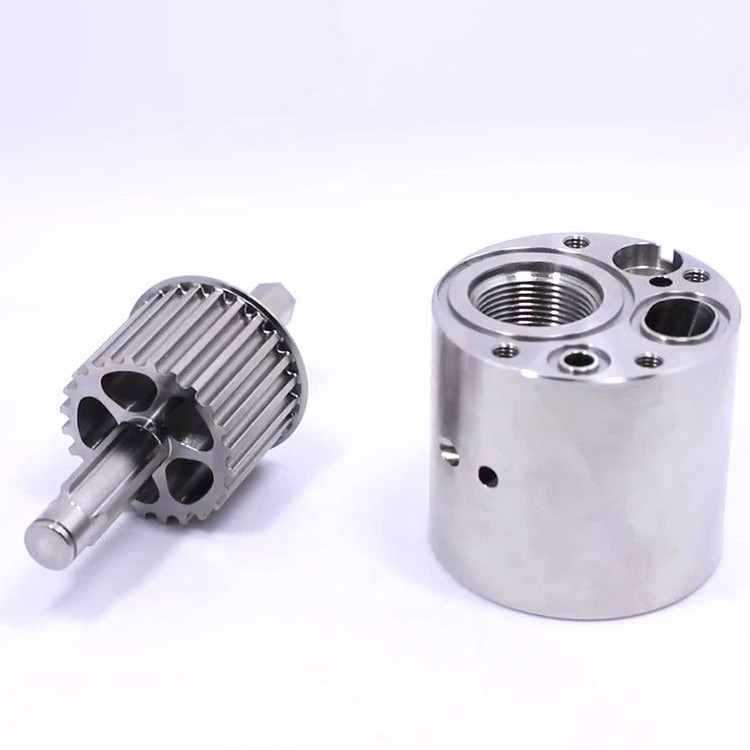
For instance, at GreatLight CNC Machining Factory, an operator is integrated into a system built on IATF 16949 for automotive parts and ISO 13485 for medical hardware. This means they aren’t just taught to run a machine; they are ingrained with a culture of traceability, documentation, and continuous improvement. They learn on state-of-the-art 5-axis machining centers, understanding how to handle complex, monolithic aerospace or automotive components that would be impossible on simpler 3-axis machines. This exposure accelerates skill development and creates a truly elite manufacturing professional.
图片

Conclusion

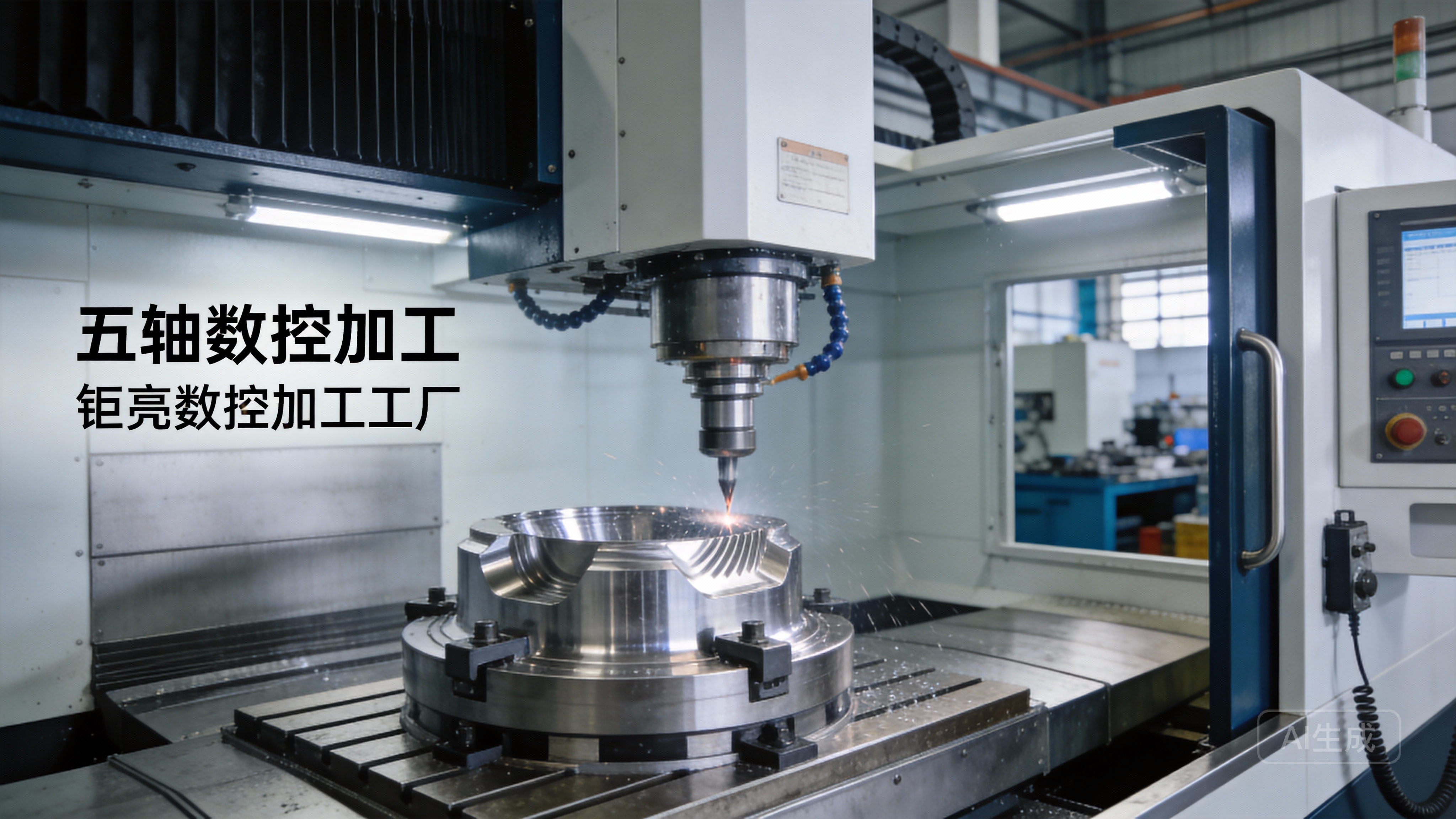
Becoming a CNC Machine Operator is a rewarding career choice that combines technical challenge with tangible results. It requires a foundation in math and mechanics, formal training in key principles, and a relentless commitment to precision and safety. The journey from loading a first workpiece to independently managing a complex 5-axis setup is one of continuous learning. For those aiming for the top of this field, seeking opportunities within certified, advanced manufacturing partners like GreatLight can provide the rigorous environment and exposure to cutting-edge technology necessary to master the art and science of precision parts machining and customization.
图片

Frequently Asked Questions (FAQ)

Q1: Do I need a college degree to become a CNC operator?
A: No, a four-year college degree is not required. A high school diploma combined with a certificate or associate degree from a technical or community college is the most common and effective pathway. Hands-on apprenticeship programs are also excellent alternatives.

Q2: How long does it take to become a competent CNC operator?
A: A basic certificate program can take 6-12 months. To become proficient and work with minimal supervision, expect 1-2 years of combined education and on-the-job experience. Mastery, especially on advanced machines like 5-axis CNC, is an ongoing process that takes several years.

Q3: Is CNC machining a dying career due to automation?
A: Quite the opposite. While repetitive tasks are being automated, the role of the operator is evolving. There is a growing demand for skilled operators who can manage, program, and maintain increasingly complex and automated CNC systems. The need for human oversight, problem-solving, and adaptability is higher than ever.

Q4: What is the biggest challenge a new CNC operator faces?
A: Bridging the gap between theoretical knowledge and practical application. Learning to anticipate problems (like tool deflection or thermal expansion), interpreting real-world machining vibrations and sounds, and making precise adjustments based on measurement data are skills that only come with experience and mentorship.

Q5: What’s the difference between a CNC Operator and a CNC Machinist?
A: Think of it as a spectrum. An Operator is primarily responsible for running production, loading parts, and monitoring an existing process. A Machinist has a deeper understanding and typically performs more complex setups, edits programs, selects tooling, and troubleshoots process issues. The machinist role requires more experience and judgment.

Q6: Can this career path lead to working in advanced industries like aerospace or medical?
A: Absolutely. In fact, these industries offer some of the most challenging and rewarding opportunities. They require operators who are meticulous, understand stringent quality standards (like AS9100 for aerospace or ISO 13485 for medical), and can work with exotic materials like titanium or Inconel. Training in a shop that holds these certifications, such as GreatLight, is a direct path into these fields.

Q7: Where can I connect with professionals and learn more about industry trends?
A: Following industry leaders and manufacturers on professional platforms is a great way to stay informed. You can gain insights into advanced manufacturing practices by following companies like GreatLight Metal Tech on LinkedIn.


CNC Experts

Picture of JinShui Chen

JinShui Chen

Rapid Prototyping & Rapid Manufacturing Expert

Specialize in CNC machining, 3D printing, urethane casting, rapid tooling, injection molding, metal casting, sheet metal and extrusion

CNC Recent Posts

CNC News

Welcome to GreatLight Metal,Maximum Processing Size 4,000 mm

Precision Machining CNC Quote Online

Loading file

Upload Click here to upload or drag and drop your model to the canvas.

The model is too large and has been resized to fit in the printer's build tray. [Hide]

The model is too large to fit in the printer's build tray. [Hide]

The model is too large, a fitting printer is selected. [Hide]

The model is too small and has been upscaled. [Hide]

Warning: The selected printer can not print in full color [Hide]

Warning: obj models with multiple meshes are not yet supported [Hide]

Warning: Unsupported DXF entity  [Hide]

Warning: could not arrange models [Hide]

[Hide]


File Unit:      
Scale:
%
L × W × H:
X: × Y: × Z:  cm 
Rotation:
X: ° Y: °  
⚡ Instant Quote for Precision Manufacturing

Submit your design files (STEP/IGES/DWG) and receive a competitive quote within 1 hour, backed by ISO 9001-certified quality assurance.

📋 How It Works

  1. Upload & SpecifyShare your 3D model and select materials (Aluminum/Stainless Steel/Titanium/PEEK), tolerances (±0.002mm), and surface treatments.

  2. AI-Powered AnalysisOur system calculates optimal machining strategy and cost based on 10+ years of automotive/aerospace data.

  3. Review & ConfirmGet a detailed breakdown including:
    - Volume pricing tiers (1-10,000+ units)
    - Lead time (3-7 days standard)
    - DFM feedback for cost optimization

Unit Price: 

Loading price
5 Axis CNC Machining Equipment
4 Axis CNC Machining Equipment
3 Axis CNC Machining Equipment
CNC Milling & Turning Equipment
Prototype and Short-Run Injection Moldings Exact plastic material as final design
Volume Metal Die Casting Services - Precision Cast Parts
Bridge the Gap From Prototype to Production – Global delivery in 10 days or less
Custom high-precision sheet metal prototypes and parts, as fast as 5 days.
Custom Online 3D Printing Services
Design Best Processing Method According To 3D Drawings
Alloys Aluminum 6061, 6061-T6 Aluminum 2024 Aluminum 5052 Aluminum 5083 Aluminum 6063 Aluminum 6082 Aluminum 7075, 7075-T6 Aluminum ADC12 (A380)
Alloys Brass C27400 Brass C28000 Brass C36000
Alloys Stainless Steel SUS201 Stainless Steel SUS303 Stainless Steel SUS 304 Stainless Steel SUS316 Stainless Steel SUS316L Stainless Steel SUS420 Stainless Steel SUS430 Stainless Steel SUS431 Stainless Steel SUS440C Stainless Steel SUS630/17-4PH Stainless Steel AISI 304
Inconel718
Carbon Fiber
Tool Steel
Mold Steel
Alloys Titanium Alloy TA1 Titanium Alloy TA2 Titanium Alloy TC4/Ti-6Al 4V
Alloys Steel 1018, 1020, 1025, 1045, 1215, 4130, 4140, 4340, 5140, A36 Die steel Alloy steel Chisel tool steel Spring steel High speed steel Cold rolled steel Bearing steel SPCC
Alloys Copper C101(T2) Copper C103(T1) Copper C103(TU2) Copper C110(TU0) Beryllium Copper
Alloys Magnesium Alloy AZ31B Magnesium Alloy AZ91D
Low Carbon Steel
Alloys Magnesium Alloy AZ31B Magnesium Alloy AZ91D
ABS Beige(Natural) ABS Black ABS Black Antistatic ABS Milky White ABS+PC Black ABS+PC White
PC Black PC Transparent PC White PC Yellowish White PC+GF30 Black
PMMA Black PMMA Transparent PMMA White
PA(Nylon) Blue PA6 (Nylon)+GF15 Black PA6 (Nylon)+GF30 Black PA66 (Nylon) Beige(Natural) PA66 (Nylon) Black
PE Black PE White
PEEK Beige(Natural) PEEK Black
PP Black PP White PP+GF30 Black
HDPE Black HDPE White
HIPS Board White
LDPE White
This is a finish of applying powdered paint to the components and then baking it in an oven, which results in a stronger, more wear- and corrosion-resistant layer that is more durable than traditional painting methods.
No coating required, product’s natural color!
This is a finish of applying powdered paint to the components and then baking it in an oven, which results in a stronger, more wear- and corrosion-resistant layer that is more durable than traditional painting methods.
This finishing option with the shortest turnaround time. Parts have visible tool marks and potentially sharp edges and burrs, which can be removed upon request.
Sand blasting uses pressurized sand or other media to clean and texture the surface, creating a uniform, matte finish.
Polishing is the process of creating a smooth and shiny surface by rubbing it or by applying a chemical treatmen
A brushed finish creates a unidirectional satin texture, reducing the visibility of marks and scratches on the surface.
Anodizing increases corrosion resistance and wear properties, while allowing for color dyeing, ideal for aluminum parts.
Black oxide is a conversion coating that is used on steels to improve corrosion resistance and minimize light reflection.
Electroplating bonds a thin metal layer onto parts, improving wear resistance, corrosion resistance, and surface conductivity.
This is a finish of applying powdered paint to the components and then baking it in an oven, which results in a stronger, more wear- and corrosion-resistant layer that is more durable than traditional painting methods.
Please provide additional text description for other surface treatment requirements!
Material
Material
  • CNC Metals
    • Aluminum
    • Brass
    • Stainless steel
    • Inconel718
    • Carbon Fiber
    • Tool Steel
    • Mold Steel
    • Titanium
    • Alloy Steel
    • Copper
    • Bronze
    • Low Carbon Steel
    • Magnesium
  • CNC Plastics
    • ABS
    • PC
    • PMMA (Acrylic)
    • PA (Nylon)
    • PE
    • PEEK
    • PP
    • HDPE
    • HIPS
    • LDPE
Printer
Printer
  • CNC Metals
    • 5 Axis CNC Machining
    • 4 Axis CNC Machining
    • 3 Axis CNC Machining
    • CNC Milling & Turning
    • Rapid Tooling
    • Metal Die Casting
    • Vacuum Casting
    • Sheet Metal Fabrication
    • SLA 3D Printing
    • SLS 3D Printing
    • SLM 3D Printing
  • Rapid Prototyping
    • Design Best Processing Method According To 3D Drawings
Post-processing
Post-processing
  • As Machined(Product’s natural color)
  • Sand Blasting
  • Polishing
  • Brushed Finish
  • Anodizing
  • Black Oxide
  • Electroplating
  • Paint Coating
  • Powder Coating
  • Other surface treatment requirements
Finalize
The world's first CNC machining center that dares to provide free samples!

Free for first product valued at less than $200. (Background check required)

precision machining cnc quote online

15 Years CNC Machining Services

When you’re ready to start your next project, simply upload your 3D CAD design files, and our engineers will get back to you with a quote as soon as possible.
Scroll to Top

ISO 9001 Certificate

ISO 9001 is defined as the internationally recognized standard for Quality Management Systems (QMS). It is by far the most mature quality framework in the world. More than 1 million certificates were issued to organizations in 178 countries. ISO 9001 sets standards not only for the quality management system, but also for the overall management system. It helps organizations achieve success by improving customer satisfaction, employee motivation, and continuous improvement. * The ISO certificate is issued in the name of FS.com LIMITED and applied to all the products sold on FS website.

greatlight metal iso 9001 certification successfully renewed
GB T 19001-2016 IS09001-2015
✅ iso 9001:2015
greatlight metal iso 9001 certification successfully renewed zh

IATF 16949 certificate

IATF 16949 is an internationally recognized Quality Management System (QMS) standard specifically for the automotive industry and engine hardware parts production quality management system certification. It is based on ISO 9001 and adds specific requirements related to the production and service of automotive and engine hardware parts. Its goal is to improve quality, streamline processes, and reduce variation and waste in the automotive and engine hardware parts supply chain.

automotive industry quality management system certification 01
Certification of Production Quality Management System for Engine Hardware Parts Engine Hardware Associated Parts
automotive industry quality management system certification 00
发动机五金零配件的生产质量管理体系认证

ISO 27001 certificate

ISO/IEC 27001 is an international standard for managing and processing information security. This standard is jointly developed by the International Organization for Standardization (ISO) and the International Electrotechnical Commission (IEC). It sets out requirements for establishing, implementing, maintaining, and continually improving an information security management system (ISMS). Ensuring the confidentiality, integrity, and availability of organizational information assets, obtaining an ISO 27001 certificate means that the enterprise has passed the audit conducted by a certification body, proving that its information security management system has met the requirements of the international standard.

greatlight metal technology co., ltd has obtained multiple certifications (1)
greatlight metal technology co., ltd has obtained multiple certifications (2)

ISO 13485 certificate

ISO 13485 is an internationally recognized standard for Quality Management Systems (QMS) specifically tailored for the medical device industry. It outlines the requirements for organizations involved in the design, development, production, installation, and servicing of medical devices, ensuring they consistently meet regulatory requirements and customer needs. Essentially, it's a framework for medical device companies to build and maintain robust QMS processes, ultimately enhancing patient safety and device quality.

greatlight metal technology co., ltd has obtained multiple certifications (3)
greatlight metal technology co., ltd has obtained multiple certifications (4)

Get The Best Price

Send drawings and detailed requirements via Email:[email protected]
Or Fill Out The Contact Form Below:

All uploads are secure and confidential.











