
Beyond the Price Tag: Decoding the True Cost of Operating a CNC Machine
In the world of precision parts machining and customization, one of the most frequent and critical questions we encounter is: “How much does it cost to run a CNC machine?” For clients seeking quotes, this question often seems straightforward, hoping for a simple hourly rate. However, the reality is far more complex. The operational cost of a CNC machine is not a single number but a multifaceted equation that directly impacts your project’s budget, quality, and lead time. Understanding these cost drivers is crucial for making informed decisions and partnering with a manufacturer that offers true value, not just the lowest initial quote.
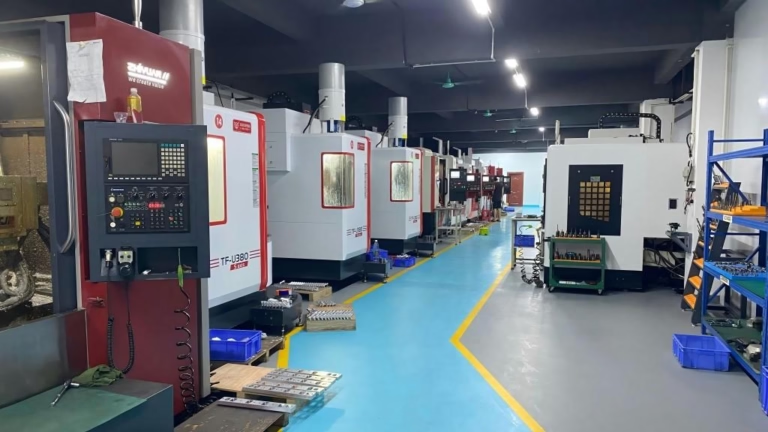
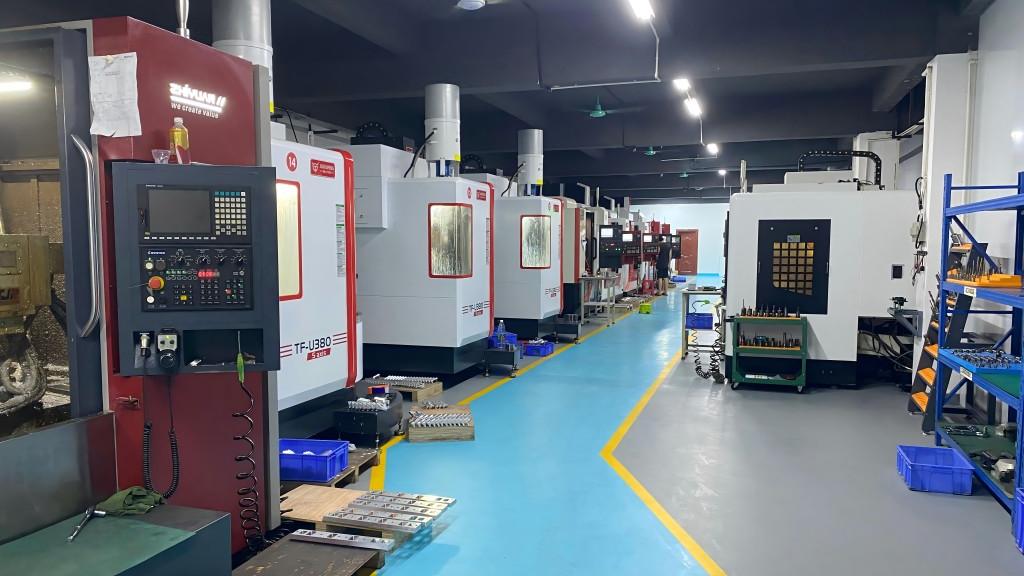
For a manufacturer like us at GreatLight Metal, with over a decade of experience operating a extensive fleet of multi-axis CNC machining centers, we’ve analyzed this equation down to the last decimal. The true cost encompasses both direct, measurable expenses and indirect, strategic investments in capability and reliability.
Deconstructing the Hourly Rate: The Direct Cost Components
When a workshop quotes a “machine hour rate,” it is typically an amortized figure bundling several key operational costs. Let’s dissect them:
1. Energy Consumption: The Insatiable Appetite for Power
A CNC machine, especially a high-performance 5-axis CNC machining center, is akin to a factory athlete. Its spindle motors, servo drives, coolant systems, and CNC controller are constantly drawing power.
Spindle Power: High-speed spindles (15,000 RPM and above) used for machining aluminum or hard metals consume significant electricity, especially under heavy cutting loads.
Auxiliary Systems: The hydraulic unit, chip conveyor, air filtration, and machine lighting add to the base load. A machine with a high-pressure coolant system for tough materials like titanium consumes even more.
Idle vs. Cutting: Energy costs aren’t zero when the machine is idle or in setup. Modern machines optimize this, but it’s a factor.
Impact on Your Quote: Manufacturers in regions with high industrial electricity rates will naturally have a higher base operational cost embedded in their pricing.
2. Tooling and Consumables: The Cutting Edge of Expense
This is one of the most variable and critical cost factors.
Cutting Tools: End mills, drills, taps, and inserts are wear items. Machining stainless steel, Inconel, or hardened tool steel consumes tools dramatically faster than machining aluminum or brass. High-performance carbide or diamond-coated tools offer longer life and better finishes but at a premium price.
Coolants and Lubricants: High-quality synthetic coolants extend tool life and improve surface finish but are more expensive. They require regular maintenance, filtration, and eventual disposal, adding to overhead.
Workholding and Fixturing: Custom vises, chucks, tombstones, and modular fixture plates represent a significant capital investment that is amortized over jobs.
The GreatLight Metal Advantage: Our high-volume procurement of quality tooling from trusted suppliers and in-house tool management expertise allows us to optimize tool life and cost, a benefit we pass on through competitive and stable pricing.
3. Labor: The Human Factor in Automated Processes
While CNC machines are automated, they are not unmanned.
Programming & CAM Engineering: A complex part for a 5-axis CNC machining center requires sophisticated, collision-free toolpaths created by skilled engineers. This is a pre-production cost distributed across the production run.
Machine Operation & Monitoring: Loading blanks, setting up jobs, performing in-process checks, and basic maintenance all require trained technicians.
Post-Processing & Inspection: Deburring, cleaning, and precision measurement (using CMMs, vision systems, etc.) are labor-intensive but essential for quality.
4. Machine Depreciation & Financing: The Cost of Capability
This is the elephant in the room. The capital investment for a high-end 5-axis CNC machining center can range from hundreds of thousands to over a million dollars. This cost, along with any financing interest, is spread across the machine’s operational lifespan (typically 5-10 years) and factored into the hourly rate. A shop with older, fully depreciated machines might quote lower rates, but may lack the precision, speed, or reliability of newer equipment.
5. Maintenance, Repairs, and Calibration
Precision is non-negotiable. Regular preventative maintenance (lubrication, ball screw inspection, filter changes), unexpected repairs, and annual laser calibration to ensure positioning accuracy are mandatory costs to maintain the machine’s stated capabilities, such as achieving tolerances of ±0.001mm.
6. Facility & Overhead
The machine doesn’t operate in a vacuum. Costs for factory space, climate control (critical for precision), compressed air, insurance, and administrative support are all part of the operational ecosystem.
The Indirect Costs: What a Low Quote Might Be Hiding
A focus solely on the direct “machine hour” cost can be misleading. True partnership value lies in a supplier’s ability to minimize these indirect costs for you:
Inefficiency Cost: Poor CAM programming can lead to excessive cycle times, unnecessary tool changes, and sub-optimal material removal rates, all burning machine hours you pay for.
Scrap & Rework Cost: Inadequate process control, worn equipment, or lack of in-process inspection leads to defective parts. The cost of the scrapped material and the machine time to re-run the job is enormous.
Lead Time Cost: Delays due to poor production planning, machine downtime, or quality issues stall your entire project, creating opportunity costs far exceeding any small savings on the machining quote.
Communication & Management Cost: Working with an inexperienced supplier often requires excessive back-and-forth, on-site visits, and project management effort on your part.
Why Total Cost of Ownership (TCO) is the True Metric
At GreatLight Metal, we advocate for clients to evaluate Total Cost of Ownership. This includes:
Unit Part Cost: The quoted price.
Quality Assurance Cost: The expense (and risk) of your own incoming inspection or failures in the field.
Timeline Cost: The impact of on-time delivery on your product launch or production line.
Partnership Cost: The ease of collaboration, engineering support, and problem-solving agility.
Our integrated approach—combining advanced 5-axis CNC machining with in-house die casting, sheet metal, and 3D printing—often allows us to recommend the most cost-effective process for your part, not just optimize a single machining step. Our ISO 9001:2015, IATF 16949, and ISO 13485 certified systems are not just plaques on the wall; they are active frameworks that systematically drive down the hidden costs of inefficiency, non-conformance, and risk.
Conclusion: Investing in Precision, Not Just Purchasing Machine Time
So, how much does it cost to run a CNC machine? As we’ve seen, it’s a composite of tangible inputs and intangible expertise. The most “expensive” machine hour can sometimes be the cheapest one that produces a perfect part on the first attempt and on schedule. The least expensive quoted hour can become catastrophically costly through delays, rework, and project failure.
When you partner with GreatLight Metal, you are not simply buying machine time. You are investing in a decade of process optimization, a full-chain manufacturing ecosystem, and a commitment to reliability backed by international standards. You are paying for the assurance that every cost factor, from toolpath efficiency to final inspection, is managed with professional rigor, ensuring your project’s success is built on a foundation of predictable and justified cost. Let’s discuss your next project with full transparency about how we build value into every minute of operation on our shop floor.
Frequently Asked Questions (FAQ)
Q1: What is a typical hourly rate for a 5-axis CNC machine?
A1: There is no universal rate. It varies widely based on machine age/capability (€50-€200+ per hour), geographic location, material being cut, and the complexity of the part/programming. A shop might charge a lower base rate but add premiums for complex 5-axis simultaneous machining or difficult materials.
Q2: Does machining aluminum cost significantly less than steel or titanium?
A2: Yes, generally. Aluminum machines faster (shorter cycle times), is less abrasive on tools (lower tooling cost), and often requires less spindle power. Machining titanium or high-temperature alloys can double or triple the effective cost per part due to very slow cutting speeds, rapid tool wear, and the need for specialized equipment like high-pressure coolant.
Q3: How can I reduce the CNC machining cost for my project?
A3: Engage with your manufacturer’s engineering team early (DFM – Design for Manufacturability). Simplifying geometries, specifying realistic tolerances, choosing readily available materials, and designing for efficient workholding can dramatically reduce programming complexity, cycle time, and scrap rates.
Q4: Are there “hidden” costs I should ask about in a quote?
A4: Always clarify what is included. Ask about:
Setup and programming fees (one-time or amortized).
Cost of standard vs. custom workholding/fixturing.
Whether inspection reports (e.g., First Article Inspection) are included.
Policies on material minimums or remnant charges.
Packaging and shipping terms.
Q5: Why might a manufacturer like GreatLight Metal with advanced equipment and certifications not have the lowest quote?
A5: Because we invest in preventing costs that others externalize as risk to you. Our costs include premium tooling for better finishes, rigorous in-process inspection to prevent batch scrap, continuous staff training, and machine calibration to ensure consistent precision. This upfront investment in quality and reliability saves you from the far greater hidden costs of delays, rework, and product failure, providing superior Total Cost of Ownership. Explore how our community of industry professionals discusses these value-driven approaches on our LinkedIn{:target=”_blank”} page.



















