
How Much Does A CNC Machine And Conveyor Belt Weigh? This question is more than just a curiosity for anyone involved in precision parts manufacturing—it’s a foundational consideration for logistics, facility design, machining accuracy, and overall operational success. Whether you’re investing in in-house equipment or partnering with a contract manufacturer like GreatLight Metal Tech Co., LTD. (GreatLight Metal), understanding the weight dynamics of CNC machines and conveyor systems helps you avoid costly mistakes, ensure safety compliance, and optimize your production workflow.
How Much Does A CNC Machine And Conveyor Belt Weigh?
The short answer is: it depends. CNC machine and conveyor belt weights vary dramatically based on factors like size, configuration, construction materials, and intended use. To provide clarity, we’ll break down each category separately, exploring the key variables that drive weight and outlining typical ranges for common equipment types.
Factors That Influence CNC Machine Weight
Before diving into specific numbers, it’s important to understand why CNC machines vary so much in weight. Here are the top factors:
Work Envelope Size: The larger the part a CNC machine can handle, the heavier it tends to be. Machines designed for large components (up to 4000mm, as offered by GreatLight Metal) require robust frames and supports to maintain stability during machining.
Construction Materials: Most industrial CNC machines use cast iron for their base and frame, as it offers exceptional vibration damping properties critical for high precision. Cast iron is dense and heavy, contributing significantly to the machine’s total weight. Smaller benchtop models may use aluminum, which is lighter but less stable.
Number of Axes: 3-axis machines are the lightest, while 4-axis and 5-axis models add weight due to additional rotary tables, spindle heads, and motion control components. 5-axis machines, in particular, require complex, heavy-duty structures to support simultaneous multi-axis movement without compromising precision.
Additional Features: Tool changers, high-power spindles, coolant systems, chip conveyors, and automation integration (like robotic loaders) all add to the machine’s weight. For example, a CNC machine with an automatic tool changer (ATC) will weigh 10-20% more than a similar model without one.
Precision Specifications: Machines built for ultra-high precision (like GreatLight Metal’s models, capable of ±0.001mm accuracy) often have thicker, heavier frames to minimize deflection and vibration during high-speed machining.
Weight Ranges of Common CNC Machine Types
To give you a tangible sense of scale, here are typical weight ranges for the most widely used CNC machines:
3-Axis CNC Machining Centers
Benchtop/Small Format: Ideal for prototype or small-batch production of small parts, these machines weigh between 500 lbs (227 kg) and 2000 lbs (907 kg). They’re compact enough to fit in most workshops but lack the stability for high-precision, heavy-duty work.
Mid-Range Industrial: Designed for medium-sized parts and moderate production volumes, these machines weigh 2000 lbs (907 kg) to 10,000 lbs (4536 kg). They balance portability and stability, making them a popular choice for general-purpose machining.
Large Industrial: Built to handle parts up to 3000mm in length, these heavy-duty machines weigh 10,000 lbs (4536 kg) to 50,000 lbs (22680 kg) or more. They require reinforced flooring and specialized lifting equipment for installation.
4-Axis CNC Machining Centers
4-axis machines add a rotary axis to 3-axis models, allowing for continuous rotation or indexing of parts. This extra axis adds 10-30% to the machine’s weight compared to a similar 3-axis model. Typical weights range from:
Small: 1000 lbs (454 kg) to 3000 lbs (1361 kg)
Mid-Range: 3000 lbs (1361 kg) to 15,000 lbs (6804 kg)
Large: 15,000 lbs (6804 kg) to 60,000 lbs (27216 kg)
5-Axis CNC Machining Centers
5-axis machines are the gold standard for complex, high-precision parts, capable of simultaneous movement along five axes. Their intricate design and need for extreme stability make them the heaviest CNC machines on the market. GreatLight Metal’s state-of-the-art 5-axis centers—used for industries like automotive, aerospace, and humanoid robotics—fall into these ranges:
Small/Desktop: 3000 lbs (1361 kg) to 15,000 lbs (6804 kg)
Mid-Range Industrial: 15,000 lbs (6804 kg) to 40,000 lbs (18144 kg)
Large High-Precision: 40,000 lbs (18144 kg) to 80,000 lbs (36287 kg) or more. These machines can handle parts up to 4000mm and maintain ±0.001mm accuracy, thanks to their heavy cast iron frames that dampen vibration. For more details on GreatLight’s high-precision 5-axis capabilities, explore their precision 5-axis CNC machining services (opens in new window).
Conveyor Belt Weight: Variables and Typical Ranges
Conveyor belts are integral to CNC machining operations, handling material transport, chip removal, and part transfer. Their weight depends on several key factors:
Length and Width: Longer, wider conveyors require more material for the belt and frame, increasing overall weight.
Belt Material: Rubber and PVC belts are lighter, while metal mesh or steel belt conveyors (used for high-temperature or heavy-part applications) are significantly heavier.
Frame Construction: Aluminum frames are lightweight and corrosion-resistant, ideal for small to mid-range conveyors. Steel frames offer more durability for heavy-duty use but add substantial weight.
Load Capacity: Conveyors designed to handle heavy parts (up to several tons) need reinforced frames and heavier-duty components, boosting their weight.
Typical weight ranges for conveyors used in CNC machining:
Small Chip Conveyors: Used for benchtop CNC machines, these weigh 50 lbs (23 kg) to 200 lbs (91 kg).
Mid-Range Part Transfer Conveyors: Ideal for linking CNC machines to other production stages, these weigh 200 lbs (91 kg) to 1000 lbs (454 kg).
Heavy-Duty Industrial Conveyors: Used for large parts or high-volume production, these weigh 1000 lbs (454 kg) to 5000 lbs (2268 kg) or more.
When integrated with CNC machines, the total system weight combines the machine’s weight with the conveyor’s weight, plus any additional automation components like robotic arms or part loaders. For example, a large 5-axis CNC machine paired with a heavy-duty chip conveyor could have a total system weight exceeding 85,000 lbs (38555 kg).
How Weight Impacts Precision Machining Operations
The weight of CNC machines and conveyors isn’t just a logistical concern—it directly affects the quality and efficiency of your machining operations:
Precision and Stability: Heavier CNC machines with cast iron frames have superior vibration damping, which reduces tool deflection and ensures consistent, high-precision cuts. GreatLight Metal’s large 5-axis machines leverage this to achieve ±0.001mm accuracy, a level of precision that’s critical for industries like medical device manufacturing and aerospace.
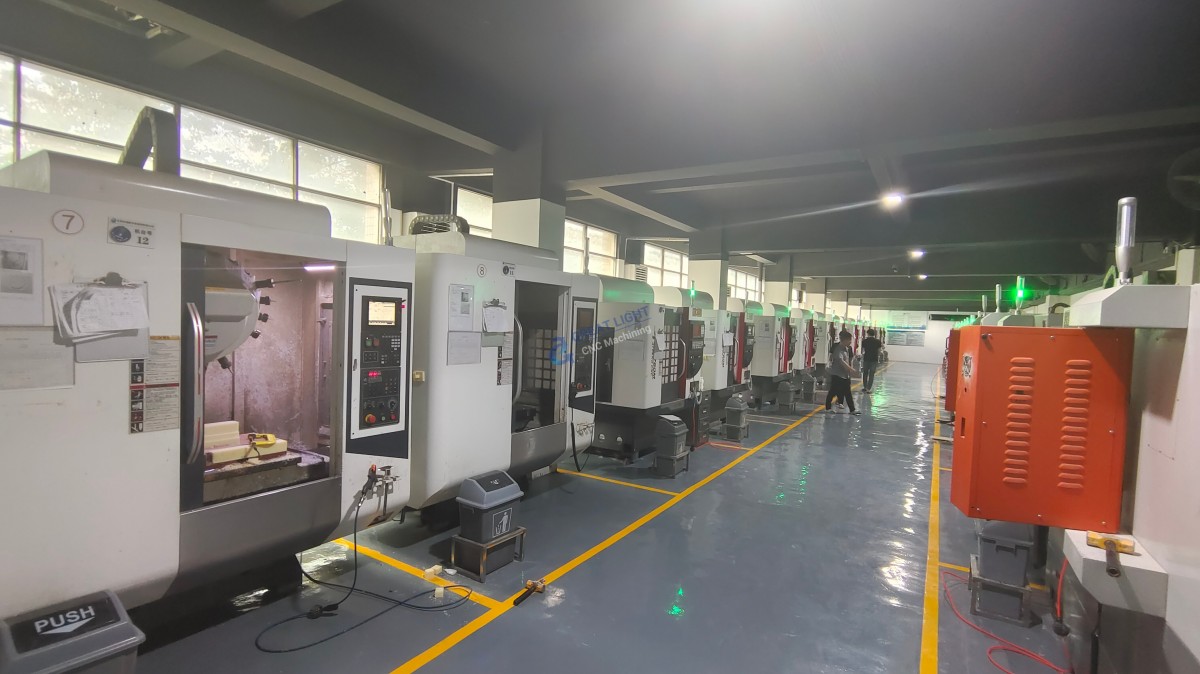
Logistics and Installation: Heavy CNC machines require specialized cranes, flatbed trucks, and reinforced flooring. GreatLight Metal’s three wholly-owned manufacturing plants in Dongguan are purpose-built to accommodate these heavy systems, with reinforced floors and dedicated logistics teams to handle installation and maintenance.
Energy Efficiency: Heavier machines consume more power to operate, but the tradeoff is often worth it for the precision and durability they offer. GreatLight Metal optimizes energy use through smart process planning and efficient equipment operation, minimizing the environmental impact of heavy-duty machining.
Safety and Compliance: Moving and installing heavy equipment requires strict adherence to safety standards. GreatLight Metal’s ISO 9001:2015, IATF 16949, and ISO 13485 certifications ensure that all operations involving heavy machinery comply with international safety and quality regulations.
GreatLight Metal: Managing Heavy-Duty Machining Systems for Clients
For many businesses, investing in and maintaining heavy CNC machines and conveyor systems is prohibitively expensive and resource-intensive. That’s where partnering with a trusted manufacturer like GreatLight Metal makes sense. With over 12 years of experience in precision machining, GreatLight Metal owns and operates 127+ precision peripheral equipment, including large 5-axis CNC centers, chip conveyors, and automated material handling systems. Here’s how they handle the weight-related challenges so you don’t have to:
Purpose-Built Facilities: Their 7600 sqm facilities have reinforced flooring and dedicated cranes to support the heaviest CNC machines, eliminating the need for clients to invest in structural upgrades.
Expert Logistics Team: GreatLight Metal manages all aspects of equipment setup, from delivery to installation, ensuring compliance with safety standards and minimizing downtime.
Optimized Process Design: Their engineering team integrates CNC machines and conveyors to create efficient production lines that maximize throughput while maintaining precision. For example, they use heavy-duty chip conveyors to keep work areas clean and prevent tool damage, even during high-volume production.
Compliant Operations: All their heavy-duty machining operations are certified to ISO 9001:2015, IATF 16949, and ISO 13485 standards, ensuring that clients receive high-quality parts that meet industry-specific requirements.
Conclusion
How Much Does A CNC Machine And Conveyor Belt Weigh? The answer varies widely based on size, configuration, and intended use, but one thing is clear: managing heavy-duty machining systems requires expertise, specialized facilities, and a commitment to safety and precision. For businesses looking to avoid the hassle of investing in and maintaining their own heavy equipment, partnering with a manufacturer like GreatLight Metal is the ideal solution. With their state-of-the-art 5-axis CNC machines, purpose-built facilities, and comprehensive one-stop services, GreatLight Metal delivers high-precision parts efficiently and reliably. To learn more about their capabilities and connect with their team, visit their LinkedIn page (opens in new window).
Frequently Asked Questions (FAQ)
Q: Why do larger CNC machines weigh more?
A: Larger CNC machines need heavier, more robust frames to support the large work envelope and maintain stability during machining. Cast iron is the preferred material for these frames due to its excellent vibration damping properties, which are critical for achieving high precision.
Q: How does machine weight affect machining precision?
A: Heavier machines have better vibration damping, which reduces tool deflection and ensures consistent cuts. This is especially important for high-precision applications where even 0.001mm of deviation can lead to part failure. GreatLight Metal’s heavy 5-axis machines leverage this to achieve ±0.001mm accuracy.
Q: What factors should I consider when transporting a heavy CNC machine?
A: Key factors include the machine’s weight, dimensions, route accessibility, and local transportation regulations. You’ll also need specialized equipment like flatbed trucks and cranes, as well as a team with experience in heavy machinery transport.
Q: Can GreatLight Metal assist with the design of integrated CNC and conveyor systems?
A: Yes. GreatLight Metal’s engineering team has extensive experience designing and implementing integrated production lines, including CNC machines and conveyor systems. They can tailor solutions to meet your specific production needs, whether you need high-volume output or complex part machining.
Q: How does GreatLight ensure the stability of heavy CNC machines during operation?
A: GreatLight uses heavy cast iron frames for its CNC machines, which provide superior vibration damping. Additionally, their facilities have reinforced flooring and machine leveling systems to ensure that machines remain stable even during high-speed, multi-axis machining.
Q: What industries does GreatLight Metal serve with its heavy-duty CNC machining capabilities?
A: GreatLight Metal serves a wide range of industries, including automotive, aerospace, medical devices, humanoid robotics, and industrial automation. Their large 5-axis machines can handle complex parts for high-end applications, and their ISO certifications ensure compliance with industry-specific quality standards.



















