
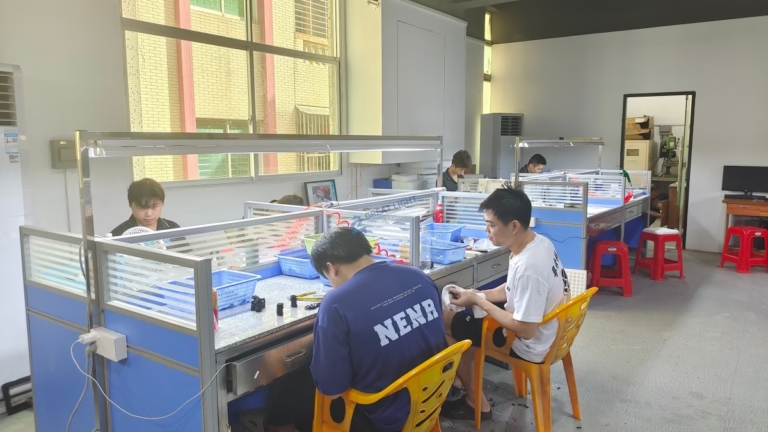
In the world of modern manufacturing, few technologies are as pivotal yet as widely misunderstood as the CNC machine. For clients seeking precision parts machining and customization, understanding what a CNC machine truly represents is the first step toward unlocking its potential for your projects. At its core, a CNC (Computer Numerical Control) machine is not merely a piece of equipment; it is a sophisticated automated manufacturing system that transforms digital designs into physical reality with unparalleled accuracy and repeatability.
This blog post will dissect the essence of CNC manufacturing, exploring its processes, capabilities, and why partnering with an expert like GreatLight Metal Tech Co., LTD. (GreatLight Metal) can transform your approach to precision part production.
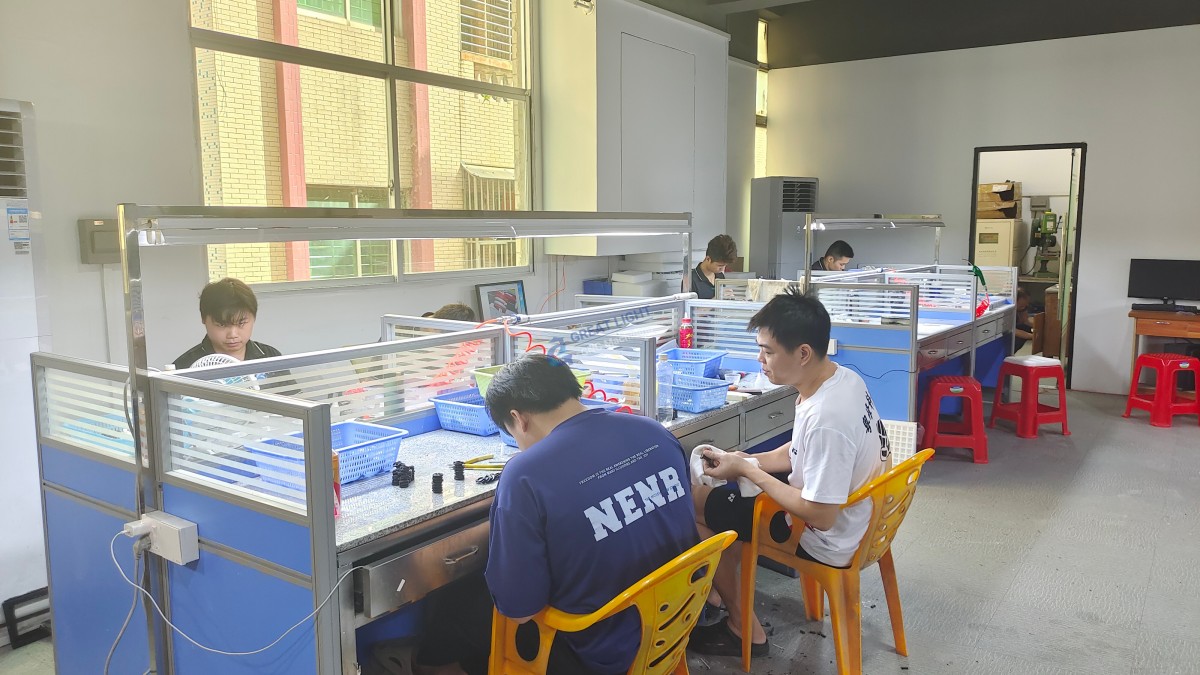
Deconstructing the CNC Machine: Beyond the Tool
A common misconception is that a CNC machine is simply a computerized version of a manual mill or lathe. While that’s the historical origin, today’s reality is far more complex. A CNC machine represents a convergence of multiple disciplines:
A Digital Interpreter: It reads G-code and M-code, the languages that instruct every movement, speed, and action.
A Precision Robot: High-precision ball screws, linear guides, and servo motors execute movements with micron-level accuracy.
A Material Scientist: Its effectiveness is defined by how it interacts with different materials—from aluminum and stainless steel to engineering plastics and exotic alloys—optimizing cutting tools, speeds, and feeds.
An Integrated System: Modern CNC machines often incorporate in-process probing, tool condition monitoring, and automated pallet changers, making them self-contained manufacturing cells.
Therefore, the kind of manufacturing a CNC machine performs is subtractive, digitally-driven, and highly deterministic manufacturing. It removes material from a solid block (or near-net shape) to create a final part, governed entirely by a pre-programmed digital blueprint.
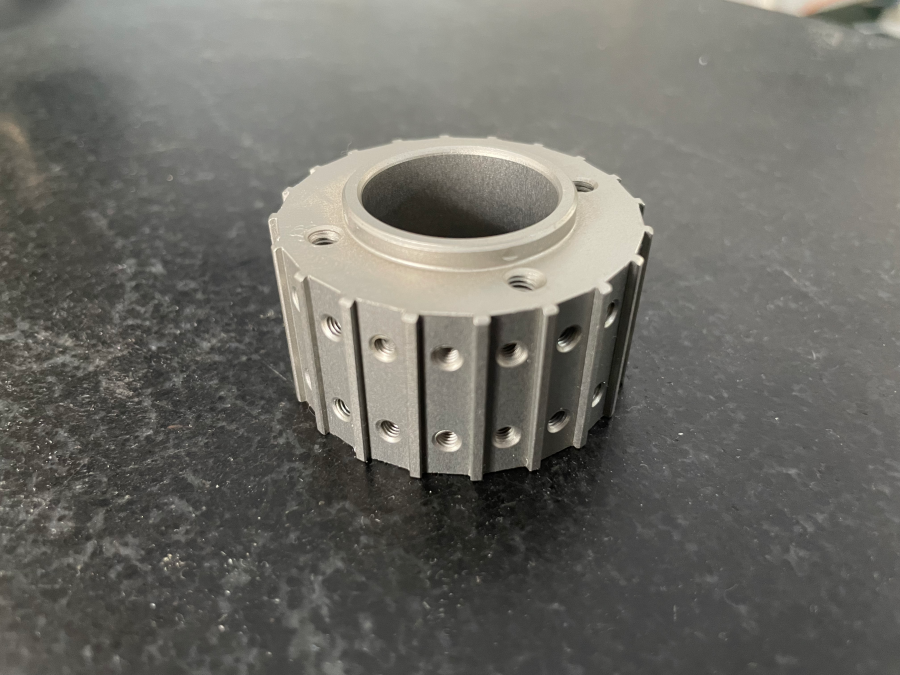
The CNC Manufacturing Workflow: From Idea to Inspection
To appreciate its role, let’s follow the journey of a precision component through a professional CNC workflow, such as the one perfected at facilities like GreatLight Metal:
Digital Design & Engineering Analysis: It all starts with your 3D CAD model. Here, engineering expertise is critical. Skilled engineers analyze the design for manufacturability (DFM), suggesting modifications to reduce cost, improve strength, or enhance machinability without compromising function.
CAM Programming – The Digital Craftsmanship: This is where the magic of planning happens. Using Computer-Aided Manufacturing (CAM) software, programmers create the toolpaths. They select cutting tools, define sequences, and calculate optimal parameters. For complex parts, this stage is as much an art as a science, especially when leveraging 5-axis CNC machining strategies to minimize setups and achieve impossible geometries.
Machine Setup & Fixturing: The physical preparation is equally vital. Selecting the right raw material, designing and installing custom fixtures to hold the workpiece securely, and calibrating all tools for length and diameter offsets are crucial steps that directly impact precision.
Automated Precision Machining: The machine executes the program. High-speed spindles rotate cutting tools at thousands of RPM, while the machine’s axes move in coordinated, simultaneous motions, sculpting the part. In advanced setups, this process runs untended for hours or even days.
In-Process & Post-Process Verification: Quality is not an afterthought. Using coordinate measuring machines (CMMs) and optical scanners, critical dimensions are checked against the original CAD model to ensure they meet the specified tolerances, sometimes as tight as ±0.001mm.
Post-Processing & Finishing: The part often leaves the CNC machine needing additional services. This can include deburring, surface treatments (anodizing, plating, painting), heat treatment, or assembly. A true one-stop partner integrates these services seamlessly.
The Evolution: Why Not All CNC Manufacturing is Equal
The term “CNC machining” encompasses a vast spectrum of capability. The key differentiators for clients seeking high-end customization lie in the machine’s configuration and the manufacturer’s ecosystem:
3-Axis vs. 5-Axis Machining: While 3-axis is excellent for prismatic parts, 5-axis CNC machining represents the apex of capability. It allows the cutting tool to approach the workpiece from virtually any direction in a single setup. This is indispensable for complex contours, undercuts, and aerospace/medical components, reducing errors and improving surface finish.
The Supporting Ecosystem: The machine itself is just one vertex of a triangle. The other two are 1) Metrology & Quality Systems and 2) Engineering Expertise. A shop with a 5-axis machine but without a CMM or seasoned application engineers cannot guarantee the same results as a fully integrated manufacturer.
Systemic Trust through Certification: This is where a manufacturer’s commitment is formally validated. Leading partners operate under frameworks like ISO 9001:2015 for quality management, ISO 13485 for medical devices, and IATF 16949 for automotive components. These are not just certificates on a wall; they are systemic assurances of consistency, traceability, and reliability—a critical trust bridge for global clients.
The GreatLight Metal Distinction: Manufacturing as an Integrated Solution
For over a decade, GreatLight Metal has evolved from a precision workshop in Dongguan’s manufacturing heartland into a full-process intelligent manufacturing solutions provider. Our interpretation of “what a CNC machine is” extends beyond the physical hardware.
For us, our suite of advanced Dema and Jingdiao 5-axis CNC centers, 4-axis mills, Swiss-type lathes, and EDM equipment forms the technical core of a much larger value proposition. We address the classic industry pain points—the “precision gap” between promise and delivery, communication hurdles, and fragmented supply chains—by wrapping our machines with deep collaborative services:
Front-End Engineering Partnership: We engage early in your design phase, offering actionable DFM feedback to optimize for performance and cost.
End-to-End Process Control: From material certification to final inspection and surface finishing (anodizing, powder coating, etc.), we maintain control under one roof, ensuring accountability and streamlined logistics.
Project-Based Collaboration: We assign dedicated engineering and project management teams to complex, long-running projects, becoming a true extension of your R&D department.
Whether it’s a prototype for a humanoid robot’s actuator, a complex aluminum housing for a new energy vehicle, or a batch of surgical instrument components, our CNC manufacturing is delivered as a guaranteed outcome, not just a machining service.
Conclusion
So, what kind of manufacturing is a CNC machine? It is the backbone of modern precision engineering—a digitally controlled, highly adaptable, and precision-capable system for creating high-value components. However, its ultimate output in terms of quality, reliability, and innovation support is fundamentally determined by the expertise, systems, and integrity of the manufacturer operating it.
Choosing the right partner means looking beyond the machine specifications to their integrated capabilities, quality certifications, and proven track record in solving complex manufacturing challenges. In an era where precision, speed, and reliability are non-negotiable, partnering with a certified, full-service expert like GreatLight Metal transforms CNC machining from a commodity service into a strategic advantage for your most ambitious projects. Let’s connect and discuss how to manufacture your next breakthrough.
Frequently Asked Questions (FAQ)
Q1: What’s the main difference between 3-axis, 4-axis, and 5-axis CNC machining?
A: The “axes” refer to the directions in which the cutting tool or workpiece can move. 3-axis (X, Y, Z) is great for simple parts but may require multiple setups. 4-axis adds a rotational axis (usually A), allowing machining around the side of a part. 5-axis CNC machining adds a second rotational axis (e.g., B or C), enabling the tool to approach the workpiece from any angle in a single setup. This is crucial for complex, contoured parts, improves accuracy by reducing setups, and allows for better tool access to difficult geometries.
Q2: My drawings call for a tolerance of ±0.025mm. Can any CNC shop achieve this?
A: While many shops claim such capabilities, consistently holding tight tolerances at volume requires more than just a good machine. It demands a stable thermal environment, rigorous tool management, in-process measurement, and a certified quality management system (like ISO 9001). Always ask for evidence of process capability (Cp/Cpk studies) for similar work, not just a machine’s theoretical precision.
Q3: Why do I need a manufacturer with certifications like IATF 16949 or ISO 13485 for my project?
A: These are industry-specific quality management standards. IATF 16949 is mandatory for supplying to the automotive industry, focusing on preventive quality and continuous improvement. ISO 13485 is for medical devices, emphasizing risk management and traceability. Using a certified manufacturer ensures they have the systemic processes to meet these sectors’ stringent regulatory and safety requirements, de-risking your supply chain.
Q4: What are the benefits of using a “one-stop” manufacturer like GreatLight Metal versus separate vendors for machining and finishing?
A: Integrated one-stop service offers significant advantages: Single-point accountability for quality and delivery, reduced lead times by eliminating inter-vendor logistics, better cost control through bundled services, and improved communication. Most importantly, the finishing team understands the machining process, allowing for better preparation and handling of critical surfaces.
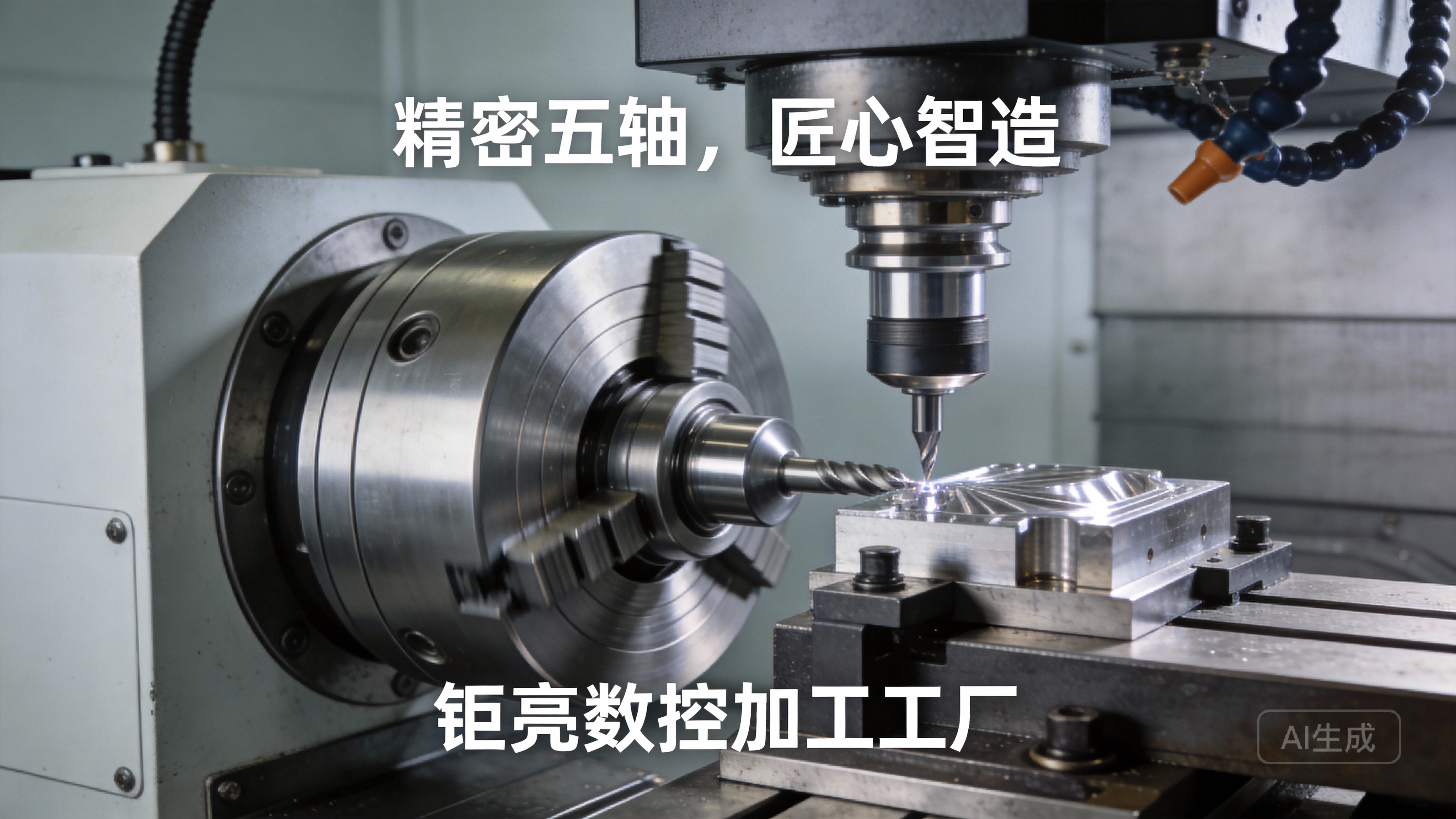
Q5: How do I start a project and ensure my design is optimized for CNC machining?
A: The best first step is to consult with the manufacturer’s engineering team early. Share your 3D CAD files and performance requirements. A professional partner like GreatLight Metal will provide a Design for Manufacturability (DFM) analysis, offering suggestions on tolerance optimization, feature design, material selection, and cost reduction before the first piece is cut, ensuring a smoother and more economical production journey. To see how industry leaders collaborate, follow our insights on LinkedIn.



















