How Many Control In CNC Machine
In the world of precision parts machining and customization, CNC (Computer Numerical Control) machines play a pivotal role. Understanding the number of controls in a CNC machine is crucial for clients looking to achieve high – precision manufacturing. Let’s delve into this topic and also explore how GreatLight CNC Machining Factory leverages these controls to offer top – notch services.
Types of Controls in CNC Machines
CNC machines can have different levels of control, which mainly depend on the number of axes they operate on.
1. Three – Axis Control
Explanation: A three – axis CNC machine has controls for the X, Y, and Z axes. The X – axis typically controls left – to – right movement, the Y – axis controls forward – and – backward movement, and the Z – axis controls up – and – down movement.
Applications: Three – axis machines are widely used for basic machining operations such as milling flat surfaces, drilling holes, and simple contouring. They are suitable for manufacturing parts with relatively simple geometries, like small brackets, plates, and basic mechanical components.
GreatLight’s Use: GreatLight CNC Machining Factory utilizes three – axis control in its CNC machining centers for cost – effective production of parts with straightforward designs. This allows them to offer quick turnaround times for clients who need simple yet precise parts.
2. Four – Axis Control
Explanation: In addition to the X, Y, and Z axes, a four – axis CNC machine has an additional rotational axis, usually the A – axis. The A – axis rotates around the X – axis. This added rotation enables the machining of more complex curved surfaces and parts that require multi – sided machining without re – positioning the workpiece multiple times.
Applications: Four – axis machines are commonly used in the production of parts for the automotive and aerospace industries, such as turbine blades and some engine components. They are also useful for creating parts with undercuts and complex profiles.
GreatLight’s Use: GreatLight’s four – axis CNC machines enhance their manufacturing capabilities, allowing them to produce parts with more intricate designs. This gives clients in industries like automotive and aerospace access to high – quality, precisely machined components.
3. Five – Axis Control
Explanation: A five – axis CNC machine has two additional rotational axes compared to a three – axis machine. Commonly, these are the A – axis (rotation around the X – axis) and the B – axis (rotation around the Y – axis) or C – axis (rotation around the Z – axis). With five – axis control, the cutting tool can approach the workpiece from almost any angle, providing unparalleled flexibility in machining complex geometries.
Applications: Five – axis machines are essential for manufacturing highly complex parts, such as impellers, molds for high – end products, and components for humanoid robots. They can reduce machining time, improve surface finish, and increase the accuracy of the final product.
GreatLight’s Advantage: GreatLight CNC Machining Factory is a professional five – axis CNC machining manufacturer. Their advanced five – axis CNC machining equipment and production technology enable them to solve complex metal parts manufacturing challenges. Whether it’s a part with complex curves or a component that requires multiple angles of machining, their five – axis machines can handle it with ease.
Other Controls and Features
Apart from axis controls, modern CNC machines also have controls for spindle speed, feed rate, and tool selection.
Spindle Speed Control: This allows the operator to adjust the rotational speed of the cutting tool. Different materials and machining operations require different spindle speeds. For example, when machining hard metals like titanium, a lower spindle speed may be required to prevent excessive tool wear, while softer materials like aluminum can be machined at higher speeds.
Feed Rate Control: The feed rate determines how fast the cutting tool moves along the workpiece. Controlling the feed rate is crucial for achieving the desired surface finish and dimensional accuracy. A slower feed rate may be used for finishing operations to ensure a smooth surface, while a faster feed rate can be used for roughing operations to remove material quickly.
Tool Selection Control: CNC machines can be equipped with automatic tool changers. The control system can select the appropriate tool for different machining operations, such as drilling, milling, or turning. This automation reduces setup time and increases production efficiency.
GreatLight CNC Machining Factory’s Overall Capabilities
GreatLight CNC Machining Factory, established in 2011 and located in Chang’an District, Dongguan City, China, has a comprehensive range of CNC machining capabilities. With a factory area of approximately 7600 square meters and 150 employees, they are well – equipped with 127 pieces of precision peripheral equipment, including three – axis, four – axis, and five – axis CNC machining centers.
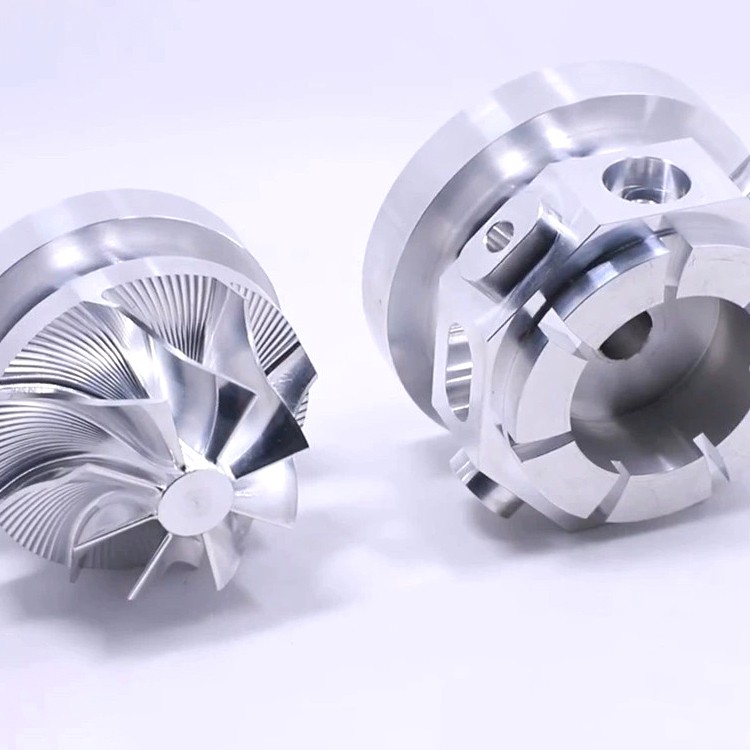
They focus on the design, processing, customized production, and application of precision prototype models. Their services include precision CNC machining (three – axis, four – axis, and five – axis machining), CNC milling, die casting mold/metal die casting processing, vacuum casting customization, sheet metal processing customization, and various 3D printing services.
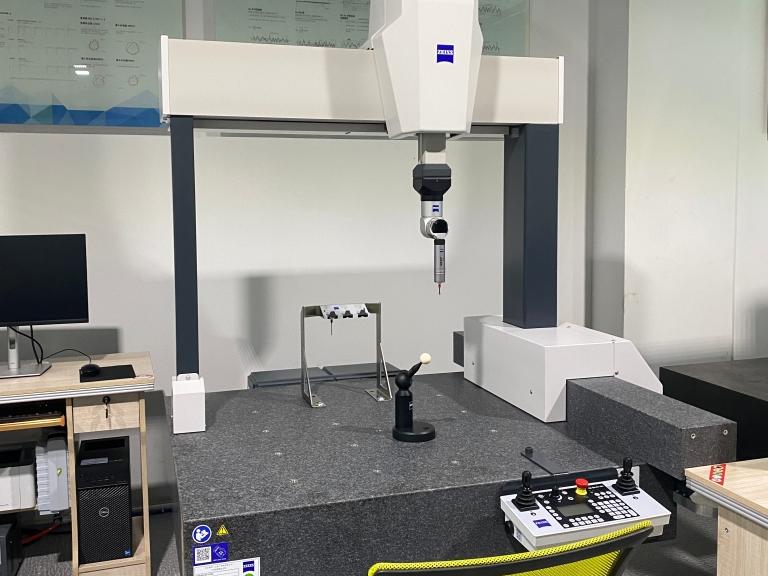
The factory adheres to strict ISO quality standards, holding ISO 9001:2015 certification. This ensures that their production lines use advanced technology to guarantee precision and accuracy in manufacturing. They also have in – house precision measurement and testing equipment to verify that all materials and parts meet the clients’ specifications.
Conclusion
The number of controls in a CNC machine, whether it’s three – axis, four – axis, or five – axis, significantly impacts the complexity and precision of the parts that can be manufactured. GreatLight CNC Machining Factory’s diverse range of CNC machines with different control systems allows them to meet the various needs of clients in the precision parts machining and customization field. Whether you need simple parts or highly complex components for industries like automotive, aerospace, or humanoid robotics, GreatLight can provide high – quality, customized solutions using their advanced CNC machining technology.
Frequently Asked Questions (FAQ)
Q1: What is the difference between three – axis, four – axis, and five – axis CNC machines in terms of cost?
A: Generally, three – axis machines are the most cost – effective as they have the simplest control system. Four – axis machines are more expensive due to the additional rotational axis, and five – axis machines are the most costly because of their high – end technology and greater flexibility. However, GreatLight CNC Machining Factory offers competitive pricing for all their machining services, regardless of the axis configuration.
Q2: Can GreatLight CNC Machining Factory handle large – scale production with these different – axis machines?
A: Yes, they can. With their three wholly – owned manufacturing plants and a large number of precision peripheral equipment, GreatLight can handle both small – batch and large – scale production. Their advanced production management system ensures efficient production processes for high – volume orders.
Q3: How accurate are the parts produced by GreatLight’s CNC machines?
A: GreatLight is capable of processing parts to ±0.001mm / 0.001 In and above. Their strict adherence to ISO quality standards and the use of in – house precision measurement and testing equipment guarantee high – precision manufacturing.
Q4: What materials can GreatLight’s CNC machines process?
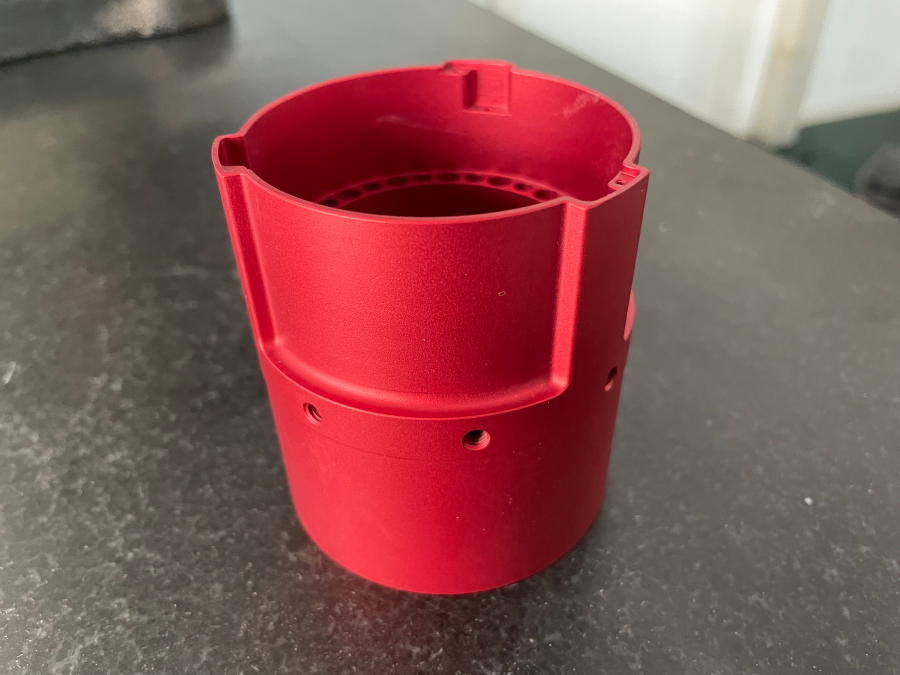
A: Most materials can be quickly customized and processed at GreatLight. This includes metals such as aluminum, steel, titanium, and stainless steel, as well as various plastics and composite materials. They also offer 3D printing services for materials like stainless steel, aluminum alloy, titanium alloy, and mold steel.