
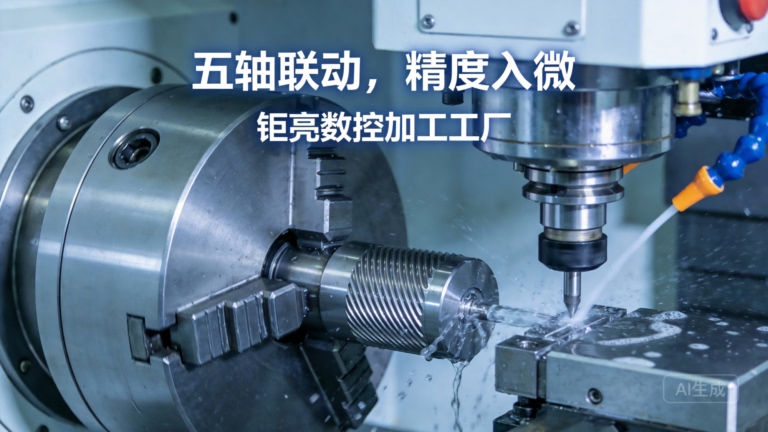
For clients exploring precision parts machining and customization, the question “How hard is it to program a CNC machine?” is both fundamental and critical. The answer isn’t simple; it spans a spectrum from straightforward to highly complex, depending entirely on the part geometry, required precision, machine type, and the chosen programming method. Understanding this complexity is key to selecting the right manufacturing partner who can translate your design intent into flawless physical parts.
The Spectrum of CNC Programming Complexity
At its core, CNC programming is the process of creating a set of instructions—code—that directs the machine tool to move in specific paths, at defined speeds, to cut away material and create a part. The difficulty lies in the translation from a 3D model (CAD) to an efficient, collision-free, and precise toolpath (CAM), and finally to machine-readable code (G-code).
H2: Breaking Down the Factors That Determine Difficulty
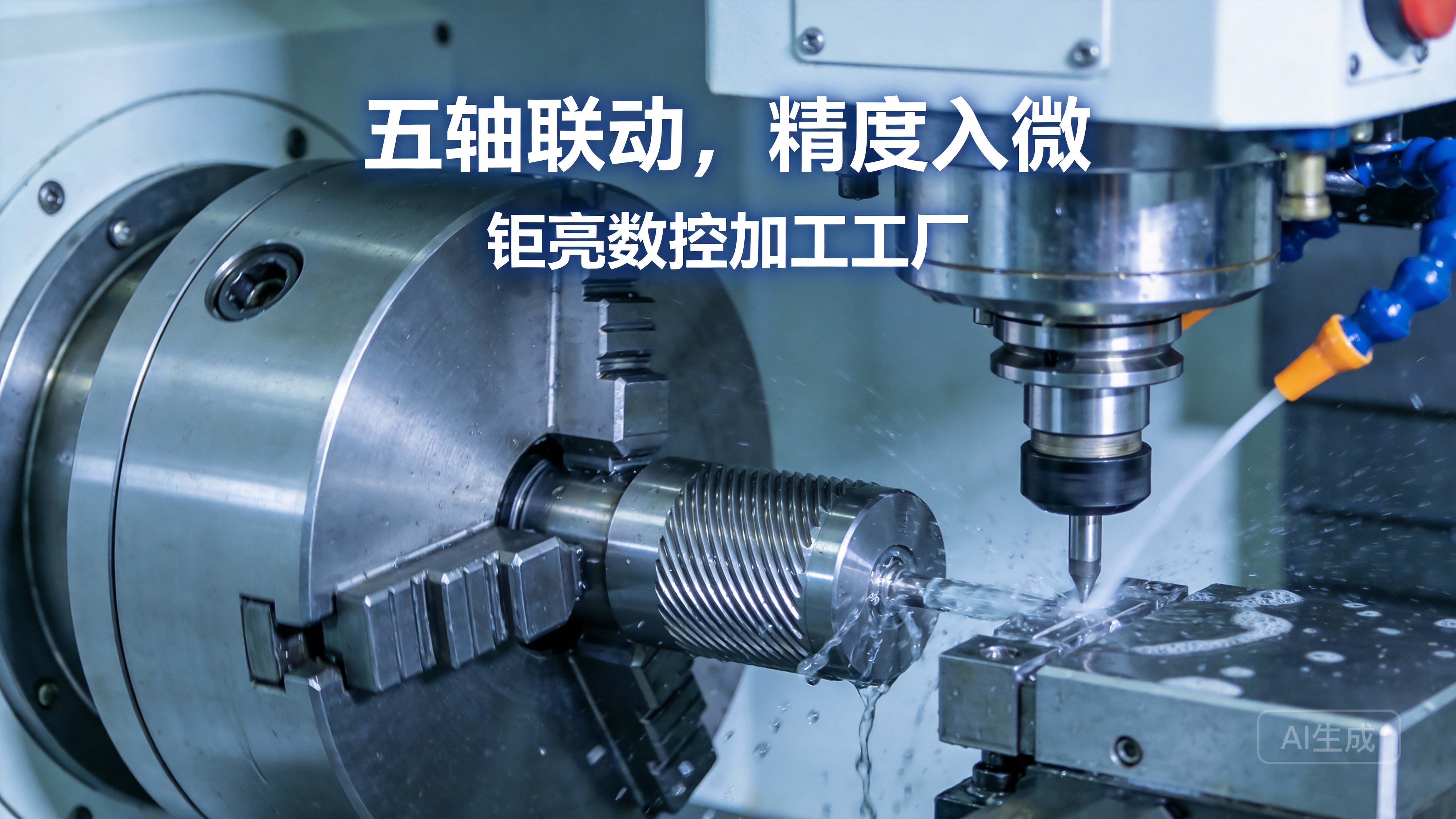
Several intertwined factors dictate how challenging it will be to program a job successfully.
H3: 1. Part Geometry: From Simple to Mind-Bending
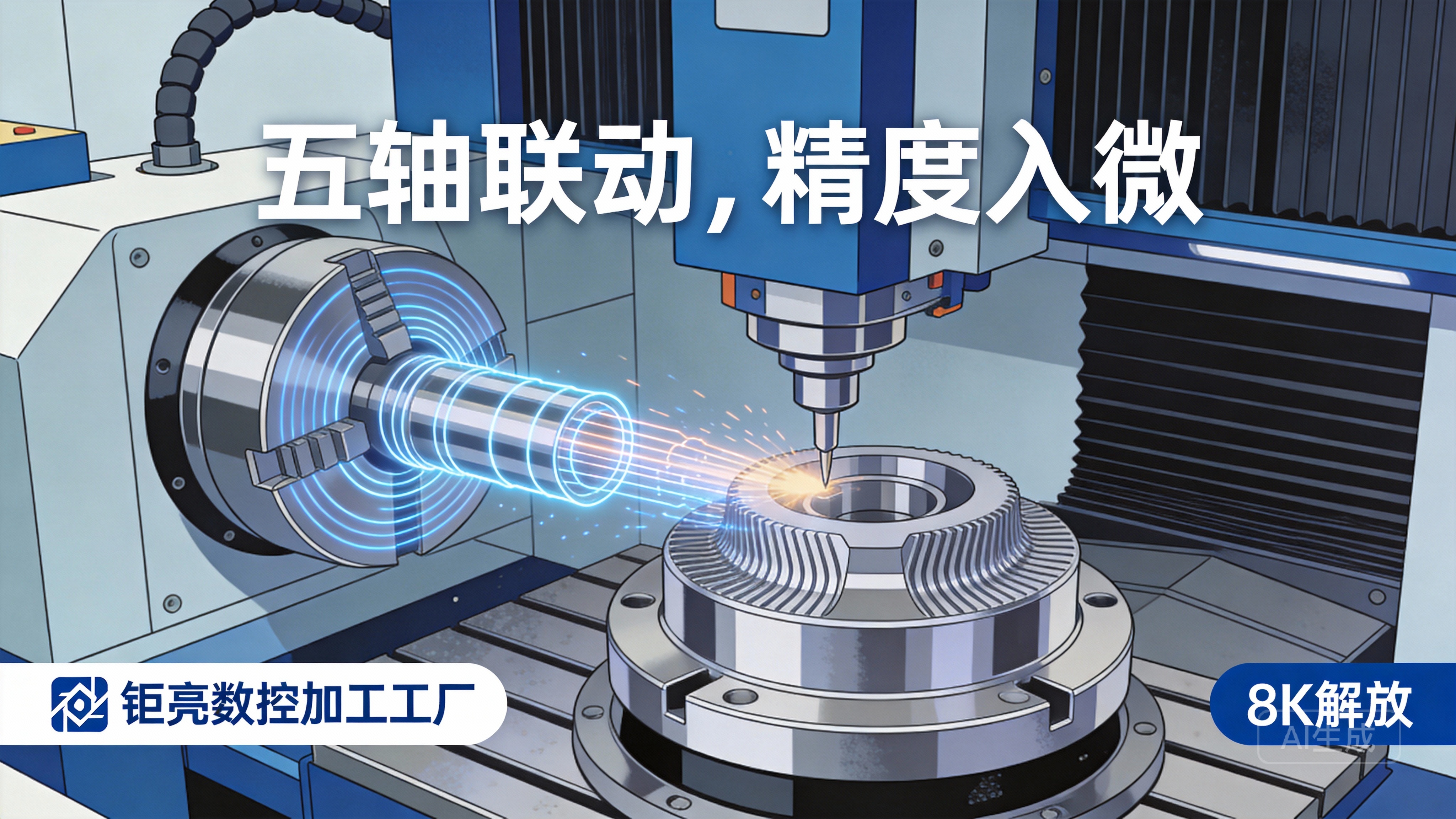
Simple 2.5D Parts: Features like pockets, holes, and profiles on a flat plane are relatively easy. Programming is often about selecting the right tool and defining its path depth and contour.
Complex 3D Contours: Sculpted surfaces, organic shapes (like impellers or turbine blades), and complex molds require 3D toolpaths. This demands advanced CAM software and a programmer who can strategize approach angles, stepovers, and scallop heights to achieve the required surface finish.
Intricate Multi-Sided Parts: Parts requiring machining on five or more faces add layers of complexity. The programmer must plan multiple setups or, more efficiently, utilize a 5-axis CNC machining center, which introduces the challenge of simultaneous multi-axis interpolation and avoiding tool collisions with the part or fixture.
H3: 2. The Machine Tool: 3-Axis vs. 5-Axis
3-Axis CNC Machining: Programming is more linear. The tool moves in X, Y, and Z independently. The mental model is simpler, making it more accessible to learn. The primary challenges are tool selection, fixturing, and accessing undercuts.
5-Axis CNC Machining: This is where programming difficulty increases significantly. The programmer must manage two additional rotational axes (A, B, or C). The advantages are immense—complex parts in a single setup, better tool access, improved surface finish—but the programmer must have deep knowledge of kinematics, tool center point management, and sophisticated collision avoidance. Not all shops have this expertise in-house.
H3: 3. The Programming Methodology: Manual vs. CAM
Manual G-Code Programming: Writing code line-by-line is a specialized skill, akin to learning a low-level programming language. It’s efficient for simple, repetitive tasks but becomes prohibitively time-consuming and error-prone for complex geometry. Few modern shops rely solely on this for complex work.
Computer-Aided Manufacturing (CAM) Programming: This is the industry standard for complex parts. The programmer uses software (like Mastercam, Siemens NX, or Hypermill) to visually define toolpaths on the 3D model. While CAM software is powerful, it is not automatic. The programmer’s skill in selecting strategies, defining parameters (feeds, speeds, stepdown), and simulating the entire process is what separates a good part from a scrapped one. Mastering a CAM system is a significant undertaking.
H3: 4. Material and Tolerance Considerations
Programming for machining aluminum differs vastly from programming for Inconel or titanium. The programmer must account for material hardness, heat generation, and tool wear. Similarly, holding a tolerance of ±0.001mm is an order of magnitude more difficult than ±0.1mm. It influences every decision: machine rigidity, toolpath strategy, cutting parameters, and even thermal compensation in the machine.
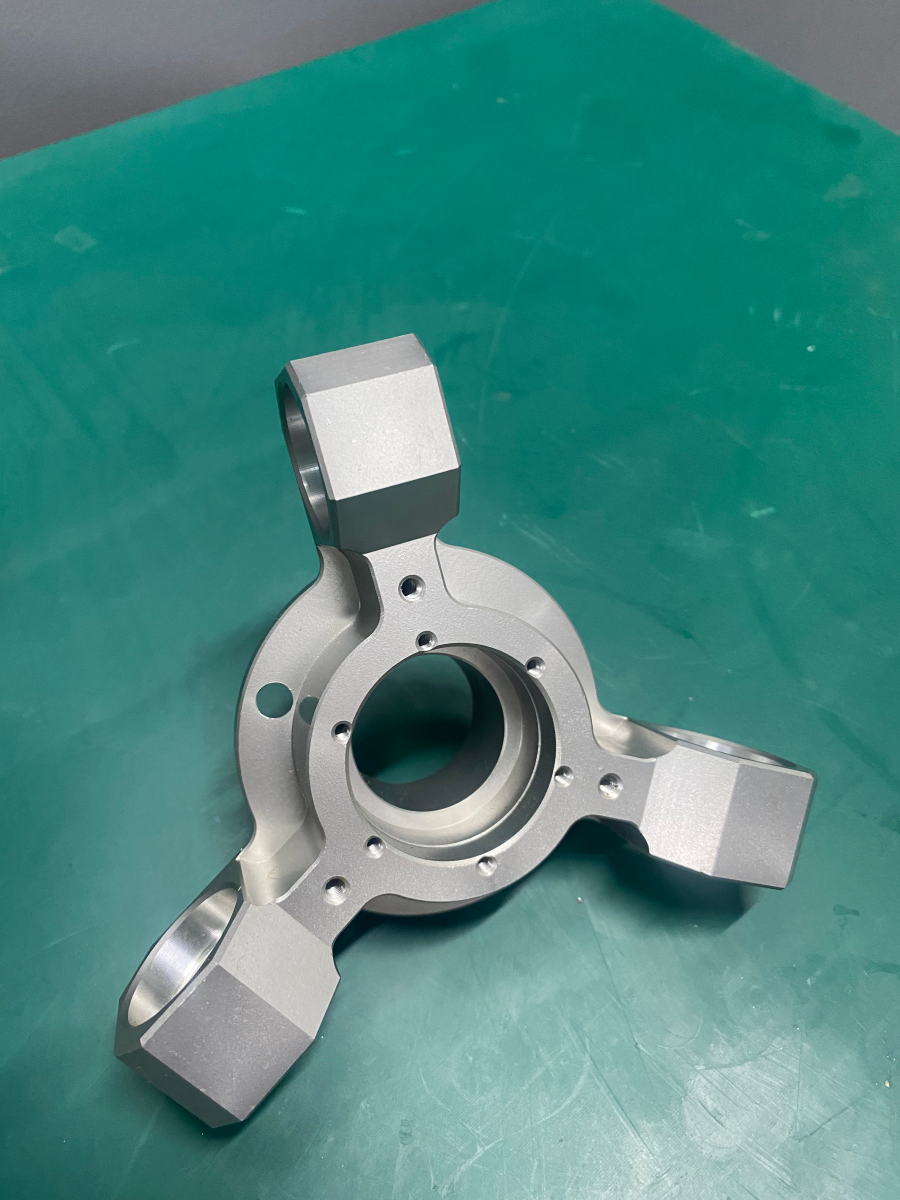
The Hidden Challenge: From Code to Perfect Part
Writing the initial program is only the first step. The real test comes in proving out the program on the actual machine.
Simulation: Advanced CAM software includes simulation to check for collisions and verify material removal. This is a non-negotiable step for complex 5-axis work.
Setup & Fixturing: The programmer must design or select workholding that secures the part without interfering with the toolpath. A brilliant program is useless if the part moves during cutting.
Proving Run: Often, the first run is done “in air” (without cutting) or with reduced feed rates to validate movements. For ultra-high-value materials or single complex components, this step is nerve-wracking and requires immense confidence in the program and setup.
Optimization: The first successful part is rarely the most efficient. An experienced programmer will refine the program to reduce cycle time, improve surface finish, and extend tool life—directly impacting your part cost and lead time.
Why This Matters for Your Sourcing Decision
As a client, you don’t need to learn CNC programming, but you should understand its implications. The programming capability of your manufacturing partner is a direct proxy for their ability to handle complexity, ensure quality, and control costs.
This is where a partner like GreatLight Metal Tech Co., Ltd. (GreatLight Metal) demonstrates its value. Their decade-long journey in precision manufacturing has built a core competency not just in operating machines, but in mastering the art and science of programming them. With a technical cluster centered on advanced 5-axis CNC machining centers and complemented by a full suite of 3 and 4-axis equipment, their engineering team tackles programming challenges daily. They navigate the “precision black hole” by combining authoritative process control (underpinned by ISO 9001:2015, IATF 16949 for automotive, and other standards) with deep CAM expertise to ensure the promise on the drawing becomes reality on the shop floor.
For clients, this translates to a seamless experience. You provide the CAD model and specifications; their team handles the complex translation into an optimized, reliable manufacturing process. Whether it’s a complex aluminum housing for a new energy vehicle, a precision medical component, or a high-strength aerospace bracket, their programming proficiency is a critical link in the chain that delivers functional, high-quality parts.
Conclusion
So, how hard is it to program a CNC machine? For a simple bracket, it can be quite straightforward. For a monolithic, thin-walled aerospace component with compound curvatures requiring 5-axis simultaneous machining, it is an engineering challenge requiring high-level expertise, advanced software, and proven experience. The difficulty lies not in generating any code, but in generating the right code—the one that produces a perfect part, efficiently and reliably, every time. Therefore, when selecting a partner for precision parts machining and customization, evaluating their programming and process engineering capability is as important as evaluating their machine park. Choosing a partner with demonstrated expertise in this invisible but crucial phase is the key to transforming your innovative designs into manufacturable, high-performance realities.
Frequently Asked Questions (FAQ)
Q1: Can AI automatically program CNC machines from my CAD file?
A: While AI and automation are making inroads (feature recognition, automated tool selection), fully autonomous programming for complex parts is not yet industry-standard. Human expertise is still essential for strategy, optimization, and problem-solving, especially for high-precision or complex 5-axis work. The programmer’s role is evolving from manual coding to strategic planning and oversight of intelligent CAM systems.
Q2: What’s the main difference between 3-axis and 5-axis programming difficulty?
A: The core difference is spatial reasoning and collision avoidance. In 3-axis, the tool moves linearly; the programmer mainly worries about the tool tip. In 5-axis, the tool orientation constantly changes, so the programmer must mentally track the entire tool holder and machine components in 3D space to prevent crashes, requiring advanced simulation and a deeper understanding of machine kinematics.
Q3: Does more expensive CAM software make programming easier?
A: More advanced software provides more powerful tools, better simulation, and more efficient strategies, which can make complex tasks more manageable for a skilled programmer. However, the software is only a tool. The fundamental knowledge of machining principles, materials, and tooling still rests with the programmer. A master with mid-range software can often outperform a novice with top-tier software.
Q4: As a client, what can I do to make the programming and machining process smoother?
A: Provide clean, fully defined CAD models (preferably in STEP or IGES format) with critical tolerances and finishes clearly called out. Early engagement with your manufacturing partner’s engineering team is invaluable. A design-for-manufacturability (DFM) review before finalizing the design can identify features that are difficult or expensive to machine, allowing for simplifications that reduce programming complexity and cost.
Q5: How do certifications like ISO 9001 relate to CNC programming?
A: These certifications formalize the process. They ensure that programming follows a controlled, documented procedure—from model validation and toolpath strategy selection to simulation and proofing. This systematic approach minimizes human error and variability, ensuring that the programming output is consistent, reliable, and traceable, which is crucial for parts in regulated industries like automotive or medical devices. For more insights into industry standards and partnerships, you can connect with thought leaders on platforms like LinkedIn.



















