
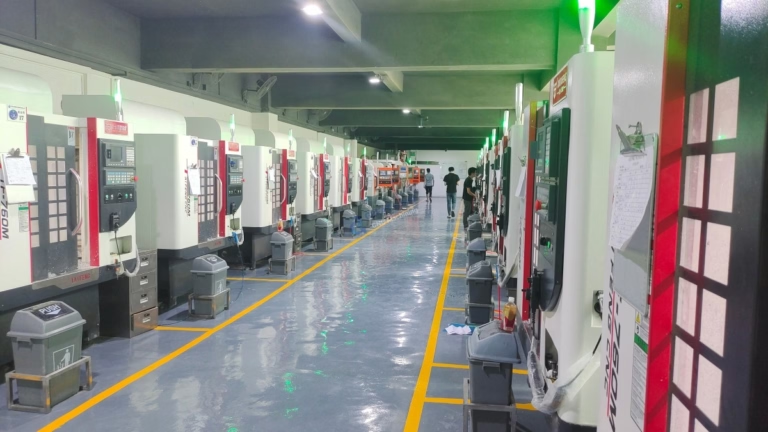
In the intricate world of precision manufacturing, where tolerances are measured in microns and repeatability is king, the question of how a CNC machine homes out strikes at the very heart of machine reliability and part accuracy. For engineers and procurement specialists sourcing custom precision parts, understanding this fundamental process is key to evaluating a manufacturer’s capability to deliver consistent quality. As a senior manufacturing engineer, I’ll demystify this critical startup ritual and explain why it’s a non-negotiable pillar of the high-precision work we perform daily at facilities like ours.
H2: What is Homing, and Why is it the CNC’s “True North”?
Before a CNC machining center can sculpt a block of titanium into a complex aerospace component or mill intricate features on a medical implant, it must answer a deceptively simple question: “Where am I?” Unlike humans, a machine has no innate sense of location. Homing is the systematic procedure through which a CNC machine establishes a precise, fixed, and repeatable reference point for each of its linear and rotary axes.
Think of it as the machine’s calibration ritual. After power-up, the control system knows it has motors and drives, but it has no correlation between its internal coordinate system and the physical position of the machine table or spindle. Without homing, any movement command is given in a void—the machine could attempt to drive a tool directly into a vise or exceed its physical travel limits, causing a catastrophic crash.
For a manufacturer like GreatLight Metal, where we routinely push equipment to its precision limits on 5-axis projects, a rigorous and correctly executed homing sequence is the absolute foundation of our process integrity. It ensures that every part, from the first to the thousandth in a batch, is machined from the same spatial datum, guaranteeing dimensional consistency.
H2: The Step-by-Step Homing Procedure: A Technical Deep Dive
The homing process is automated but follows a precise logic. While specifics can vary between controller brands (e.g., Siemens, Fanuc, Heidenhain) and machine configurations, the core principles remain consistent.
H3: 1. Initiation: The Command to Find Home
The process begins automatically upon machine power-up or is manually initiated by the operator via the “Home All Axes” or “Reference Return” button on the control panel. The machine will typically home axes in a predefined sequence, often starting with the Z-axis (spindle) to retract the tool from the work area for safety, followed by X and Y.
H3: 2. The Search for the Marker: Engaging the Home Switch
Each axis is equipped with a precision limit switch or proximity sensor, known as the “home switch” or “reference mark switch.” Upon initiation, the axis moves slowly and deliberately in a predetermined direction (usually the positive direction) until it physically contacts or triggers this switch. This initial contact provides the first coarse positional cue.
H3: 3. The Fine Alignment: Seeking the Encoder Index Pulse
The home switch alone isn’t precise enough for high-tolerance work. The real magic lies in the next step. Once the switch is triggered, the axis will slow down, back off slightly from the switch, and then move forward again at a very slow creep. During this second, precise movement, the machine control is listening for a specific signal from the axis motor’s rotary encoder—the “index pulse” or “zero pulse.”
This pulse occurs once per full revolution of the motor. The moment this electronic pulse is detected after the home switch has been triggered, the machine control records that exact position as the machine home position (MHP) or machine coordinate zero. This dual-system approach (physical switch + electronic pulse) provides both robustness and extreme precision, often repeatable within a few microns.
H3: 4. Establishing the Coordinate System
With the MHP stored, the machine now has its fundamental reference. All other coordinate systems used in programming—like the Machine Coordinate System (MCS) and the workpiece-specific Work Coordinate System (WCS or G54-G59)—are defined relative to this unchanging home point. When a programmer sets a workpiece zero, they are essentially telling the machine, “The home position is here, and my part’s corner is offset from it by these exact distances.”
H2: Critical Components Enabling Precise Homing
The reliability of this entire process hinges on the quality and maintenance of key hardware components:
High-Resolution Rotary Encoders: These act as the machine’s “eyes,” providing continuous feedback on motor shaft position. The integrity of the index pulse is paramount.
Robust Limit/Home Switches: These must be durable, consistently actuated, and free from contamination to provide a reliable trigger signal.
Rigid Mechanical Structure: The ball screws, guideways, and frame must be thermally stable and free from backlash. Any mechanical slop or thermal growth would cause the home position to “drift,” defeating the purpose.
Stable Control System: The CNC controller must process the switch and encoder signals with flawless timing and logic.
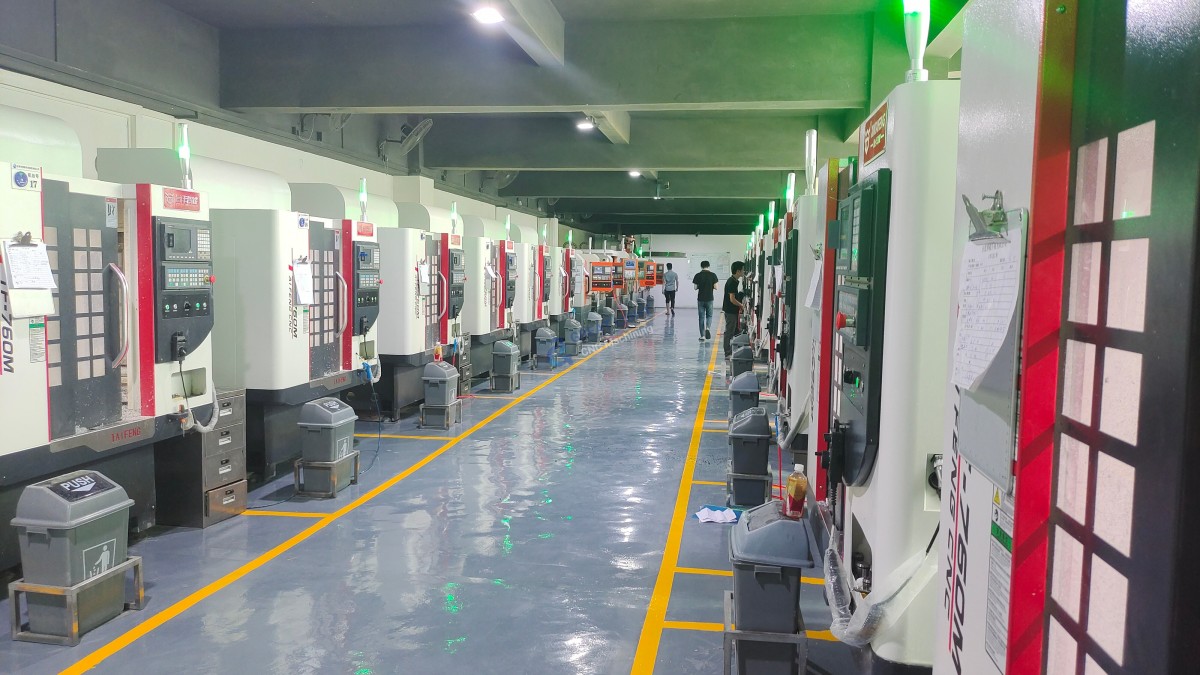
At GreatLight Metal, our preventive maintenance programs are meticulously scheduled around these critical components. Regular calibration checks of homing repeatability are part of our ISO 9001:2015 quality regimen, ensuring our Dema and Jingdiao 5-axis machining centers provide a rock-solid foundation for precision work.
H2: The Direct Impact on Your Precision Parts
Why should a client care about this behind-the-scenes process? The implications are direct and significant:
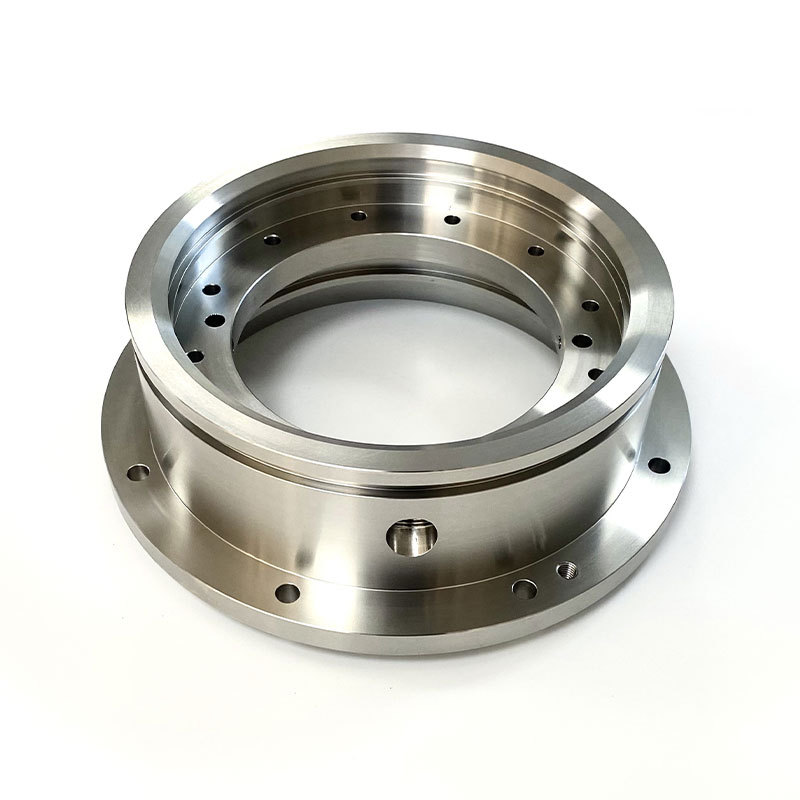
Batch-to-Batch Consistency: A perfectly homed machine ensures that a production run started today will be geometrically identical to one run next month. This is critical for interchangeable parts in assemblies.
Multi-Setup and Pallet System Accuracy: In advanced manufacturing with pallet changers or parts requiring multiple setups, the machine must return to an exact home to accurately realign fixtures and tools. Our 4th and 5th axis rotary tables also undergo homing to ensure angular positioning is perfect.
Crash Prevention and Tool Protection: A known home position defines the machine’s safe working envelope, preventing axes from over-traveling into hard stops during program execution.
Foundation for Advanced Compensation: Modern machines use home position data as a baseline for applying sophisticated error compensation maps (like pitch error compensation and thermal growth compensation), further enhancing accuracy beyond the machine’s native capability.
Conclusion: Homing—The Unseen Guarantor of Precision
How a CNC machine homes out is far more than a routine startup chore; it is the essential first step in building trust between a digital design and a physical part. It transforms a powerful but “blind” collection of axes and spindles into a coordinated, spatially aware precision instrument. For partners seeking not just a supplier but a technical collaborator, understanding this level of process control is crucial.
When you choose a manufacturer, you are implicitly trusting their commitment to these fundamental disciplines. At facilities like GreatLight Metal, this commitment is embedded in our culture—from the quality of our components and the rigor of our maintenance to the training of our technicians. It is this unwavering attention to foundational processes like homing that allows us to confidently tackle your most challenging precision machining projects, ensuring every feature is located exactly where your design intended.
Frequently Asked Questions (FAQ)
Q1: Does a CNC machine need to be homed every time it’s powered on?
A: Yes, absolutely. The machine’s positional memory is volatile and is lost when power is removed. Homing must be performed after every power cycle to re-establish the machine coordinate zero. Some machines with absolute encoders may retain position, but a homing cycle is still often recommended to synchronize the system and ensure no errors have accumulated.
Q2: What happens if the homing sequence is interrupted or fails?
A: The machine will generate an alarm and halt all operations. The operator must diagnose the cause, which could range from a blocked/ faulty home switch, a dirty encoder, a mechanical obstruction, or a drive fault. The machine cannot proceed with any machining operations until a successful home is completed.
Q3: Can the “home position” be changed or shifted by an operator?
A: The Machine Home Position (MHP) is a fixed mechanical/electronic datum and should never be changed. However, operators constantly define and shift the Work Zero (G54, etc.) for each new workpiece. This workpiece coordinate is an offset from the immutable machine home. Tampering with the MHP settings would invalidate all machine calibrations and is a serious operational error.
Q4: How does homing differ on a 5-axis CNC machine compared to a 3-axis?
A: The principle is identical, but there are more axes to home. In addition to the linear X, Y, and Z axes, the rotary axes (typically A and/or C) must also perform a homing cycle. These rotary axes have their own home switches and encoder index pulses to establish a precise zero-degree angular reference. This is especially critical for complex multi-sided machining where angular positioning is as important as linear movement.
Q5: Does the homing process affect the overall positioning accuracy of the machine?
A: It establishes the repeatability baseline. The ultimate positioning accuracy is determined by the quality of the ball screws, guideways, and the control system’s compensation maps. However, a precise and repeatable home position is the prerequisite for all other accuracy enhancements to function correctly. A poor homing routine will introduce a constant, systemic error into every part produced.
For more insights into the high-precision capabilities enabled by such rigorous machine protocols, explore the expertise of industry leaders like GreatLight Metal Tech Co., LTD. and connect with the broader engineering community on professional networks such as LinkedIn.



















