
Decoding the Need for Speed: The Engineering Marvel Behind CNC Machine Velocity
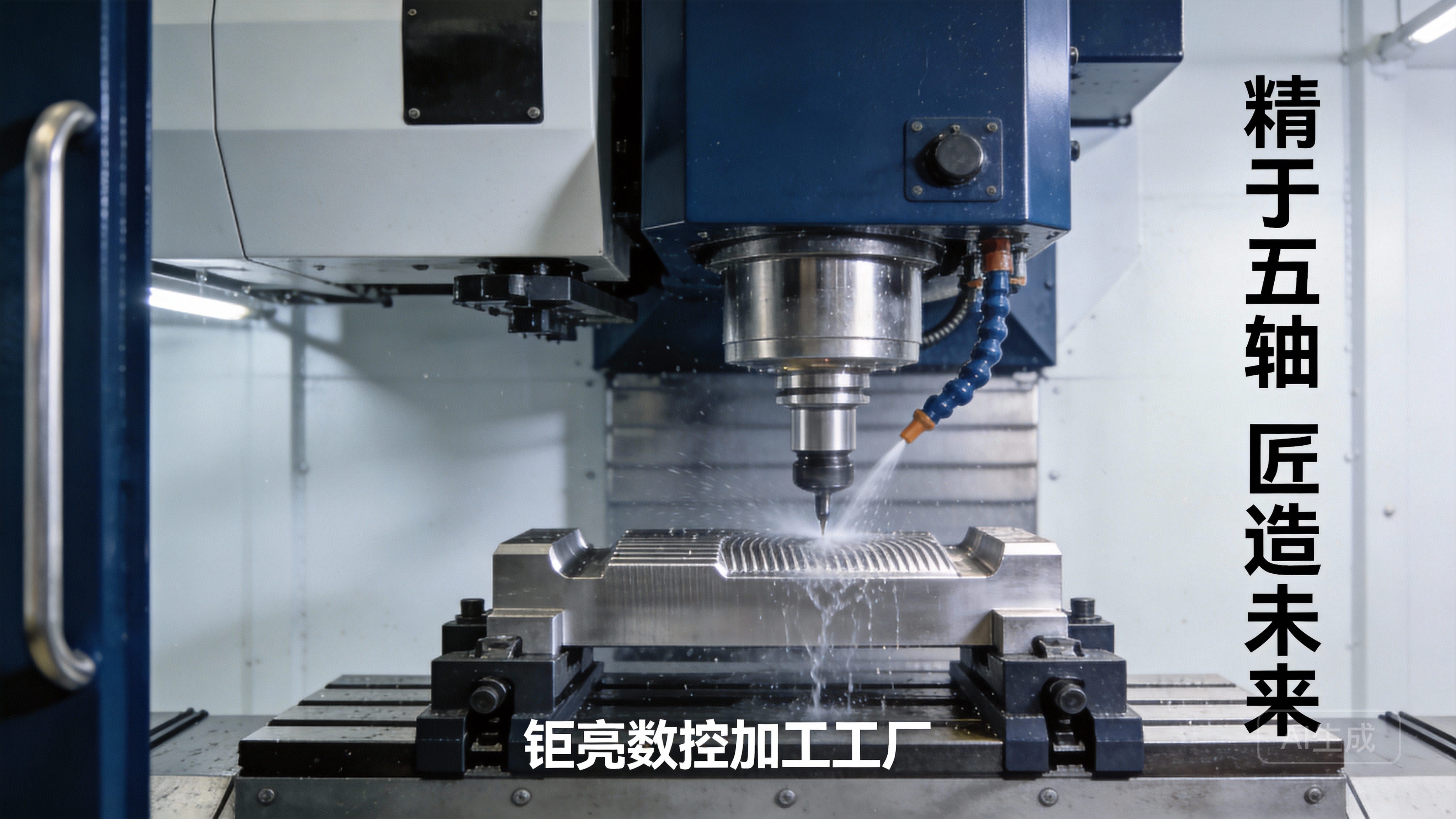
In the world of high-precision manufacturing, the breathtaking speed of modern CNC machines is more than just an impressive spectacle—it’s the cornerstone of productivity, precision, and cost-effectiveness. For clients seeking precision parts machining and customization, understanding how these machines achieve such remarkable velocity offers insight into the capabilities and limitations of the technology that shapes your critical components. The answer lies in a symphony of advanced engineering, encompassing cutting-edge drive systems, ultra-rigid mechanical structures, and intelligent, predictive software.
H2: The Heart of the Motion: Advanced Drive and Control Systems
At the core of a CNC machine’s speed are its servo drives and motors. Unlike simple stepper motors, modern AC servo systems provide immense torque across a wide speed range with exceptional responsiveness.
High-Performance Servo Motors and Drives: These are the “muscles.” They convert electrical signals into precise rotational motion. Key metrics include high torque-to-inertia ratios (allowing rapid acceleration/deceleration) and exceptional feedback resolution, often via high-end encoders that provide millions of pulses per revolution for pinpoint accuracy even at high speeds.
Digital Signal Processing (DSP): The “nervous system.” High-speed DSP chips in the CNC controller process trajectory calculations, error corrections, and motion commands in microseconds. This real-time processing ensures the machine follows the programmed path faithfully, preventing lag or deviation.
H2: The Mechanical Backbone: Minimizing Inertia and Maximizing Rigidity
Raw power is useless without a structure that can harness it. The mechanical design is crucial for translating electronic commands into fast, stable motion.
Linear Motion Systems: Traditional lead screws are often replaced with pre-tensioned ball screws or, in ultra-high-speed machines, linear motors.
Ball Screws: Offer high efficiency (over 90%) and precision. Pre-tensioning eliminates backlash, allowing for rapid reversal of direction without lost motion.
Linear Motors: Represent the pinnacle of speed. They have no mechanical contact between the moving and stationary parts, eliminating backlash, wear, and inertia from screws or gears. This allows for accelerations exceeding 2G and traverse speeds over 100 meters per minute.
Lightweight yet Rigid Components: Moving parts like slides, carriages, and even spindle heads are engineered from advanced materials like polymer composites or magnesium alloys. This reduces moving mass (inertia), enabling faster acceleration and deceleration without sacrificing the static and dynamic rigidity needed to resist cutting forces.
High-Speed Spindles: The cutting tool’s rotation is equally critical. Modern high-speed spindles, often using magnetic or liquid-cooled ceramic bearings, can exceed 30,000 RPM, and even reach 60,000 RPM or more for micromachining. This allows for taking advantage of high-speed machining (HSM) strategies that use lighter, faster cuts.
H3: The Intelligence Factor: Look-Ahead and Optimization Software
The physical hardware is guided by sophisticated software that optimizes every move.
Advanced Look-Ahead (ALH) Function: This is a game-changer for speed. The CNC control reads dozens or even hundreds of program blocks ahead of the current position. It anticipates sharp changes in direction and automatically adjusts the feed rate to maintain precision—slowing down before a corner and accelerating out of it smoothly. This prevents “jerky” motion and allows the machine to maintain a higher average speed throughout a complex program.
Smooth Trajectory Control: Modern controllers don’t just move from point to point; they calculate a perfectly smooth, continuous path (spline interpolation) that avoids sudden stops and starts, further enhancing speed and surface finish.
H2: Application in Precision Machining: It’s Not Just About Raw Speed
For a professional manufacturer like GreatLight Metal, leveraging this speed effectively is an engineering discipline in itself. High-velocity machining must be balanced with the uncompromising demands of precision.
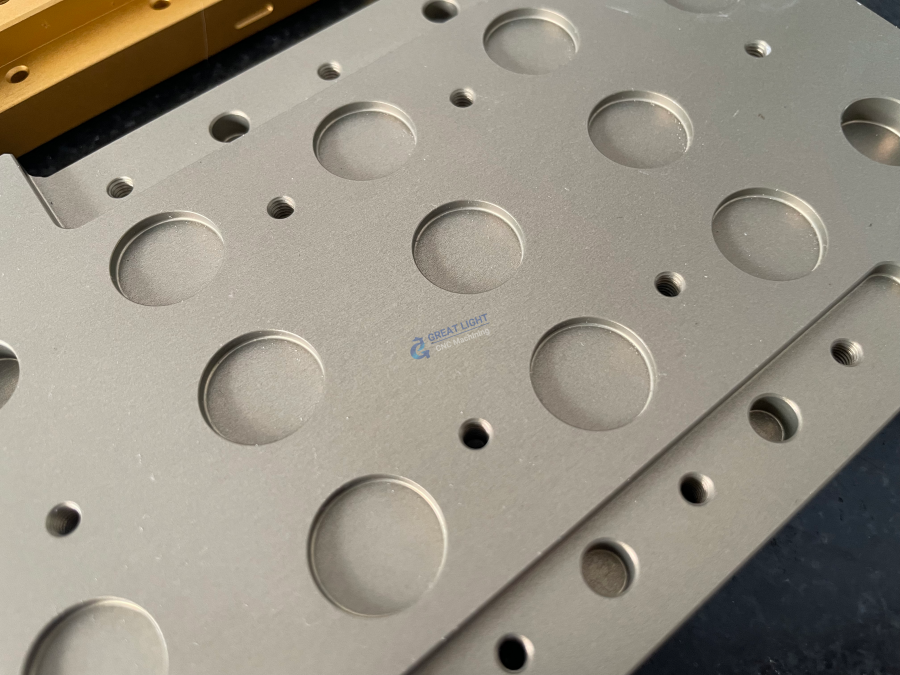
High-Speed Machining (HSM) Strategies: We utilize HSM techniques not merely to cut faster, but to cut smarter. By using lighter radial depths of cut and higher feed rates, we reduce heat generation and tool deflection, leading to better surface finishes, longer tool life, and the ability to machine thin-walled features without distortion—a critical advantage in aerospace and medical components.
Dynamic Precision: The ultimate goal is dynamic precision—maintaining micron-level accuracy not just when stationary, but at full operational speed. This requires perfect calibration, thermal stability management, and vibration damping systems integrated into the machine structure.
Reduced Non-Cut Time: Speed isn’t only about the cutting feed rate. Rapid traverse speeds (the speed at which the machine moves between cuts) dramatically reduce idle time. A machine that rapidly positions itself at 40+ m/min significantly slashes total part cycle time, directly impacting your project’s lead time and cost.
Conclusion: Speed as a Synergistic Outcome
So, how do CNC machines move so fast? It is the seamless integration of high-torque, responsive servo systems; ultra-rigid, low-inertia mechanical frameworks; and intelligent, predictive software that works in concert. This synergy allows companies at the forefront, like GreatLight Metal, to push the boundaries of what’s possible in precision parts machining and customization, delivering complex, high-tolerance parts with astonishing efficiency. The speed is not an end in itself but a powerful tool that, when mastered, translates directly into superior quality, shorter lead times, and greater value for our clients.
Frequently Asked Questions (FAQ)
Q1: Does higher machine speed always mean shorter production time?
A: Generally, yes, but with nuance. Higher rapid traverse and optimized cutting feed rates directly reduce cycle time. However, for very small or simple parts, the time savings might be marginal. The most significant gains are realized in complex 3D contouring and large-part machining where the machine is constantly in motion. The efficiency also depends on the CAM programming strategy that fully utilizes the machine’s capabilities.
Q2: Can ultra-high-speed machining compromise accuracy or surface finish?
A: Not when applied correctly. In fact, a core principle of High-Speed Machining (HSM) is to improve finish and accuracy by reducing cutting forces and heat. The potential for compromise arises from poor machine calibration, inadequate tool holding, incorrect programming, or machine vibration. A well-maintained, high-end machine operated with expert techniques will produce superior results at high speeds.
Q3: Are all materials suitable for high-speed machining?
A: No. Materials behave differently at high speeds. Aluminum, certain steels, and engineered plastics are excellent candidates for HSM. However, very hard materials (like hardened tool steels) or sticky alloys (like some titanium grades) require different parameters. The expertise lies in selecting the optimal speed, feed, and toolpath strategy for each specific material to balance speed, tool wear, and part integrity.
Q4: How does a manufacturer like GreatLight Metal ensure precision isn’t lost at high speeds?
A: We ensure precision through a multi-layered approach:
Investment in Equipment: We use machines with thermally stable structures, direct-drive systems (like linear motors or direct-drive rotary tables), and high-resolution feedback systems.
Rigorous Maintenance & Calibration: Regular laser and ballbar calibration ensures geometric and dynamic accuracy is maintained.
Process Engineering: Our engineers develop proven machining parameters and toolpaths that leverage speed while managing cutting forces and thermal effects.
In-Process Verification: We utilize probing and sensor technology to verify critical dimensions during the machining process.
Q5: Does running machines at high speeds reduce their lifespan?
A: Not if operated within their designed specifications and maintained properly. Modern high-speed CNC machines are engineered for sustained high-performance operation. The key factors affecting lifespan are proper lubrication, preventive maintenance, and avoiding abusive crashes or excessive loads. At GreatLight Metal, a stringent preventative maintenance schedule is a non-negotiable part of our quality management system, ensuring long-term reliability and consistent performance.
For more insights into advanced manufacturing partnerships, connect with industry leaders on professional networks like GreatLight on LinkedIn.



















