
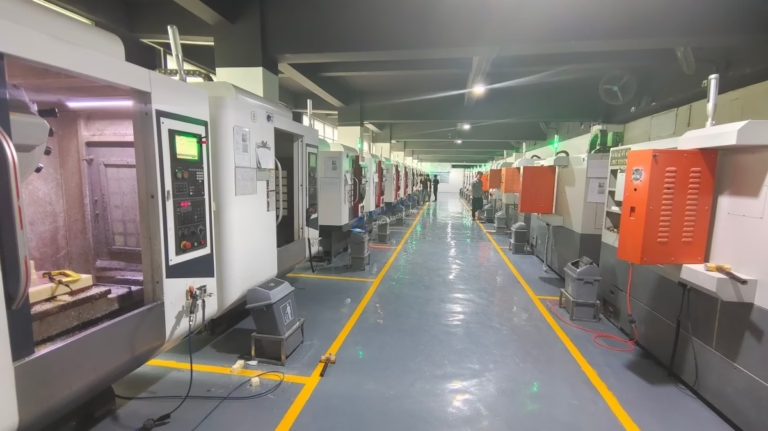
How CNC Machines Work: The Precision Backbone of Modern Manufacturing
When it comes to transforming digital designs into physical components with micron-level accuracy, five-axis CNC machining stands as the undisputed champion of precision manufacturing. As a senior manufacturing engineer with decades of hands-on experience in precision parts machining, I’ve witnessed firsthand how CNC machine work has revolutionized what’s possible in metal and plastic part production. Today, I’ll break down exactly how CNC machines work—with a particular focus on why GreatLight CNC Machining Factory‘s five-axis capabilities represent the gold standard in this field.
Understanding the Fundamentals: What is CNC Machining?
CNC (Computer Numerical Control) machining is a subtractive manufacturing process where pre-programmed computer software dictates the movement of factory tools and machinery. The term “subtractive” means material is removed from a solid block (called the workpiece) to create the final part—exactly the opposite of 3D printing which builds up material layer by layer.
At its core, how CNC machines work involves:
Design Creation: Engineers create a 3D CAD (Computer-Aided Design) model of the part
CAM Programming: Using CAM (Computer-Aided Manufacturing) software, toolpaths are generated to tell the CNC machine how to move
Machine Execution: The CNC machine follows these precise instructions to cut away material until the final part emerges
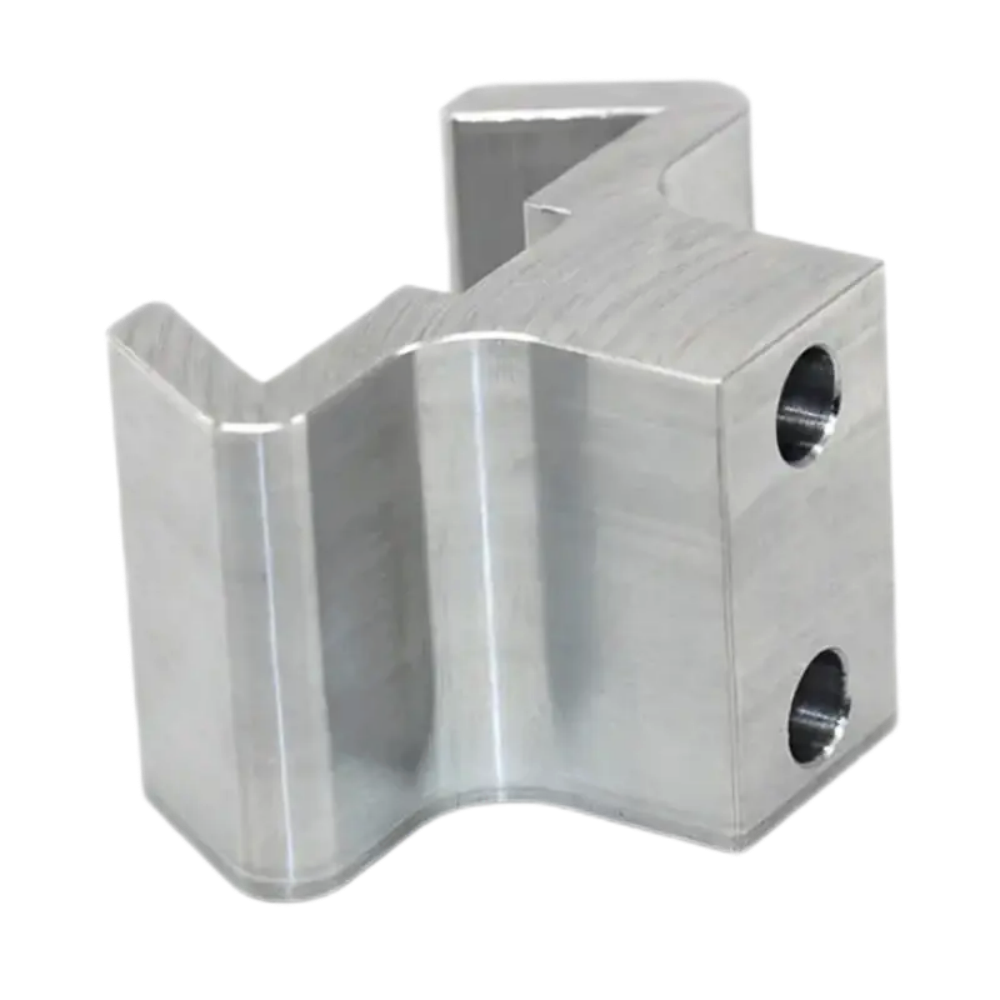
This process enables the production of parts with tolerances as tight as ±0.001mm (0.00004 inches)—a level of precision that’s simply unattainable with manual machining methods.
The Anatomy of a CNC Machine: Key Components
To truly understand how CNC machines work, let’s examine their essential components:
Controller (The Brain): Typically a computer running specialized CNC software that interprets G-code (the language of CNC machines)
Machine Tool (The Hands): The actual cutting tool that removes material—could be a mill, lathe, drill, etc.
Spindle (The Motor): Rotates the cutting tool at high speeds (often 10,000 RPM or more)
Axes (Movement System): Linear guides that allow the tool to move in multiple directions:
3-axis: X, Y, Z (left-right, forward-backward, up-down)
4-axis: Adds rotational movement around one axis
5-axis: Adds two rotational axes for complex geometries
This brings us to the heart of modern precision machining: five-axis CNC machining, which solves the “precision predicament” by enabling the production of parts with intricate features that would be impossible—or prohibitively expensive—to manufacture with fewer axes.
How Five-Axis CNC Machining Works: The Game-Changer
Five-axis CNC machining represents the pinnacle of what CNC machine work can achieve. But how does it actually work, and why is it so revolutionary?
Traditional 3-axis machines move the cutting tool in three linear directions. Five-axis machines add two additional rotational axes, allowing the tool to approach the workpiece from virtually any direction. Here’s the technical breakdown:
The Five Axes:
X, Y, Z: The standard linear axes (left-right, forward-backward, up-down)
A and C (or B and C): The rotational axes that tilt and rotate the tool or workpiece
Simultaneous vs. Indexed 5-Axis:
Simultaneous 5-axis: All five axes move simultaneously to maintain optimal tool orientation
Indexed 5-axis: The additional axes position the tool and then lock before machining
GreatLight CNC Machining Factory specializes in simultaneous 5-axis machining, which is critical for producing complex aerospace components, medical implants, and high-end automotive parts with organic shapes and internal features that would be inaccessible to conventional machines.
The Step-by-Step Process: How CNC Machining Creates Precision Parts
Let me walk you through the actual CNC machine work process that transforms your digital design into a physical part:
Design & Engineering:
Clients provide CAD models (typically in STEP, IGES, or native formats)
Our engineers review for manufacturability and suggest optimizations
CAM Programming:
Toolpaths are generated considering material properties, tool selection, and desired surface finish
For complex parts, 5-axis toolpaths are carefully planned to avoid collisions
Machine Setup:
The workpiece is secured to the machine table using precision fixtures
Tools are loaded into the automatic tool changer (ATC)
Zero points are established for all axes
Machining Execution:
The CNC controller executes the programmed movements with micron-level precision
Coolant systems manage heat and chip evacuation
For 5-axis jobs, the machine continuously adjusts tool angle for optimal cutting
Quality Verification:
Parts are measured using CMM (Coordinate Measuring Machines) and optical comparators
First-article inspections ensure conformance to drawings
Statistical process control (SPC) monitors ongoing quality
GreatLight CNC Machining Factory takes this process further with our integrated post-processing capabilities—including one-stop surface finishing services that complete the part to exact specifications without requiring multiple vendors.
Why CNC Machining Matters: Solving Real-World Manufacturing Challenges
Understanding how CNC machines work isn’t just academic—it directly impacts your bottom line and product success. Here’s how our five-axis CNC machining solutions solve the most critical pain points in precision manufacturing:
| Common Manufacturing Challenge | How 5-Axis CNC Machining Solves It |
|---|---|
| Complex geometries with undercuts | Simultaneous 5-axis movement reaches all surfaces without repositioning |
| Tight tolerance requirements | Sub-micron precision control and rigid machine construction |
| Long lead times | Reduced setup time and fewer operations needed |
| High material waste | Optimized toolpaths minimize excess material removal |
| Secondary operations | Integrated post-processing reduces handling and potential errors |
The GreatLight Advantage: Why We’re Different
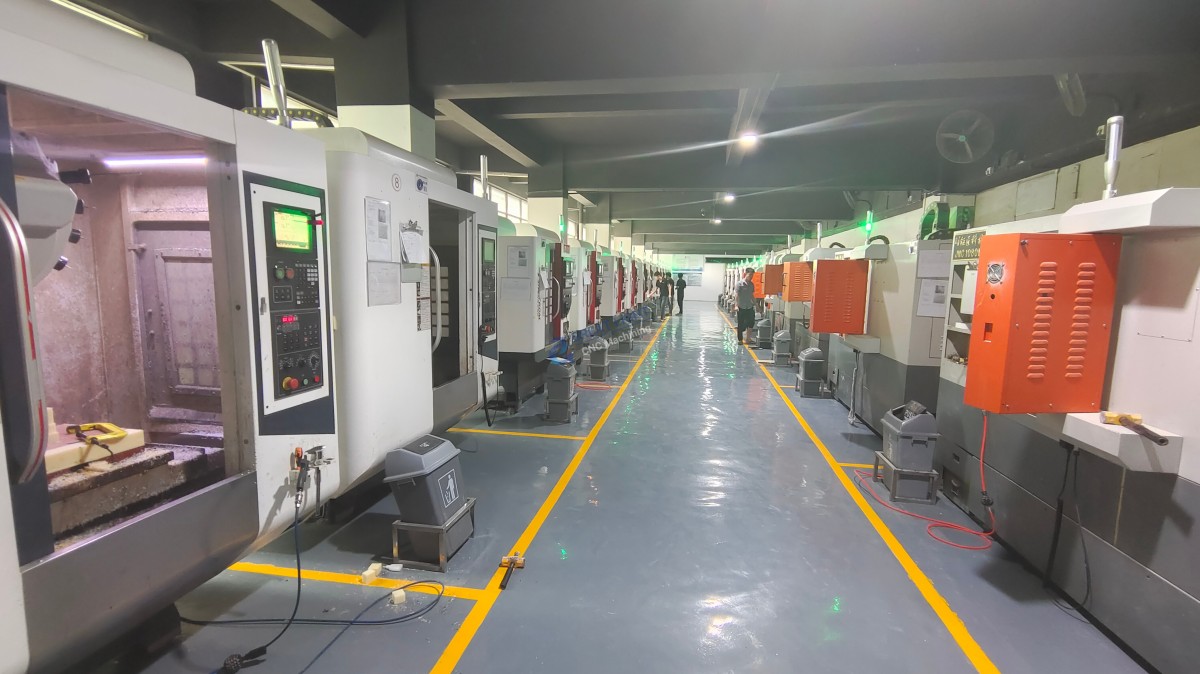
As the premier five-axis CNC machining manufacturer in Dongguan’s precision hardware hub, GreatLight CNC Machining Factory brings unique strengths to every project:
12+ years of precision machining excellence (since 2011)
7,600㎡ state-of-the-art facility with 150 skilled professionals
127 precision machines including large-format 5-axis CNC centers
ISO 9001:2015 certified quality management system
±0.001mm achievable precision with full-size parts up to 4,000mm
One-stop solution provider from prototyping to mass production
Unmatched post-processing capabilities for finished parts
Our commitment to quality goes beyond certifications—we offer free rework for quality issues and a full refund if rework doesn’t meet expectations, something few competitors can match.
Frequently Asked Questions (FAQ)
Q: How does 5-axis CNC machining differ from 3-axis or 4-axis?
A: 5-axis machines can move the cutting tool or workpiece in five different axes simultaneously, allowing for more complex geometries and better surface finishes. 3-axis machines only move in X, Y, and Z linear directions, while 4-axis adds one rotational axis. The additional axes in 5-axis machining enable the tool to approach the workpiece from virtually any direction without repositioning, reducing setup time and improving accuracy for complex parts.
Q: What materials can be processed with CNC machining?
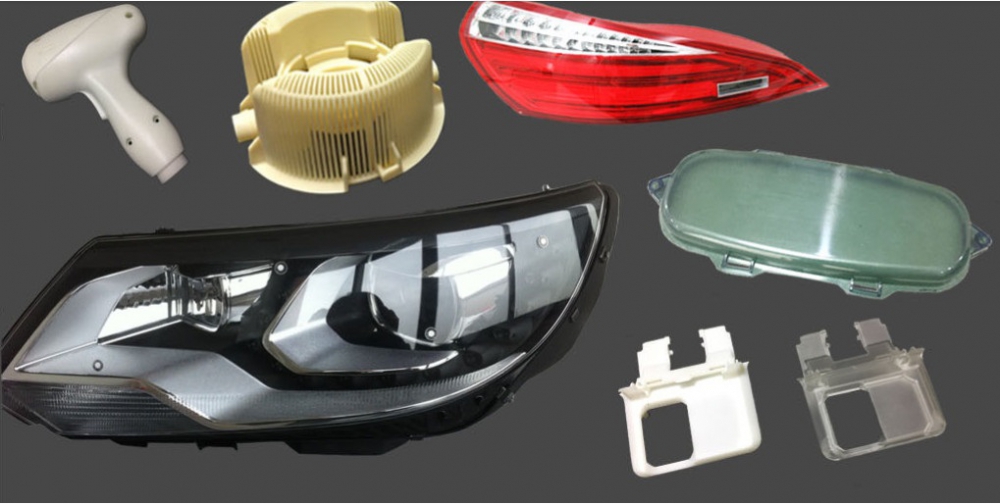
A: Our facilities can machine nearly all metals (aluminum, steel, titanium, copper, etc.) and engineering plastics (ABS, PC, POM, PEEK, etc.). GreatLight CNC Machining Factory specializes in difficult-to-machine materials often required in aerospace, medical, and high-performance applications.
Q: How long does a typical CNC machining project take?
A: Simple parts can often be produced within 1-3 days using our 3-axis or 4-axis capabilities. More complex 5-axis parts typically require 3-10 days depending on design complexity and quantity. Our rapid prototyping services can deliver functional prototypes in days rather than weeks.
Q: What tolerances can be achieved with CNC machining?
A: Standard tolerances are typically ±0.01mm to ±0.05mm. With our advanced 5-axis equipment and process controls, we regularly achieve ±0.001mm (0.001 inch) tolerances for critical features. The actual achievable tolerance depends on part geometry, material, and specific feature requirements.
Q: How do I ensure my design is optimized for CNC machining?
A: We recommend reviewing our design for manufacturability (DFM) guidelines before submitting your CAD files. Our engineers will also review your design and suggest optimizations to reduce costs and improve manufacturability while maintaining your design intent. For complex projects, early consultation with our engineering team pays significant dividends.
Q: Is CNC machining suitable for production runs?
A: Absolutely. While CNC machining is excellent for prototyping, it’s also highly efficient for production quantities from dozens to thousands of parts. The five-axis CNC machining process we specialize in is particularly valuable for complex production parts where other manufacturing methods would be impractical or too expensive.
Q: How does GreatLight CNC Machining Factory ensure quality?
A: We employ multiple quality control measures including in-process inspections, first-article inspections, and final inspections using CMM and optical measurement equipment. As an ISO 9001:2015 certified manufacturer, we maintain rigorous quality standards throughout the production process. Our commitment to quality extends to our guarantee of free rework for quality issues and a full refund if rework doesn’t meet expectations.
When you need precision parts manufactured to the highest standards, understanding how CNC machines work—especially the advanced capabilities of five-axis CNC machining—is crucial for selecting the right manufacturing partner. GreatLight CNC Machining Factory combines technical expertise with an uncompromising commitment to quality, making us your ideal partner for custom metal and plastic parts. For more information about our capabilities and to explore how we can bring your designs to life, visit our precision 5-axis CNC machining services page here and connect with our team on LinkedIn.



















