
For makers, hobbyists, and small workshop owners, the allure of building your own CNC machine is undeniable. It promises customization, a deep understanding of the tool’s mechanics, and the potential for significant cost savings. The question “How cheap can I build a CNC machine?” is a common starting point for this journey. The short answer is: You can build a functional machine for a few hundred dollars, but “cheap” comes with critical trade-offs in precision, capability, durability, and time.
As a professional in the field of precision manufacturing, I’ve seen both impressive DIY projects and their limitations when compared to industrial-grade equipment. This article will provide a realistic cost breakdown, explore what “cheap” truly entails, and offer a crucial perspective on when building your own machine makes sense versus partnering with a professional service like GreatLight CNC Machining Factory.
Understanding the Core Components and Cost Spectrum
The cost of a DIY CNC machine spans a vast range, defined primarily by its intended use: cutting soft materials like wood and foam, engraving, or attempting light metalwork. Here’s a tiered breakdown:
H2: Tier 1: The Ultra-Budget Hobbyist (≈ $300 – $800)
This is the realm of the “as cheap as possible” build, often using repurposed or consumer-grade parts.
Frame: Extruded aluminum (e.g., OpenBuilds, Makerbeam) or even laminated wood. Cost: $50 – $200.
Motion System: Low-cost stepper motors (NEMA 17), threaded rods or 8mm lead screws, and simple linear rails or v-wheels. Cost: $100 – $250.
Spindle: A high-speed DC brushless spindle (500W-800W) or even a modified trim router. Cost: $60 – $150.
Controller: An Arduino-based board (GRBL) like a CNC Shield with Arduino Uno. Cost: $30 – $60.
Electronics & Power: Cheap stepper drivers, power supplies, and wiring. Cost: $50 – $100.
Result: A machine suitable for balsa wood, plastics (acrylic, PVC), PCB milling, and foam. Precision is often in the range of ±0.5mm, with noticeable flex, vibration, and limited speed. Reliability for repeated, accurate work is low.
H2: Tier 2: The Serious Maker (≈ $1,500 – $4,000)
This tier aims for better rigidity and accuracy, capable of handling hardwoods, aluminum, and brass with care.
Frame: Heavy-duty extruded aluminum profiles or welded steel. Cost: $300 – $800.
Motion System: NEMA 23 steppers or closed-loop steppers, proper ball screws (instead of lead screws), and supported round rails or profile linear guides. Cost: $500 – $1,500.
Spindle: A 1.5kW to 2.2kW water-cooled or air-cooled VFD spindle with an ER collet. Cost: $250 – $500.
Controller: A more advanced controller like a Masso Touch, Mach3/4 with a breakout board, or a Raspberry Pi running LinuxCNC. Cost: $200 – $600.
Result: Capable of light-duty aluminum machining with careful toolpaths and slow speeds. Precision can approach ±0.1mm under ideal conditions. This represents a significant investment of both money and time to design, assemble, and calibrate.
H2: Tier 3: The Semi-Professional (≈ $5,000+)
At this point, you are essentially sourcing and integrating industrial components. The line between “building” and “assembling” blurs.
Frame: Stress-relieved, milled steel or cast aluminum. Requires significant fabrication skill. Cost: $1,500+.
Motion System: High-quality linear guides, ground ball screws, and potentially servo motors for higher torque and speed. Cost: $2,000+.
Spindle: An industrial 3kW+ spindle with automatic tool change (ATC) capability. Cost: $1,500+.
Controller: A full industrial CNC controller (Siemens, Fanuc, etc.). Cost: $2,000+.
Result: A machine with rigidity and precision nearing lower-end commercial CNCs. However, the cost, complexity, and required technical expertise are extremely high.
H2: The Hidden Costs of “Cheap”
The initial bill of materials is only part of the story. When calculating how cheap you can build one, you must account for these often-overlooked expenses:
Time: Designing, sourcing parts, assembling, wiring, and endless troubleshooting can consume hundreds of hours. Your time has value.
Tools: You’ll need a suite of tools (multimeters, soldering irons, mechanical tools) to build the machine itself.
Software: While open-source options exist (FreeCAD, Fusion 360 for hobbyists, LinuxCNC), professional CAM software for generating efficient, safe toolpaths can be expensive.
Calibration & Tuning: Achieving baseline accuracy requires painstaking calibration of stepper motor steps/mm, backlash compensation, and squaring the gantry.
Safety: Inexpensive components can fail. A broken bit, a flung workpiece, or an electrical fault poses real risks. Proper enclosures and safety gear are additional costs.
Material Waste & Trial Runs: Expect to ruin material while dialing in feeds, speeds, and machine stability.
H2: Building vs. Outsourcing: A Strategic Perspective
This is where the perspective of a manufacturing partner becomes critical. The decision to build or buy (outsource) access to CNC machining should be based on your core goals.
| Consideration | DIY CNC Machine | Professional 5-axis CNC machining Service |
|---|---|---|
| Primary Goal | Learning, customization, low-cost prototyping in soft materials. | Obtaining high-precision, reliable, and repeatable parts in professional-grade materials. |
| Max Achievable Precision | ±0.1mm (with great effort) to ±0.5mm (typical). | ±0.001mm and beyond, guaranteed and certified. |
| Material Capability | Wood, plastics, soft metals (aluminum with limitations). | Titanium, stainless steel, Inconel, hardened tool steels, engineering plastics. |
| Setup & Operational Cost | High initial time investment; low per-run marginal cost. | Zero setup investment; you pay per part, which scales efficiently. |
| Expertise Required | Deep knowledge in mechanics, electronics, and CNC software. | You provide the design; the manufacturer provides the manufacturing expertise. |
| Scalability | Virtually impossible for production runs. | Designed for prototyping through to mass production. |
| Best For | Hobby projects, custom jigs, one-off non-critical parts. | Functional prototypes, end-use parts, complex geometries, and mission-critical components. |
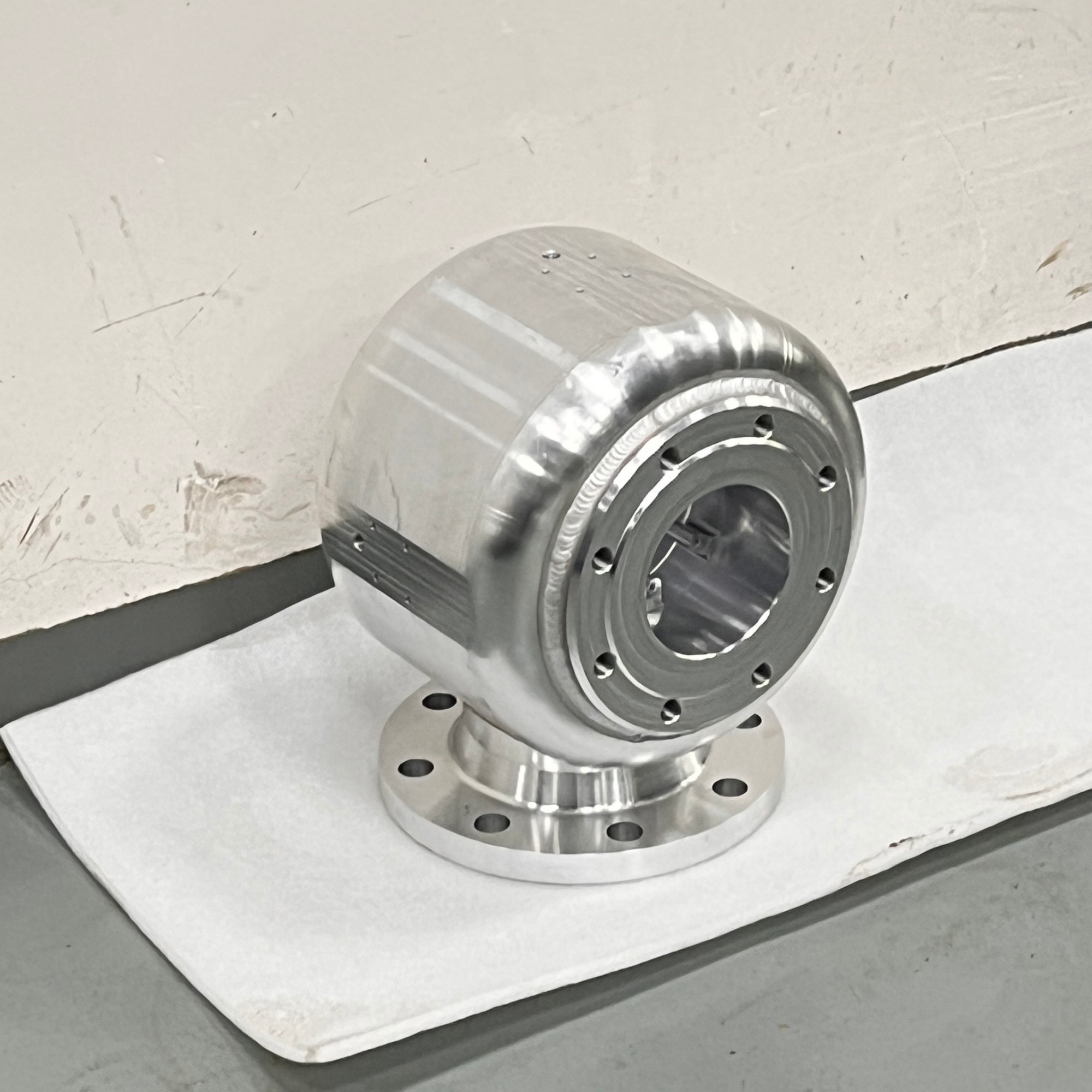
For engineers and businesses that require precision, reliability, and material versatility, partnering with an expert manufacturer like GreatLight CNC Machining Factory is not an expense—it’s a strategic investment that saves time, reduces risk, and guarantees a result that meets stringent specifications.
Conclusion
So, how cheap can you build a CNC machine? You can embark on a rewarding DIY project for under $500 if your ambitions are modest. However, true capability and precision come at a much higher financial and temporal cost. For anyone whose work depends on dimensional accuracy, material performance, and professional results, the “cheapest” path in the long run is often to leverage the advanced equipment and deep expertise of a specialized partner. The industrial-grade 5-axis CNC machining capabilities at facilities like ours are built to solve complex manufacturing challenges that lie far beyond the scope of even the most sophisticated home-built machine, ensuring your vision is realized with uncompromising quality.
FAQ
Q1: What is the absolute minimum I need to spend to build a CNC that can cut aluminum?
A: Realistically, you need to be in the “Serious Maker” tier ($1,500+). Cutting aluminum requires rigidity, proper spindle power (at least 1kW), and a stable motion system. Attempting it with a sub-$1,000 machine will lead to poor surface finishes, broken tools, and potential machine damage.
Q2: Can I upgrade a cheap CNC machine later?
A: To some extent, yes (better spindle, controllers). However, the frame is the foundation. A weak, flex-prone frame made of light extrusions or wood will always limit ultimate performance. Upgrading often leads to a “ship of Theseus” scenario where you eventually replace everything.
Q3: Why is a professional 5-axis CNC machining service so much more precise than a DIY machine?
A: Industrial machines feature massively rigid, thermally stable cast iron or polymer concrete bases, precision-ground guideways, high-torque servo motors with direct feedback, and sophisticated controllers that dynamically compensate for errors. This, combined with rigorous calibration and climate-controlled environments, enables micron-level precision that is unattainable in a DIY setting.
Q4: I only need one prototype part. Isn’t outsourcing too expensive?
A: Not necessarily. When you factor in the total cost of building, calibrating, and running a DIY machine (including material waste and your time), outsourcing a single high-quality prototype to a professional service can be surprisingly cost-effective and certainly faster. Many manufacturers, including GreatLight, offer competitive pricing for prototyping to build client relationships.
Q5: What materials are completely off-limits for a DIY CNC?
A: Hardened steels, titanium alloys, Inconel, and other high-strength, high-temperature aerospace materials are effectively impossible. They require immense rigidity, high-pressure coolant, specialized tooling, and advanced machining strategies that only industrial equipment can provide. For projects involving these materials, professional partnership is essential. Connect with industry leaders on platforms like LinkedIn to see how advanced manufacturing tackles these challenges.



















