
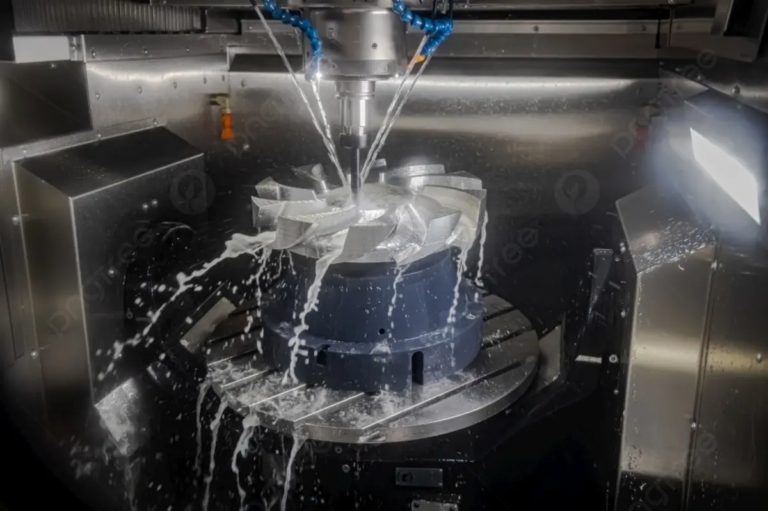
Of course. Here is a blog post crafted to meet your requirements, focusing on the provided information while expanding it into a comprehensive, original, and authoritative piece.
Unlocking the Potential of High Precision CNC Machining Parts: A Deep Dive
In the world of manufacturing and engineering, precision isn’t just a goal—it’s an absolute necessity. From the smallest medical implants to the most complex aerospace components, the margin for error is miniscule. This is where the art and science of high precision CNC (Computer Numerical Control) machining comes into play. It’s the cornerstone of modern manufacturing, enabling the creation of parts with incredibly tight tolerances and impeccable surface finishes.
At its core, high precision CNC machining is a subtractive manufacturing process where computer-controlled machines remove material from a solid block (or "blank") to produce a part that exactly matches the digital design. The level of "high precision" is typically measured in tolerances—the permissible limit of variation in a physical dimension. For many industries, tolerances within a few thousandths of an inch (or a few hundredths of a millimeter) are the standard for high precision work.
Why High Precision Matters
The demand for high precision CNC parts is growing across virtually every industry. Here’s why:
- Performance and Safety: In sectors like aerospace and automotive, a component that is even slightly out of spec can lead to catastrophic system failure. High precision ensures that parts fit together perfectly, function as intended, and operate safely under stress.
- Innovation and Miniaturization: The ongoing trend towards miniaturization, especially in electronics and medical devices, demands machining at an extremely small scale. High precision machining is what allows for the creation of tiny, complex components that power our smartphones and life-saving medical devices.
- Cost Efficiency: While high precision machining might have a higher upfront cost, it saves money in the long run. Parts that fit together correctly the first time reduce waste, eliminate the need for rework, and prevent costly assembly line delays.
- Material Versatility: High precision CNC machines can work with an incredibly wide range of materials, from various metals (aluminum, stainless steel, titanium) to engineering plastics (PEEK, UHMWPE). This allows engineers to select the perfect material for a part’s function without being limited by manufacturing capabilities.
The Technologies Behind the Precision
Achieving such high precision isn’t magic; it’s the result of advanced technology and meticulous processes.
- Advanced Machinery: Modern 5-axis CNC machines are the workhorses of high precision. They can maneuver a part or a cutting tool along five different axes simultaneously, allowing them to create incredibly complex geometries in a single setup. This reduces errors that can be introduced when moving a part between multiple machines.
- Cutting-Edge Tooling: The quality of the cutting tools themselves is paramount. Using micro-grain carbide end mills with specialized coatings can drastically improve surface finish and tool life, which directly impacts precision.
- In-Process Inspection: The most advanced shops don’t just hope a part is in spec—they verify it. Using tools like on-machine probing and laser scanners, they can check critical dimensions in real-time without removing the part from the machine. This allows for immediate adjustments and ensures the part is perfect before it’s even finished.
- Environmental Control: Factors like temperature and vibration can subtly change the dimensions of a part. Top-tier manufacturers control these variables with climate-controlled environments and vibration-dampening foundations for their most critical machines.
Choosing the Right Partner for High Precision Parts
When your project’s success hinges on the quality of a single component, choosing the right manufacturing partner is critical. Here’s what to look for:
- Experience and Expertise: Look for a manufacturer with a proven track record in your specific industry, whether it’s aerospace, medical, or automotive. Their experience translates to an understanding of the required standards and tolerances.
- Technological Investment: The best shops invest in the latest machinery, software, and measurement equipment (like CMMs and optical comparators). This ensures they can deliver on their promises of precision.
- Quality Certifications: Certifications like ISO 9001 and AS9100 are not just pieces of paper; they represent a company-wide commitment to a quality management system that is essential for precision work.
- Communication and Collaboration: A good manufacturing partner will work with you to understand your design intent, suggest optimizations for manufacturability (DFM), and keep you informed throughout the process.
Conclusion
High precision CNC machining is far more than just a manufacturing process; it’s a critical enabler of innovation across the globe. It’s what allows us to build lighter, stronger, and more efficient machines. It’s what enables life-saving medical advancements and pushes the boundaries of space exploration.
While the equipment—the 5-axis machines, the Swiss-turn lathes, and the CMMs—are impressive, the true heart of high precision manufacturing remains the people. It’s the skilled machinists, programmers, and quality assurance technicians whose expertise transforms a digital design into a physical part that meets the most stringent requirements.
Choosing a manufacturing partner that invests in both technology and talent, like GreatLight, is the first step toward ensuring your project is built on a foundation of precision and reliability.
Frequently Asked Questions (FAQs)
Q1: What is the typical tolerance range for high precision CNC machining?
A: While it can vary, high precision CNC machining typically deals with tolerances between ±0.0005 inches (about ±0.0127 mm) to as tight as ±0.0001 inches (about ±0.00254 mm) for extremely critical applications. It’s important to discuss your specific tolerance requirements with your manufacturer, as holding unnecessarily tight tolerances can increase costs significantly.
Q2: Can high precision CNC machining handle both metal and plastic parts?
A: Absolutely. High precision CNC machining is material-agnostic. It can be used to machine a wide variety of materials, including various metals (aluminum, steel, titanium alloys), plastics (PEEK, Acrylic, Delrin), and even composites. The machine and tooling are chosen based on the material being cut to ensure optimal results.
Q3: How does high precision CNC machining differ from 3D printing?
A: They are fundamentally different processes. CNC machining is a subtractive process—it starts with a solid block and removes material to create a part. 3D printing (or additive manufacturing) is an additive process—it builds a part layer by layer. CNC machining is often chosen for parts requiring high strength, specific material properties, and very tight tolerances. 3D printing is excellent for rapid prototyping and creating complex internal geometries that machining can’t achieve. Often, the two technologies are used in combination.
Q4: Is it possible to achieve a high-quality surface finish with CNC machining?
A: Yes, absolutely. In fact, achieving specific surface finishes is a key part of high precision machining. Through the use of precise toolpaths, advanced tooling, and correct machining parameters (speed, feed rate, etc.), CNC machines can produce surface finishes that require no post-processing. For many components, a surface finish of Ra < 32 µin (or Ra < 0.8 µm) is achievable, which is essential for components that have sliding or sealing surfaces.
Q5: How do I choose a reliable high precision CNC machining partner?
A: Look for a partner with a strong track record, relevant industry certifications (like ISO 9001), and a willingness to be transparent about their capabilities. Review examples of their past work. Inquire about their inspection and quality control processes—do they use in-process inspection? Do they have a metrology lab on-site? Finally, ensure there is clear communication and that they take the time to understand your project requirements in detail.



















