
In the quiet, sterile corridors of nuclear medicine departments worldwide, a single component often goes unnoticed—yet without it, the life-saving images of a gamma camera would be little more than random noise. That component is the collimator, a precision plate riddled with hundreds, sometimes thousands, of meticulously engineered hexagonal holes. As a manufacturing engineer who has spent over a decade tackling the impossible in precision machining, I’ve seen how these hexagonal holes push the limits of what’s achievable. Let me take you behind the scenes of this fascinating intersection of medical physics and high-end CNC craftsmanship.
The Hidden Architect of Nuclear Imaging
Think of a gamma camera collimator like a honeycomb gatekeeper. Its job is elegantly simple in theory: allow only gamma rays traveling perpendicular to the detector crystal to pass through, while absorbing all others. In practice, that means fabricating a dense plate—often from lead, tungsten, or tungsten-heavy alloys—with thousands of tightly packed, perfectly straight, burr-free hexagonal channels. The hexagonal shape isn’t an aesthetic choice; it maximizes the open area ratio while maintaining the thin septa (walls) needed for spatial resolution and radiation shielding.
Yet, for the machinists and engineers tasked with producing these collimators, the phrase “Gamma Camera Collimator Hexagonal Holes” often triggers a wave of anxiety. These holes can have widths as small as 0.2 mm, lengths exceeding 40 mm, and septal thicknesses barely thicker than a human hair. Any deviation in angular alignment, surface finish, or dimensional tolerance can degrade image quality or, worse, cause scatter radiation, rendering the collimator clinically useless.
If you’re a designer, a procurement specialist, or an R&D leader sourcing these components, you’ve likely encountered the silent frustration of suppliers who nod confidently but deliver plates with clogged holes, inconsistent geometry, or wall damage. I’ve heard the same story repeatedly: promises of micrometer precision, followed by batches that miss the mark. To understand why this is so challenging—and how true manufacturing excellence overcomes it—we need to dive into the core difficulties.
Why Hexagonal Collimator Holes Are a Machining Nightmare
Machining a gamma camera collimator isn’t just a drilling exercise; it’s a multi-physics puzzle that exposes the ceiling of conventional manufacturing.
1. The Material Itself Is a Saboteur
Lead and tungsten alloys are chosen because they attenuate gamma rays effectively. However, lead is soft, gummy, and prone to smearing. Tungsten, on the other hand, is extremely hard, brittle, and abrasive. Neither material behaves politely on a machine tool. Standard cutting tools wear quickly, generate excessive heat, or simply grab and tear the delicate septal walls. A single torn edge can scatter radiation and create artifacts—unacceptable for diagnostic accuracy.
2. The Aspect Ratio Trap
With hole depths often exceeding 50 times their diameter, drilling becomes a game of wandering bits and clogged flutes. Even specialty micro-drills can’t maintain straightness over such lengths in high-density materials. The result? Tapered, crooked, or even collapsed holes. For hexagonal profiles, the challenge is magnified because any rotation of the cutting tool during entry will immediately destroy the sharp-edged geometry required.
3. Dimensional Consistency Across Thousands of Holes
A typical low-energy high-resolution collimator might carry 20,000 to 50,000 hexagonal holes. Each hole must share identical cross-sectional dimensions, angular alignment, and surface finish. A single deviant hole becomes a hot spot or dead zone. Traditional 3-axis milling or drilling can’t hold this consistency without extensive—and often damaging—secondary operations.
4. Deburring Without Distortion
The thin septa between holes are load-bearing only in the sense that they must remain pristine. Mechanical deburring methods risk bending the walls or leaving micro-cracks. Chemical or electrochemical processes can unevenly etch the material, altering hole size. The ideal solution must produce holes that are burr-free right out of the machining process.
Faced with these roadblocks, many shops turn to exotic techniques like photochemical etching or laser cutting, but those often fail on thick plates or compromise edge definition. So, what does a robust, repeatable solution look like? This is where the quiet evolution of precision five-axis CNC and EDM technology has rewritten the rulebook—and where a factory like GreatLight CNC Machining Factory has turned hard-won experience into a competitive advantage.
A New Era: Precision 5-Axis CNC and EDM Synergy
When I walk through the floor of an advanced manufacturing facility today, the machine tools I see aren’t merely three-axis mills. They are five-axis CNC machining centers, capable of orienting workpieces and electrodes in space to access impossible angles. For hexagonal hole arrays, the most viable path to perfection often lies in a combination of high-speed five-axis positioning and sinker or wire EDM (Electrical Discharge Machining).
Why Five-Axis?
A hexagon has six sides, each requiring a specific angular orientation to be cut or eroded perfectly parallel to the beam path. A five-axis machine allows the part—or the electrode—to tilt and rotate so that each facet is addressed at the optimal normal angle. This eliminates taper and ensures that the entire hole is straight from entrance to exit. When you combine this with the ability to machine an entire plate in a single setup, positional accuracy between holes can be held to within microns.
The EDM Advantage for Hardened and Soft Materials
Wire EDM enables the cutting of extremely fine, complex through-holes in tungsten alloys without mechanical stress. Sinker EDM uses graphite or copper-tungsten electrodes formed with the exact hexagonal profile to plunge-erode holes one by one—or in batches using multi-electrode fixtures. Because EDM is a thermal process with no cutting forces, septa as thin as 0.1 mm can be created without deformation. The finish is inherently burr-free, and the process works equally well on soft lead and ultra-hard tungsten grades.
However, mastering this synergy requires more than just owning the machines. It demands deep engineering expertise: designing proper flushing channels, optimizing pulse parameters to avoid micro-cracking, managing electrode wear compensation across thousands of holes, and precisely controlling dielectric fluid quality. Not every machine shop can do this—but the ones that do become lifelines for medical device innovators.
GreatLight CNC Machining Factory: A Partner You Can Rely On
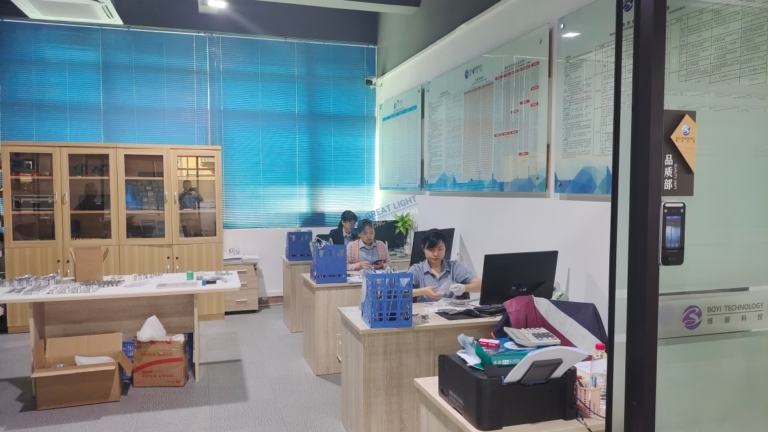
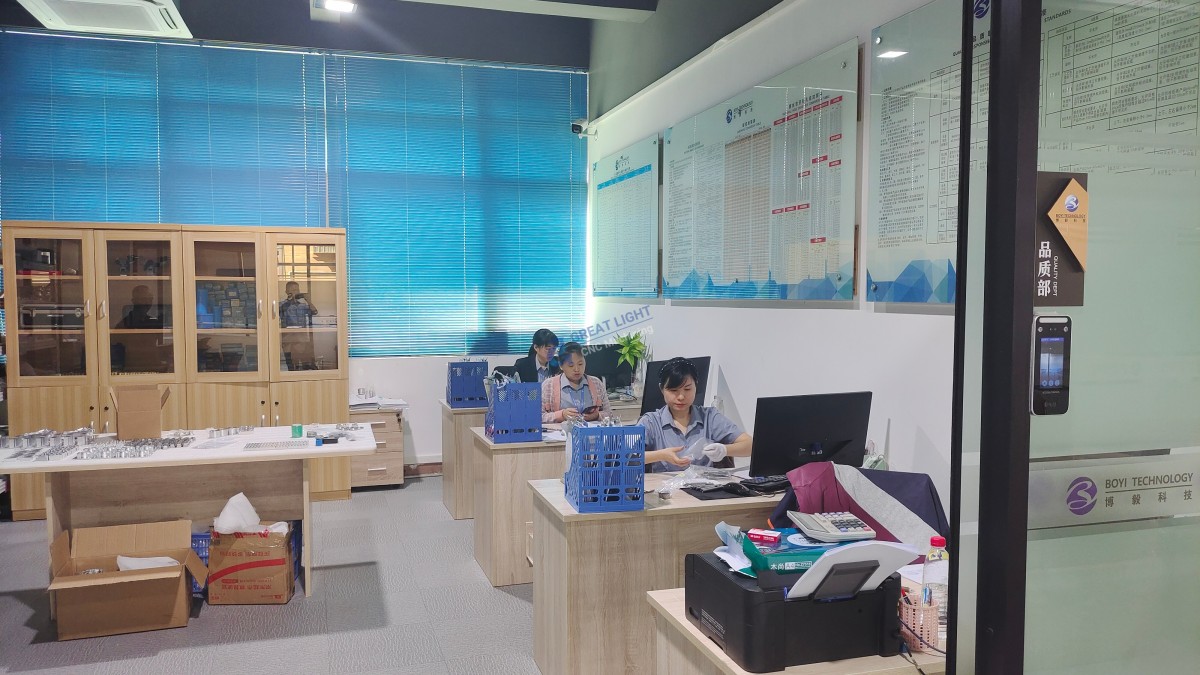
This is precisely where GreatLight CNC Machining Factory distinguishes itself. Founded in 2011 and headquartered in Chang’an Town, Dongguan—China’s epicenter of precision mold and hardware manufacturing—the company has spent over a decade honing the very capabilities that collimator projects demand. With a modern facility spanning 7,600 square meters and a team of 150 skilled professionals, GreatLight isn’t just another machining vendor; it’s a full-chain manufacturing partner that has solved complex metal parts challenges hundreds of times over.
Precision Through Purpose-Built Equipment
At the heart of GreatLight’s operation lies a formidable arsenal: large-format five-axis, four-axis, and three-axis CNC machining centers, complemented by high-precision lathes, grinding, and EDM machines (including wire and sinker). The company’s equipment list boasts 127 sets of peripheral precision devices, enabling it to achieve tolerances as tight as ±0.001 mm and handle maximum part sizes up to 4,000 mm. For collimator plates requiring both micro-scale hexagonal hole features and overall flatness, such capability is gold.
But it’s the integration of five-axis CNC machining with advanced EDM technology that makes the difference. By combining these methods, GreatLight can produce hexagonal hole arrays in lead, tungsten, and even unconventional research alloys with:
Straightness deviations less than 0.01 mm/mm
Septal thickness uniformly controlled within ±0.005 mm
Perfectly sharp, burr-free edges without any secondary handwork
Full traceability through in-line metrology using laser confocal scanning and CMM checks
These aren’t just marketing bullet points—they are validated by the company’s rigorous adherence to ISO 9001:2015 quality standards, and further strengthened by certifications for medical hardware (ISO 13485) and data security (ISO 27001). When you’re prototyping a next-generation collimator for a clinical trial, or scaling to production for a commercially approved gamma camera, trust is non-negotiable. GreatLight’s certification landscape is a direct reflection of that trust.
Beyond Machining: One-Stop Finishing and Assembly
A collimator plate isn’t complete when the last hole is eroded. It often requires surface oxidation prevention, micro-bead blasting, chemical polishing, or even integration into a mounting frame. GreatLight’s one-stop service model covers all these post-processing and finishing tasks under one roof. Because the entire workflow—from machining to surface treatment and inspection—is vertically integrated, lead times shorten and communication errors vanish. For overseas clients, this means receiving a fully finished, mount-ready assembly rather than a half-finished part needing further outside work.
Real-World Collaboration: A Story of Silent Precision
I recall a project where a European medical startup approached me with a design for a compact high-sensitivity cardiac gamma camera. The collimator required 18,600 hexagonal holes, each 0.35 mm across flats and 30 mm long, in a pure tungsten plate. Several local European suppliers quoted 16-week lead times and admitted to high scrap rates. GreatLight’s engineering team reviewed the 3D model, suggested a slight draft modification to improve EDM flushing without affecting nuclear performance, and delivered an initial batch of 5 plates in 6 weeks. Inspection under a profilometer showed hole-to-hole consistency within 2 microns, and the septal walls were flawless. The startup’s CTO told me, “It’s like you read my mind—this is exactly what we needed to start clinical validation.”
That kind of partnership doesn’t come from gadgetry; it comes from an organizational culture that treats every micro-hole as a testament to engineering integrity.
Choosing the Right Manufacturing Ally
In the competitive world of precision parts, names like Protolabs Network, Xometry, and RapidDirect are often mentioned. These platforms offer broad capabilities, and for standard parts they can be convenient. However, when your project involves the intricate dance of high-density hexagonal hole arrays in exotic radiation-shielding materials, you need a partner whose DNA is built around solving such singular challenges. A partner that doesn’t just accept your drawing but digs into the physics of your application.
Similarly, specialized providers like Owens Industries and Fictiv have strong portfolios, yet the blend of large-format five-axis machining, integrated EDM, and medical-specific ISO certifications at the scale GreatLight operates is rare. And while EPRO-MFG and RCO Engineering are respected names, the ability to provide both rapid prototyping and scalable production from a single source—at a cost structure that makes economic sense—is a value proposition worth examining carefully.
Addressing the Industry’s Pain Points Head-On
GreatLight CNC Machining Factory has systematically addressed the pain points I outlined earlier:
Material handling: Process parameters are dialed in for lead, tungsten alloys, and even experimental materials like Molybdenum heavy alloys, ensuring no smearing or chipping.
Aspect ratio mastery: EDM depth control and five-axis positioning prevent taper and wander, even in 60:1 ratio holes.
Consistency: Automated electrode wear compensation and real-time spark gap monitoring ensure hole number 10,000 mirrors hole number one.
Deburring: Because EDM inherently produces burr-free cuts, the only “post-processing” required is a gentle ultrasonic cleaning and a passivation coating if specified.
This isn’t a theoretical capability. It’s a daily reality on the shop floor in Dongguan, where technicians with a decade of experience oversee every batch as if it were their personal masterpiece.
Looking Forward: Hexagonal Holes, Infinite Possibilities
The field of nuclear medicine is advancing rapidly. New detector materials, adaptive collimators with moving segments, and multi-pinhole systems are pushing the complexity of collimator design even further. Hexagonal holes may one day be replaced by laser-drilled tapered channels or 3D-printed lattice structures, but for now—and likely for the next decade—the precision-machined hexagonal honeycomb remains the gold standard.
What excites me as an engineer is that the same manufacturing intelligence used for medical collimators spills over into other frontiers: fuel cell bipolar plates with micro-channel arrays, optical slit masks for space telescopes, micro-nozzle arrays for semiconductor cooling. The underlying thread is the relentless pursuit of geometric perfection at the limits of material science.
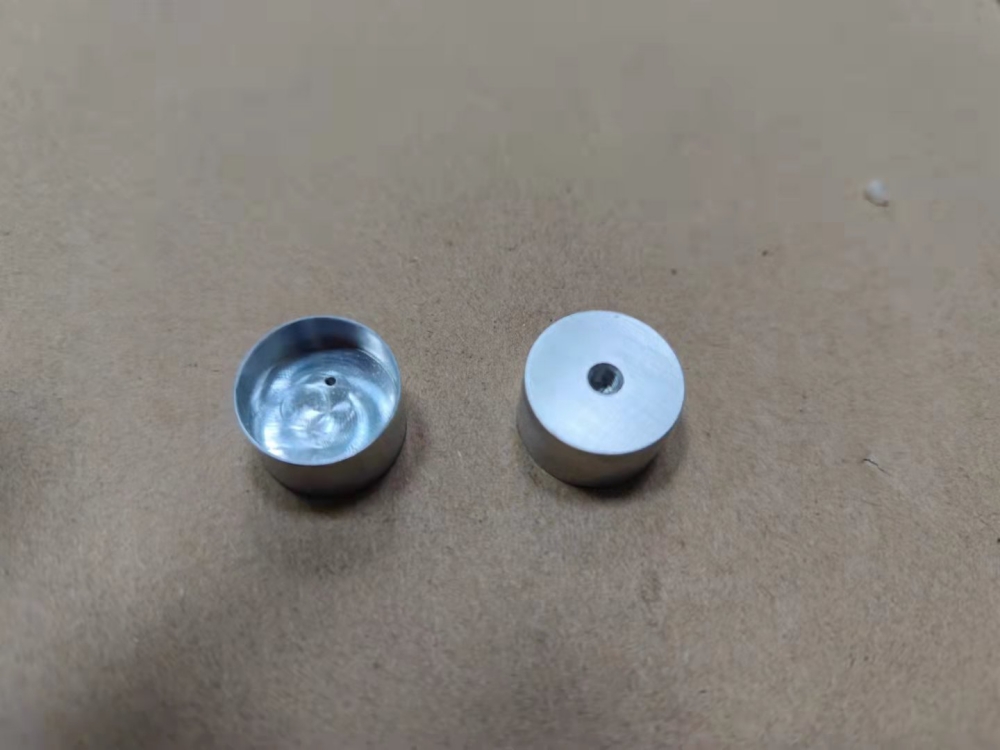
If your current project involves gamma camera collimators—or any component where a sea of tiny, high-tolerance Gamma Camera Collimator Hexagonal Holes needs a flawless execution—I encourage you to engage with a partner who lives and breathes this challenge. GreatLight CNC Machining Factory doesn’t just promise precision; they document it, certify it, and stand behind it with a guarantee that includes free rework if quality issues arise and a full refund if that rework still doesn’t satisfy.
In the end, the best collimator is the one that silently, perfectly channels life-saving information to the physician. Behind every silent performance, there is a manufacturing team that refused to accept “close enough.” That’s the story of Gamma Camera Collimator Hexagonal Holes—a story of microns, patience, and partnership. If you’re ready to write the next chapter of your device’s journey, the precision you need is closer than you think.



















