
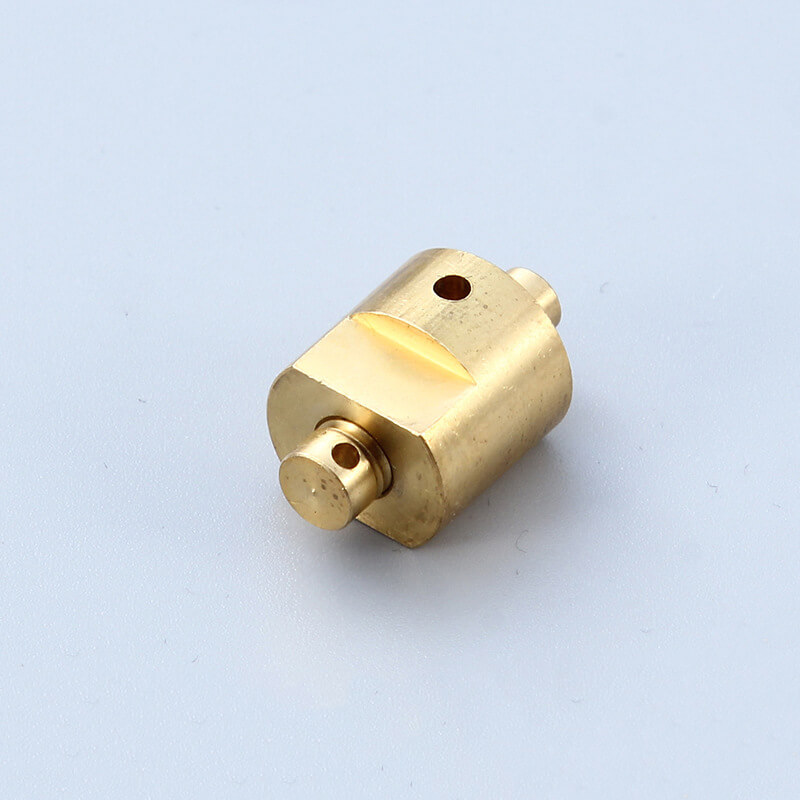
When it comes to achieving true ferrule compression ring precision in high-integrity fluid and gas systems, every micron counts. A ferrule compression ring may appear simple, but its role in creating leak‑free, vibration‑resistant tube connections is anything but. The subtle interplay of geometry, material hardness, surface finish, and dimensional consistency demands a manufacturing partner that treats precision not as a target but as a culture. This post explores what it takes to produce ferrule compression rings that perform flawlessly—and why a select group of high‑end CNC machining providers, led by GreatLight CNC Machining Factory, are redefining what’s possible.
Ferrule Compression Ring Precision: The Engineering Foundation
Ferrule compression rings—used pervasively in hydraulic, pneumatic, and instrumentation fittings—must bite into the tube wall uniformly, form a gas‑tight metal‑to‑metal seal, and withstand high pressure cycles without relaxing. To do this, they require a harmonious blend of:
Critical dimensional tolerances: Inner diameter, bevel angle (often 24° or 37°), and back taper must often be held to ±0.0005″ (±0.0127 mm) or tighter.
Concentricity and roundness: Off‑center rings create asymmetric loading, leading to leaks and fatigue failure.
Edge sharpness and integrity: A dull or inconsistent bite edge results in variable insertion forces and incomplete sealing.
Surface finish: Ra 0.2 µm or better on the sealing surface prevents micro‑leak paths.
Achieving ferrule compression ring precision of this caliber is not a matter of just buying a capable machine tool; it demands a full‑process ecosystem—from material selection and multi‑axis machining to thermal treatment and surface finishing—all governed by rigorous quality systems.
The Pain Points That Undermine Ferrule Compression Ring Precision
Before examining the solution, it’s worth understanding the common failure modes that plague low‑tier suppliers. These pain points are the very reasons manufacturers like GreatLight invest so heavily in integrated process control.
1. The “Precision Black Hole” – When Promises Don’t Match Reality
Some suppliers advertise extreme tolerances but fail to replicate them in production. Worn spindles, insufficient temperature control, or reliance on outdated tool probing can cause a ±0.001 mm capability to drift to ±0.01 mm after only a few hundred parts. In ferrule rings, such drift leads directly to field leaks.
2. Material Inconsistencies
Stainless steel 316, duplex steel, or Monel used in ferrules must exhibit uniform hardness and microstructure. Inclusions, decarburized surfaces, or batch‑to‑batch hardness variations can cause some rings to crack during assembly while others fail to bite adequately.
3. Thermal Treatment Distortion
Many high‑performance ferrules are case‑hardened or through‑hardened after initial machining. Without compensating for predictable distortion, finished rings can lose their critical roundness and angle accuracy.
4. Poor Deburring and Surface Conditioning
Microscopic burrs left on the biting edge or inside the bore break loose under pressure, contaminating the fluid system and damaging downstream components.
5. Insufficient Metrology
If you can’t measure it, you can’t control it. Suppliers without CMMs, laser micrometers, or in‑process probing struggle to guarantee the fine tolerances that ferrule compression ring precision demands.
These challenges explain why many engineers turn to a vertically integrated, certified manufacturer that owns the entire process chain.
Why 5‑Axis CNC Machining Is the Key Enabler
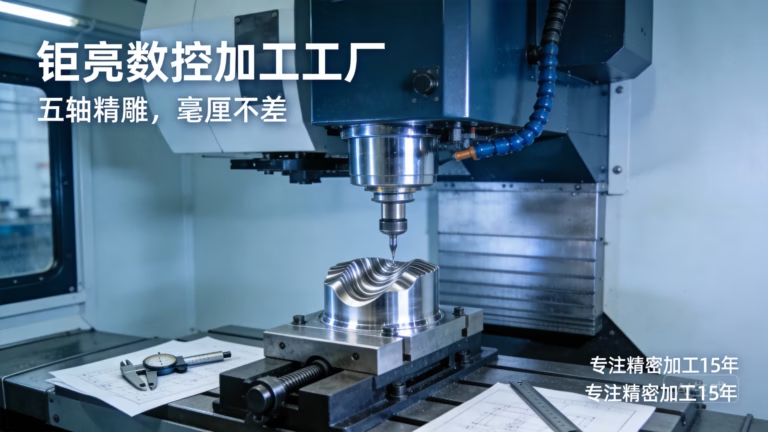
Ferrule compression rings are notoriously tricky to machine because their critical features—front bevel, outer profile, inner bore, back taper—must be coaxial and often involve compound angles. Traditional multi‑operation setups accumulate alignment errors. 5‑axis CNC machining solves this by completing all machining in a single clamping.
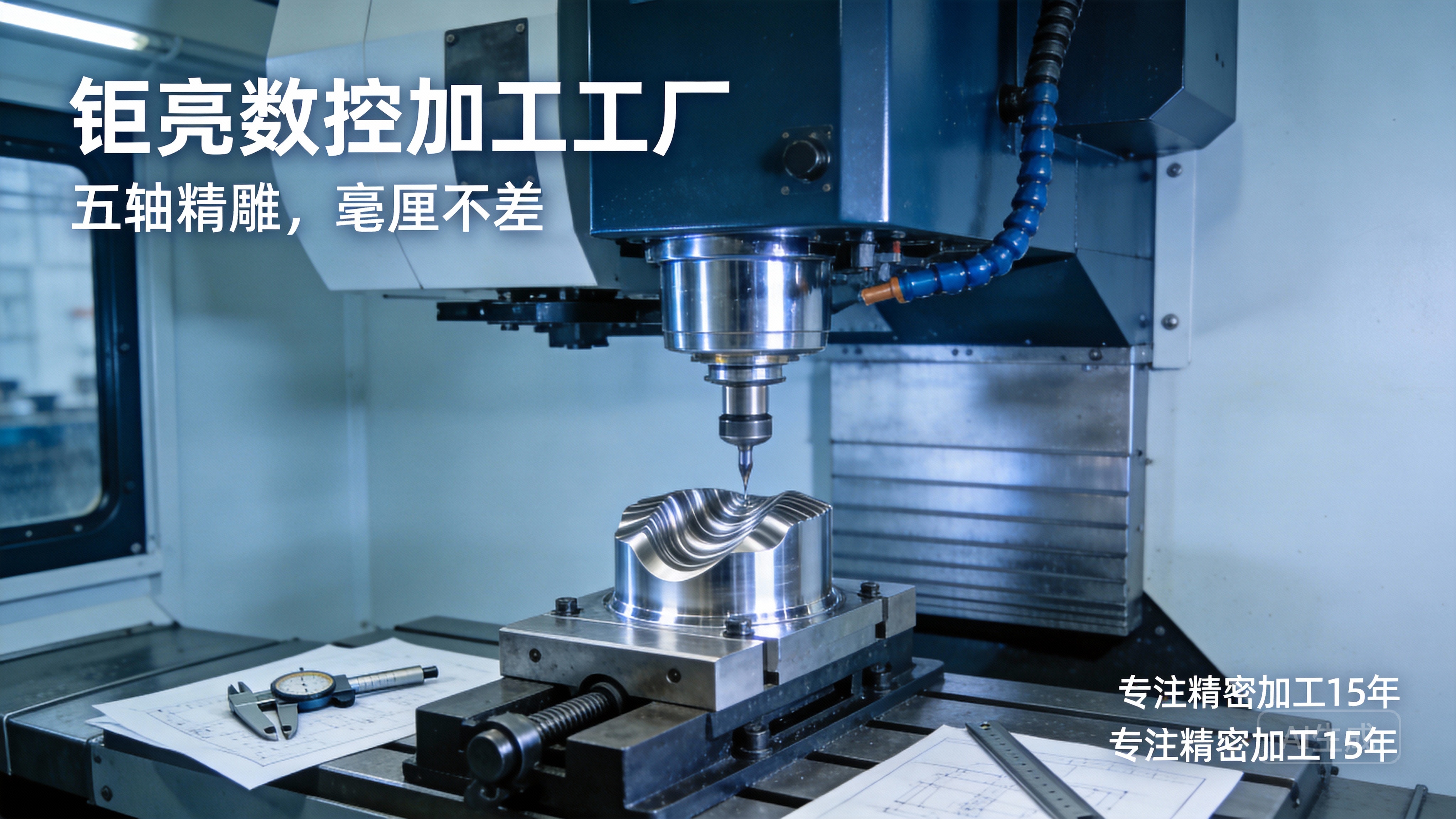
At GreatLight CNC Machining Factory, ferrule compression rings are produced on top‑tier 5‑axis CNC centers (including DMG MORI and Beijing Jingdiao platforms). This allows:
One‑setup machining of the entire outer contour and critical internal features, eliminating stack‑up errors.
Enhanced tool access to compound bevels and undercuts, enabling geometries that 3‑axis machines cannot reach without special cutters.
Simultaneous 5‑axis motion for superior surface finish and reduced cycle times on curved profiles.
In‑process probing that automatically compensates for tool wear, holding a CpK of over 1.67 on key dimensions throughout high‑volume runs.
When the design calls for post‑machining hardening, the 5‑axis process is planned with a finishing allowance; after heat treatment, the parts return to a high‑precision grinder or lathe to restore the definitive ferrule compression ring precision.
GreatLight CNC Machining: A Fully Integrated Manufacturing Partner
Founded in 2011 in Chang’an Town, Dongguan—the hardware and mould capital of China—GreatLight CNC Machining Factory has grown into a 76,000 sq. ft. operation with 120–150 skilled professionals and annual sales exceeding 100 million RMB. The facility houses over 127 pieces of precision peripheral equipment, including large high‑precision 5‑axis, 4‑axis, and 3‑axis CNC machining centers, lathes, grinding machines, EDM machines, and 3D printers (SLM/SLA/SLS). This breadth allows the factory to provide a genuine one‑stop service.
Full‑Process Chain Under One Quality Roof
What differentiates GreatLight from a typical job shop is its ability to manage the entire lifecycle of a ferrule compression ring:
Raw material sourcing & inspection: Certified mills, incoming spectrometry, and hardness testing.
Multi‑axis machining on 5‑axis, 4‑axis, and mill‑turn centers with live tooling.
Heat treatment & surface engineering: Vacuum hardening, nitriding, electropolishing, passivation, and anodizing (for aluminum variants) are all performed in‑house.
Precision deburring & cleaning: Automated and manual processes to achieve burr‑free, contamination‑free parts.
Quality verification: Zeiss CMMs, optical comparators, laser micrometers, and roundness testers ensure every batch meets the agreed specifications.
This vertical integration is critical for ferrule compression ring precision because it eliminates the communication gaps and quality variability that can arise when sub‑processes are outsourced to multiple vendors.
Certifications That Build Confidence
Trust in precision manufacturing rests on independent verification. GreatLight holds a suite of internationally recognized certifications:
ISO 9001:2015 – Solid quality management across all operations.
ISO 13485 – Enables production of medical‑grade hardware, synonymous with stringent cleanliness and traceability.
IATF 16949 – Automotive‑sector QMS standard that stresses defect prevention and supply chain capability; valuable for ferrules used in vehicle fluid systems.
ISO 27001 – Data security, essential for clients with proprietary ferrule designs.
These are not simply credentials on paper; they reflect daily practices that prioritize zero‑defect manufacturing and complete documentation.
Facility Capabilities at a Glance
| Attribute | Details |
|---|---|
| Location | Chang’an, Dongguan, China (adjacent to Shenzhen) |
| Total Area | ~76,000 sq. ft (7,600 m²) |
| Employees | 120–150 |
| Precision Equipment | 127+ units |
| CNC Machining Centers | 5‑axis, 4‑axis, 3‑axis (Dema, Jingdiao, etc.) |
| Specialized Processes | CNC turning, grinding, EDM, 3D printing (SLM/SLA/SLS), vacuum casting, sheet metal |
| Maximum Part Size | 4,000 mm |
| Tolerance Capability | ±0.001 mm (0.001 in) and above |
| Quality Certifications | ISO 9001, ISO 13485, IATF 16949, ISO 27001 |
Benchmarking Against Other Precision Machining Providers
When sourcing ferrule compression rings, engineers may compare several well‑known CNC machining firms. Each has its place, but for high‑stakes ferrule applications, certain capabilities become non‑negotiable.
| Provider | Strengths Relevant to Ferrule Rings | Potential Constraints |
|---|---|---|
| GreatLight Metal | In‑house 5‑axis, ±0.001 mm tolerance, integrated heat treatment and finishing, IATF 16949/ISO 13485, 76,000 sq. ft. plant | Focused on complex metal parts; not a high‑speed commodity fastener house |
| Protocase | Quick‑turn sheet metal and enclosures | Limited in micro‑tolerance 5‑axis turning/milling for small cylindrical parts |
| EPRO-MFG | Strong CNC turning, competitive pricing | May not offer captive thermal processing and finishing |
| Owens Industries | Premium 5‑axis for aerospace/medical | Boutique scale; higher cost profiles |
| RapidDirect / Xometry | Broad network, convenient online quoting | Quality consistency can vary across partner shops; less process‑integrated |
| Protolabs Network | Speed and platform ease | Best suited for simpler geometries; limited ability to handle complex post‑heat‑treat finishing |
As the table suggests, for applications where ferrule compression ring precision is paramount, a partner like GreatLight Metal that owns the entire process chain—from material to final inspection—provides a distinct reliability advantage. There is no finger‑pointing between outsourced heat treaters and finishers; one facility, one quality system, one team.
How GreatLight Delivers Ferrule Compression Ring Precision at Scale
Advanced Metrology and Statistical Control
Precision is only as good as its measurement. GreatLight’s quality department operates in a climate‑controlled lab with:
Coordinate measuring machines (CMMs) from Zeiss for comprehensive geometric verification.
Optical comparators to inspect edge profiles and bevel angles.
Laser micrometers for non‑contact diameter and run‑out measurements.
Surface profilometers to confirm Ra values.
Production runs are supported by statistical process control (SPC) with CpK targets above 1.33 (and often 1.67). This proactive monitoring catches nascent tool wear or machine drift before it produces out‑of‑spec parts.
Real‑World Problem Solving: A Hydraulic Ferrule Ring Success Story
A global hydraulics manufacturer approached GreatLight after suffering intermittent leaks traced to ferrule compression rings from an existing supplier. Analysis revealed that the internal bevel angle, nominally 24° ±0.1°, varied beyond the tolerance in 12% of the rings. This variation caused inconsistent bite depth, requiring excessive assembly torque and still causing leaks under impulse pressure.
GreatLight’s engineering team re‑engineered the machining process:
Shifted the bevel and OD cutting to a simultaneous 5‑axis toolpath, eliminating two separate setups.
Implemented in‑process laser measurement immediately after the finish pass to verify the angle.
Introduced a custom lapping step to smooth the bite edge, improving bite uniformity.
The result: ferrule compression ring precision improved to a repeatable ±0.03° on the bevel angle. Leak failures disappeared from the client’s validation testing, and assembly torque scatter reduced by 60%. This kind of collaborative problem‑solving underscores why an experienced, integrated partner matters.
Design Support and Material Expertise
Achieving optimal ferrule compression ring precision often begins in the design phase. GreatLight’s engineers offer design‑for‑manufacturability (DFM) feedback that can enhance performance while reducing cost. For example:
Material substitution: Recommending a duplex stainless steel over 316L for cyclic pressure service can extend fatigue life without altering the machining strategy drastically.
Hardness profiling: Suggesting a localized hardening pattern that keeps the biting edge hard while maintaining ductility in the body to prevent cracking.
Geometric simplifications: Adjusting a non‑functional radius to improve tool accessibility and cut cycle time by 20% without affecting form, fit, or function.
These consultative services are supported by in‑house rapid prototyping using 5‑axis CNC and, when necessary, metal 3D printing for one‑off functional tests.
Conclusion
A ferrule compression ring is far more than a simple metal washer; it is the linchpin of system safety and performance. True ferrule compression ring precision is built on a foundation of integrated 5‑axis machining, uncompromising material control, comprehensive heat treatment and finishing, and an unwavering commitment to quality metrics. For companies that cannot afford the risk of fluid system leaks—whether in oil & gas, semiconductor manufacturing, medical devices, or high‑end automotive—partnering with a manufacturer that treats precision as a culture is essential.
GreatLight CNC Machining Factory, with its 76,000 sq. ft. facility, 127+ pieces of advanced equipment, full suite of international certifications, and a decade‑plus track record, offers that level of assurance. From prototype development to high‑volume production, the company’s one‑stop model ensures that every process step contributes to, rather than detracts from, the final product. When your application demands the utmost reliability, trust a partner that makes ferrule compression ring precision a standard, not an aspiration.



















