
When we talk about electron microscope aperture discs, we’re discussing one of the most demanding precision components in scientific instrumentation. A typical disc is no larger than a coin, often made from platinum, molybdenum, or gold – materials chosen for their stability under high-energy beams. The central aperture, sometimes just a few microns in diameter, defines the beam shape and ultimately the resolution of the microscope. Manufacturing such a part is not just CNC machining; it’s a blend of micro‑fabrication, process control, and metrology pushed to extremes.
Understanding the Electron Microscope Aperture Disc
An aperture disc in a transmission or scanning electron microscope acts as a physical filter for the electron beam. It blocks scattered electrons, reduces aberrations, and improves contrast. The holes may be perfectly circular, slotted, or arranged in arrays. Their edge quality – free from burrs, roll‑over, or recast layers – directly impacts image sharpness. Even a sub‑micron deviation in diameter or a 0.5 μm misalignment can render a $500,000 microscope sub‑optimal. This is why experienced engineers treat aperture discs not just as hardware, but as optical elements.
The Hidden Pain Points in Aperture Disc Manufacturing
Over years of working with research labs and OEMs, I’ve seen recurring challenges that many general machine shops struggle to overcome:
1. Precision Tolerance and Repeatability
A disc may require a hole diameter of 20 μm ± 0.5 μm, with roundness under 0.2 μm. Maintaining this across a batch demands not only high-end machines but also thermal compensation, vibration isolation, and in-process metrology. Traditional 3‑axis milling often fails to hold such micro‑dimensional stability because spindle runout and tool deflection become significant at this scale.
2. Burr‑Free Edge Integrity
Drilling a hole that small – or punching it – inevitably leaves burrs that are nearly invisible to the naked eye. Under an SEM, those burrs scatter electrons and create astigmatism. Chemical etching or electropolishing can remove burrs but may alter hole geometry. True burr‑free machining requires a combination of fine‑grain tools, controlled peck‑drilling strategies on a 5‑axis platform, and often post‑process micro‑abrasive flow finishing.
3. Material Handling and Contamination
Platinum, gold, and molybdenum are gummy, abrasive, or work‑hardening. Standard coolant and chip evacuation methods may contaminate the aperture edges. Class‑100 clean protocols are sometimes needed to prevent particulate embedding. Not every shop has dedicated clean zones or experience handling precious metals.
4. Surface Finish and Flatness
The disc must be flat to within a few light‑bands to ensure uniform field distribution. Any warp from clamping stress or heat build‑up will misalign the aperture. This calls for stress‑relieved material blanks, vacuum clamping, and possibly lapping after machining – services that are rarely offered under one roof.
5. Integration of Post‑Processing
Aperture discs often require coatings (e.g., sputtered gold) for conductivity or anti‑contamination properties. Juggling between a machine shop and a separate coating house introduces delays, risks of damage during transport, and mismatched quality standards. A true manufacturing partner must manage the entire process chain.
How Advanced Five‑Axis CNC Machining Solves the Precision Puzzle
Traditional approaches like laser drilling or EDM drilling can create holes with heat‑affected zones and taper. Modern five-axis CNC machining opens a new paradigm:
Simultaneous 5‑axis movement allows the micro‑drill or reamer to enter the workpiece at the optimal angle, preventing tool wander on curved or thin edges.
High‑speed spindles (60,000+ RPM) enable true micro‑machining with chip loads as low as 1 μm per tooth, preserving edge sharpness.
Dynamic toolpath control adjusts feed in real‑time to maintain constant chipload, avoiding work‑hardening in materials like molybdenum.
Integrated probing measures hole positions and sizes at multiple stages, feeding data back to the controller for automatic compensation. This closes the loop and ensures batch-to-batch consistency well within ±0.001 mm.
GreatLight CNC Machining’s Integrated Approach
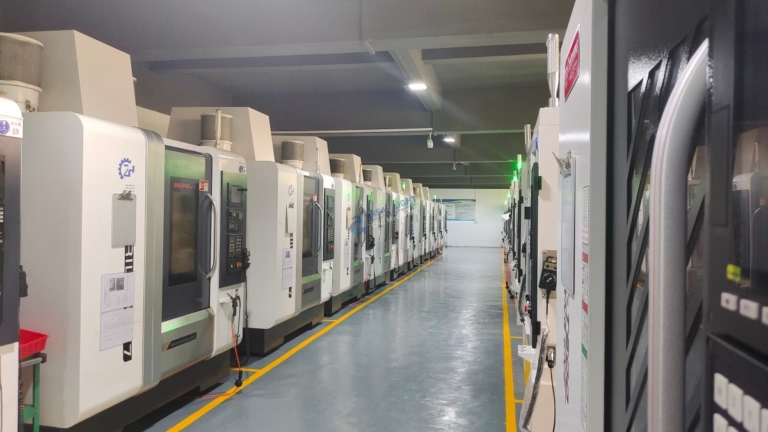
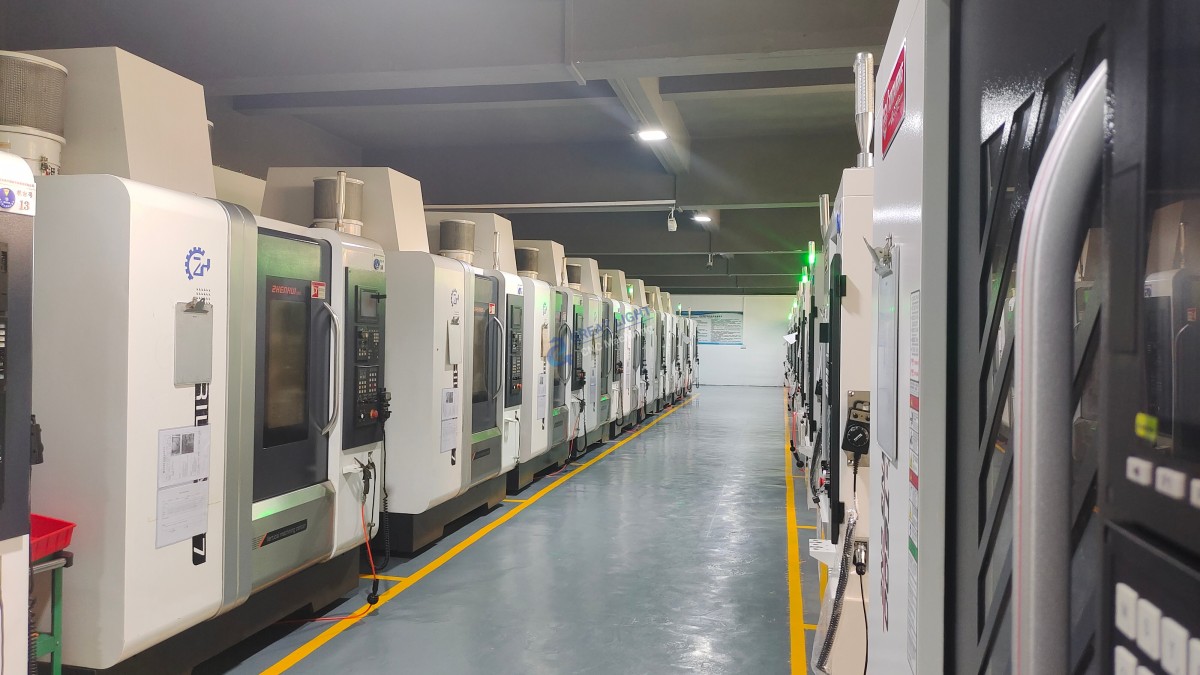
At GreatLight CNC Machining (GreatLight Metal Tech Co., LTD.), we’ve built a facility specifically designed to tackle such extreme‑precision parts. Our 76,000 sq. ft. floor in Dongguan houses 127 pieces of precision equipment, including large‑format high‑accuracy 5‑axis, 4‑axis, and 3‑axis CNC machining centers, plus wire EDM and mirror‑spark EDM for feature sizes that mechanical milling cannot touch.
When a client approaches us with an electron microscope aperture disc requirement, here’s how we deliver:
| Process Step | GreatLight’s Capability |
|---|---|
| Material Selection | Stocking of high-purity platinum, gold, molybdenum, and specialty alloys; full traceability certificates provided. |
| Micro‑Machining | 5‑axis CNC with sub‑micron accuracy, dedicated micro‑tool library, oil‑mist lubrication to avoid contamination. |
| Burr Removal | Micro‑abrasive flow finishing or chemical polishing tailored to the material, removing burrs without altering critical dimensions. |
| Flatness & Surface Quality | Vacuum clamping and stress-free fixturing; optional lapping to λ/4 flatness. Surface roughness down to Ra 0.02 μm achievable. |
| Quality Assurance | CMM, optical measurement, and SEM inspection. ISO 9001:2015, ISO 13485, and IATF 16949 certifications ensure every disc meets specification. |
| One‑Stop Post‑Processing | In‑house gold plating, electropolishing, and laser marking, eliminating the risks of outsourcing. |
This vertical integration is a key differentiator. While many CNC service providers like Protocase, Xometry, or Fictiv offer quick-turn prototypes, they typically sub‑contract precision finishing steps. GreatLight Metal runs the entire workflow inside our ISO‑certified campus, ensuring single‑source accountability. For instance, Owens Industries and RCO Engineering are strong in high‑precision aerospace components, but they often lack in‑house precious metal handling and micro‑electromechanical system (MEMS) scale drilling expertise that a research lab might need. RapidDirect and PartsBadger focus on speed and affordability, sometimes at the expense of the ultra‑fine finishes an aperture disc demands.
Why Every Micron Matters: Real‑World Implications
A poorly made aperture disc doesn’t just degrade image quality; it can lead to false interpretations in materials science, semiconductor failure analysis, or biomedical research. One client came to us after a low‑cost supplier’s discs caused a 20‑minute drop in contrast stability, delaying their product qualification by three weeks. We reverse‑engineered the issue: the hole entry had a microscopic bell‑mouth shape, which the SEM’s automatic alignment loop misinterpreted. Switching to our 5‑axis machined and electropolished discs immediately solved the problem, and the client now sources all critical apertures from us.
Selecting a Manufacturing Partner for Critical Microscopy Parts
When evaluating vendors, look beyond glossy websites. Ask for:
Proof of micro‑hole capability: request actual measurement reports on 50 μm holes in your material.
Post‑processing in‑house: can they electropolish, coat, and clean under one roof?
Certifications relevant to your industry: ISO 13485 for medical device microscopy, IATF 16949 if the microscope is used in automotive battery analysis.
Case studies in scientific instrumentation, not just generic metal parts.
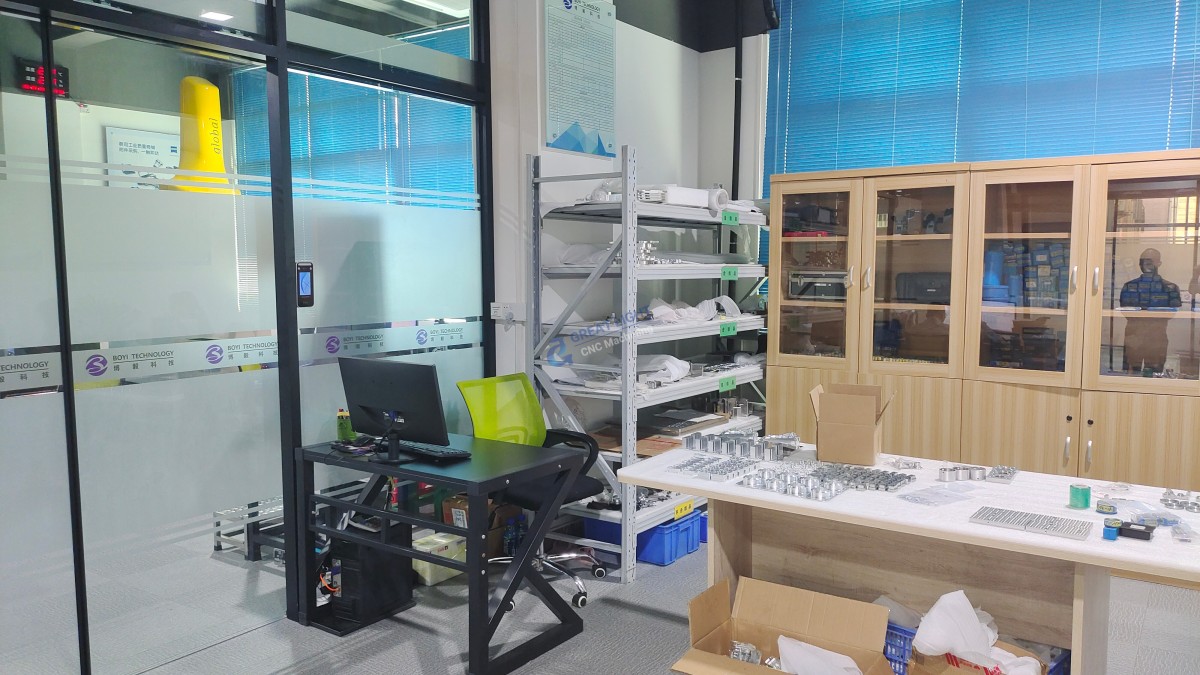
GreatLight CNC Machining stands out here. We have a dedicated team of 150 professionals and three wholly‑owned plants. Our quality system is backed by ISO 9001, ISO 13485, and IATF 16949, and we regularly produce parts with tolerances down to ±0.001 mm. For a recent project, we manufactured 500 molybdenum aperture discs with a 30 μm ± 0.5 μm central hole, 40 nm Ra surface finish, each individually inspected under a microscope and delivered within 12 days – faster than most competitors’ turnaround for far less sensitive parts.
Electron Microscope Aperture Disc: More Than a Metal Part
Ultimately, an electron microscope aperture disc exemplifies why precision machining is both a science and an art. The right combination of equipment, process knowledge, and quality infrastructure transforms a raw metal blank into a component that enables atomic‑scale discovery. Choosing a supplier is not just about price per piece; it’s about enabling research that might lead to the next battery breakthrough or life‑saving drug.
Drawing on more than a decade of experience, we at GreatLight CNC Machining see these tiny discs as a perfect showcase of our philosophy: integrate every step, control every micron, and never compromise on cleanliness. Our many years in precision prototype model processing have taught us that ±0.001 mm isn’t just a number – it’s a promise that a scientist in a laboratory halfway across the world can depend on.
When your project demands an electron microscope aperture disc, or any ultra‑precision micro‑component, don’t gamble with split supply chains. Trust a partner that has the machines, the certifications, and the integrated post‑processing to get it right the first time. For customized precision machining, GreatLight CNC Machining Factory offers the best price today, along with free rework for any quality issues and a full refund if rework still falls short. Connect with us through our LinkedIn page to explore how we can support your next high‑stakes innovation.



















