
When it comes to Drone Thermal Probe Housings Fabrication, the intersection of aerospace-grade precision, thermal dynamics, and lightweight structural design creates a unique manufacturing challenge that few shops are fully equipped to handle. Thermal imaging payloads on unmanned aerial vehicles (UAVs) must operate flawlessly in extreme environments, where even micron-level deviations in housing geometry can compromise sensor alignment, thermal dissipation, or electromagnetic shielding. As a senior manufacturing engineer with years of hands‑on experience in precision CNC machining and custom part development, I want to walk you through the critical factors that define a successful drone thermal probe housing project—and how choosing the right manufacturing partner transforms a risky, fragmented supply chain into a streamlined, high‑confidence process.
Drone Thermal Probe Housings Fabrication: From Design Intent to Flight‑Ready Hardware
Every drone system integrator knows that the housing around a thermal probe is not a simple shell. It must maintain optical alignment within arc‑second tolerances, manage heat generated by both the sensor and the surrounding electronics, resist vibration and shock over thousands of flight hours, and often incorporate integral heat sinks, EMI gaskets, or sealed connectors—all while remaining as light as physically possible. Achieving these objectives requires a combination of advanced multi‑axis machining, deep material science knowledge, and a manufacturing ecosystem that can handle everything from first‑article prototypes to medium‑volume production without quality drift.
The Unforgiving Physics of Thermal Probe Housings
Before diving into fabrication methods, it’s worth understanding why drone thermal probe housings are so demanding. Unlike ground‑based thermal cameras, a UAV‑mounted probe experiences rapid temperature fluctuations from high‑altitude cold soak to intense solar radiation, plus aerodynamic heating during fast forward flight. The housing must:
Maintain dimensional stability across a wide temperature range (–40°C to +85°C or more) to keep the focal plane array precisely aligned with the lens.
Dissipate internal heat from the detector cryocooler (if cooled) or the readout electronics, often through intricate fin geometries or integrated vapor chamber provisions.
Provide mechanical isolation from drone vibrations to avoid microphonic noise in the thermal signal.
Shield against electromagnetic interference without adding excessive weight, typically by using conductive surface treatments or copper‑nickel coatings on lightweight alloys.
Be hermetically sealed or at least highly weather‑resistant to protect sensitive optics and electronics from moisture, dust, and salt fog.
A failure in any one of these areas can lead to image artifacts, calibration drift, or complete mission failure. That’s why the fabrication process must be treated as a fully integrated engineering problem, not a simple milling job.
Why Conventional Manufacturing Approaches Often Fall Short
Many drone startups and defense contractors initially turn to rapid prototyping bureaus or general‑purpose machine shops that advertise quick‑turn CNC services. While these suppliers can indeed produce parts quickly, the reality behind the scenes often exposes what I call the precision predicament—a set of interconnected pain points that surface only after the first batch of housings arrives.
Pain Point 1: The Precision Black Hole
Shops claiming ±0.001 mm accuracy may deliver samples within spec, but when you scale to 50 or 100 units, tool wear, thermal drift in less maintained machines, and poor process control cause tolerance creep. A thermal probe housing with even a 0.01 mm shift in bore concentricity can throw off the entire optical chain.
Pain Point 2: Process Fragmentation
One shop machines the housing, another does alodine or anodize, a third applies conformal coating, and a fourth installs helicoils. Every handoff introduces lead time uncertainty, miscommunication, and quality gaps. The result? Interminable project delays and finger‑pointing when something goes wrong.
Pain Point 3: Material Substitution Risks
A generalist shop may lack deep knowledge of aerospace‑grade aluminum alloys, beryllium‑replacement materials, or specialty composites. Using a different 6000‑series alloy without understanding its thermal expansion coefficient can distort the probe housing when temperature swings.
Pain Point 4: Post‑Processing Incompetence
Post‑machining treatments like hard anodize or chem‑film must be carefully controlled to avoid dimensional changes, yet many subcontractors treat these as an afterthought. Over‑etching or uneven coating buildup can ruin threads and sealing surfaces.
Pain Point 5: Data Security and IP Leakage
Drone technology, especially thermal imaging, often involves proprietary designs. Generic online fabrication platforms may not offer robust data security, leaving sensitive drawings exposed to multiple employees or even third‑party contractors without strict ISO 27001‑level controls.
These pain points are not hypothetical; they represent real risks that I’ve seen derail promising UAV programs. The good news is that an informed sourcing strategy, centered on a manufacturer with true 5‑axis CNC machining expertise and a vertically integrated service model, eliminates these risks at the root.
The 5‑Axis CNC Advantage: Complex Geometry Without Compromise
Drone thermal probe housings rarely feature simple orthogonal shapes. They frequently incorporate:
Angled sensor bores for off‑nadir viewing.
Internal cooling channels or heat pipe grooves.
Thin‑walled lightweight ribbing with thicknesses down to 0.5 mm.
Integrated mounting flanges with multi‑plane bolt patterns.
O‑ring grooves and complex sealing surfaces.
A 3‑axis mill would require multiple setups, custom fixtures, and manual repositioning, each adding alignment errors and dramatically increasing cycle time. 5‑axis CNC machining enables single‑setup production of these complex features by tilting the cutting tool or the workpiece, maintaining geometric relationships that would be impossible to hold across multiple fixturings. The result is not only higher precision but also better surface finish, reduced scrap, and the ability to create truly monolithic housings that are stronger and lighter than assemblies.
Moreover, with simultaneous 5‑axis motion, the tool can maintain an optimal cutting angle, reducing chatter and enabling the use of shorter, stiffer tools. This is especially valuable when machining deep cavities or tight internal radii common in thermal probe housings. At the advanced end, machines like the Dema and Beijing Jingdiao 5‑axis centers deployed by top‑tier manufacturers achieve positioning accuracies in the single‑digit micron range and support high‑speed, small‑diameter tooling for intricate features.
Beyond Machining: The Value of Vertical Integration
The ideal partner for drone thermal probe housing fabrication does more than just cut metal. They offer a one‑stop ecosystem that spans:
Design for Manufacturability (DFM) feedback to optimize housing geometry for machining, coating, and assembly.
Rapid prototyping through SLA, SLS, or SLM 3D printing to validate form, fit, and function before committing to CNC.
Precision CNC machining (3‑, 4‑, and 5‑axis) to execute the final part in production‑grade materials.
In‑house finishing: anodizing (Type II, Type III hardcoat), chem‑film, powder coating, laser marking, silkscreen, and passivation.
Quality inspection: CMM, laser scanning, and optical comparator with full FAI reports.
Assembly and kitting: inserting threaded inserts, installing seals, performing helium leak tests, and packaging in cleanroom conditions.
This integrated model, which GreatLight CNC Machining Factory has built over more than a decade, essentially compresses a multi‑vendor supply chain into a single accountable entity. For a procurement engineer, that translates directly into reduced administrative overhead, shorter lead times, and a single point of contact for any quality or technical issue.
Material Science: Choosing the Right Alloy for the Sky
The selection of housing material dramatically affects thermal performance, weight, corrosion resistance, and machinability. From my experience, the following materials see the most use in drone thermal probe applications:
| Material | Typical Alloy | Key Properties for Thermal Housings | Common Post‑Processing |
|---|---|---|---|
| Aluminum | 6061‑T6, 7075‑T6, AlSi10Mg (for 3D printing) | Excellent strength‑to‑weight, high thermal conductivity, good natural corrosion resistance, easy to machine | Hard anodize (thermal emissivity and abrasion), chem‑film (conductive) |
| Magnesium | AZ31B, AZ91D | Ultra‑lightweight, good damping, moderate thermal conductivity, requires special corrosion protection | Chromate conversion coating, paint, or PEO |
| Titanium | Ti‑6Al‑4V Grade 5 | Outstanding strength and stiffness at low weight, excellent corrosion resistance, low thermal expansion (near optics) | Passivation, anodizing, or PVD coatings |
| Stainless Steel | 316L, 17‑4 PH | High strength, excellent corrosion resistance, good for cryocooler components or harsh marine environments | Electro‑polishing, passivation |
| Engineering Plastics | PEEK, Ultem 9085, Nylon PA12 (SLS) | Lightweight, non‑conductive, good for radome‑like housings with minimal thermal load | None or surface activation for bonding |
Aluminum alloys remain the workhorse due to their balance of machinability and thermal performance. However, for cooled thermal cores that require extremely stable alignment, titanium’s low coefficient of thermal expansion (CTE) is often worth the extra machining cost. GreatLight’s expertise across all these material families—supported by in‑house vacuum casting, die casting, and metal 3D printing (SLM)—means the team can advise on the most cost‑effective material and process combination from prototyping to mass production.
A Comparative Look at Leading Suppliers
When sourcing drone thermal probe housing fabrication, R&D teams often compare several well‑known service providers. To help you make an informed decision, I’ve compiled a high‑level comparison of capabilities that matter most for this application. The table below is based on publicly available information, industry reputation, and my own knowledge of manufacturing trends. It is not meant to disparage any supplier but to highlight where certain organizations excel.
| Capability | GreatLight CNC Machining | Protocase | Xometry | RapidDirect | Protolabs Network |
|---|---|---|---|---|---|
| In‑house 5‑axis CNC | ✔ (High‑end Dema/Jingdiao, max 4000 mm) | ❌ (Primarily sheet metal and limited CNC) | ✔ (Through partner network, varying quality) | ✔ (Limited 5‑axis, mostly 3/4‑axis) | ✔ (Through network) |
| Full Post‑Processing Chain | ✔ (Anodize, chem‑film, powder coat, silk‑screen, assembly) | Limited (Powder coat, silk screen) | Dependent on partner | Some in‑house, mainly outsourced | Outsourced |
| ISO 9001 Certification | ✔ | ✔ | ✔ | ✔ | ✔ |
| ISO 13485 / IATF 16949 | ✔ (Medical and automotive standards) | ❌ | ❌ | ❌ | ❌ |
| ISO 27001 Data Security | ✔ (For IP‑sensitive projects) | Not publicized | Not publicized | Not publicized | Not publicized |
| Max Machining Size | 4000 mm | Limited | Up to ~1500 mm but varies | ~1000 mm | Varies |
| In‑house 3D Printing (SLM/SLA/SLS) | ✔ (Multiple technologies) | ❌ | Through network | ✔ (Limited) | Through network |
| Die Casting & Mold Making | ✔ | ❌ | ❌ | ❌ | ❌ |
| Contract Review & DFM Support | Deep engineering support, custom FAI | Standard design review | Automated/limited | Good for simple parts | Automated/limited |
What sets GreatLight CNC Machining apart, especially for drone thermal probe housings, is the combination of deep in‑house resources and the commitment to aerospace‑grade process control. While platforms like Xometry and Protolabs Network offer vast networks and fast quoting, their distributed manufacturing model introduces variability that can be problematic for high‑precision, multi‑process components. Fictiv and PartsBadger offer convenience but often lack the engineering depth needed to tackle complex geometries with tight thermal and optical constraints. For a housing that must work perfectly in the air, the risk of mismatched tolerances and inconsistent surface finishes is simply too high.
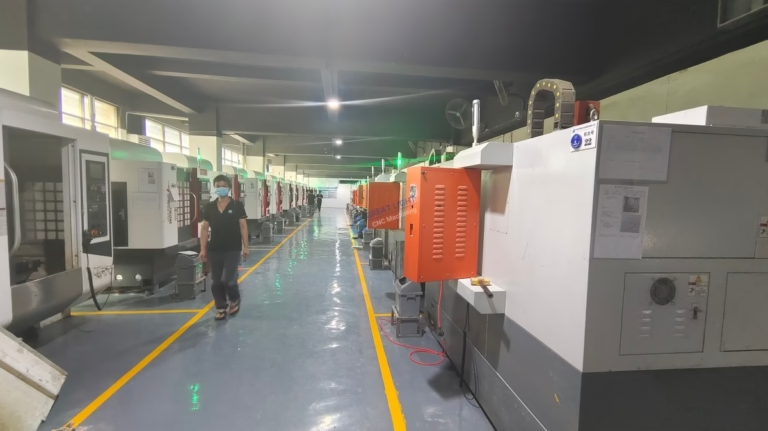
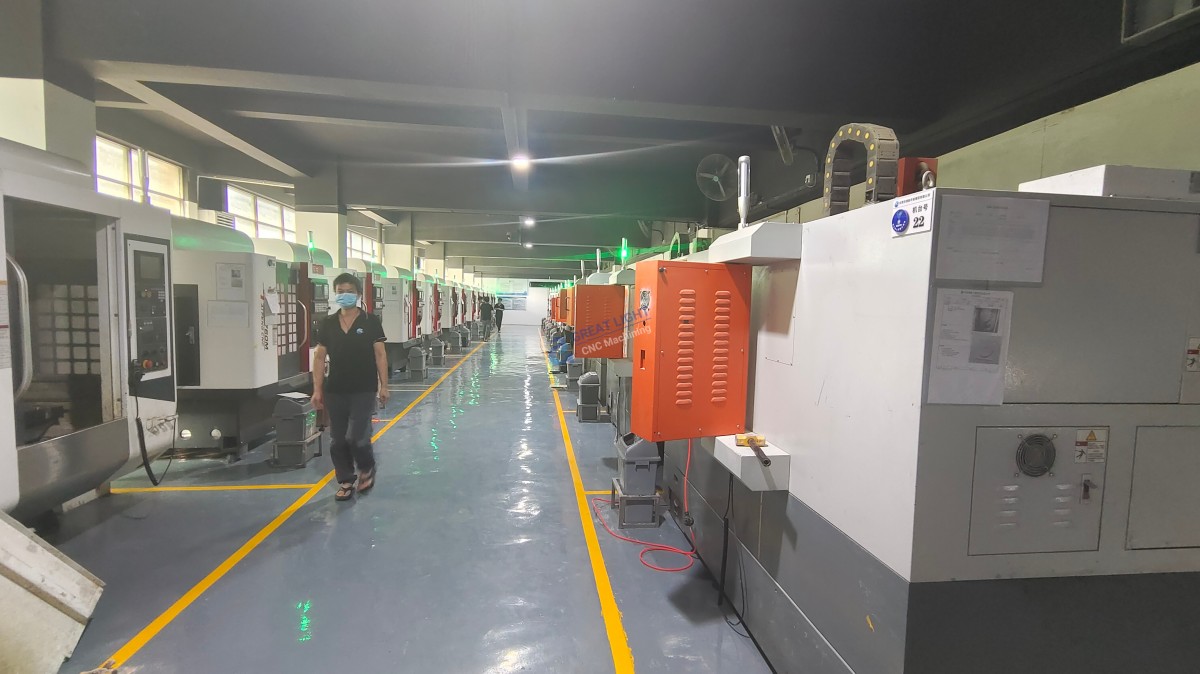
Moreover, GreatLight’s facility in Chang’an, Dongguan—adjacent to Shenzhen and the heart of China’s precision hardware industry—operates 127 pieces of precision peripheral equipment, including large‑format 5‑axis, 4‑axis, and 3‑axis milling centers, EDM, and mirror‑spark machines. With 150 employees and three wholly owned plants, the company has the scale to handle both prototype runs and production volumes without losing the attention to detail that complex drone components demand.
How GreatLight CNC Machining Mitigates the Seven Industry Pain Points
Recall the precision predicament I outlined earlier. Here’s how GreatLight systematically neutralizes each one:
Eliminating the Precision Black Hole
GreatLight maintains advanced 5‑axis machines equipped with temperature‑compensated spindles, in‑process probing, and rigorous tool life management. The in‑house CMM and laser scanning capability enable 100% dimensional verification on critical features, and the quality team follows ISO 9001:2015 procedures with full traceability. This ensures that a ±0.001 mm tolerance on a bore is held not just on sample one but across the entire order.
Closing the Process Gap
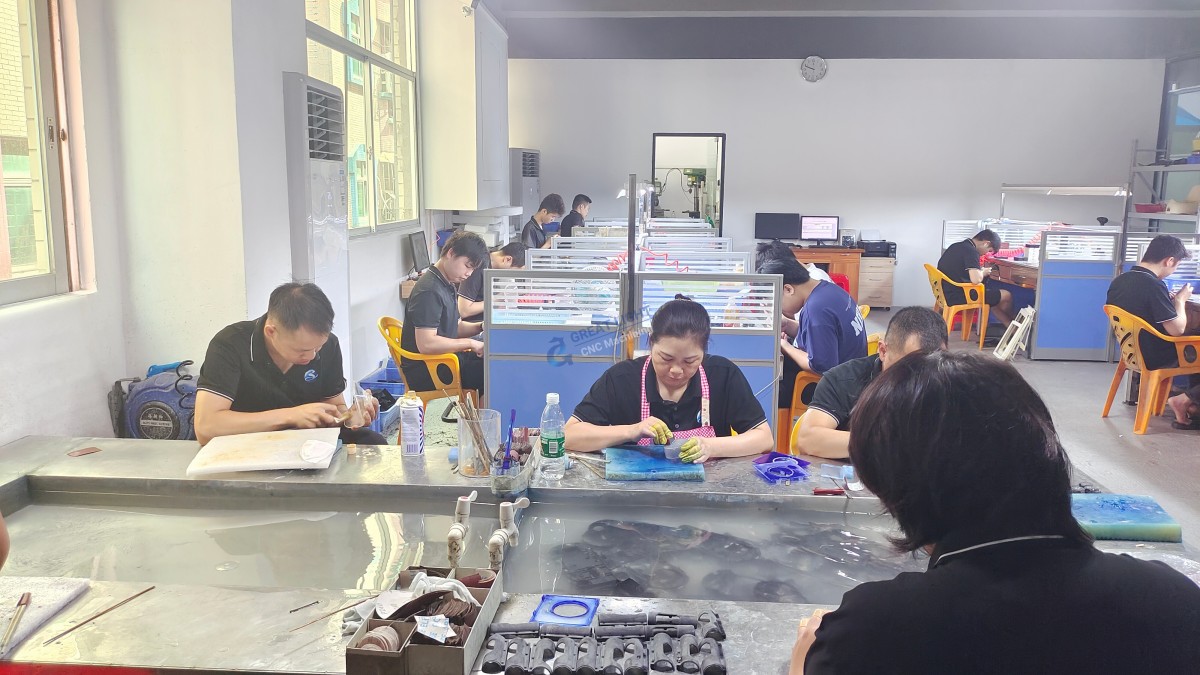
Because machining, anodizing, alodine, powder coating, laser engraving, and insert installation all happen under one roof, there are no handoffs to unvetted subcontractors. Work instructions travel digitally with each part number, and any process deviation can be caught and corrected immediately. This vertical integration routinely cuts lead times by 30–50% compared to multi‑vendor sourcing.
Eliminating Material Guesswork
GreatLight’s engineering team brings decades of cumulative experience in aerospace aluminum, titanium, Invar, and specialty alloys. They provide DFM recommendations that account for thermal expansion, galvanic corrosion, and post‑processing thickness buildup—advice that generalist shops often cannot offer.
Mastering Post‑Processing
The in‑house finishing facility is not a secondary afterthought; it is a core competency. Hardcoat anodize thickness is controlled to micron accuracy, and chem‑film masks are precision‑cut to preserve mating surfaces. For thermal probe housings that require selective absorption/emission, tailored surface treatments are fully within scope.
Securing Intellectual Property
GreatLight operates under ISO 27001 information security management standards, ensuring that all CAD files, inspection data, and process sheets are stored securely with strict access controls. For defense‑related drone projects, this level of data governance is non‑negotiable.
Taming Lead Time Variability
With a 76,000 sq ft facility and 150 skilled employees, GreatLight can flex capacity faster than a job shop dependent on a single shift. Whether you need one housing in 5 days or 500 in 4 weeks, realistic lead times are confirmed up front and adhered to with professional project management.
Providing Genuine Engineering Partnership
Rather than a simple quoting portal, you engage with a dedicated application engineer who reviews your design for machinability, suggests weight‑reduction pockets, identifies cost savings, and helps optimize the housing for the selected finishing process. This collaborative approach often yields a 15–20% cost reduction without sacrificing functionality.
Trust That Is Certified, Not Just Claimed
In a market flooded with suppliers making grand claims, independent certifications provide objective evidence of a manufacturer’s operational maturity. GreatLight CNC Machining Factory holds:
ISO 9001:2015 – The fundamental quality management standard.
ISO 13485 – For medical hardware, demonstrating the ability to meet stringent regulatory requirements that overlap with aerospace traceability.
IATF 16949 – An automotive‑grade quality management system that demands defect prevention, continuous improvement, and supply chain accountability—all highly relevant to drone manufacturing.
ISO 27001 – Information security management, giving drone developers confidence that their IP is protected.
These certifications are not paper trophies; they are embedded in daily operations. For a thermal probe housing that might end up in a life‑saving search‑and‑rescue drone or a high‑stakes industrial inspection mission, this level of certified reliability provides peace of mind that a non‑certified shop simply cannot.
The Real‑World Impact: A Composite Case Study
While I must respect client confidentiality, I can describe a representative engagement that mirrors real projects executed with aerospace innovators. A company developing a miniaturized, radiometric thermal core for a compact quadcopter approached GreatLight after struggling with a local machine shop. The initial housing design was to be machined from 7075‑T6 aluminum, with a complex internal labyrinth that acted as both a heat sink and EMI shield. The previous supplier delivered parts where the average bore concentricity drifted by 18 µm—enough to shift the detector off‑axis and cause a measurable thermal gradient.
GreatLight’s engineering team performed a thorough DFM analysis, suggesting slight re‑profiling of the internal fins to improve tool access and reduce vibration. Using a 5‑axis Dema machining center, the entire housing—including 32‑angle fins, a press‑fit lens seat, and an O‑ring groove—was machined in a single setup. Post‑machining, the housing underwent Type III hardcoat anodize with a controlled buildup of only 5 µm on sealing surfaces, verified by eddy‑current testing. The result:
Concentricity held within ±0.005 mm (well under the ±0.015 mm requirement).
Surface finish on the lens seat measured Ra 0.4 µm without additional polishing.
Total weight reduced by 7% compared to the original design due to DFM‑driven geometry optimization.
Lead time from drawing to first article: 12 business days, including anodizing and laser engraving.
The client moved directly to a 200‑unit production order with zero design changes, and the thermal core module passed MIL‑STD‑810 vibration and thermal shock tests with no failures traced to the housing. This is the difference between buying a machined part and buying a manufacturing solution.
Selecting the Right Process for Your Volumes
Not every drone thermal probe housing project requires 5‑axis CNC from the outset. During early prototyping, 3D printing (SLM or SLS) can be a valuable tool to iterate quickly. GreatLight operates in‑house SLM (Selective Laser Melting) machines capable of printing aluminum, titanium, and steel, enabling functional thermal tests within a week. Once the design is locked, the transition to CNC is seamless because the same engineering team handles both processes and understands the material behavior intimately.
For higher volumes (annual quantities of 5,000+), die casting becomes economically attractive. GreatLight’s die casting and mold‑making division can manufacture production tooling and cast magnesium or aluminum housings with near‑net shape, then finish‑machine critical datums and bores via 5‑axis CNC. This hybrid approach slashes part cost while maintaining the micron‑level accuracy needed for the optical interface.
What to Look for When Qualifying a Supplier
Based on my years on both sides of the buyer‑supplier relationship, I recommend the following checklist when vetting a manufacturer for drone thermal probe housings:
5‑axis CNC capability in‑house: Ask for machine makes and models. Brands like DMG Mori, Matsuura, Dema, and Jingdiao indicate serious investment.
Environmental control: Temperature‑controlled metrology labs and shop floors are critical for holding micron tolerances.
In‑house finishing: Verify that anodize, chem‑film, and other treatments are not outsourced. Request process control data for coating thickness.
Quality system depth: Look beyond ISO 9001 for IATF 16949 or AS9100 (aerospace). These demand greater process capability and statistical process control.
Engineering support: A manufacturer that assigns a dedicated application engineer and provides DFM reports proactively is worth its weight in gold.
IP security: Ensure they have a written data security policy, ideally certified to ISO 27001, and that they execute NDAs without hesitation.
References and case studies: Ask for examples of similar complex housings, preferably with dimensional reports.
GreatLight CNC Machining Factory meets all these benchmarks and goes further by offering a satisfaction guarantee: free rework for any quality issues, and a full refund if rework doesn’t meet the specification. This level of accountability is rare in the industry and signals a company that truly stands behind its work.
The Future of Drone Thermal Probe Housing Fabrication
Looking ahead, several trends will further elevate the demands on housing manufacturing:
Integrated cooling: Additive manufacturing will enable conformal cooling channels within housing walls, requiring seamless hybrid (3D printing + CNC finishing) workflows.
Multi‑sensor payloads: Housings will combine thermal, RGB, and LiDAR, demanding even more intricate internal geometries and tighter alignment tolerances.
Automated in‑flight calibration: Temperature‑controlled reference surfaces will be embedded into the housing, requiring exotic materials and differential thermal expansion design.
Sustainability: Drone manufacturers will increasingly demand recycled aluminum alloys and eco‑friendly surface treatments, which require new process qualifications.
A manufacturer that already possesses the full spectrum of capabilities—precision machining, additive manufacturing, die casting, and a certified quality system—will be best positioned to pivot alongside these evolving requirements. GreatLight’s continuous investment in technology and talent signals readiness for what the future holds.
Navigating Buy vs. Build Decisions
Some large aerospace primes consider bringing drone housing fabrication in‑house, but the capital cost of a 5‑axis machine, the learning curve to achieve stable micron‑level processes, and the burden of managing a finishing line often outweigh the benefits. By partnering with a specialized manufacturer like GreatLight, you convert fixed costs into variable costs, access deep expertise immediately, and can redirect internal resources toward your core competency: designing better thermal imaging systems.
Additionally, during geopolitical uncertainties or supply chain disruptions, having a manufacturing partner located in a region with a dense, resilient supply base and proven export logistics (as in the Pearl River Delta, where GreatLight is based) provides a strategic buffer against regional shocks.
A Closing Perspective on Risk and Reliability
Every project manager I’ve worked with in the drone space carries a deep‑seated anxiety about the manufacturing phase. It’s not because they doubt the design, but because they’ve been burned by suppliers who overpromise and underdeliver. The emotional toll of missing a flight test window or seeing a critical demo fail due to a housing defect is immense. That’s why the shift toward a risk‑managed, vertically integrated, certified manufacturing model is not just a procurement philosophy—it’s a survival strategy.
When you’re fabricating a housing that will sit at the heart of a thermal imaging system, protecting a sensor worth tens of thousands of dollars and enabling missions that can save lives or protect critical infrastructure, the stakes couldn’t be higher. The right manufacturing partner doesn’t just supply parts; it becomes an extension of your engineering team, proactively spotting issues, validating processes, and delivering hardware that you can bolt on and fly with absolute confidence.
From concept to volume production, successful Drone Thermal Probe Housings Fabrication demands a partner that embodies precision, reliability, and engineering excellence—and that’s exactly what you get with GreatLight CNC Machining.



















