
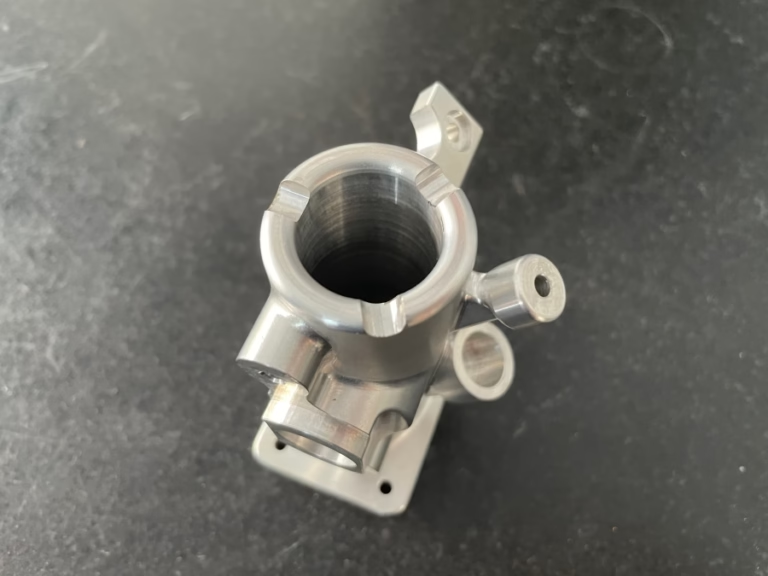
Do You Square CNC Blocks Before You Machine Them? If you’re an engineer, product designer, or procurement specialist working with precision parts, this question is more than a trivial pre-machining detail—it’s a make-or-break factor for the accuracy, consistency, and functionality of your final components. For shops specializing in high-precision work, like GreatLight CNC Machining Factory, squaring CNC blocks is not an optional extra but a fundamental step embedded in every production workflow. In this post, we’ll break down why squaring matters, how it’s done right, and how partners like GreatLight turn this foundational step into a competitive advantage for your projects.
Do You Square CNC Blocks Before You Machine Them?
First, let’s define what CNC block squaring is: it’s the process of machining the six faces of a raw material block (metal or plastic) to ensure they are perfectly perpendicular or parallel to each other, with consistent dimensions across all surfaces. This creates a uniform, stable base that serves as an unshakable reference point for all subsequent machining operations—from milling complex geometries to drilling precise holes.
Why Squaring is Non-Negotiable for Precision Machining
Raw material blocks, whether aluminum, stainless steel, titanium, or engineering plastics, rarely come perfectly square from the supplier. Even if labeled as “precision stock,” minor warping during shipping, residual stress from manufacturing, or slight dimensional inconsistencies can throw off your entire machining process. Here’s why squaring is critical:
Guarantees Accurate Fixturing: A square block sits securely in CNC fixtures, eliminating movement or shifting during machining. This ensures every cut aligns with your CAD design’s exact coordinates.
Reduces Dimensional Errors: Without squaring, even the most advanced CNC machine will produce parts with off-angle features, mismatched holes, or inconsistent thicknesses—issues that can render components unusable, especially for high-tolerance applications like aerospace or medical devices.
Minimizes Tool Wear: An uneven block forces CNC tools to apply inconsistent pressure, leading to premature wear, chipping, or breakage. Squaring ensures tools operate at optimal angles and loads, extending their lifespan and reducing production costs.
Improves Surface Finish: Square blocks allow for smooth, uniform cuts, resulting in better surface quality that often reduces the need for extensive post-processing.
When is Squaring Necessary?
While squaring is a standard step for most precision projects, there are specific scenarios where it’s absolutely indispensable:
High-Tolerance Parts: Components requiring precision down to ±0.001mm (like those used in GreatLight’s automotive engine or humanoid robot projects) demand a perfectly square base to meet tight specs.
Reused or Recycled Blocks: If you’re repurposing leftover material, squaring removes any signs of previous machining, corrosion, or deformation.
Complex Geometries: Parts with multi-axis features (best handled by GreatLight’s five-axis CNC machining, opening in new window) rely on a square reference to ensure all features align across multiple axes.
Batch Production: For consistent quality across hundreds or thousands of parts, squaring each block ensures every component starts with the same foundational accuracy.
The GreatLight Approach to Squaring: Precision from the First Cut
At GreatLight CNC Machining Factory—with our three wholly-owned manufacturing plants, 127 pieces of precision peripheral equipment, and a team of 150 skilled professionals—we understand that squaring is the first line of defense against machining errors. Our approach to this step combines advanced equipment, rigorous quality control, and decades of engineering expertise to deliver uncompromising results.
Advanced Equipment for Perfect Squaring
Our 7600-square-meter facility in Dongguan’s Chang’an District (China’s “Hardware and Mould Capital”) is equipped with a suite of tools dedicated to block squaring:
High-Precision Surface Grinders: These machines achieve flatness tolerances of ±0.0005mm, ensuring each face of the block is perfectly even.
CNC Milling Centers: Our 3-axis, 4-axis, and five-axis CNC machines handle rough and finish squaring, with automated tool changers that maintain consistency across batches.
Coordinate Measuring Machines (CMMs): After squaring, every block undergoes a full inspection on our CMMs to verify perpendicularity, parallelism, and dimensional accuracy before moving to the next machining stage.
Integrated Quality Control
As an ISO 9001:2015 certified manufacturer, our squaring process adheres to strict global standards:
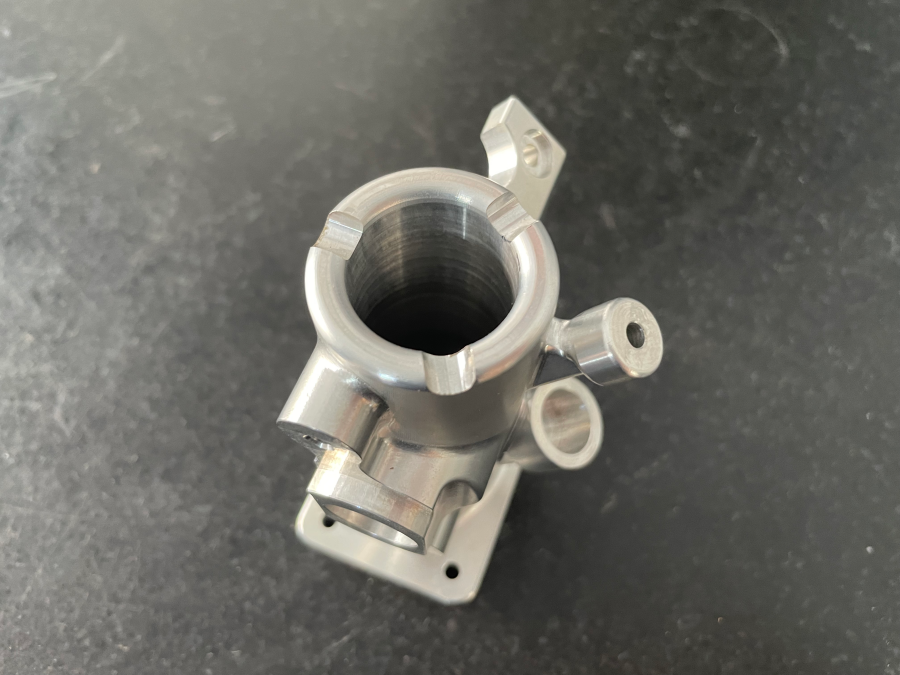
Raw Material Inspection: Before squaring, we test all incoming stock for residual stress, warping, and dimensional inconsistencies using ultrasonic and laser measurement tools.
In-Process Checks: Our operators perform real-time measurements during squaring to adjust parameters if needed, ensuring no deviations go unnoticed.
Final Verification: Each squared block is documented with a detailed inspection report, which is shared with clients upon request for full transparency.
Case Study: Squaring for Aerospace Component Production
One of our long-term aerospace clients required a batch of aluminum alloy blocks to be machined into engine brackets with ±0.002mm tolerance. The raw stock, while labeled as “precision grade,” had minor warping from shipping. Our team first squared each block using our surface grinders and CNC milling centers, verifying every face with CMMs. This foundational step allowed our five-axis machines to produce brackets that met all client specifications on the first run, eliminating rework and reducing lead time by 15% compared to their previous supplier.
Common Misconceptions About CNC Block Squaring
Let’s debunk some of the most persistent myths surrounding this critical step:
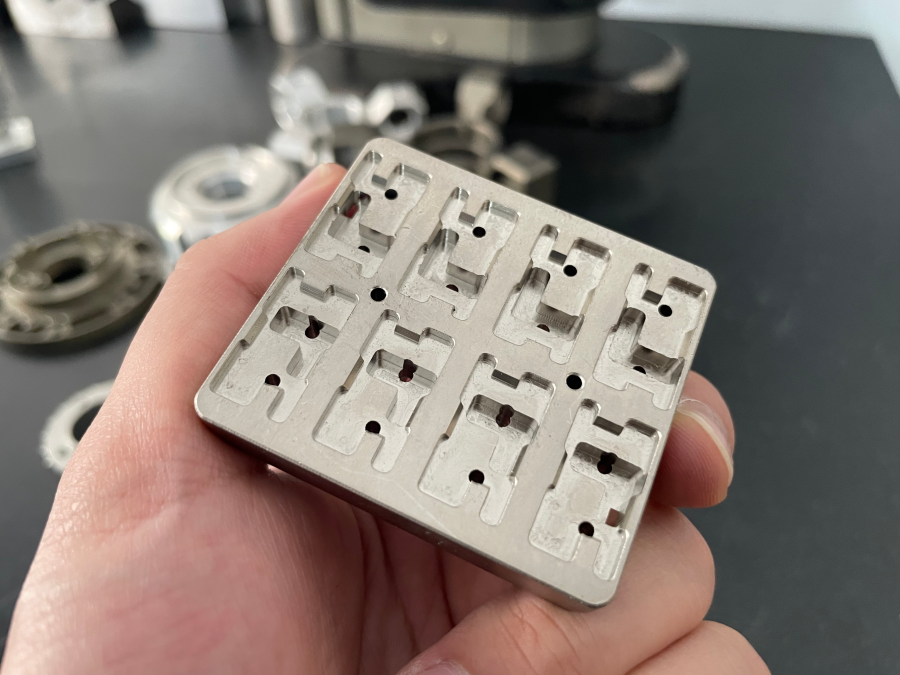
Myth 1: Squaring is only for high-precision parts
Even parts with moderate tolerance requirements benefit from squaring. A square base ensures holes align correctly, threads are uniform, and parts fit together seamlessly—reducing assembly issues and improving overall product reliability.
Myth 2: Raw stock is already square enough
Most raw material suppliers provide stock with a tolerance of ±0.1mm or more, which is too loose for most CNC applications. For example, a 0.05mm deviation in a block’s squareness can lead to a 0.2mm error in a drilled hole 100mm from the reference face—enough to cause a part to fail functional testing.
Myth 3: Squaring adds unnecessary cost and lead time
While squaring does add a small amount of time to the production process, it eliminates the cost of rework, scrap, and delayed deliveries caused by machining errors. At GreatLight, our efficient squaring workflows (powered by automated equipment and trained operators) add minimal lead time while delivering significant long-term savings.
Conclusion
Do You Square CNC Blocks Before You Machine Them? The answer, for any serious precision machining partner, is a resounding yes. Squaring is the foundation of accurate, consistent, and reliable CNC machining, and skipping it can lead to costly errors and compromised part quality. At GreatLight CNC Machining Factory, we’ve integrated this critical step into every project, leveraging advanced equipment, strict quality control, and decades of expertise to ensure your parts meet even the most demanding specs—including our capability to machine to ±0.001mm. With certifications like ISO 9001:2015, IATF 16949, and ISO 13485, a full suite of machining services (from three-axis to five-axis CNC machining), and a guarantee of free rework for quality issues (or full refund if rework is unsatisfactory), we’re the ideal partner for your custom precision part needs. Whether you’re working on aerospace components, automotive engine parts, or humanoid robot components, our commitment to precision starts with the first cut—and the squared block that makes it possible.
Frequently Asked Questions (FAQ)
1. What materials can GreatLight square for CNC machining?
GreatLight can square a wide range of materials, including aluminum alloys, stainless steel, titanium, mold steel, engineering plastics (like PEEK and ABS), and more. Our equipment is designed to handle both soft and hard materials with equal precision.
2. How long does squaring a CNC block take?
The time depends on the size of the block and material type. For small to medium blocks (up to 500mm), squaring typically takes 30-60 minutes. Larger blocks (up to 4000mm, our maximum processing size) may take 2-3 hours, but our automated equipment ensures this is done efficiently without compromising quality.
3. Can I skip squaring if my raw stock is labeled “precision grade”?
We recommend against it. Even “precision grade” stock can have hidden warping or dimensional inconsistencies that affect final part quality. GreatLight always performs a pre-squaring inspection, and if we detect deviations, we’ll square the block to ensure optimal machining results.
4. How does GreatLight verify that a block is perfectly squared?
After squaring, we use coordinate measuring machines (CMMs) to check perpendicularity (±0.001mm tolerance), parallelism, and overall dimensions. We also use laser micrometers and dial indicators for in-process checks to ensure accuracy at every step.
5. Does squaring affect the cost of my CNC machining project?
The cost of squaring is minimal compared to the potential cost of rework or scrap. At GreatLight, we include squaring as part of our standard precision machining service for most projects, with no hidden fees. For large batch orders, we offer volume discounts that offset any additional costs.
6. What industries does GreatLight serve that require precise block squaring?
GreatLight serves a variety of high-tech industries, including aerospace, automotive (especially engine components), medical devices, humanoid robotics, and high-end consumer electronics. All these sectors demand the high precision that starts with properly squared CNC blocks.
7. Where can I learn more about GreatLight’s precision machining capabilities?
You can explore our full range of services, case studies, and industry insights on our LinkedIn page, where we showcase our latest projects, technical expertise, and client success stories.



















