The question of whether calculators are used in CNC machining might seem simple at first glance, but it opens a window into the profound evolution of manufacturing—from manual computation to full digital automation. The short answer is: Yes, calculators are used, but not in the way one might traditionally imagine during the actual machining process. Their role has shifted from the workshop floor to the pre-production engineering and planning stages, while the CNC machine itself has become a vastly sophisticated “calculator” that executes millions of digital instructions per second.
To understand this fully, we need to dissect the journey from a design to a finished precision part and see where human-driven calculation and computer-driven computation intersect.
The Digital Heart of Modern CNC: Beyond the Pocket Calculator
At its core, a modern 5-axis CNC machining center is a computer-controlled system. The “CNC” stands for Computer Numerical Control. When we ask if it uses a calculator, we’re really asking about the nature of the instructions it follows.
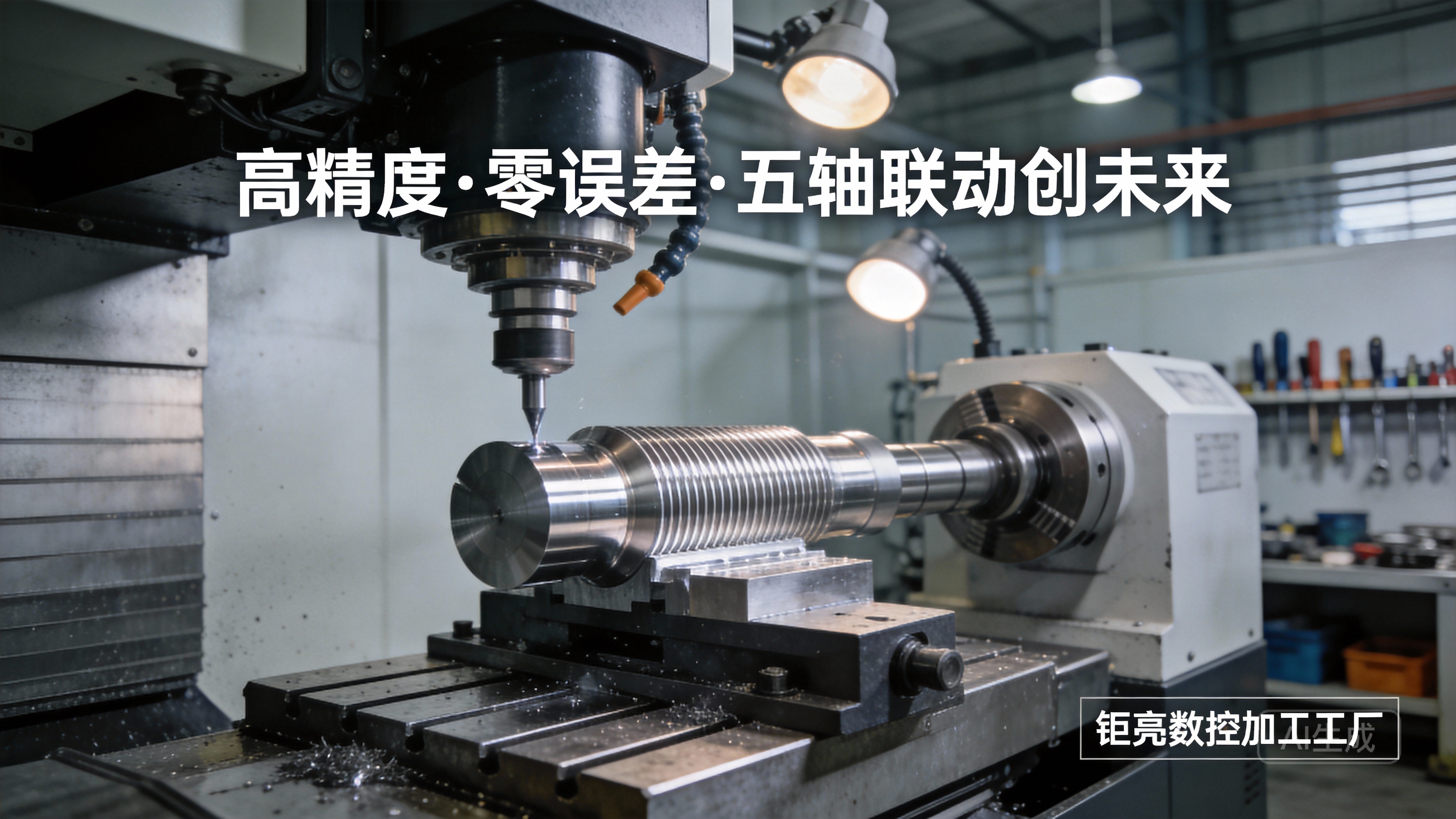
The “Program” as the Ultimate Calculation: The machining process is governed by a G-code program. This program is essentially a long list of precisely calculated coordinates, feed rates, spindle speeds, and tool paths. These calculations are performed not on a handheld calculator, but within specialized software.
CAD (Computer-Aided Design): Engineers design the 3D model. The software calculates volumes, surfaces, and geometries.
CAM (Computer-Aided Manufacturing): This is the critical link. CAM software takes the 3D CAD model and, based on the selected tool, material, and desired finish, calculates the optimal tool path. It performs millions of complex geometric and kinematic calculations to determine the exact sequence of movements needed to carve the part from a solid block, avoiding collisions and ensuring efficiency. This process automatically generates the G-code.
The Machine Controller: The Real-Time Calculator: Once the G-code is loaded into the CNC machine, the machine’s built-in computer (the controller) takes over. It reads each line of code and performs real-time calculations to:
Coordinate the simultaneous movement of up to five axes.
Adjust for tool length and diameter offsets.
Implement look-ahead functions to ensure smooth motion and surface finish.
This onboard system is a specialized, industrial-grade computer far beyond the capability of any standard calculator.
So, in the automated production phase, the CNC system itself is the calculator. The need for an operator to manually compute coordinates and input them via a calculator is virtually extinct in advanced machining environments.
Where Traditional Calculators and Engineering Judgment Still Play a Role
Despite the high level of automation, the human engineer’s expertise, often backed by fundamental calculations, remains irreplaceable. This is where you might still find a calculator—physical or software-based—on an engineer’s desk.
Process Planning & Feasibility Analysis: Before any code is generated, engineers must calculate:
Cutting Parameters: Using formulas to estimate cutting forces, horsepower requirements, and optimal feed/speed rates based on material science data. While CAM software suggests parameters, experienced engineers often verify or fine-tune them with manual calculations.
Cost Estimation: Calculating machining time, material volume, tool wear, and overhead to provide an accurate quote. This involves both analytical calculations and empirical data.
Fixture Design & Workholding: Calculating clamping forces and stability to ensure the part does not move during high-speed machining.
Quality Control & Metrology: While Coordinate Measuring Machines (CMMs) are digitally driven, technicians might use calculators to analyze data, perform statistical process control (SPC), or convert units between imperial and metric systems.
Troubleshooting & Optimization: If a surface finish issue or vibration (chatter) occurs, engineers revert to fundamental principles—calculating resonant frequencies, evaluating harmonic interactions—to diagnose and solve the problem.
A Historical Perspective: From Manual Maths to Digital Threads
To appreciate the present, it helps to look at the past. Before CNC, there was manual machining and earlier NC (Numerical Control) machines.
The Era of the Machinist-Calculator: Skilled machinists would use trigonometry, geometry, and physical calculators to determine coordinates for every hole, pocket, and contour on a blueprint. They would then manually operate mill handles or set up tracer controls. The machinist’s mind and slide rule were the original “CNC controller.”
The Advent of CNC: This technology digitized the entire calculation chain. The “digital thread” was created: a seamless flow of calculated data from CAD to CAM to CNC controller, eliminating manual translation errors and enabling complexities impossible to achieve by hand.
The GreatLight Metal Approach: Integrating Calculated Precision at Every Step
At GreatLight Metal Tech Co., LTD., our philosophy embodies this integration of deep engineering calculation with advanced digital execution. We don’t just rely on software outputs; we apply layers of engineering oversight that involve critical calculation and simulation.
Pre-Program Simulation: Before any metal is cut, we use advanced simulation software that calculates material removal rates, tool deflection, and potential collisions in a virtual environment. This prevents costly physical errors.
Process Engineering: For a complex aerospace component or a critical medical implant, our engineers perform upfront calculations for thermal expansion, stress concentrations, and optimal stock allowance. This ensures the CNC machining process is designed for success from the first part.
Integrated Metrology: Our in-house precision measurement equipment, like CMMs and laser scanners, generates vast amounts of data. We use statistical software to calculate process capabilities (Cp/Cpk), ensuring consistency across production runs.
This dual command of fundamental engineering principles and cutting-edge digital tools allows us to tackle the “Precision Predicament” head-on, bridging the gap between promised and delivered accuracy.
Conclusion
So, do they use calculators and CNC machining? The relationship is symbiotic and evolutionary. The standalone calculator has been absorbed into the digital fabric of modern CNC technology. It is no longer a separate tool on the shop floor but an inherent function within every piece of software and every machine controller. The true power in today’s precision manufacturing lies in the seamless flow of calculated intelligence—from the engineer’s initial feasibility analysis, through the CAM system’s path planning, to the CNC controller’s real-time execution. For clients seeking not just a machine shop but a manufacturing partner, choosing a provider like GreatLight Metal means accessing a depth of calculated expertise that ensures your most complex designs are transformed into flawless reality, with every micron accounted for by a robust chain of digital and human intelligence.
Frequently Asked Questions (FAQ)
Q1: If everything is automated with software, why do I need an experienced machining partner?
A: Software is a tool, not a strategist. An experienced partner provides the critical engineering judgment that software lacks. They define the strategy (fixturing, tool selection, sequence of operations), interpret results, troubleshoot unforeseen issues, and ensure the entire process is optimized for quality, cost, and lead time. They ask “why” and “what if,” which software cannot do.
Q2: Can’t I just send a CAD file and get perfect parts from any CNC shop?
A: Not reliably. The CAD file is just the geometry. A professional manufacturer adds value by:
Analyzing the design for manufacturability (DFM).
Selecting the right material and grade.
Planning the machining strategy to maintain precision and avoid stress.
Choosing appropriate post-processing (e.g., anodizing, plating).
Without this calculated oversight, you risk parts that are expensive, late, or fail to meet specifications.
Q3: How do you ensure the calculations in your CAM software are correct for my specific material?
A: We combine software databases with proprietary knowledge. Our CAM libraries are populated with parameters refined over thousands of projects. More importantly, our process engineers apply material-specific knowledge—understanding how alloys like titanium 6Al-4V behave differently than aluminum 6061 or stainless steel 316L—to adjust and validate the software’s suggestions, often through physical testing and iteration.
Q4: Is manual machining completely obsolete then?
A: Not obsolete, but its role has changed. It is invaluable for:
Prototyping and one-offs: Quick turnarounds where programming CNC might be less efficient.
Tool and fixture making: Creating the custom workholding needed for CNC production.
Repairs and modifications: Making adjustments to existing parts.
Modern precision shops like ours integrate manual skills with CNC for maximum flexibility.
Q5: What’s the biggest risk of relying solely on automated calculations in CNC machining?
A: The biggest risk is unexpected physical phenomena. Software calculates in an ideal world. In reality, tools wear, materials have internal stresses, and machines have tiny vibrations. A purely automated process might miss signs of chatter, poor chip evacuation, or thermal distortion. Expert machinists monitor these real-world factors and make calculated adjustments, ensuring the digital plan translates into physical perfection.